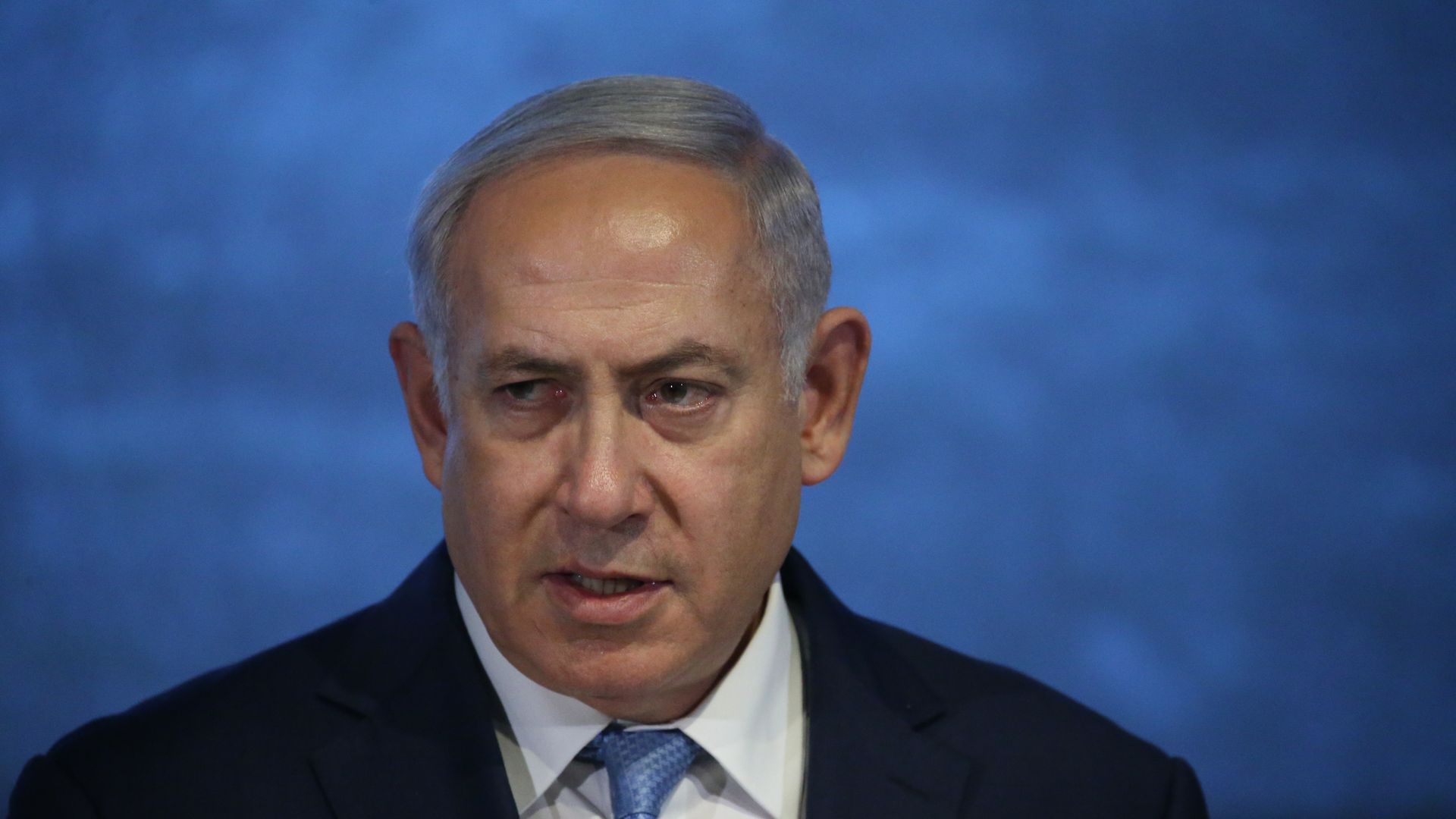
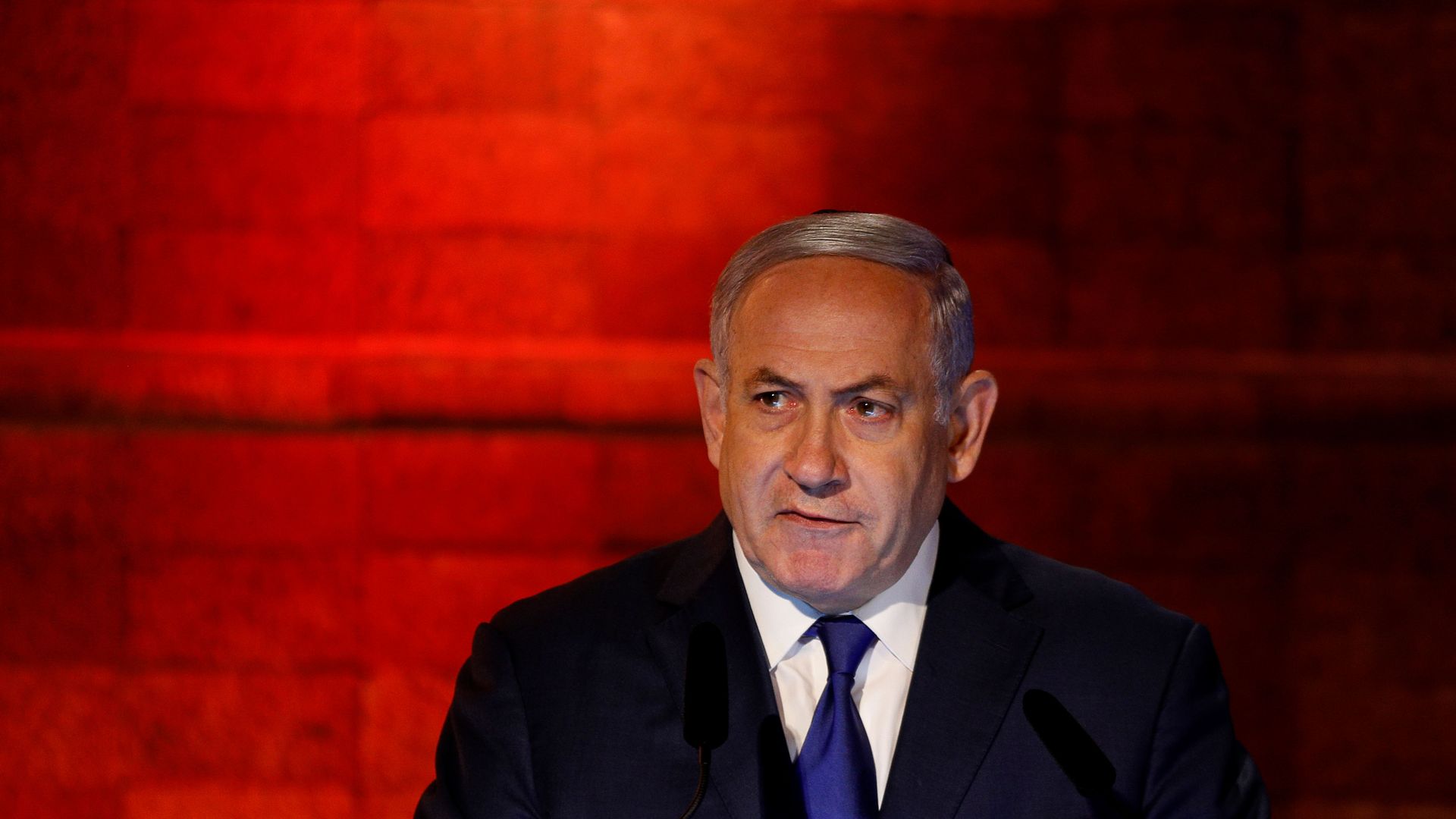
Israeli Prime Minister Benjamin Netanyahu presented documents and files during a primetime speech in Israel that he says shows Iran has "a comprehensive program to design, build and test nuclear weapons," despite Iran's claims it has no ambitions to pursue nuclear weapons development.
Between the lines: The urgency behind the nuclear deal came from the belief Iran was pursuing a nuclear weapon, so this won't come as a surprise to any of the parties to the deal. Axios contributor Barak Ravid tweets the "information is not new and especially interesting. ...It won't change the position of the European powers."
Israeli Prime Minister Benjamin Netanyahu will give a speech at 1pm ET (8pm local) laying out new evidence concerning Iran's nuclear program, an Israeli official said. He briefed the Israeli security cabinet on the matter earlier today.
Why it matters: Israeli officials say he'll provide dramatic information showing Iran is cheating on the deal. They say he updated President Trump on Saturday and Secretary of State Pompeo yesterday. This comes 12 days before Trump's deadline to decide whether to stay in the deal.
The Trump administration has not appointed diplomats to 38 ambassadorships around the world, reflecting a larger issue of key vacancies across the State Department, reports Foreign Policy.
Why it matters: Some of the regions missing ambassadors are crucial to the U.S.'s foreign policy priorities. South Korea is missing a top diplomat amid negotiations with North Korean leader Kim Jong-un, and the European Union and Mexico have vacancies as those nations try to avoid a trade war with the U.S.
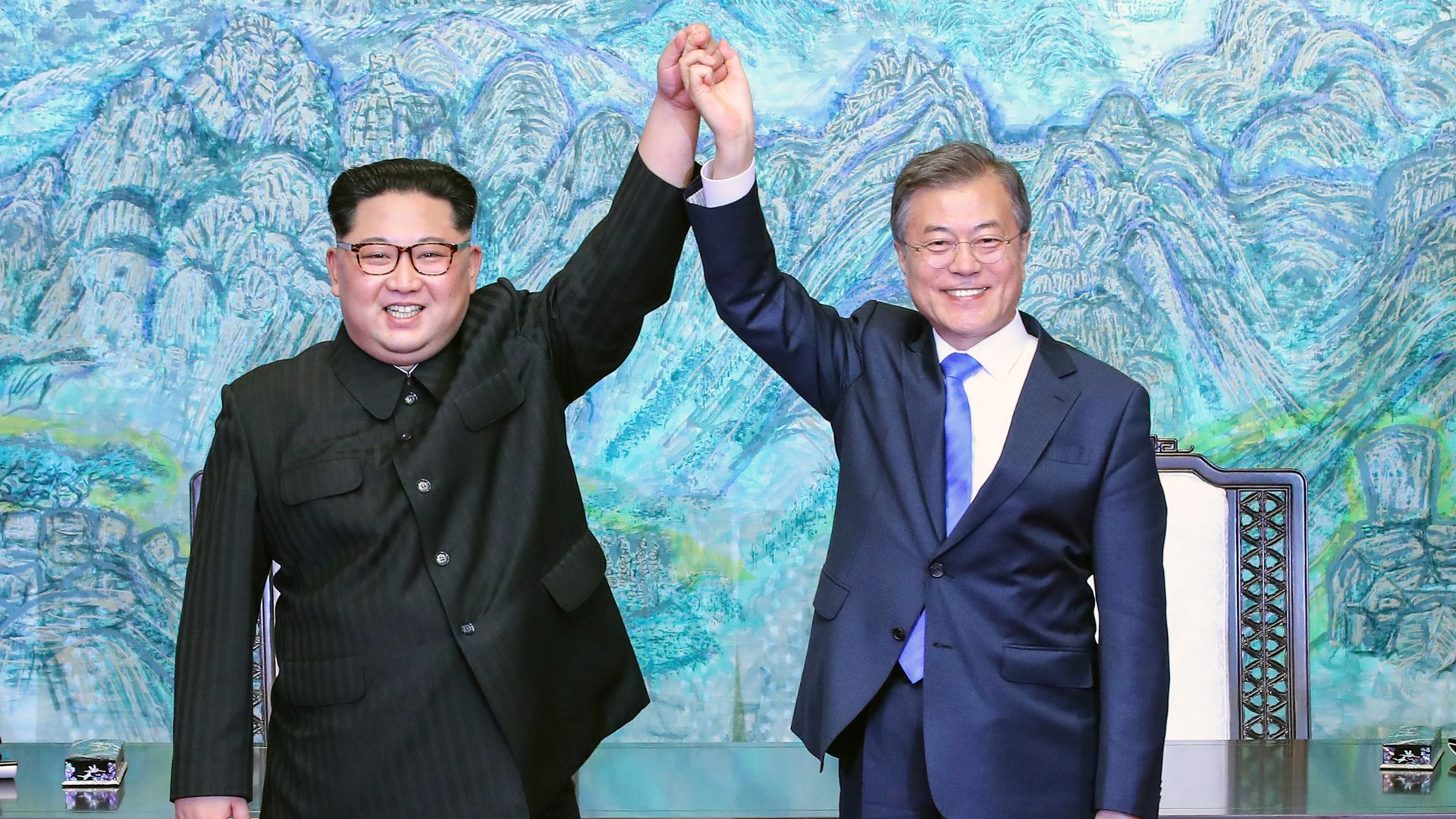
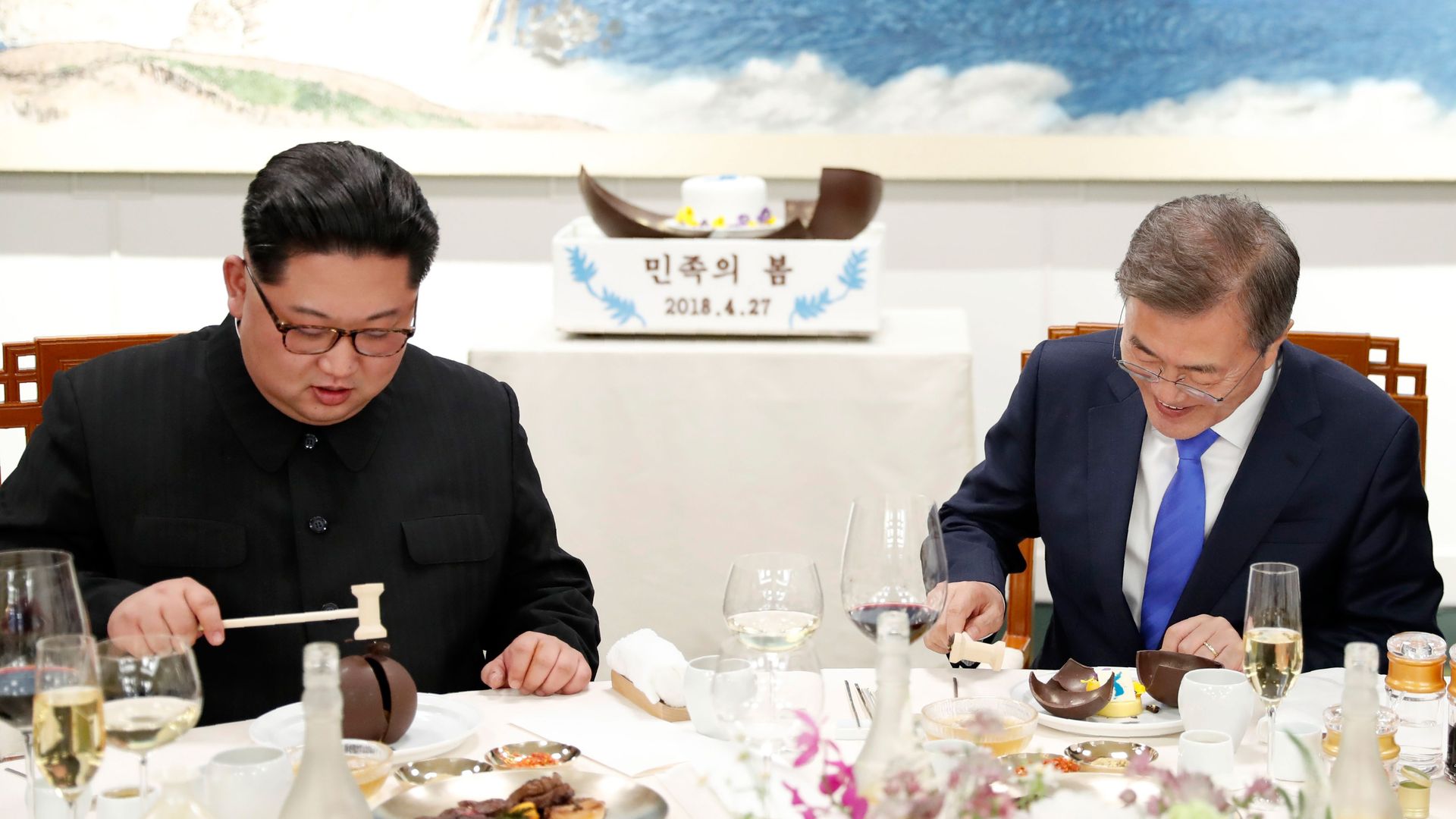
South Korea is removing propaganda-broadcasting loudspeakers from its North Korean border as promised after a summit between North Korean leader Kim Jong-un and South Korean President Moon Jae-in, reports AP.
Why it matters: These gestures of peace show that both sides are willing to work with each other to create peaceful relations between North Korea and South Korea after decades of turmoil.
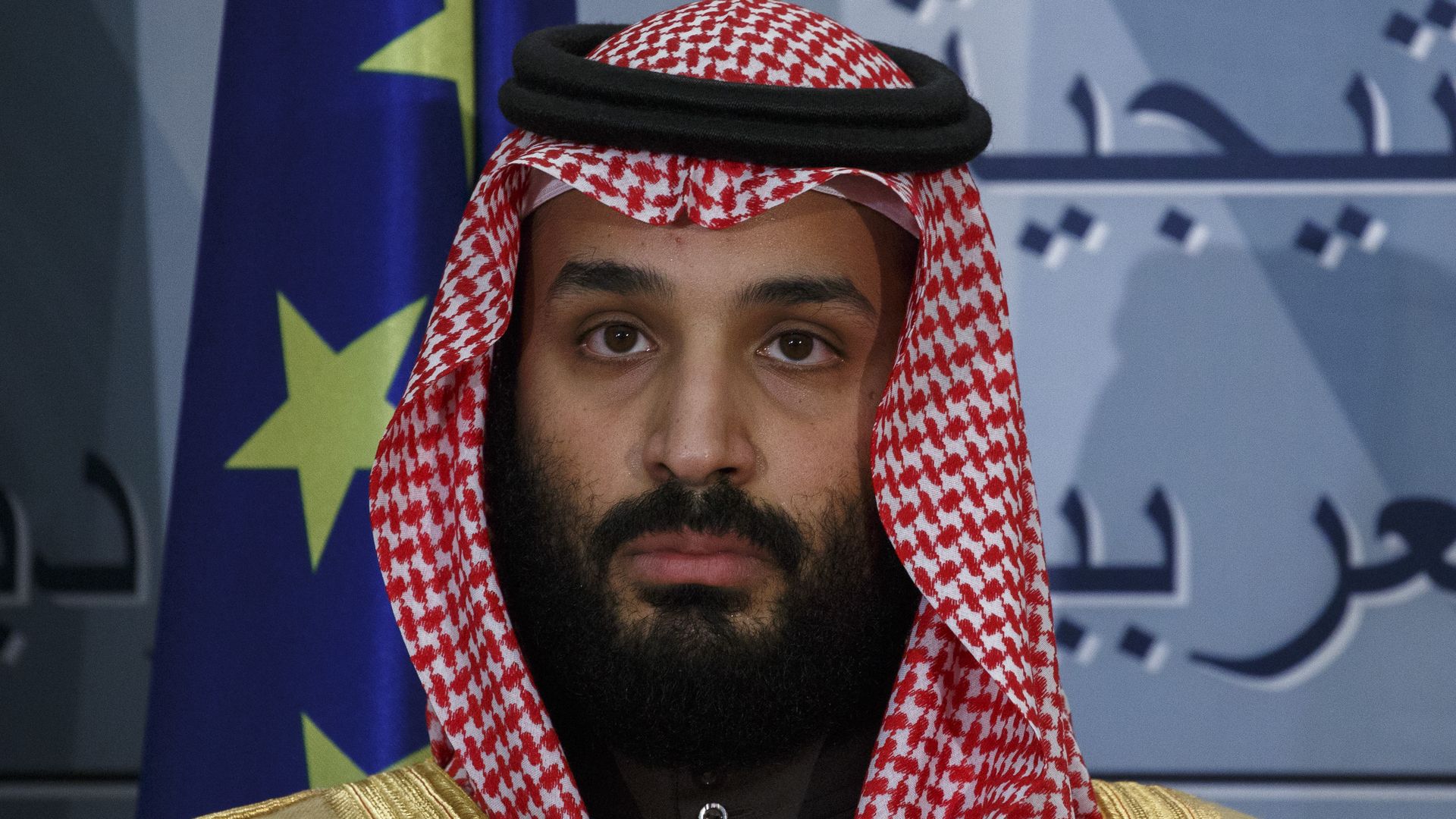
In a closed-door meeting with heads of Jewish organizations in New York on March 27th, Saudi Crown Prince Mohammed Bin Salman (MBS) gave harsh criticism of Palestinian President Mahmoud Abbas (Abu Mazen), according to an Israeli foreign ministry cable sent by a diplomat from the Israeli consulate in New York, as well three sources — Israeli and American — who were briefed about the meeting.
The bottom line ofthe crown prince's criticism: Palestinian leadership needs to finally take the proposals it gets from the U.S. or stop complaining.
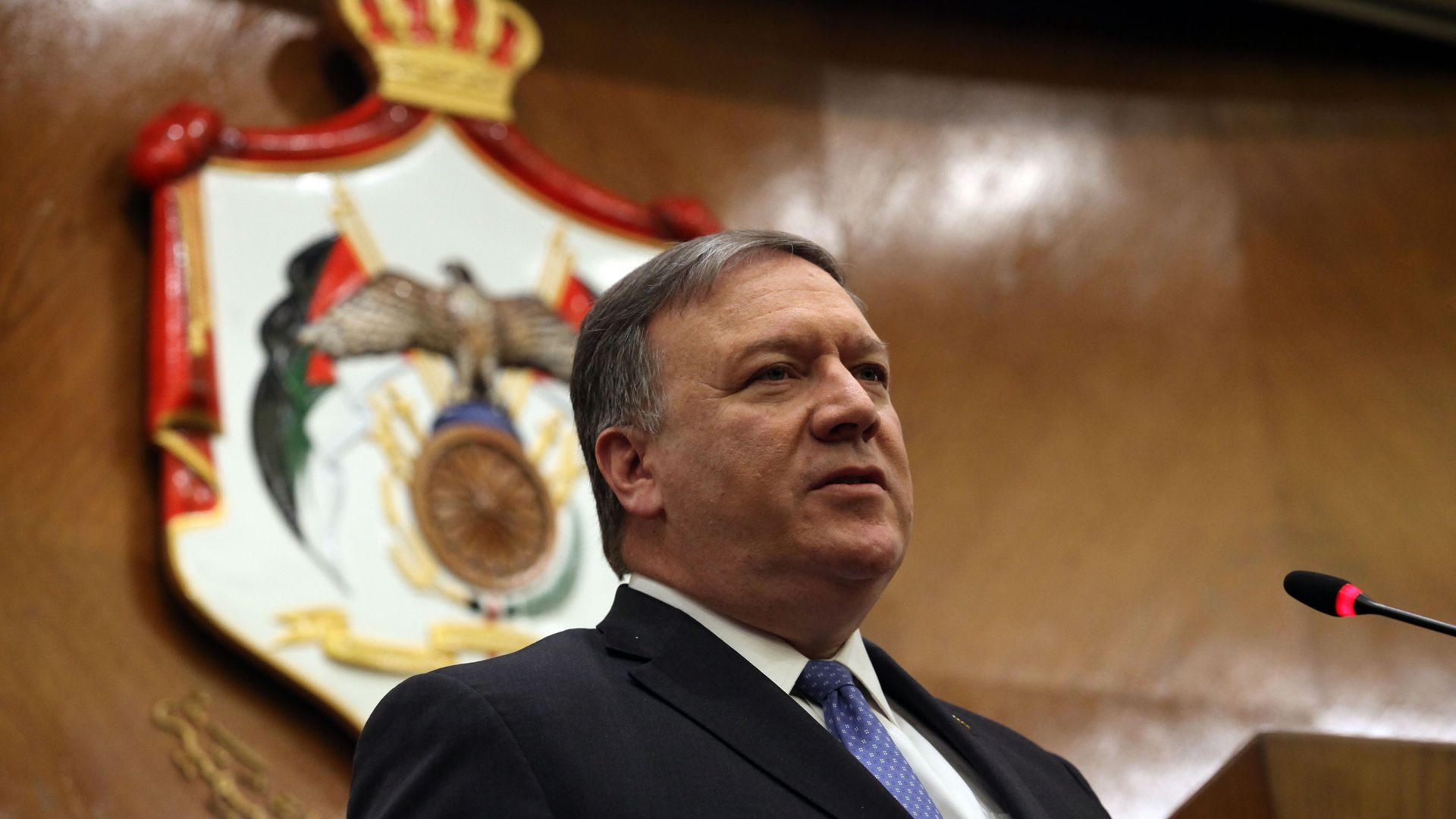
At a press conference with Israeli Prime Minister Benjamin Netanyahu, newly-confirmed Secretary of State Mike Pompeo made clear President Trump's intention to withdraw from the Iran nuclear deal if significant changes are not made. Trump has set May 12th as the deadline to reach a new agreement with France, Germany and the U.K.
"North Korea’s leader, Kim Jong-un, told President Moon Jae-in of South Korea when they met that he would abandon his nuclear weapons if the United States would agree to formally end the Korean War and promise that it would not invade his country, a South Korean government spokesman said," reports the N.Y. Times.
Why it matters: Axios future editor Steve LeVine, a foreign correspondent who covered the aftermath of the Soviet Union for The Wall Street Journal, said this morning's reporting reminds him of the pivotal year 1985 in the Soviet Union.
Anchoring ABC's "This Week," Jonathan Karl asked Secretary of State Mike Pompeo, by satellite from Saudi Arabia, if he can really trust anything that comes out of a meeting with North Korea's Kim Jong-un.
"This administration has its eyes wide open. We know the history. We know the risks. We’re going to be very different. We’re going to negotiate in a different way than has been done before."
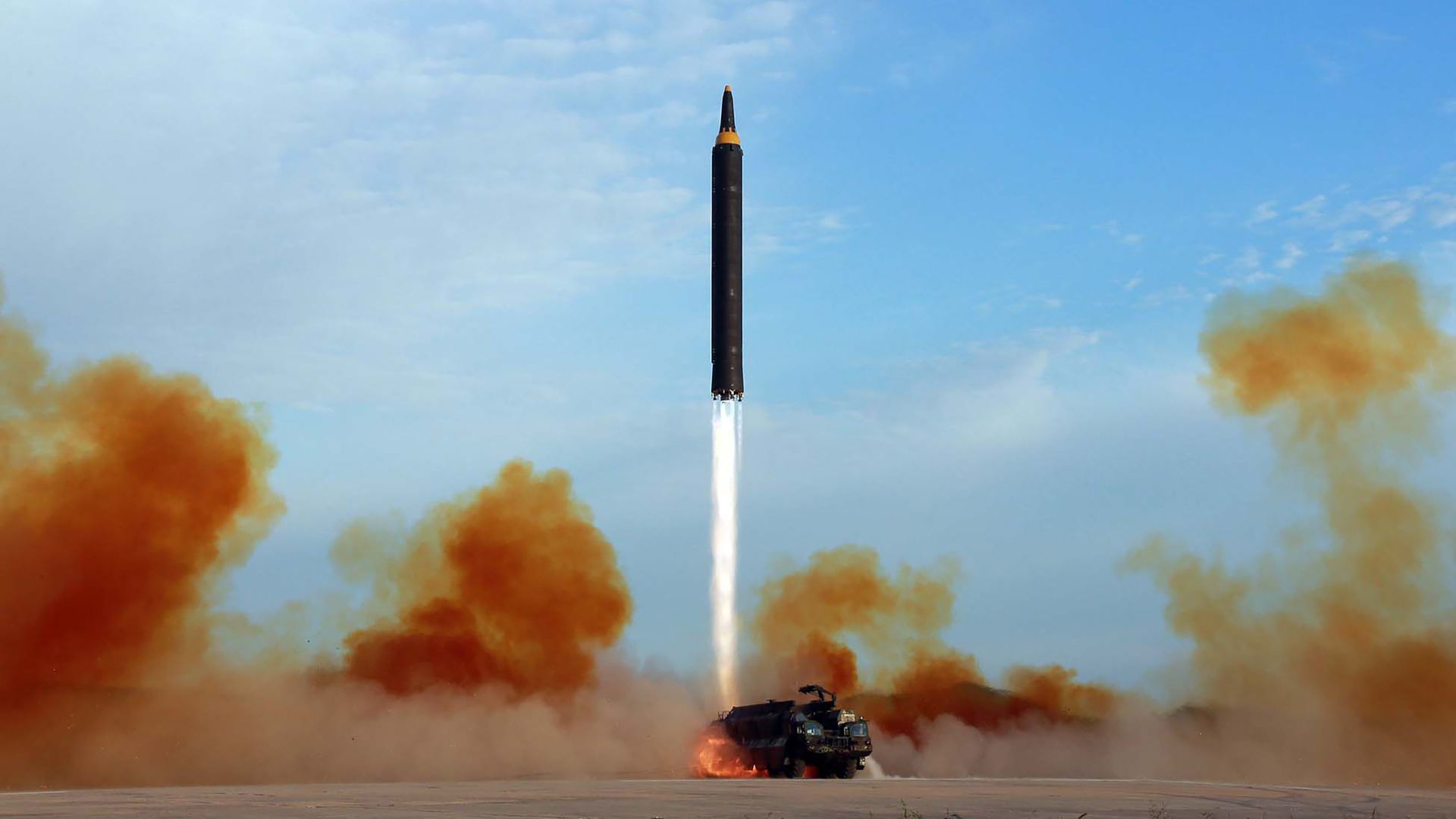
North Korean leader Kim Jong-un reportedly told South Korean President Moon Jae-in "that he would carry out the closing of the nuclear test site in May," reports AFP citing Moon's spokesman.
The details: The spokesman told reporters that North Korea will invite experts from South Korea and the U.S. to witness the closure "to disclose the process to the international community with transparency." Kim is sticking to a promise made earlier this month when he announced the country would stop nuclear missile testing and had plans to close a testing site, explaining that “[t]he nuclear test site has done its job.”