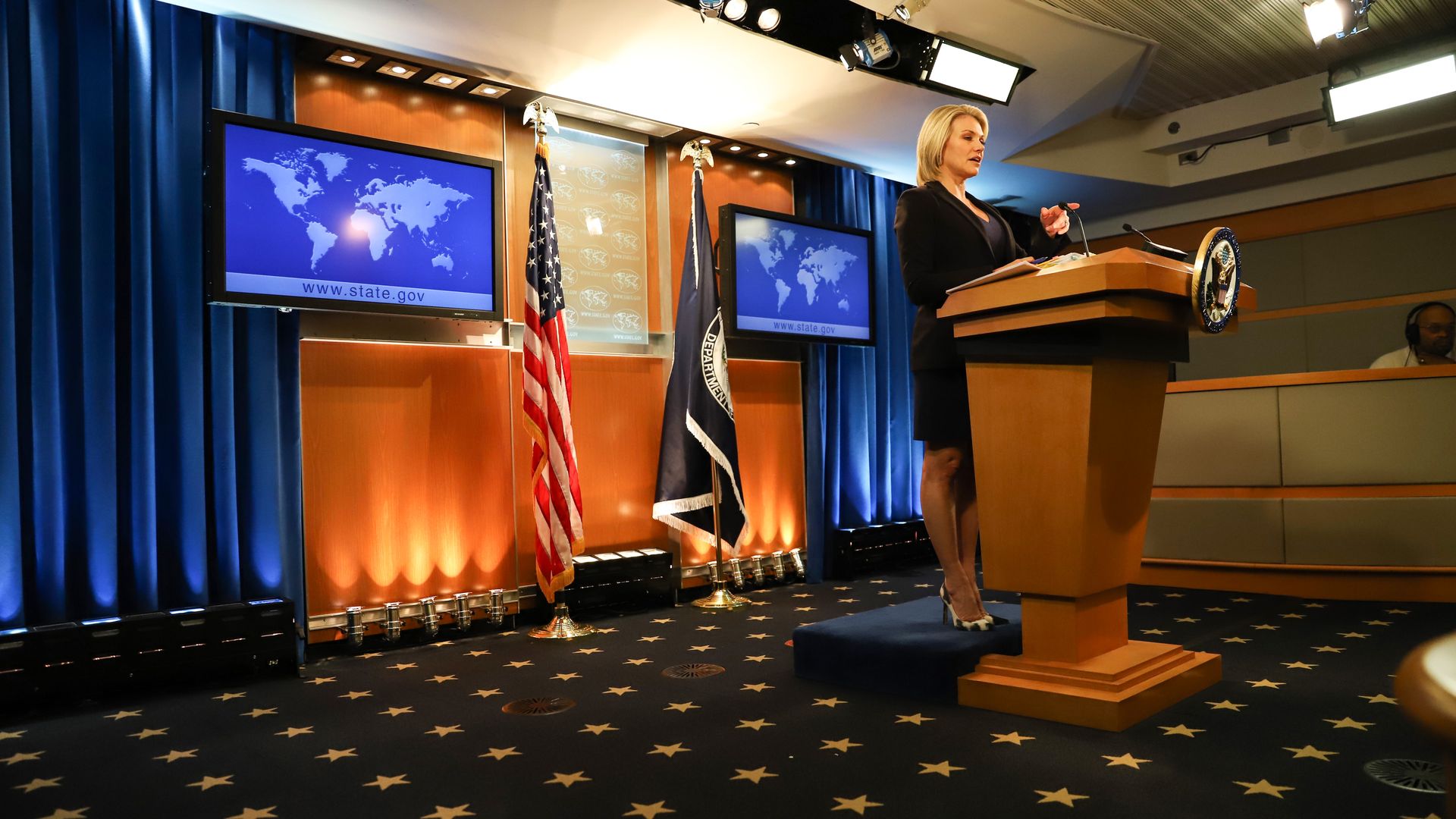
Department of State spokeswoman Heather Nauert said on Thursday that that U.S. "reserves the right to respond" after Russia announced a retaliatory expulsion of U.S. diplomats. Nauert said Russia has decided to "further isolate itself diplomatically and economically." While the U.S. wasn't surprised by Russia kicking out 60 U.S. diplomats, it's "unjustified" she said, adding that Russia "should not be acting like a victim."
Russia’s foreign minister, Sergei Lavrov, summoned the U.S. Ambassador to Russia, Jon Huntsman, to the foreign ministry Thursday where he was informed Russia is expelling 60 U.S. diplomats — the same number as the U.S. expelled stateside — and will close the U.S. consulate in St. Petersburg, per the AP. Russia will take similar action in the 25 other countries that expelled Russians, expelling 150 diplomats in total.
The bottom line: This was the expected reaction and is part of the Russian playbook. A European diplomat tells Axios the response from the U.S., U.K. and others has been far stronger than the Kremlin expected over the poisoning of ex-spy Sergei Skripal with a nerve agent on British soil.
iQiyi, a Netflix-style service in China that is owned by Baidu, raised $2.25 billion in its IPO. It priced 125 million shares at $18 (middle of range), for a filly-diluted market value of $13.7 billion, and will trade on the Nasdaq under ticker IQ.
In context: iQiyi is hitting the U.S. markets at the exact same time that FANG stocks, including Netflix, are getting hammered. It doesn't face the same threats of U.S. regulation or American privacy concerns, but it does have serious censorship and competitive challenges.
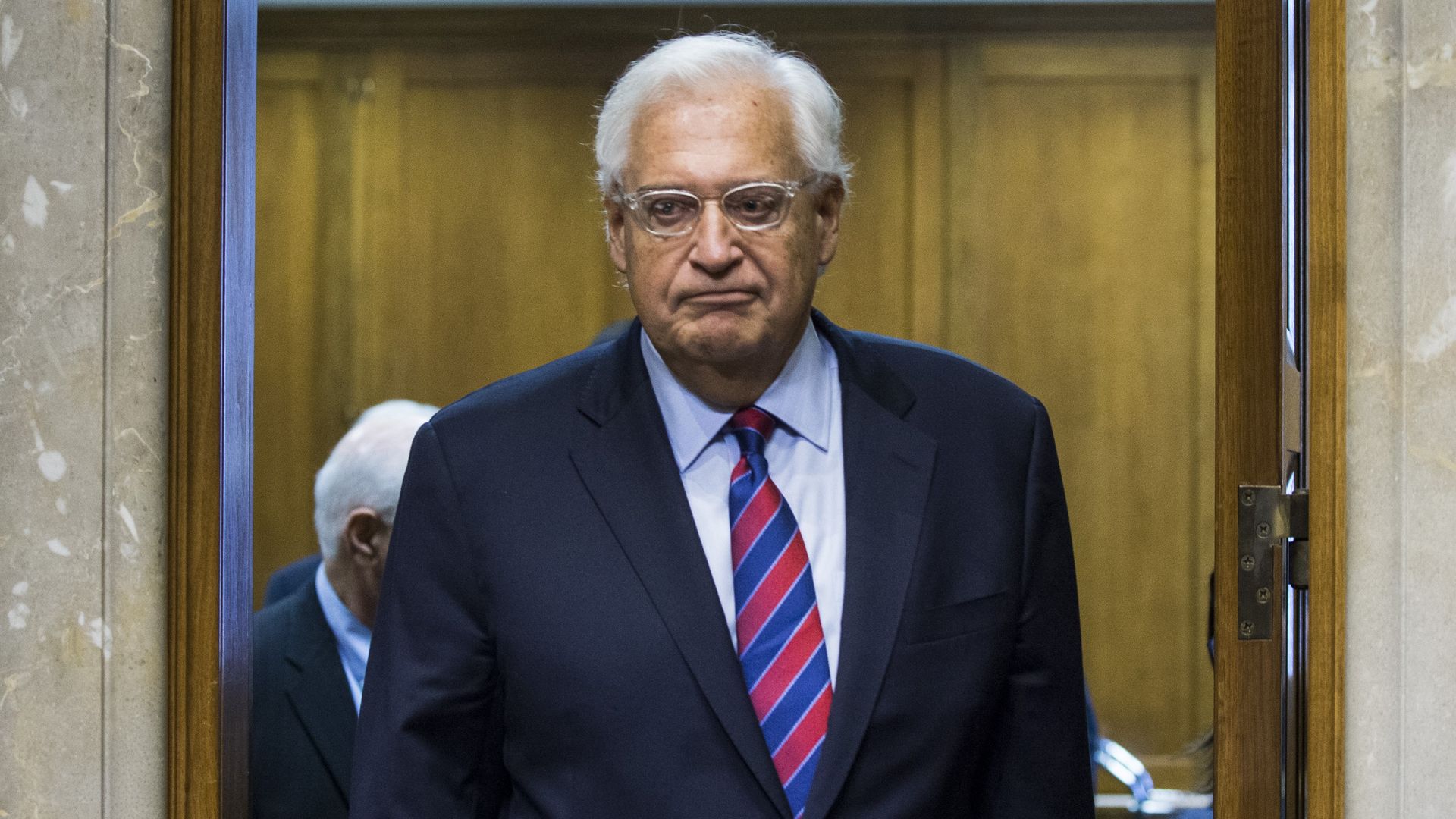
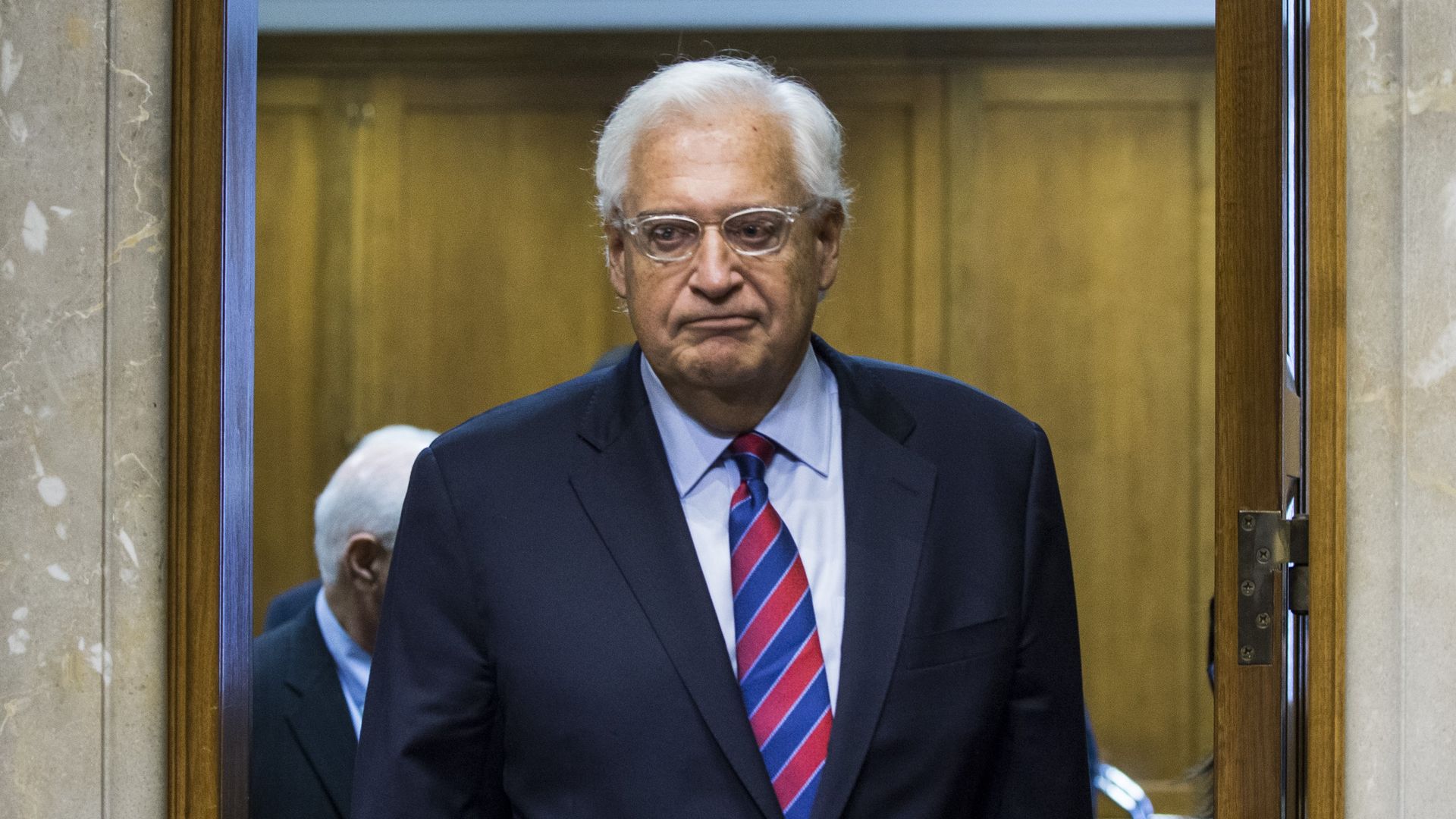
U.S. ambassador to Israel David Friedman issued today a clarification about comments he made against Palestinian president Mahmoud Abbas. Friedman wrote this morning in a tweet:
"The United States is not seeking 'to replace' Mahmoud Abbas. It is for the Palestinian people to choose its leadership."
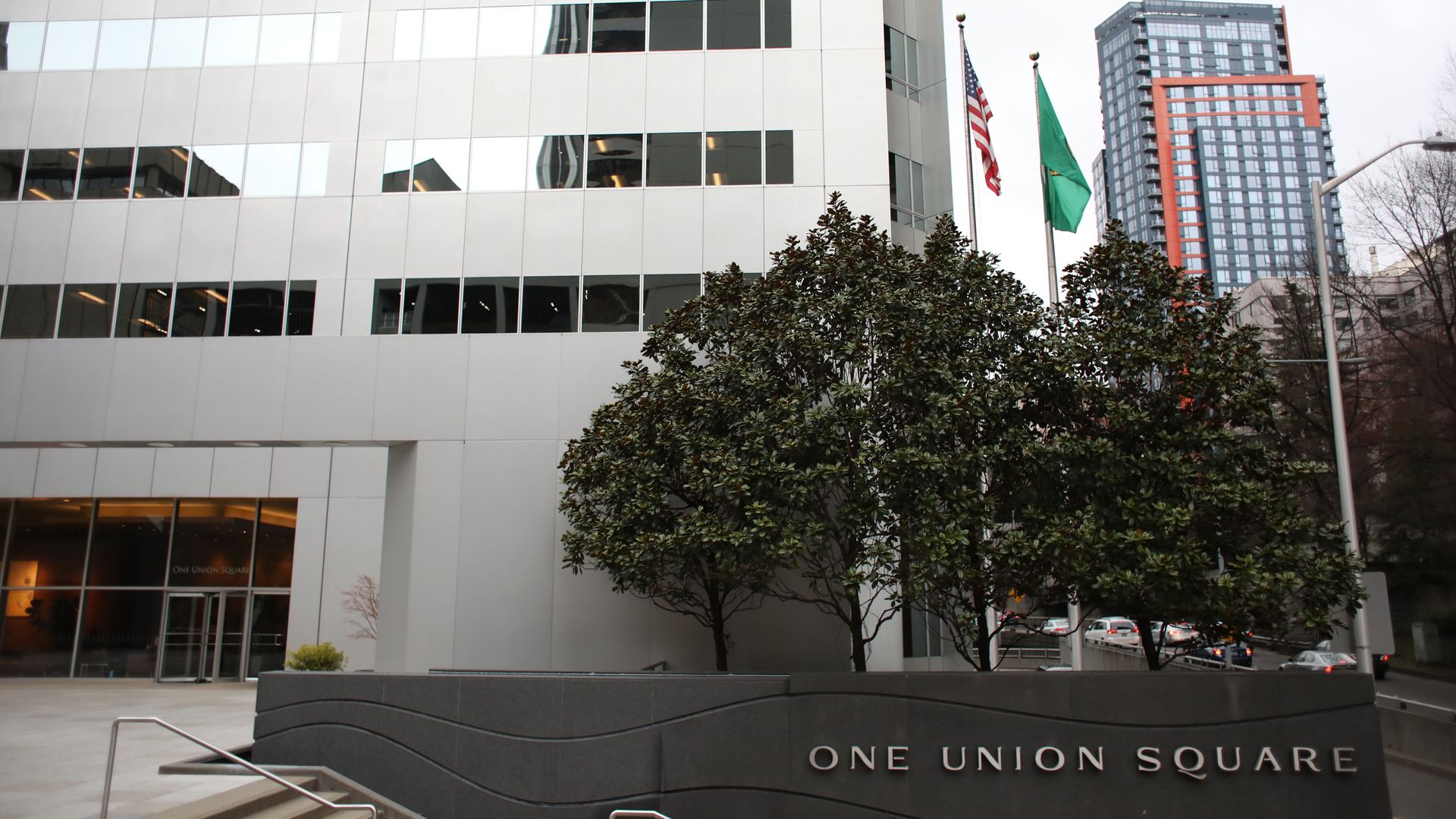
The Trump administration's decision to expel 60 Russian diplomats from the U.S. and shut down the Russian consulate in Seattle was an important expression of solidarity with the U.K., which had expelled 23 Russian diplomats in response to the nerve agent attack against a former Russian spy. More than 20 countries have now jointly responded, expelling more than 100 Russian diplomats worldwide.
What's next: Russia has vowed to retaliate, but the scope of its response remains unknown. One thing is clear: The downward spiral in relations will not abate as long as the Kremlin continues its confrontation course with the West.
North Korean leader Kim Jong-un will meet South Korean President Moon Jae-in for a summit at the Korean border village of Panmunjom on April 27, per the AP. Their meeting could set the stage for a meeting between Kim and President Trump, which is currently projected to take place in May.
The big picture: It'll be just the third time that the leaders of the two Koreas have sat down face-to-face since the Korean War ended in 1953. The last two summits occurred in 2000 and 2007.
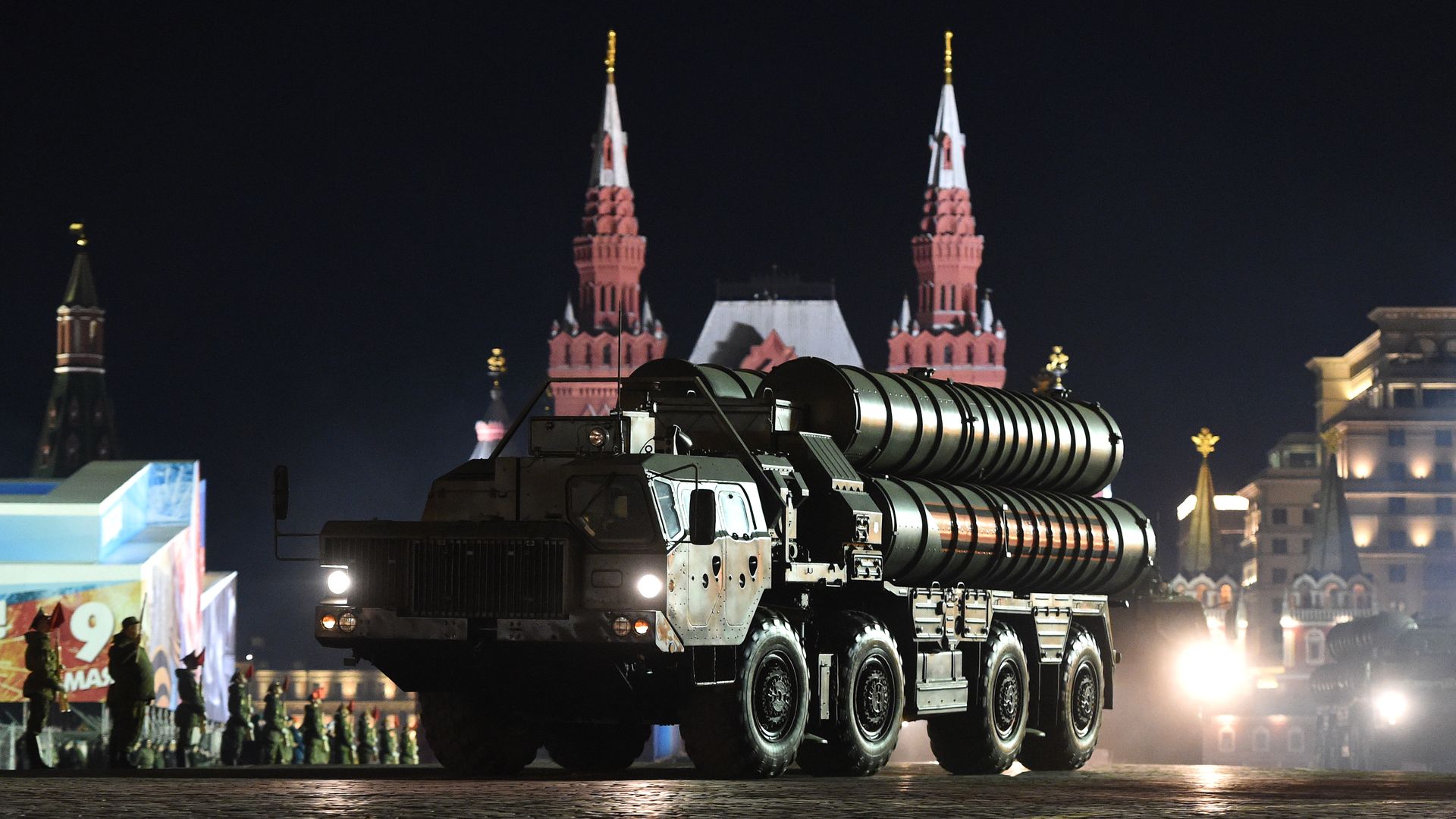
India may close a major defense deal with Russia as early as next week, when Indian Defense Minister Nirmala Sitharaman will make her first trip to Moscow. The deal covers two S-400 air defense systems, which include radar, missile launchers and command center technology.
Why it matters: In August 2017, President Trump signed into law the Countering America’s Adversaries through Sanctions Act (CAATSA) against Russia. Because the sanctions target any country trading with Russia's defense and intelligence sectors, India's pending deal may put it on a collision course with the U.S.
U.S. ambassador to Israel David Friedman has warned that if Palestinian President Mahmoud Abbas continues to refuse to engage with the Trump administration, the U.S. will find other players to talk to.
Why it matters: Friedman's comments were the first time a senior Trump administration official raised the possibility that the White House will decide that Abbas is irrelevant.
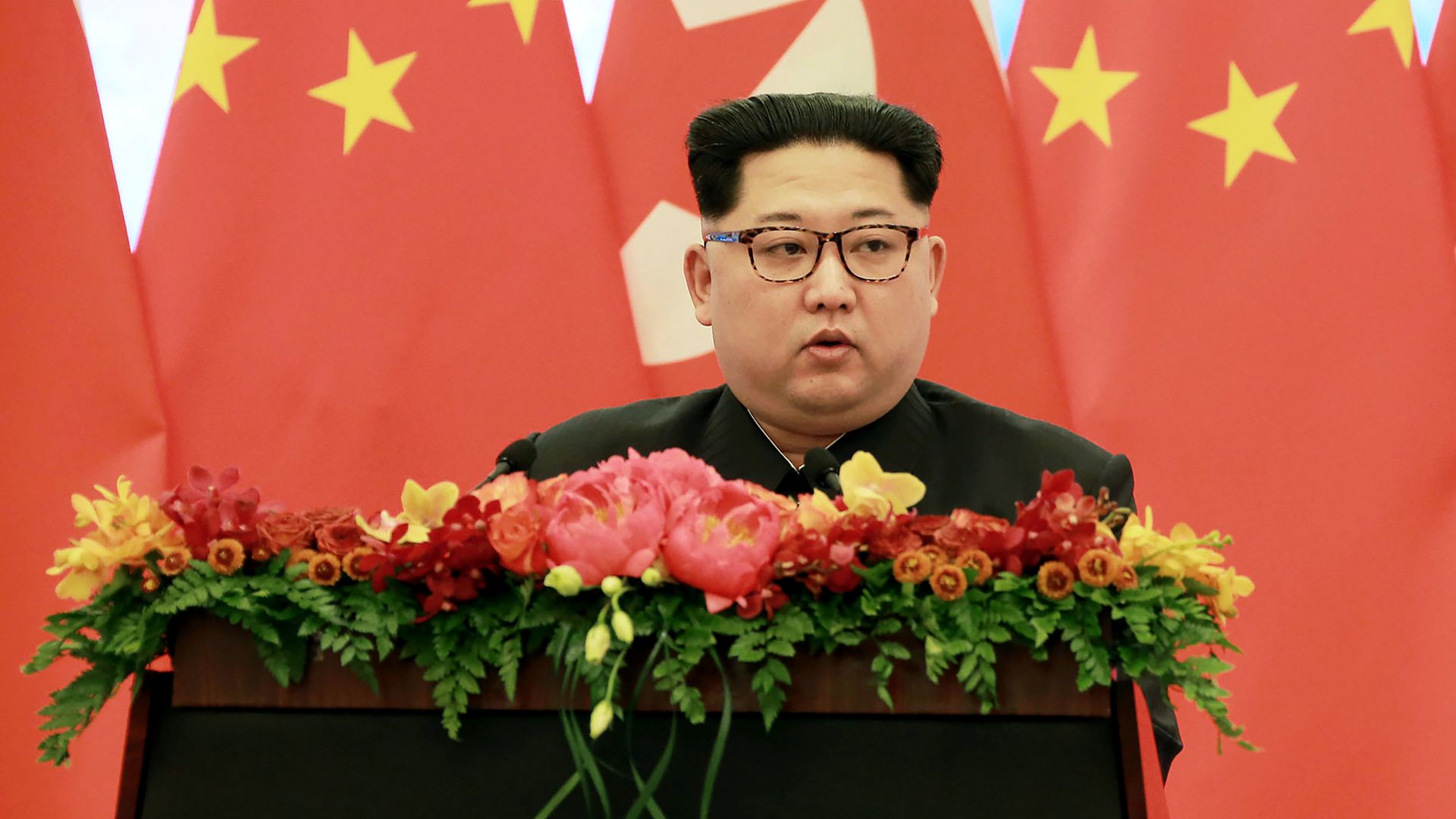
President Trump confirmed in a tweet this morning that his planned summit with North Korean leader Kim Jong-un is still on. The president expressed hope that Kim, who just visited Chinese President Xi Jinping in Beijing, "will do what is right for his people and for humanity."
Kim's message to Trump in Beijing: "The issue of denuclearization of the Korean Peninsula can be resolved, if South Korea and the United States respond to our efforts with goodwill, create an atmosphere of peace and stability while taking progressive and synchronous measures for the realization of peace."