The White House released a statement on Wednesday supporting the U.K.'s expulsion of 23 Russian diplomats earlier in the day over the poisoning of Russian ex-spy Sergei Skripal in the English town on Salisbury.
"The United States shares the United Kingdom’s assessment that Russia is responsible for the reckless nerve agent attack on a British citizen and his daughter, and we support the United Kingdom’s decision to expel Russian diplomats as a just response."
— Press Secretary Sarah Sanders
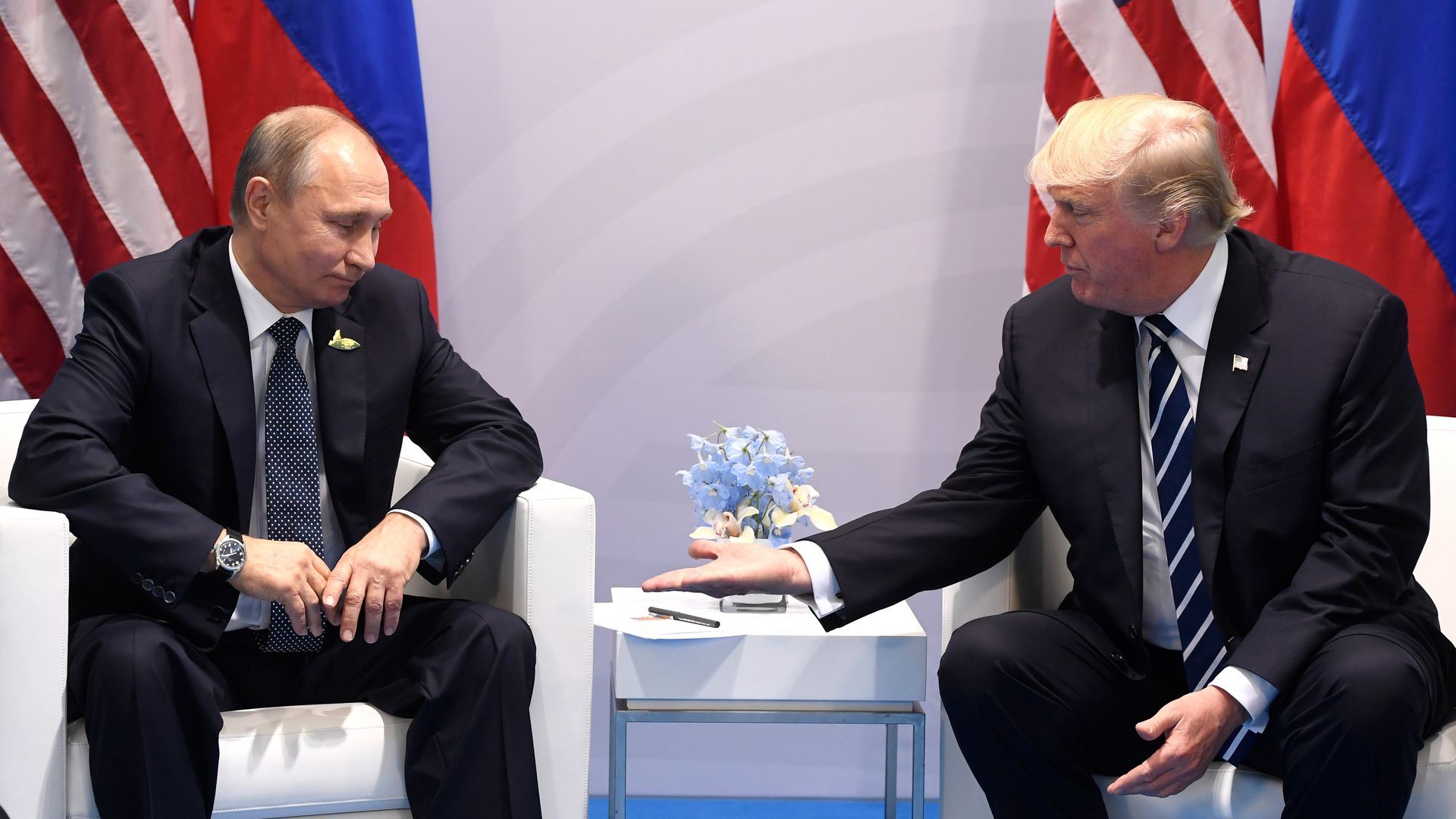
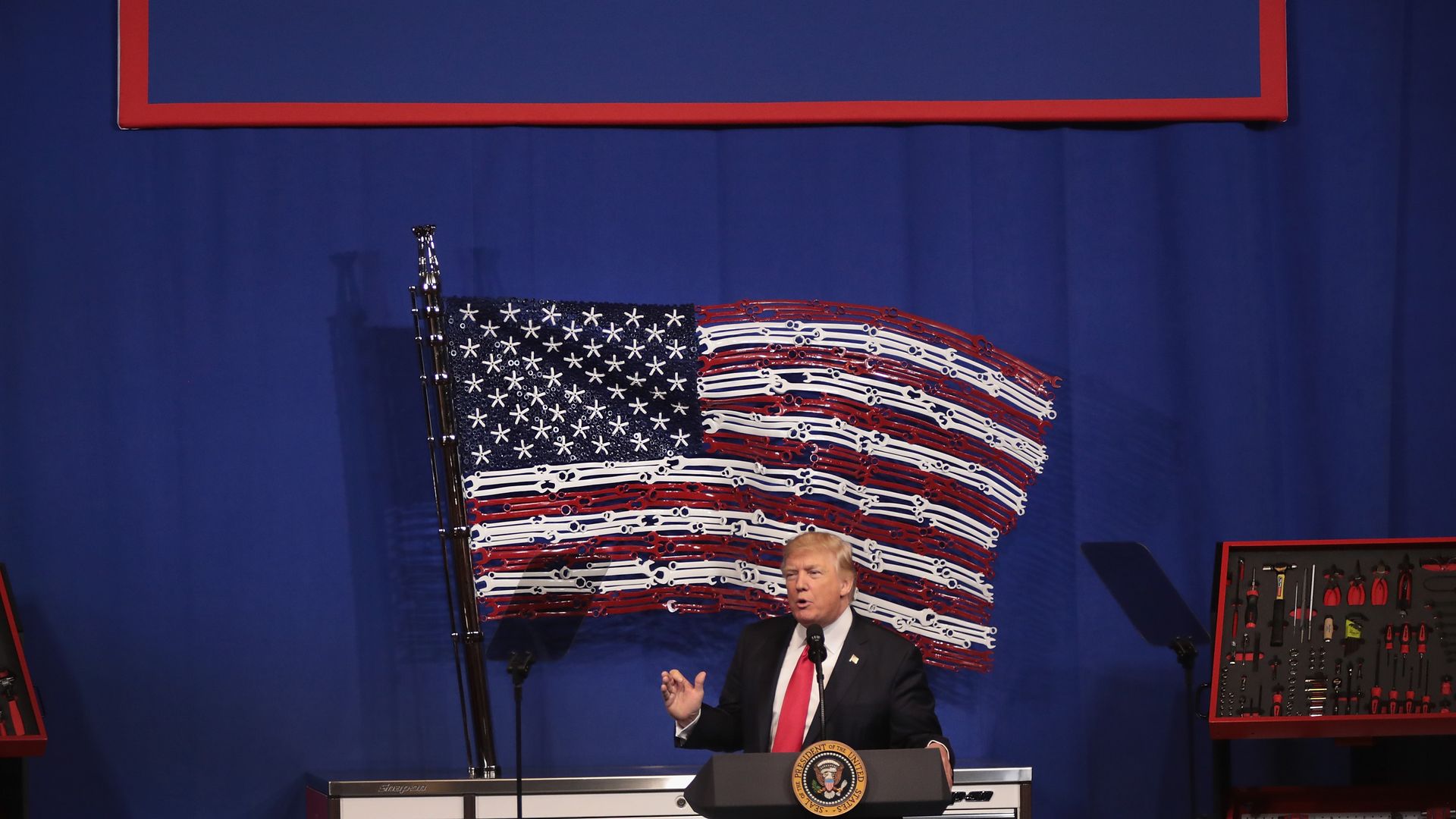
The backdrop: Theresa May's announcement was a major escalation in Russia-U.K. relations, and President Trump said on Tuesday that the U.S. would condemn Russia "[a]s soon as we get the facts straight, if we agree with them." Ambassador to the U.N. Nikki Haley took a strong stance against Russia on Wednesday.
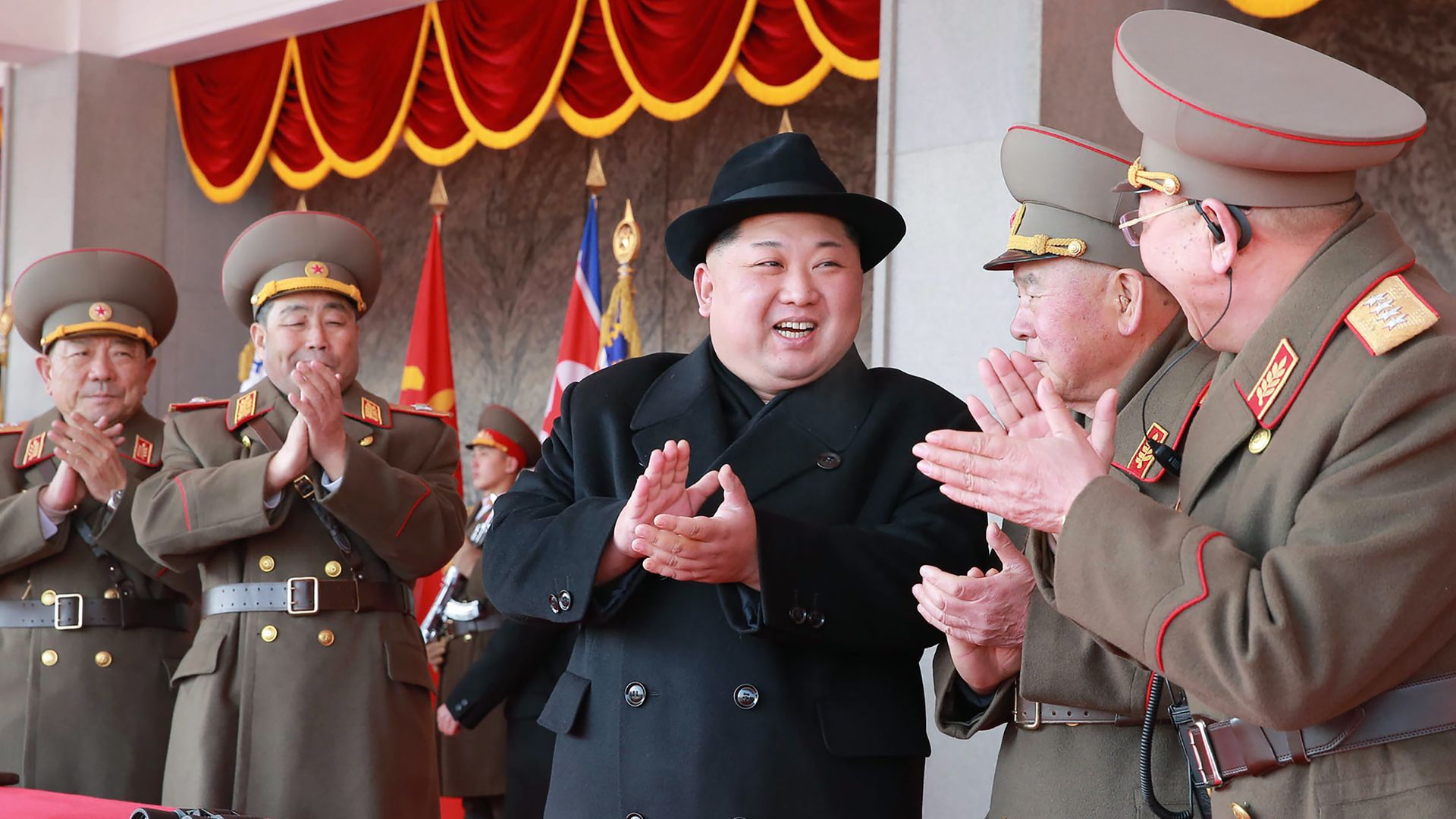
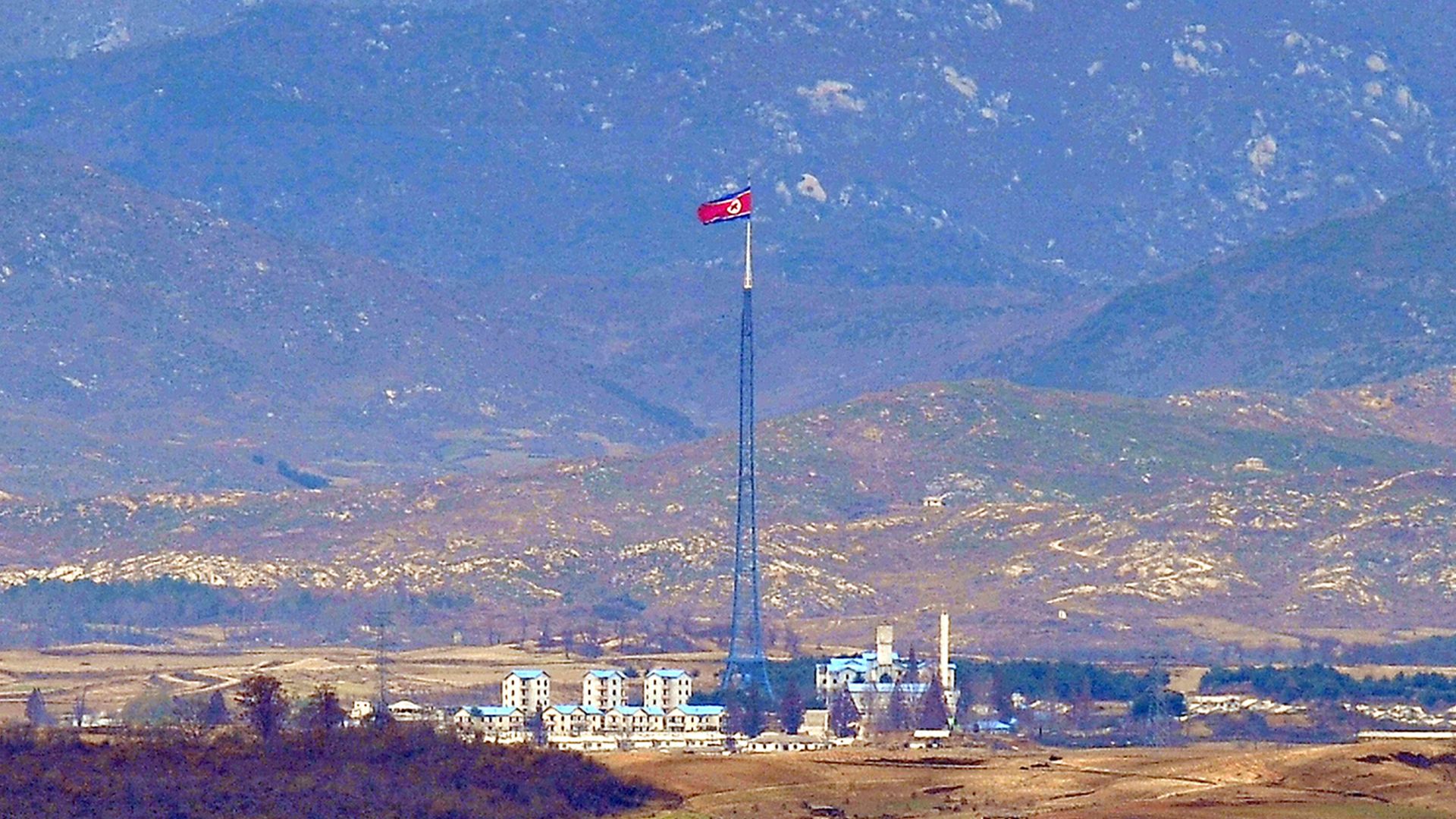
Talks with North Korea present a long list possible pitfalls for the U.S. Since Kim Jong-un's offer, President Trump has exacerbated the risks by accepting the invitation outright, issuing overconfident statements and replacing the cautious Rex Tillerson with the pliant Mike Pompeo as secretary of state.
Why it matters: The State Department exists to ensure that the president arrives at summits like this with a strong hand, by nailing down favorable terms and negotiation strategy. Ignoring this expertise will see Trump striding blithely toward potential traps.
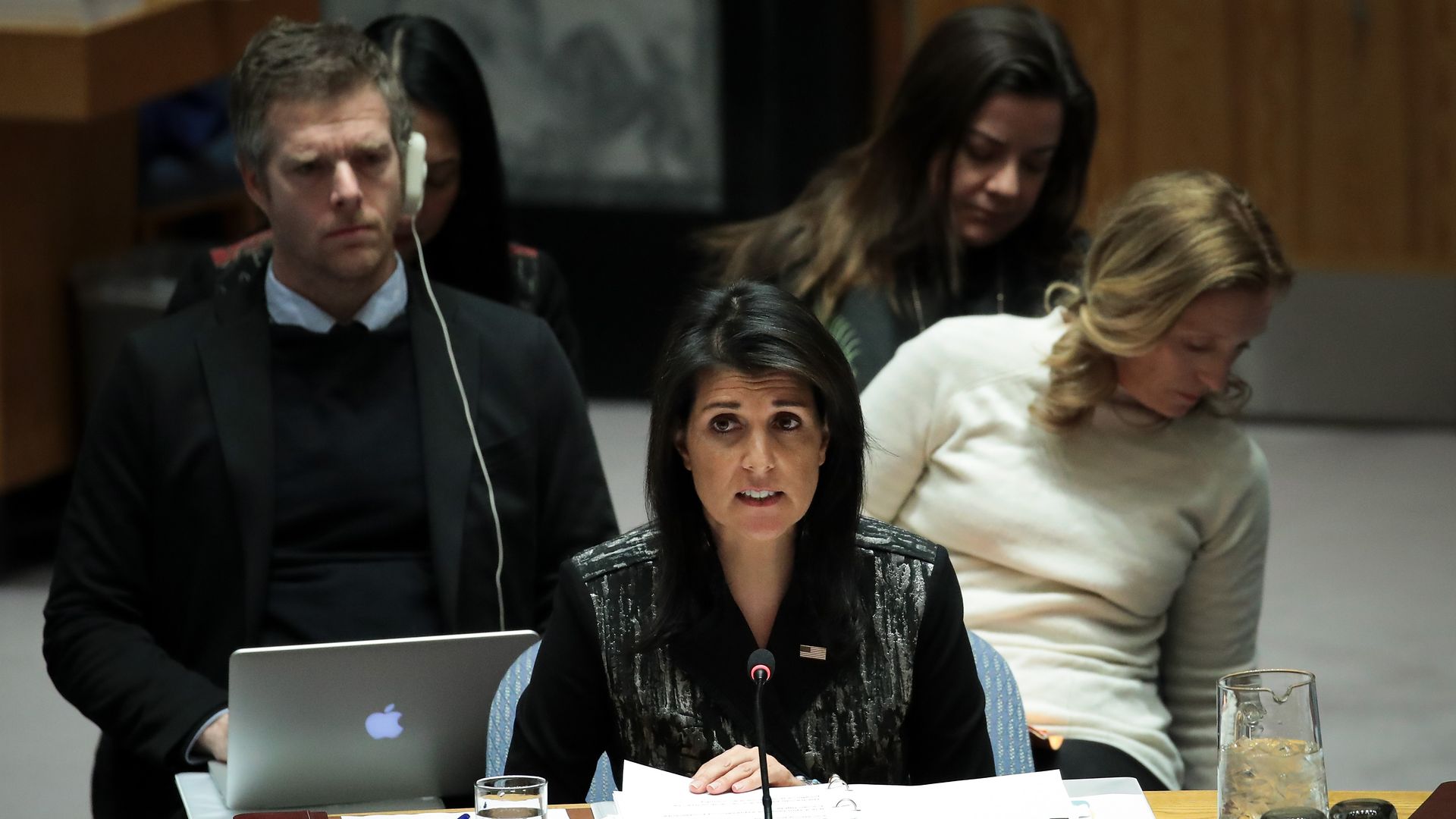
UN Ambassador Nikki Haley said at a UN Security Council meeting that the “U.S. believes that Russia is responsible” for the nerve agent attack on an ex-spy in the UK.
"This is a defining moment," she said. "One member stands accused of using a chemical weapon on the sovereign soil of another. The credibility of this council will not survive if we fail to hold Russia to account."
The backdrop: These are strong remarks from Haley, particularly compared to President Trump's comments yesterday, in which he hedged on whether Russia was responsible. Her comments follow British P.M. Theresa May's decision to expel 23 Russian diplomats and call on the security council to take up the matter.
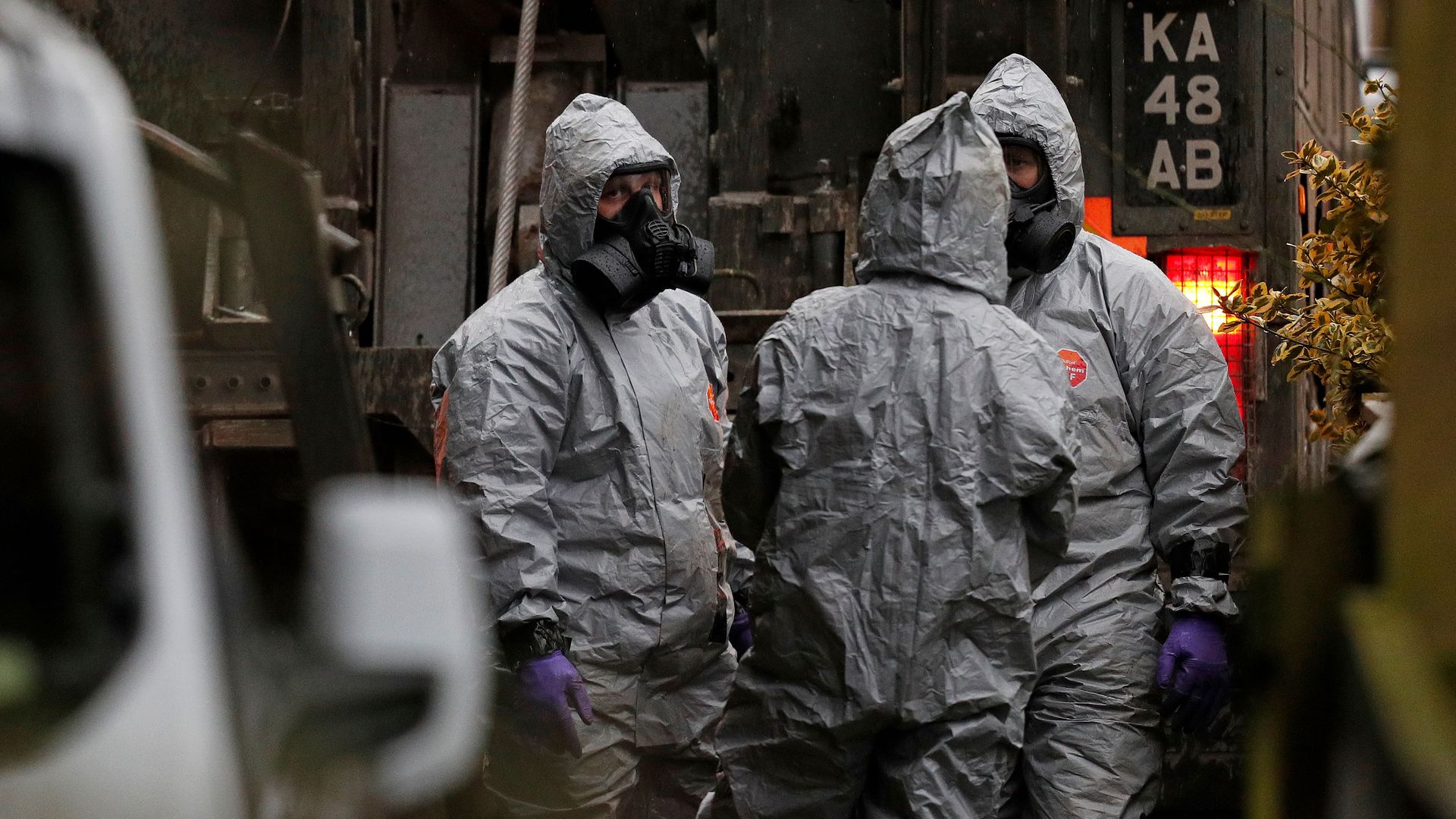
The U.K. announced today that it would expel 23 Russian diplomats and cut off high-level diplomatic contact with Russia, in response to the attempted assassination in London last week of Sergei Skripal, a former Russian intelligence agent.
Skripal was poisoned with Novichok, a dangerous nerve agent known to have been produced in Russia, which also infected his daughter. Individuals near the scene, some 500 in all, were advised to disinfect their belongings.
Why it matters: This attack is the latest in a string of Russia-linked assassinations on British soil, which include the 2006 polonium poisoning of Alexander Litvinenko, also a former Russian intelligence officer, and 14 other Russian nationals who died under mysterious circumstances, such as the oligarch Boris Berezovsky. Yet the Skripal case stands out as particularly egregious and escalatory.
President Trump's trade agenda may soon include restrictions on Chinese investment in U.S. companies, according to Politico.
Bottom line: No specific details have leaked, but this seemingly could curtail the strengthening trend of Chinese money plunging into U.S. companies, including Silicon Valley tech startups. If restrictions are applied to big spenders like Alibaba or Tencent, there could be severe retribution for U.S. investors who play heavily in China.
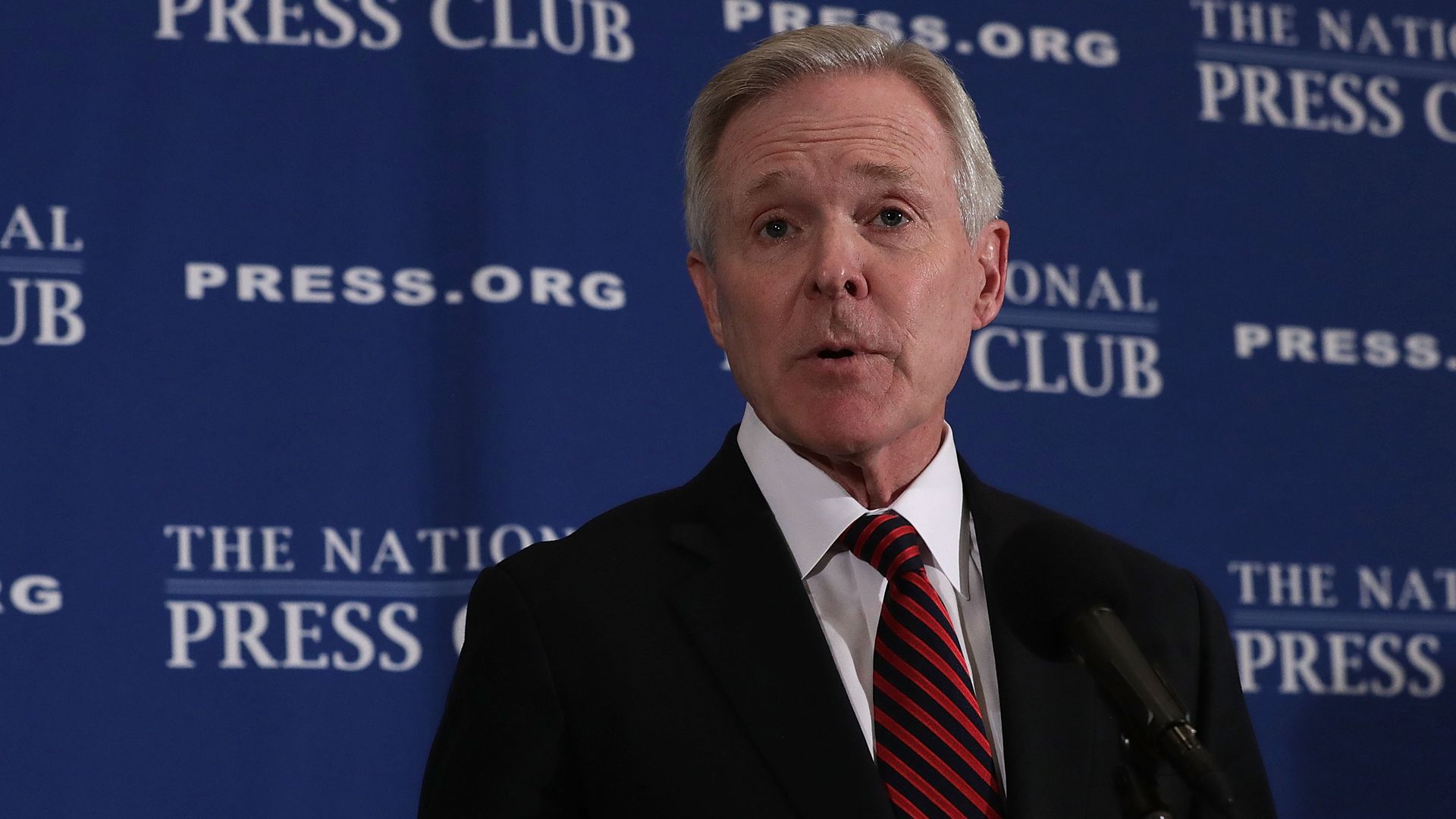
Secretary of the Navy Ray Mabus, who served under Barack Obama from 2009 to 2017, told Axios that government threat intelligence sharing during elections must improve or voters "won't have confidence that voting has not been tainted."
Why it matters: The Department of Homeland Security will, for the first time, share classified information with officials about cybersecurity threats during elections during the 2018 midterms, but there will still be kinks to work out. "You get silos of information in the government that are tough to break," noted Mabus.
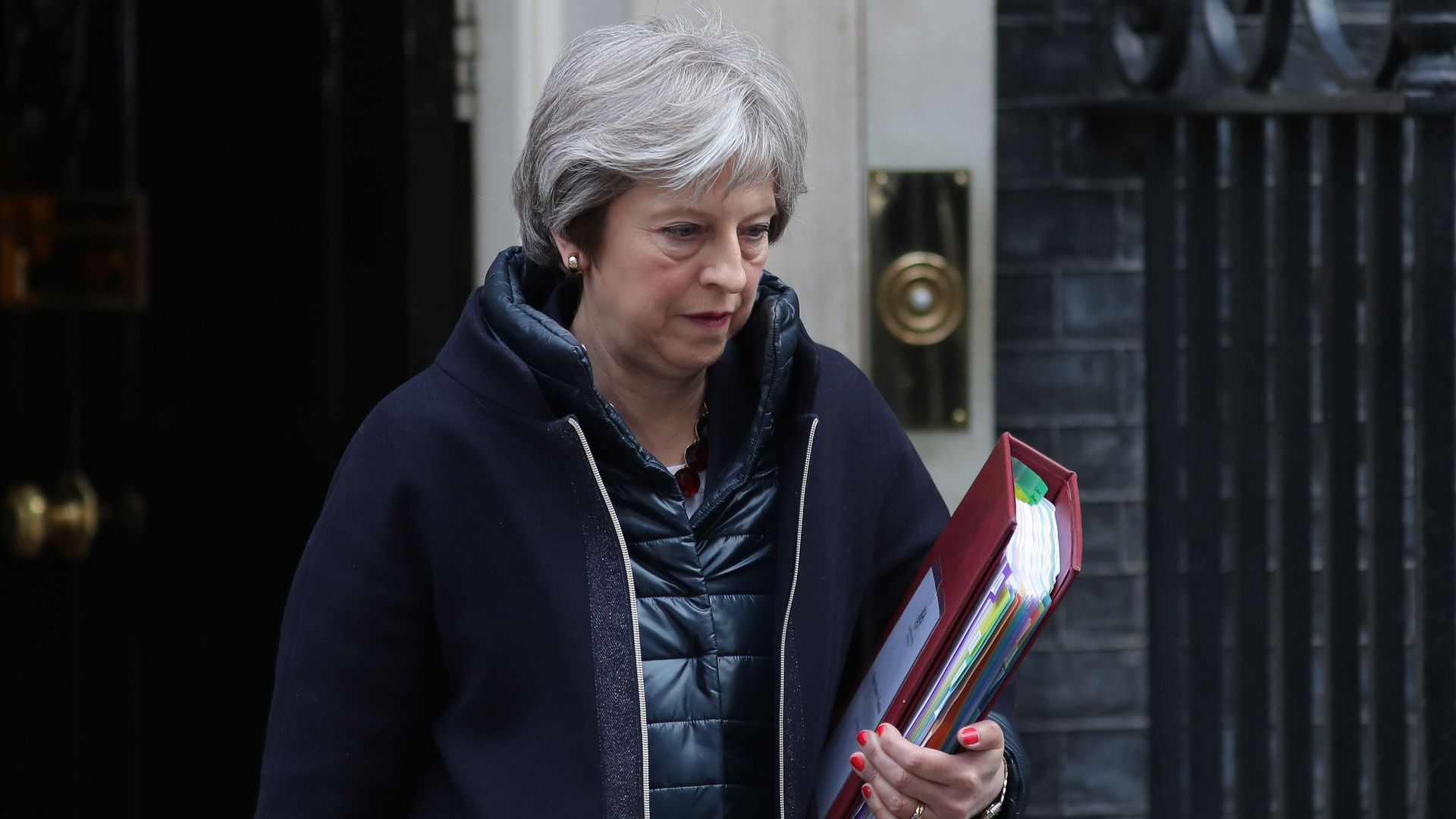
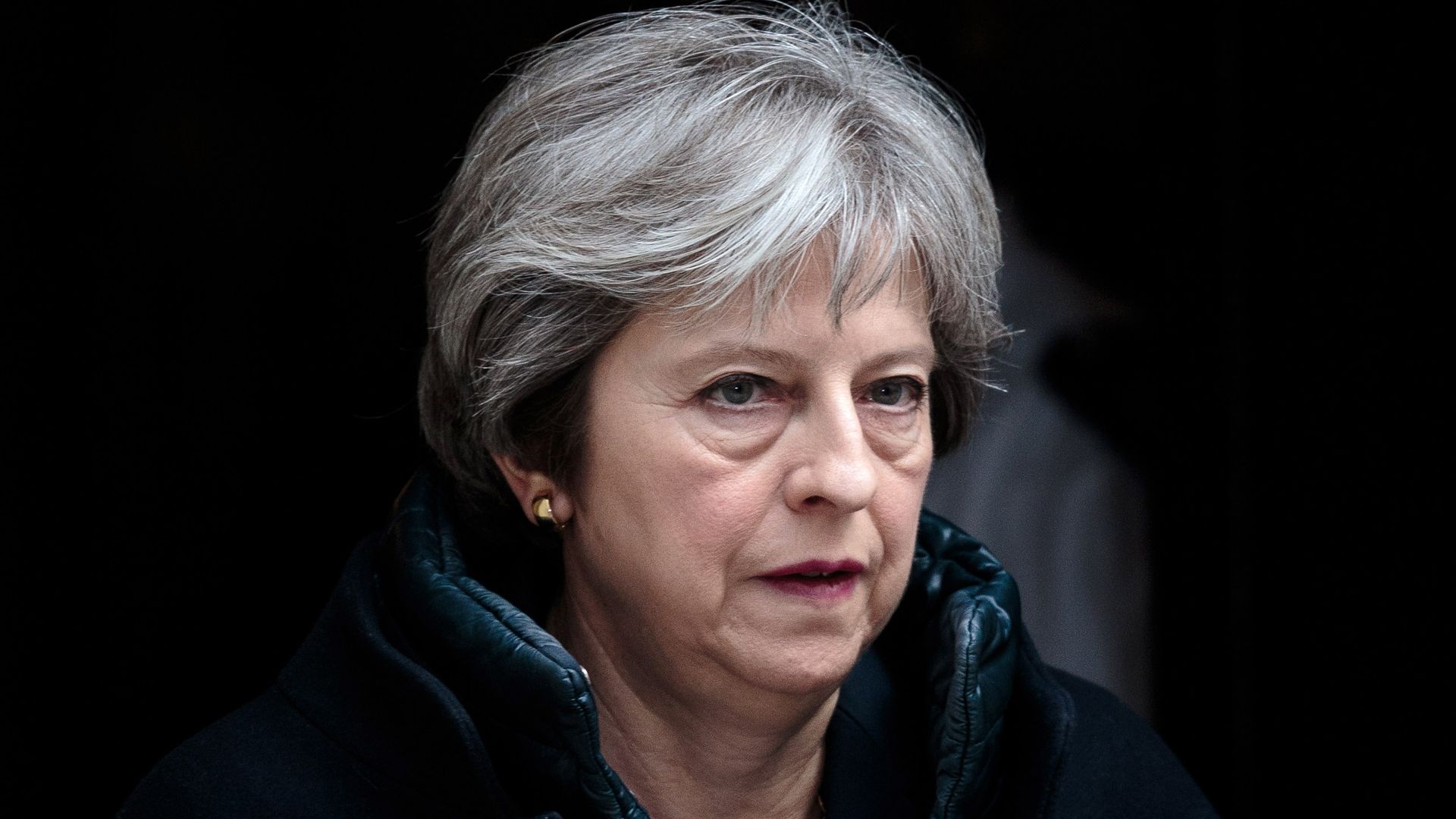
British Prime Minister Theresa May announced the expulsion of 23 Russian diplomats and other measures in response to the nerve agent attack on ex-spy Sergei Skripal and his daughter on British soil. She told the House of Commons today that "there is no alternative conclusion" other than Russia's culpability for the attack.
Why it matters: May's statement marks a huge escalation in tensions between the U.K. and Russia — especially as she chose to mention Russian President Vladimir Putin by name. She had notably harsh language for Russia's handling of the situation, saying that the Kremlin had "demonstrated complete disdain" for the attack and that Russia " treated the use of a military-grade nerve agent in Europe with contempt, sarcasm, and defiance."
The United Kingdom has called for an urgent meeting of the United Nations Security Council this afternoon to discuss the use of a Russian-manufactured nerve agent against ex- spy Sergei Skripal and his daughter on British soil, per the BBC. And, during a speech to the House of Commons later this morning, Prime Minister Theresa May is expected to announce a "significant" expulsion of Russian diplomats, according to Sky News.
The big picture: After May declared it "highly likely" that Russia was behind the attack during a speech on Monday, she gave the Kremlin a deadline of midnight last night to provide an appropriate response. Russia — at least publicly — continued to deny its involvement in the attack via a series of incendiary social media posts, prompting today's response from the U.K. Also today, all 29 NATO countries have asked Russia to answer the U.K.'s questions in a joint statement, per AFP's Danny Kemp.
The U.S. has “no ability” to build sources in North Korea and very limited opportunities to gather intelligence in North Korea, a former government official with experience negotiating with North Korea tells Axios. That leaves the U.S. in the dark on aspects of North Korea’s nuclear and missile development.
Why it matters: Trump is preparing to meet with North Korea's Kim Jong-un to discuss denuclearization, something Pyongyang has discussed in the past but never delivered. "Since we have no embassy there, we have no diplomatic relations with them, no real commercial interchange with them," there is little concrete information to offer policymakers, the former official said.