Washington has always viewed Silicon Valley as culturally strange. But the current crop of AI leaders is becoming a monumental political liability, lawmakers and White House advisers tell Axios.
Why it matters: Even pro-AI government officials and lawmakers wish AI founders would do what every other major industry chief does — shut up and just build their products ... safely.
By centering the conversation around digital sentience and global catastrophe, AI leaders are turning an already complicated regulatory debate into an impossible moral panic.
Media is changing at AI speed: the open web deteriorating, search shriveling, LLMs rising, hyper-personalization surging, old revenue models breaking.
AI threatens to finish what the algorithms started: wholly upending journalism as we know it. The only certainty: What follows will be as different as the pre- and post-digital eras.
After studying and experimenting with AI for the past two years, we're placing a series of big bets on how serious journalism can flourish in an AI world.
The big idea: We believe the value of verified, reported, distinctive truth and curated human connection will spike. The yearning for human connection, and demand for human expertise, will only increase.
AI tools have become shockingly good at carrying out much of the work produced by the economic profession — from the most elite halls of academia to think tanks, government agencies, consultancies, research shops and humble newsroom economics teams.
The big picture: This fact raises important — and, we confess, unnerving — questions about the role of humans in making sense of the economy.
On a recent evening near a secure U.S. facility, three federal agents saw a flying object they couldn't identify: a large "matte black triangle" that moved as fast as a fighter jet, made no sound and then disappeared, according to FBI and Defense Department reports.
Why it matters: The 15-foot flying triangle is classified as a UFO-like "Unidentified Anomalous Phenomena" because the U.S. doesn't have the technology to make such a craft — and neither do its adversaries.
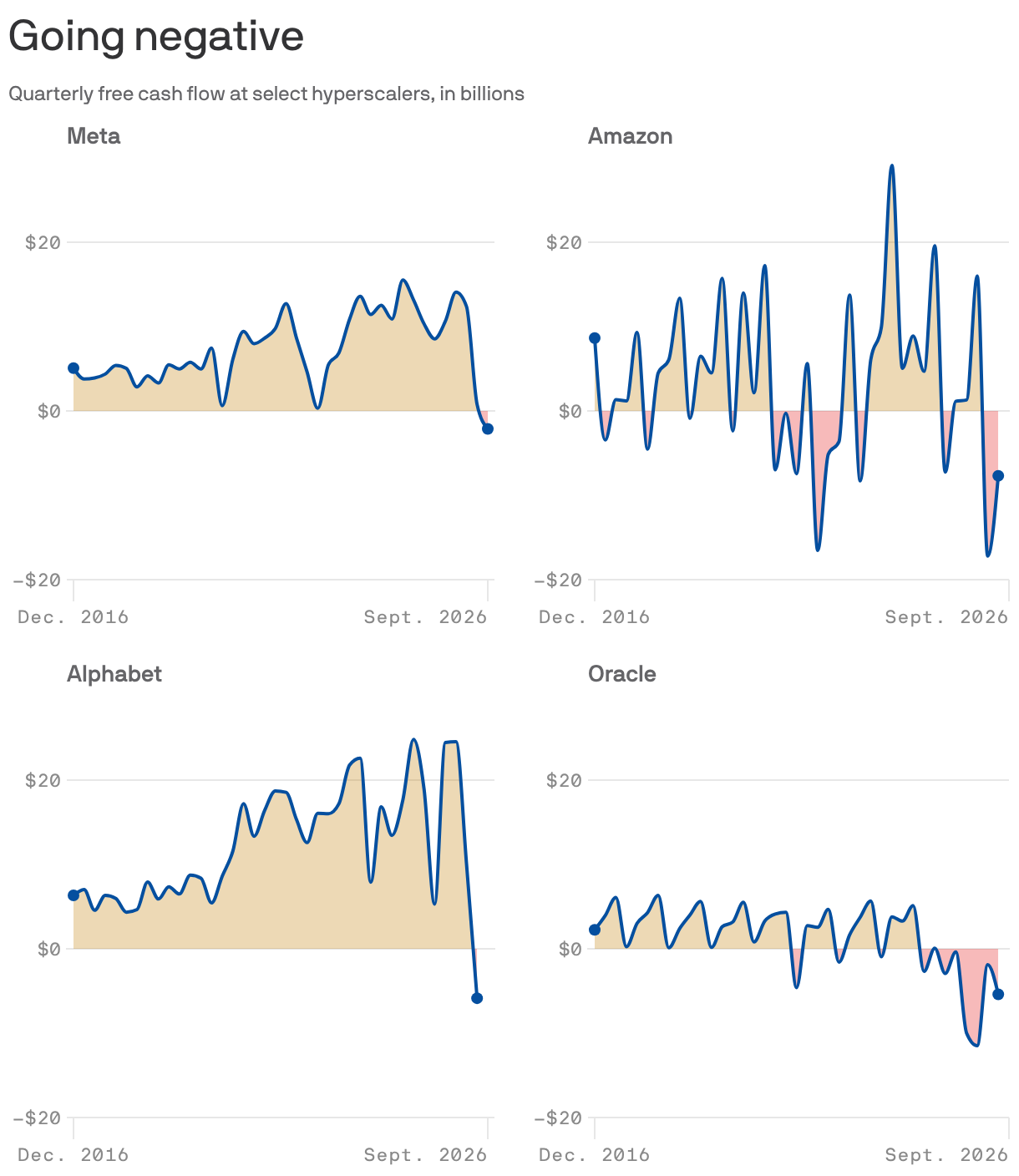
Data: FactSet, company filings; Chart Axios/Matt Phillips
Mark Zuckerberg's Meta got smacked around Thursday after reporting earnings that looked pretty strong at first glance.
Why it matters: Its drubbing in the stock market — Meta ended down 7% —suggests that investors are growing concerned that Big Tech's insistence on pouring more and more capital into data centers could end up costing them in the long run.
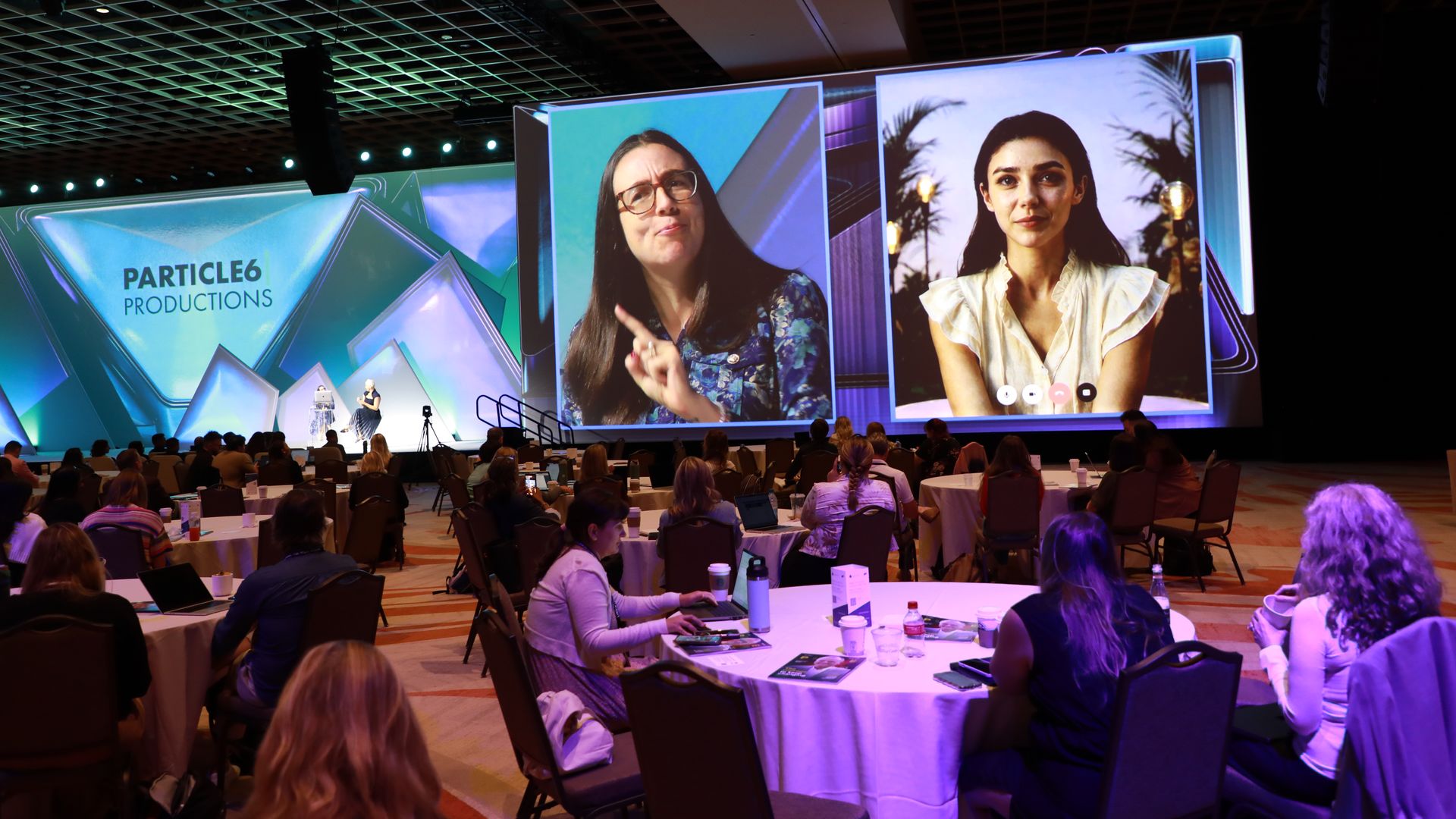
ORLANDO, Florida — I got roasted by "AI actor" Tilly Norwood in a room full of marketers.
Why it matters: The AI-generated character has attracted controversy over fears of synthetic talent replacing human jobs in Hollywood and in advertising.
America's largest banks are working to prevent AI worst-case scenarios. But they're also preparing for the "day after" a catastrophe, Axios has learned.
Why it matters: America's financial institutions have joined the largest AI companies in scenario-planning for disaster, a prudent but worrisome signal about the extent of the risk that major corporations see on the horizon.