Congress is urging the White House to respond to a growing AI cybersecurity threat: advanced models that can uncover software vulnerabilities faster than companies and governments can patch them.
Why it matters: A bipartisan letter, shared first with Axios, marks an escalation in pressure on the Trump administration to confront the risks posed by frontier AI cyber models like Anthropic's Mythos.
Anthropic is launching a new package for small businesses, betting that mom and pop shops, solo entrepreneurs and lean teams are the next big market for AI agents.
Why it matters: After spending years chasing enterprise contracts and consumer adoption, AI labs are now racing to win over small businesses — a challenging and largely untapped market defined by limited staffs and little time to experiment.
Palo Alto Networks says it found 75 vulnerabilities in its products — more than seven times the amount it usually finds in a month — after beginning to use advanced AI cybersecurity models from Anthropic and OpenAI.
Why it matters: The cybersecurity giant is among the first companies with access to Anthropic's Mythos Preview and OpenAI's GPT-5.5-Cyber, offering an early glimpse at what parts of the industry have started calling a coming "vulnpocalypse."
Anthropic surpassed OpenAI in business adoption for the first time in April, according to Ramp's latest AI Index.
Why it matters: As both companies race toward what could become some of the biggest IPOs in history, enterprise adoption — typically a larger revenue driver than customer usage — is a key metric for investors.
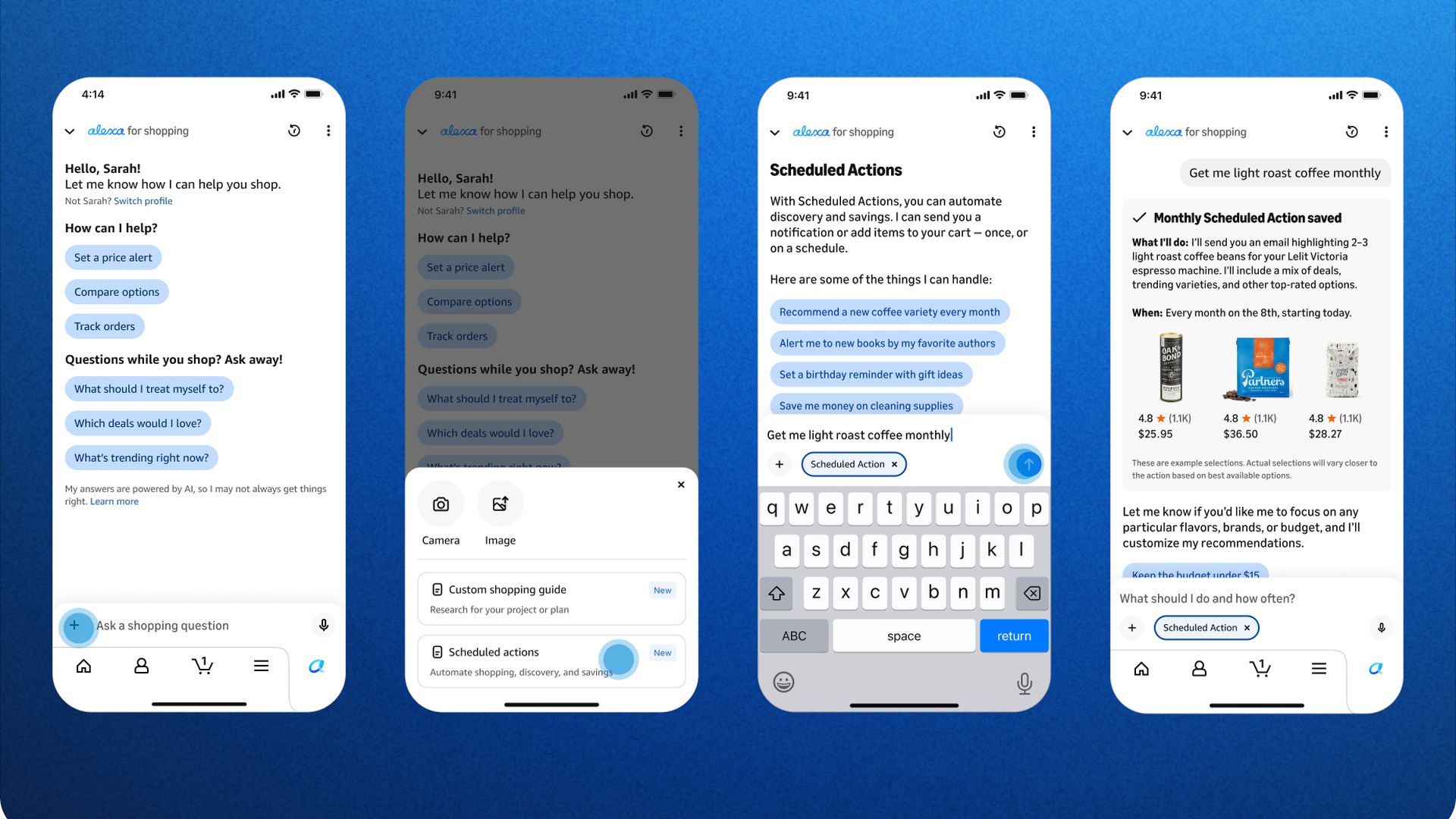
Amazon is making Alexa a more powerful shopping companion by folding its Rufus assistant into Alexa+.
Why it matters:AI shopping assistants are quickly moving from search boxes to software agents that can track prices, remember preferences, recommend products and eventually make purchases for consumers.
Semiconductors, or chips, are again turning out to be the It Girl of the global economy.
Why it matters: Chips are essential to the AI build-out, and that's driving a huge burst of demand, creating supply shortages, pushing up prices and creating an investment frenzy.
The U.S. Air Force wants to buy 206 upgraded electronic-warfare packages for the F-16 over the next few years, budget documents show.
Why it matters: The Lockheed Martin-made warplanes could be outfitted with Northrop Grumman's Integrated Viper Electronic Warfare Suite as soon as early 2028.
"This is, essentially, putting sixth-generation electronic warfare into a fourth-generation platform," Mark Sandor, Northrop's director of strategy and mission solutions, told Axios.
General Dynamics Information Technology and NightDragonhave teamed up and are on Wednesday making public their plans to accelerate U.S. government adoption of commercial and emerging tech.
Why it matters: Trump 2.0 is seeking new suppliers for the Pentagon and rewriting how the military does business.
Symbiotic relationships between traditional primes and smaller, venture-backed startups are emerging — and appear to be bearing fruit.
Reveal Technology is eyeingU.S. Army and Marine Corps biometrics programs as it rolls out its handheld Identifi system to hundreds of special operators.
Why it matters: Military biometrics is ripe for disruption, according to CEO Garrett Smith.
"When I started in the Marine Corps, there was a technology that we deployed with to Afghanistan," he said. "That is, essentially, the same technology that's been in place for like 20 years."
Chris Lehane, OpenAI's chief global affairs officer, fears the rising risk of unpopular AI and told us the solution might be a reorg of government and business. He offered two megapoints in a conversation Tuesday at OpenAI's new office in Washington:
The AI companies and government are so interdependent — the companies need light regs, contracts; government needs AI systems — that it might require a new public-private hybrid to manage them.
The AI companies could get crushed by bad politics if they don't find ways to share any wealth they create, much like Alaska shares oil & gas revenue with its residents. "People need to feel like they're gonna have a piece of this and participate in it," Lehane said. "You can't talk beyond people or above people. You need to talk with people and involve them in the conversation."
Disagreement among administration officials and a time crunch with President Trump's China summit are holding up efforts to launch a federal response to the next frontier of AI.
Why it matters: There's not yet any new federal AI regulation weeks after Mythos — Anthropic's most advanced model yet — threw Washington for a loop.
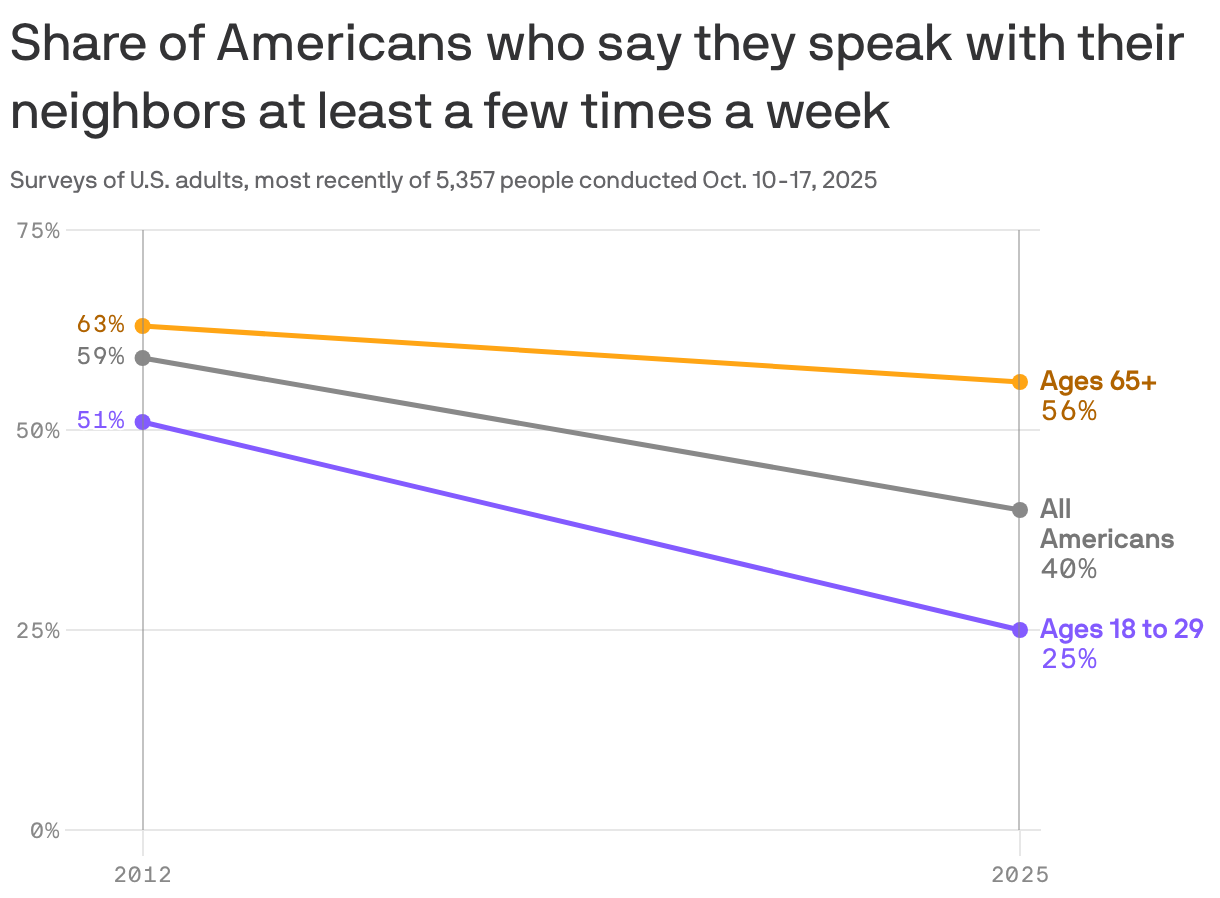
Americans are spending more time at home, yet many have become strangers to their neighbors — especially young Americans, who are increasingly unlikely to socialize with those living feet away.
Why it matters: Without casual conversations with neighbors — who are often from other races, or have different religions and political ideologies — people risk becoming more isolated and more dependent on superficial, algorithm-driven digital communities.
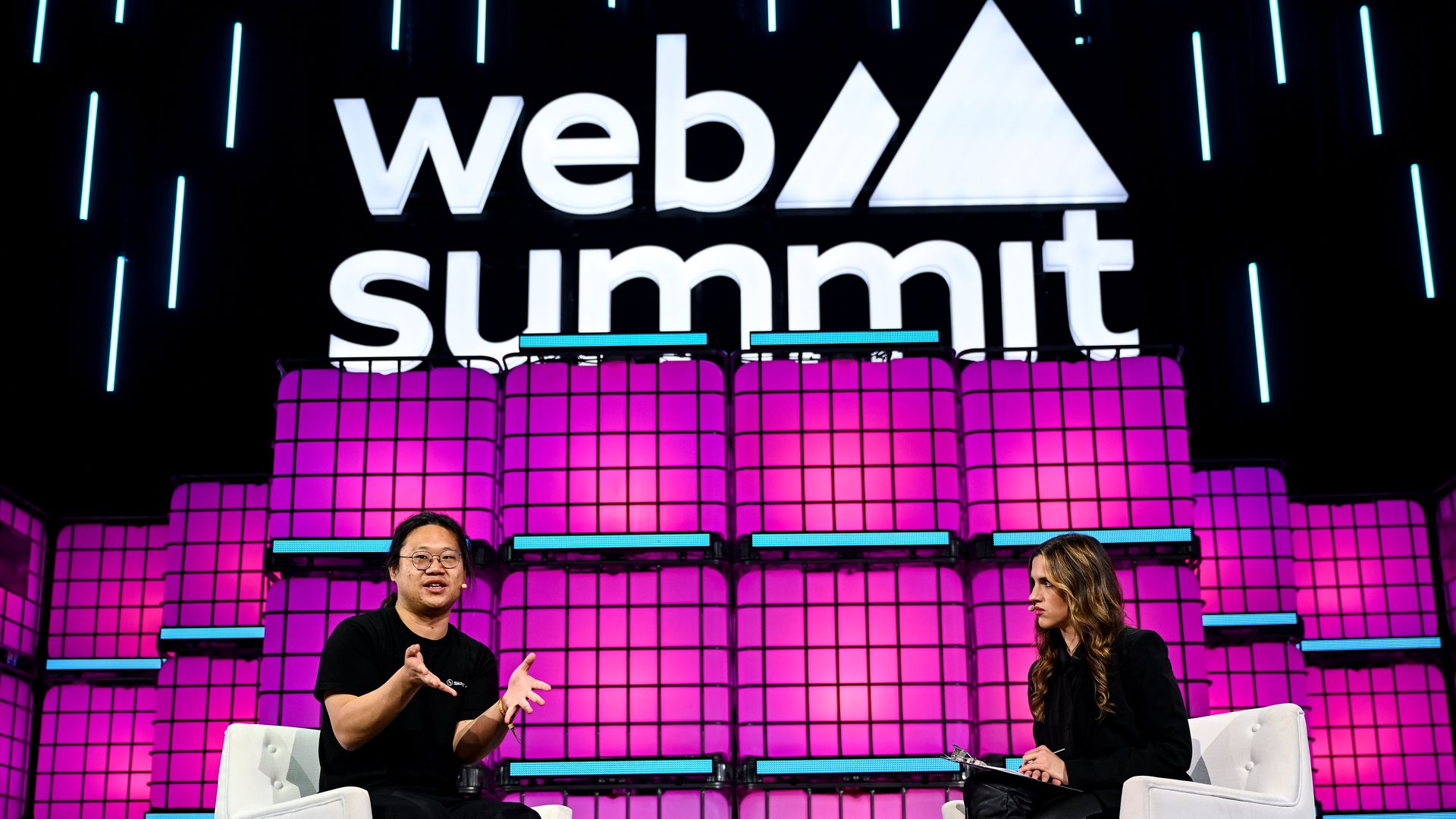
If you're worried you're falling behind on AI, developer Sigrid Jin has some advice: Use AI so much that your monthly bill rivals your rent.
Why it matters: Jin argues that tokenmaxxing, the practice of using as many AI tokens as possible, is the best way to understand the value of AI. He would know: Jin said he used 50 billion tokens in a single year.
OpenAI CEO Sam Altman's first turn on the witness stand Tuesday sharpened the central fight in Elon Musk's lawsuit: whether either man can be trusted to put AI safety ahead of money and control.
Why it matters: The testimony showed how hard it is for any AI leader to claim the moral high ground.