Formula One teams are increasingly turning to artificial intelligence to convert terabytes of data into winning decisions.
Why it matters: In a data-driven sport with big name sponsors and stiff competition, F1 teams need AI to succeed now and prepare for big changes the future.
Social media giants are investing heavily in tools and specialized apps that make it easier for users to create and edit their own short-form videos.
Why it matters: As more engagement shifts to short-form video, tech platforms want to hedge against users becoming too passive and not sharing their own creations.
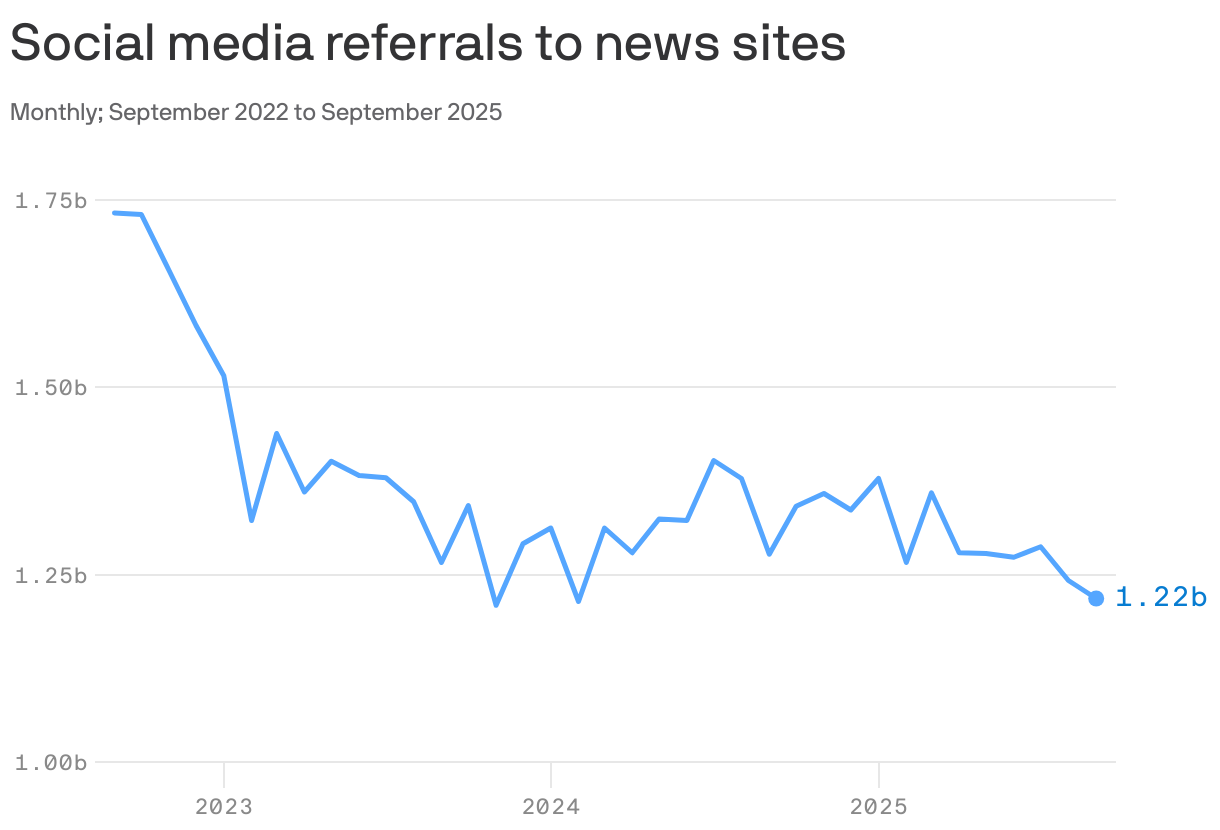
Data: Similarweb; Note: Analysis of top 100 news and media domains globally. Social media platforms include Facebook, X (formerly Twitter), Reddit, YouTube, LinkedIn and more. Chart: Axios Visuals
Social media traffic referrals to the top 100 global news sites have decreased by about 30% over the last three years, according to data from Similarweb.
Why it matters: The shift to short-form video on platforms like Instagram and Facebook has made it harder for link-based posts to break through.
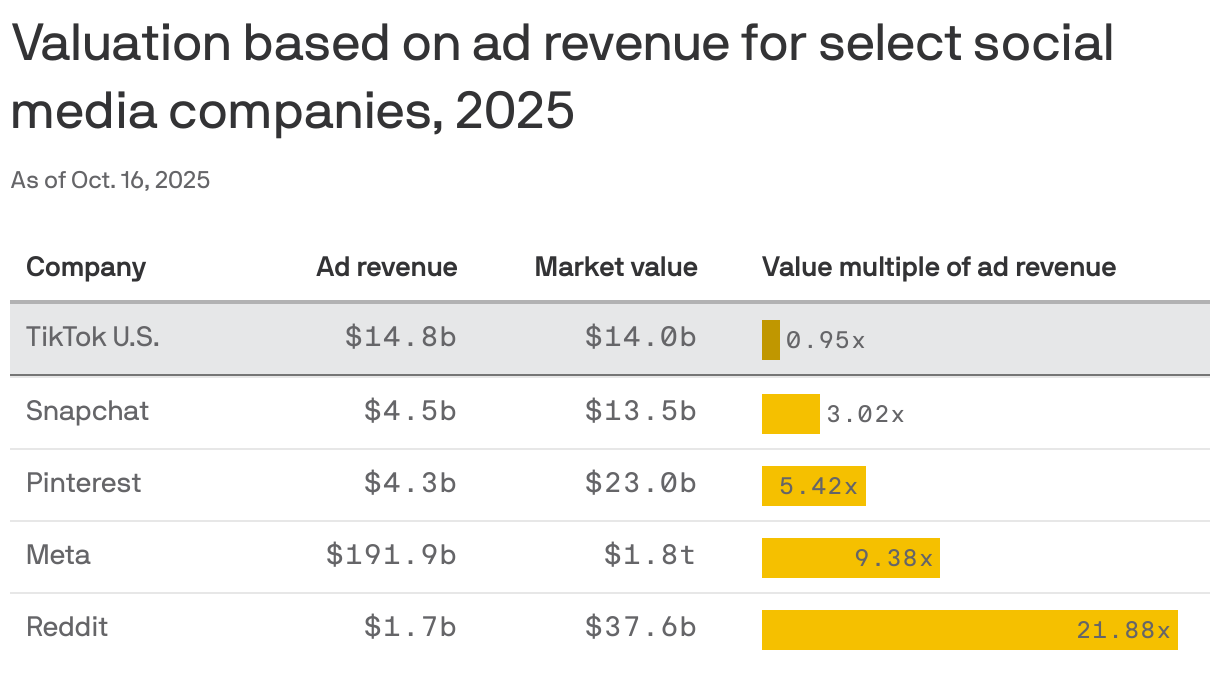
Data: eMarketer, Axios research; Note: Meta, Pinterest, Reddit and Snapchat multiples were derived from global ad revenue forecasts, while TikTok U.S. was calculated using U.S. ad revenue projections. Chart: Axios Visuals
ByteDance's fire sale deal to sell TikTok U.S. dramatically undervalues the asset compared to other ad-supported social media giants.
Why it matters: The new U.S. entity, valued at only $14 billion, is a clear sign of how desperate ByteDance was to sell the app to avoid potential legal battles over U.S. national security law that would have banned the app if it wasn't sold.
Software giants have spent more than a decade building apps that rely on smartphones they don't control. Now, those companies are looking to personal computing devices — mostly smart glasses — as their next big opportunity for growth.
Why it matters: Investing in personal, AI-powered hardware will free companies like Meta, Snap and Amazon from relying on Apple and Google's operating systems.
The AI era has accelerated sweeping changes across social media, search and advertising, unlocking new capabilities and testing industry conventions.
Why it matters: The pace of progress has overhauled investment priorities and platform policies as the media ecosystem tries to adapt to the new normal.