Social media giants are investing heavily in tools and specialized apps that make it easier for users to create and edit their own short-form videos.
Why it matters: As more engagement shifts to short-form video, tech platforms want to hedge against users becoming too passive and not sharing their own creations.
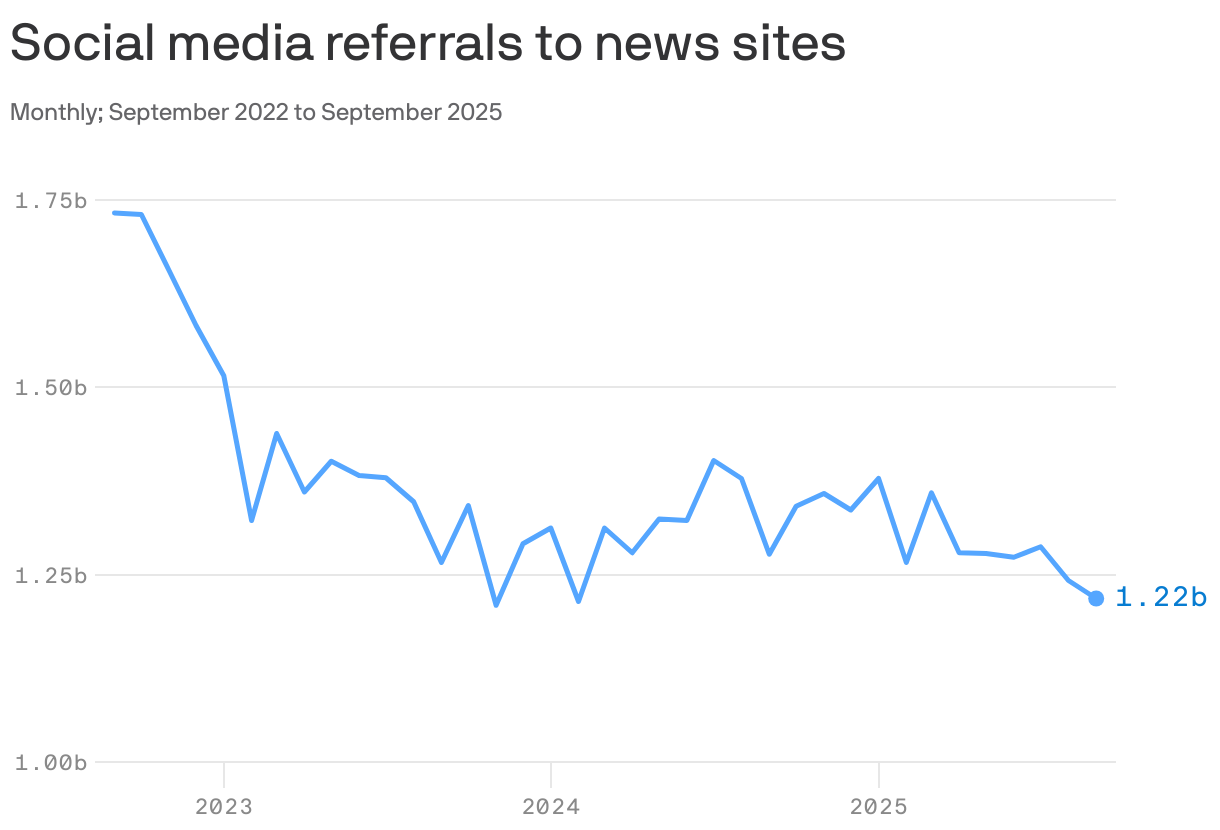
Data: Similarweb; Note: Analysis of top 100 news and media domains globally. Social media platforms include Facebook, X (formerly Twitter), Reddit, YouTube, LinkedIn and more. Chart: Axios Visuals
Social media traffic referrals to the top 100 global news sites have decreased by about 30% over the last three years, according to data from Similarweb.
Why it matters: The shift to short-form video on platforms like Instagram and Facebook has made it harder for link-based posts to break through.
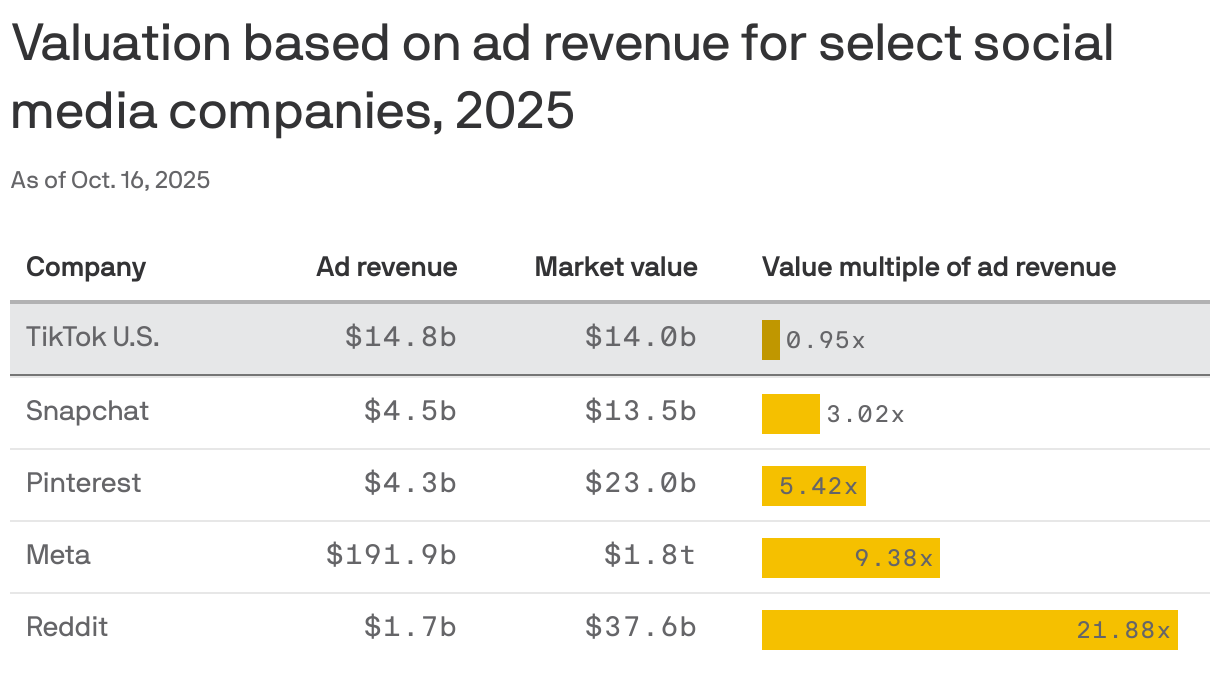
Data: eMarketer, Axios research; Note: Meta, Pinterest, Reddit and Snapchat multiples were derived from global ad revenue forecasts, while TikTok U.S. was calculated using U.S. ad revenue projections. Chart: Axios Visuals
ByteDance's fire sale deal to sell TikTok U.S. dramatically undervalues the asset compared to other ad-supported social media giants.
Why it matters: The new U.S. entity, valued at only $14 billion, is a clear sign of how desperate ByteDance was to sell the app to avoid potential legal battles over U.S. national security law that would have banned the app if it wasn't sold.
Software giants have spent more than a decade building apps that rely on smartphones they don't control. Now, those companies are looking to personal computing devices — mostly smart glasses — as their next big opportunity for growth.
Why it matters: Investing in personal, AI-powered hardware will free companies like Meta, Snap and Amazon from relying on Apple and Google's operating systems.
The AI era has accelerated sweeping changes across social media, search and advertising, unlocking new capabilities and testing industry conventions.
Why it matters: The pace of progress has overhauled investment priorities and platform policies as the media ecosystem tries to adapt to the new normal.
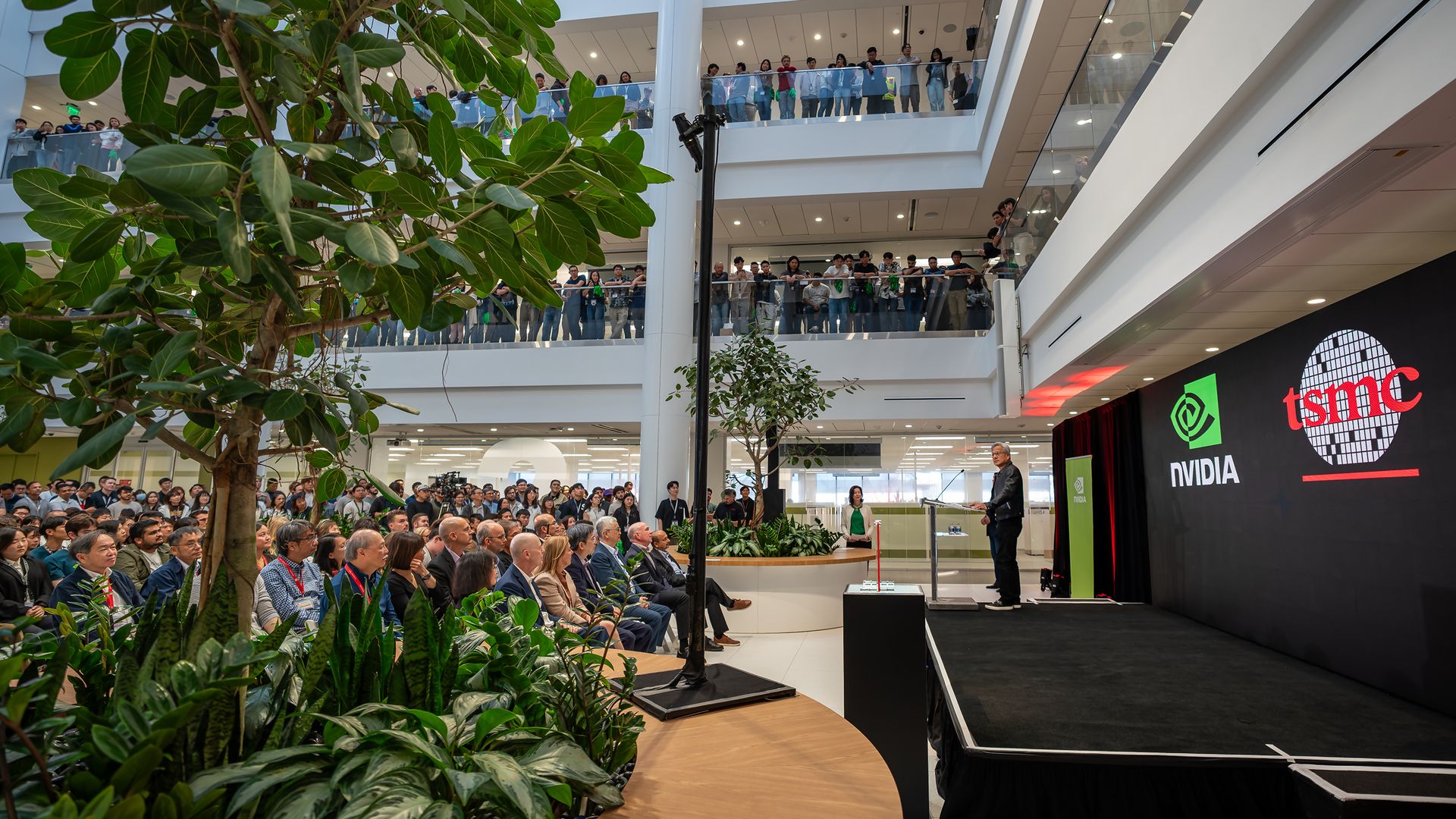
Nvidia and TSMC announced Friday their first completed U.S.-made wafer that will eventually become Blackwell chips for AI purposes, Nvidia first tells Axios.
Why it matters: This milestone represents some of the first fruits of the Trump administration's push to build AI technology in the U.S., and stay ahead in the race to control the future of artificial intelligence.
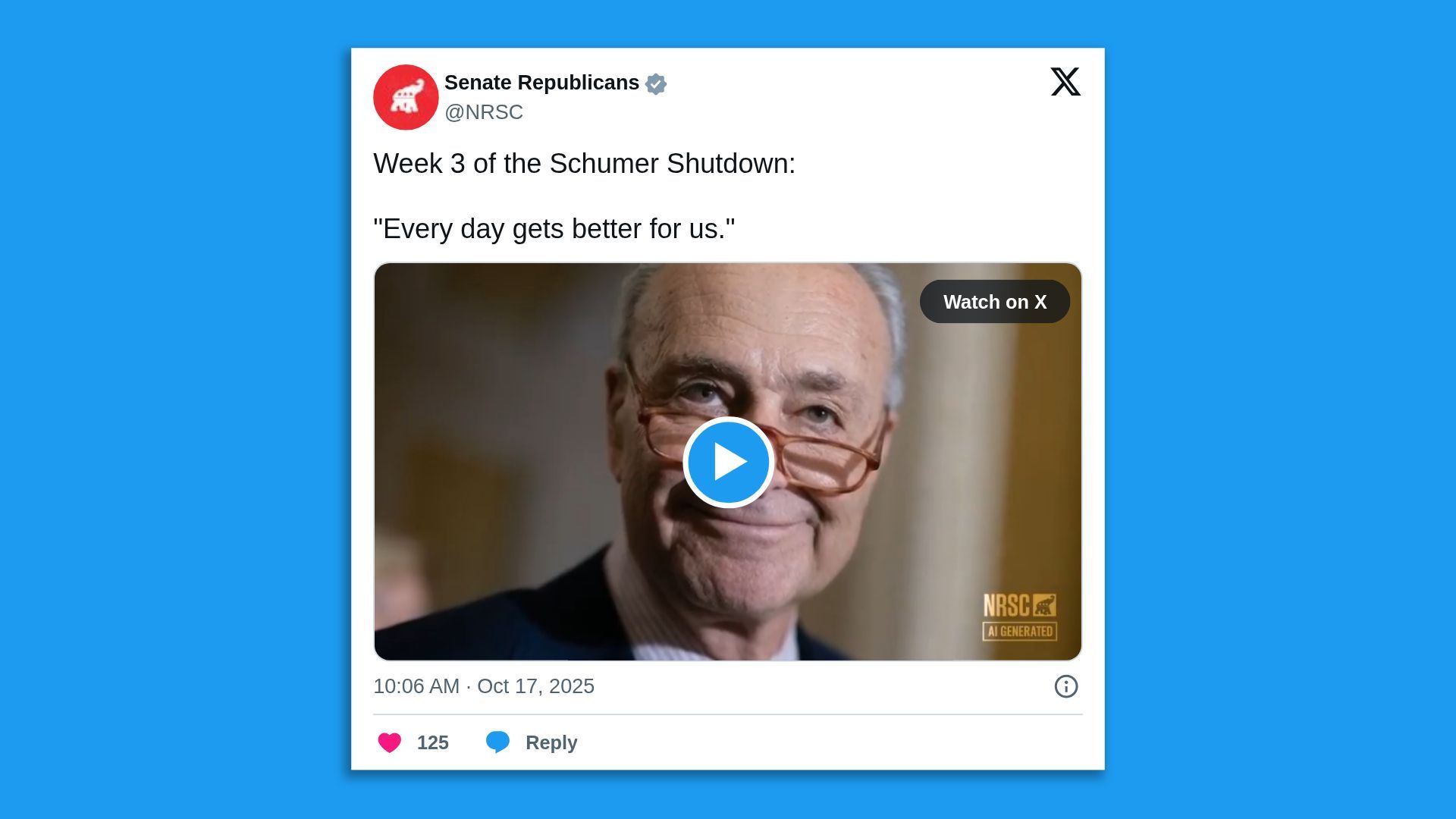
The National Republican Senatorial Committee posted an AI-doctored video today that features Schumer saying — with a grin — that "every day gets better" for Democrats during the shutdown.
The quote is real. But he never said it on camera.
Why it matters: There's a lot more of this coming fast in the AI era.
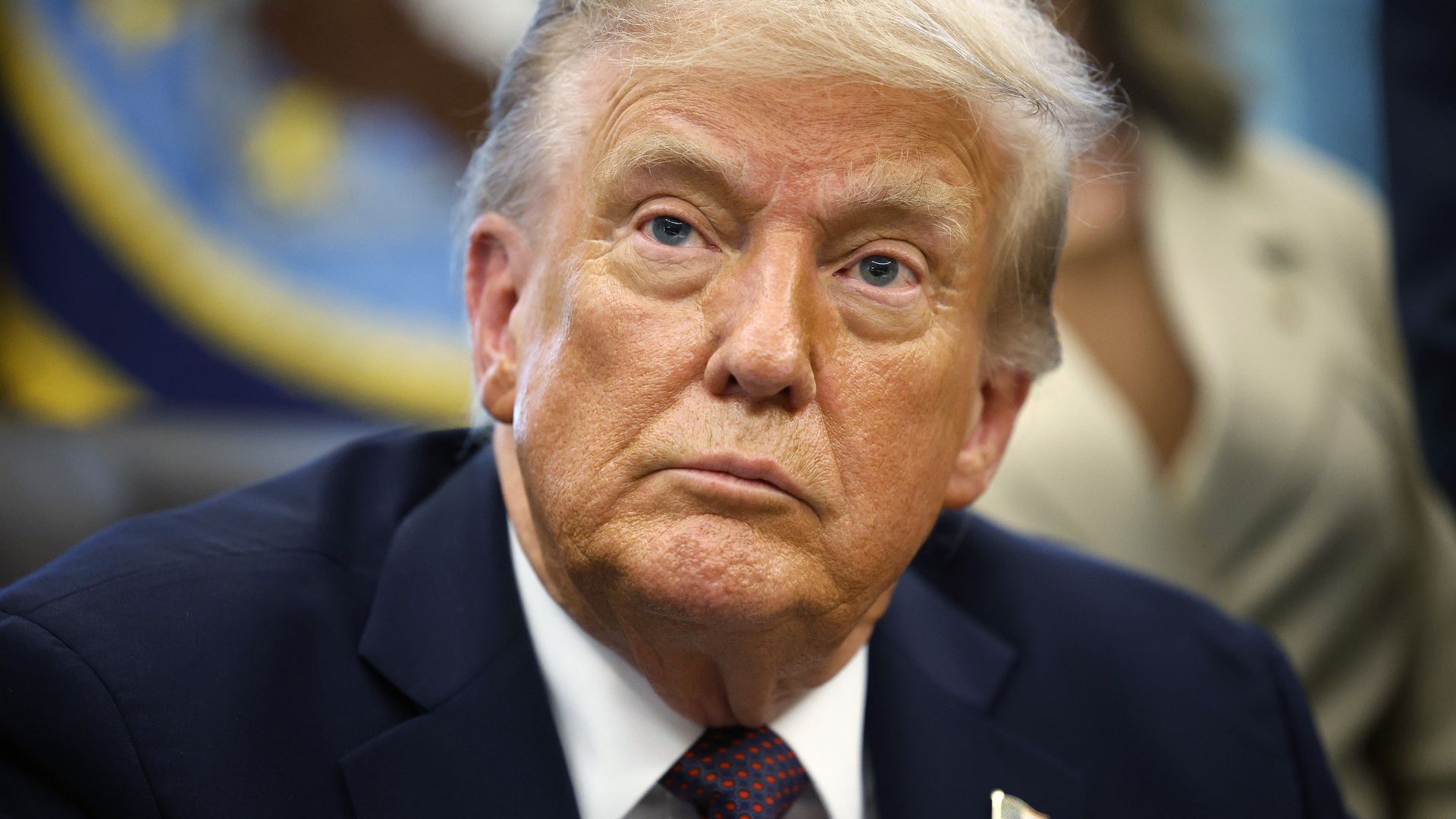
President Trump sent wayward Republicans a loud message last week: Cross me at your own peril.
Why it matters: Trump's eleventh-hour decision to endorse Republican Matt Van Epps in a contested Tennessee House primary — which vaulted Van Epps to a lopsided win — showed he has the power to decide GOP primaries with a single post on his Truth Social account.
As global tensions reshape the business landscape, geopolitics is a core concern in every boardroom. In this episode, PwC Partner Michelle Horton and Axios Creative House Host Ryan Heath explore how leaders can turn geopolitical uncertainty into strategic advantage.
As policy shifts, digital disruption, and rising energy demands redefine the global economy, leaders are rethinking how to turn change into opportunity. PwC Partner Erika Ryback, who specializes in real estate strategy and workplace transformation, and Axios Creative House Host Ryan Heath explore where growth is happening now, and what's driving it.
Our world has become increasingly affected by shifting tariffs, evolving trade policies and constant disruption. Supply chains can be both a source of risk and a wellspring of opportunity.
PwC Principal Carla DeSantis and Axios Creative House Host Ryan Heath explore how leaders can turn short-term challenges into long-term advantages with:
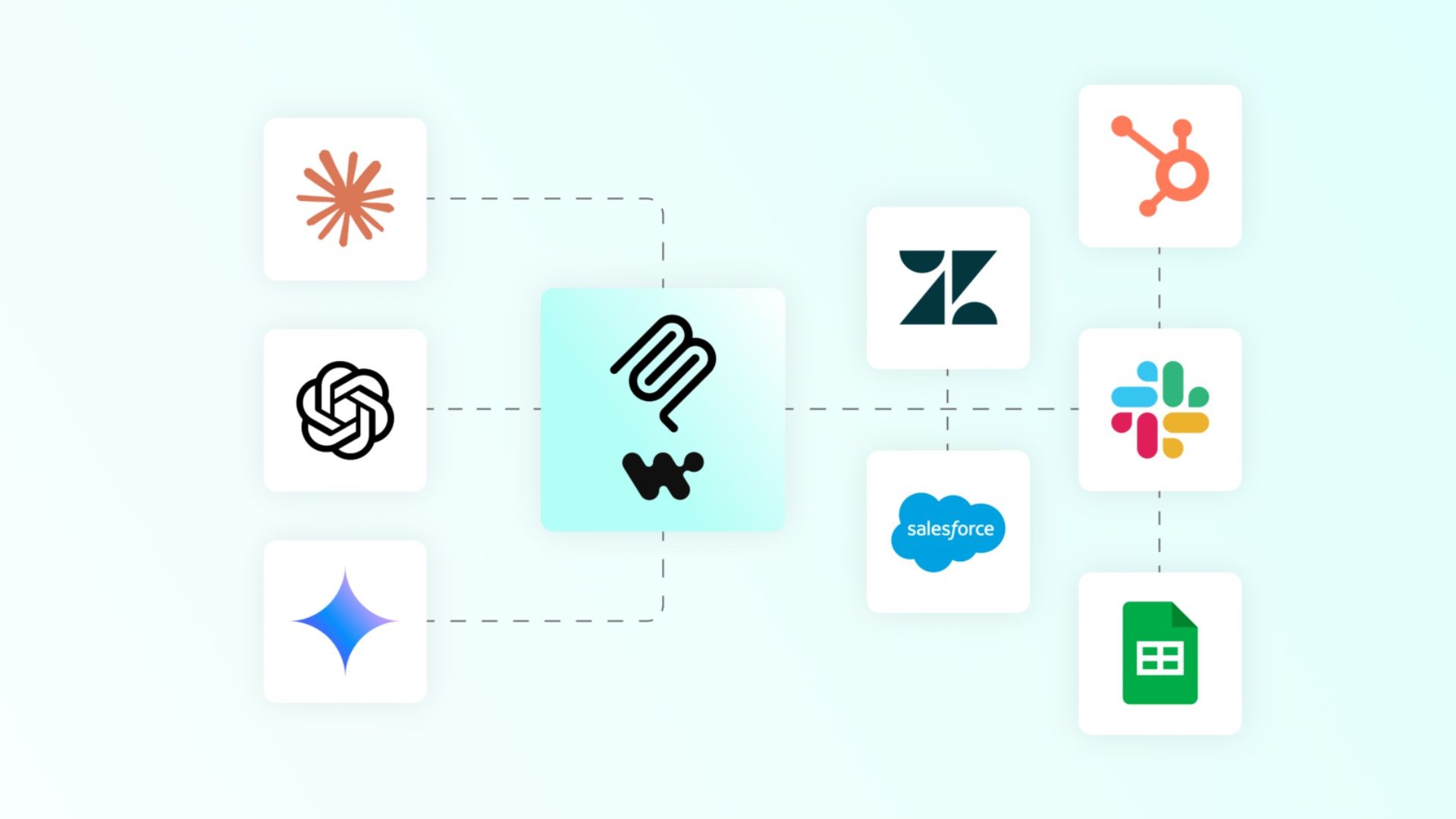
The story: Workato just introduced Workato Enterprise Model Context Protocol (MCP), the industry's fastest, most secure and complete solution for enabling organizations to put AI to work with relevant data and carry out real work in applications.
Apple and Formula 1 on Friday announced a five-year media rights deal that will bring all races exclusively to Apple TV in the United States, beginning in 2026.
Why it matters: The deal, which is reportedly valued at roughly $140 million annually, represents a significant milestone in F1's evolution and growth in the U.S.
They have performance reviews. Human managers. Email addresses. Logins. But they're not human. BNY Mellon says it has over 100 digital employees working on everything from payment remediation to engineering and code repair.
Why it matters: The bank's AI strategy is among the most aggressive on Wall Street as it seeks to increase productivity and enhance profits, though the firm says AI will not affect headcount.
San José is releasing a request for proposals to develop a custom generative AI platform for its more than 7,000 city employees, Mayor Matt Mahan's office announced.
Why it matters: San José is going all-in on using AI to transform city services.
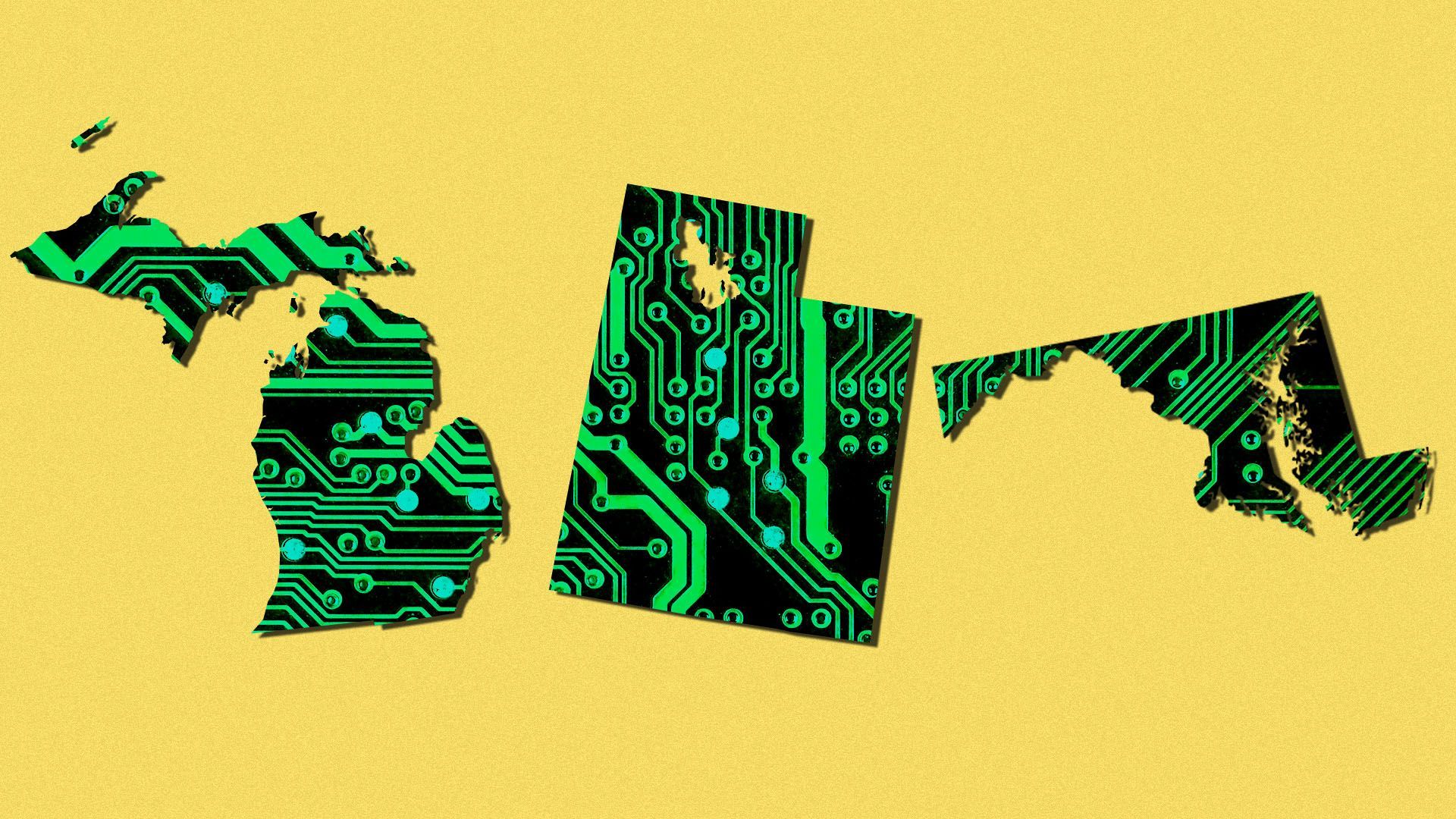
We're back with the second part in our state AI series featuring a peek behind the curtain at how Michigan, Utah and Maryland are using AI and thinking about guidelines around the technology.
Why it matters: States have a unique flexibility to test, deploy and set their own rules for AI as the federal government trails behind on legislation and regulation.
California Gov. Gavin Newsom signed a flurry of tech regulation bills, but it's the legislation he vetoed this week that could shape the national debate over kids' online safety.
Why it matters: The governor's decision underscores the tension between protecting minors and encouraging AI innovation.