James Lindsay built a multi-million dollar snack empire merging hip-hop and culture

Add Axios as your preferred source to
see more of our stories on Google.
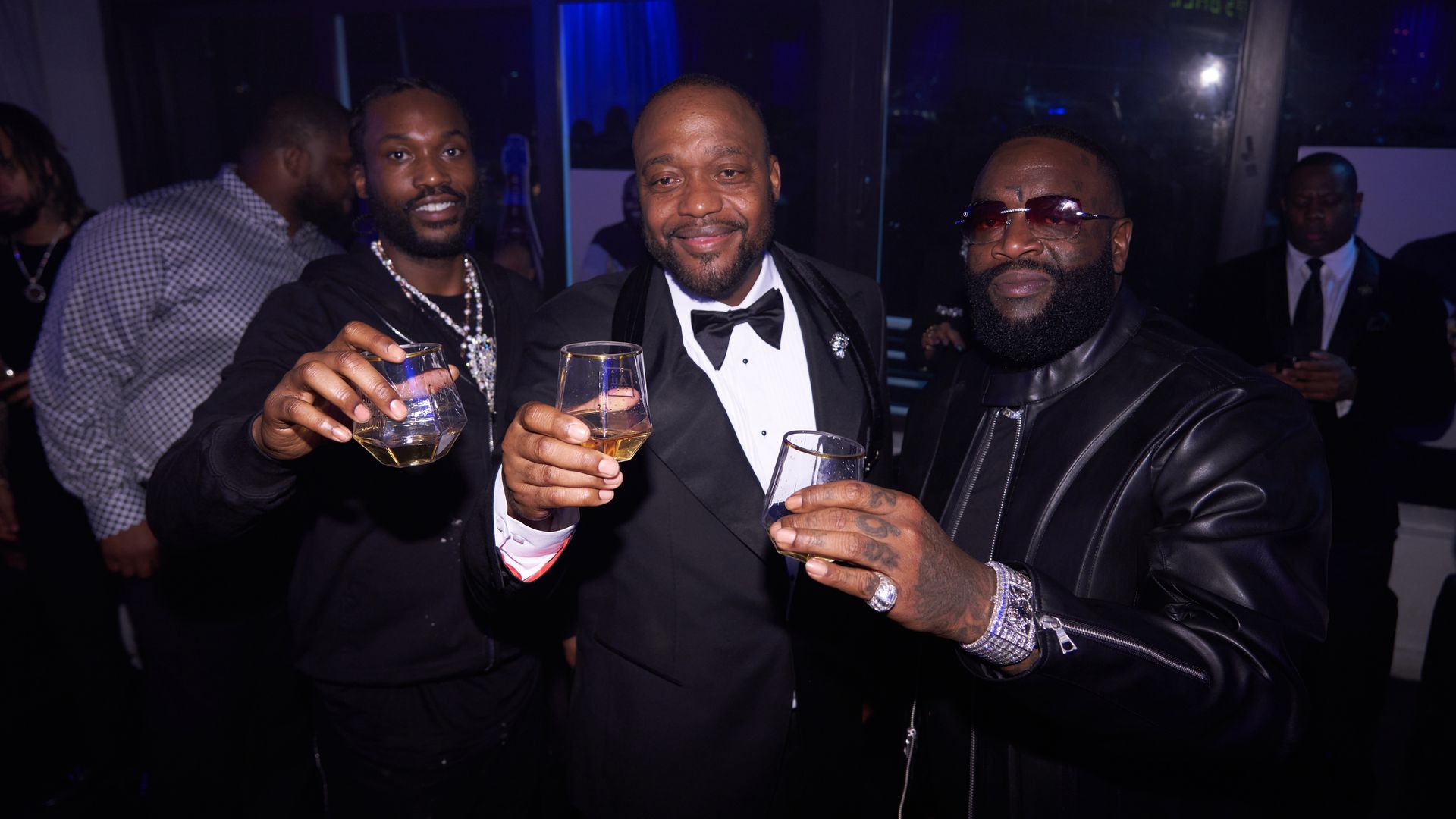
Meek Mill, James Lindsay and Rick Ross attend 2nd Annual Rap Snacks Disrupt Summit Founder's Ball at Briza On The Bay on Jan. 11, 2024 in Miami, Florida. Photo: Romain Maurice/Getty Images)
James Lindsay, the founder and CEO of Rap Snacks, has carved out a unique niche in the consumer goods industry by merging his passion for snacking and hip-hop culture.
The big picture: A native of Philadelphia and an alumnus of Cheyney University, Lindsay's entrepreneurial path reflects roughly 30 years of dedication, creativity and guidance.
- Starting with a $40,000 loan from friends and family, Lindsay has built a debt-free multimillion-dollar company fueled by the fastest-growing convenience store potato chip brand in the U.S.
Driving the news: In 2025, Rap Snacks will celebrate its 30th anniversary, continuing its legacy as a cultural staple in the era following hip-hop's monumental 50th anniversary.
What they're saying: "Hip-hop was on the rise then (1995), and I saw an opportunity to merge snacking with music," Lindsay told Axios.
- "I wrote down the idea for Rap Snacks one night and called a manufacturer the next day. Despite knowing little about the snack industry, I developed the product, sold 800 cases in two months, and the rest is history."
Catch up quickly: While working as a sales rep for Johnson Products Company, Lindsay developed a love for consumer goods and learned about product distribution under George E. Johnson, the founder of Johnson Products, a mentor who significantly influenced his entrepreneurial journey.
- "I didn't even know I was being mentored back then, but working with Mr. Johnson, I learned so much about business and persistence."
- Then, Lindsay noticed that snack products in local corner stores didn't represent Black culture or resonate with urban youth.
- "Mentors taught me about product distribution, packaging, and marketing—skills I didn't have when I started."
Zoom out: Rap Snacks has featured major artists like Cardi B and the Migos, but the original packaging had a generic mascot, "MC Potato," until Lindsay pitched Universal Music Group, offering to feature their artists on his bags.
- "They loved the concept and even paid us to advertise their artists," he said. "Over time, we expanded partnerships to include artists. These collaborations made Rap Snacks a cultural phenomenon."
- In 2010, he worked with Meek Mill to connect his brand with corporate America. They secured partnerships with companies, such as Puma, Monster Energy Drink, and Ciroc.
- "That experience showed me the power of leveraging hip-hop culture to create value in the corporate world."
Zoom in: In 2017, Rap Snacks expanded into other food categories, including noodles, cereals, rice, candy, and even honey buns.
What's next: Lindsay owns several brands, including Mr. G Snacks and a better-for-you line called "Do the Right Thing," which offers vegetable-based snacks. He's also launching a new brand to compete with Takis.
- "My goal is to have a presence in every store aisle," he said.
Lindsay says his climb to success proves that cultural representation and business savvy can reshape industries—and he hopes to inspire the next generation of entrepreneurs to dream just as boldly.
- "We're setting an example for other brands to embrace diversity without fear that it won't sell," Lindsay said. "Our products not only resonate culturally but also deliver superior taste, ensuring repeat customers."
Asked what advice Lindsay would give aspiring entrepreneurs, he said, "love what you do," treat people with respect and don't rush.
- "If you're only in it for the money, sustaining the energy needed to overcome challenges is hard," he said.
