Clio, a Canadian legaltech company, has raised $900 million in Series F funding at $3 billion valuation led by NEA, with Goldman Sachs, Sixth Street, CapitalG, and Tidemark also participating.
Why it matters: Companies have been throwing AI at every business category, but legal applications seem to have really convinced investors to cut big checks.
The Democrats haven't officially chosen their new presidential candidate, but if they go with Kamala Harris, the business and tech world could get a slightly friendlier face than Joe Biden.
Why it matters: The Republican ticket is a bit of a mixed bag — while Donald Trump has taken somenew pro-tech positions lately, he's also chosen a former venture capitalist as his running mate in J.D. Vance, who supports FTC chair Lina Khan's aggressive antitrust moves.
As the Olympic Games kick off in Paris on Friday, cyber experts are on guard for what could be a tsunami of website takedowns.
Why it matters: Distributed denial of service (DDoS) attacks are typically viewed as nuisances in the cybersecurity world — but when they're successful they can severely impact online services or live events.
PARIS — When the Paris Olympics kick off Friday, 200+ Samsung smartphones will provide a unique lens to viewers as athletes from around the world travel by boat along the Seine River.
Why it matters: The first-of-its-kind opening ceremony brings new challenges. But Olympics sponsor Samsung also saw an opportunity to incorporate its technology into the broadcast.
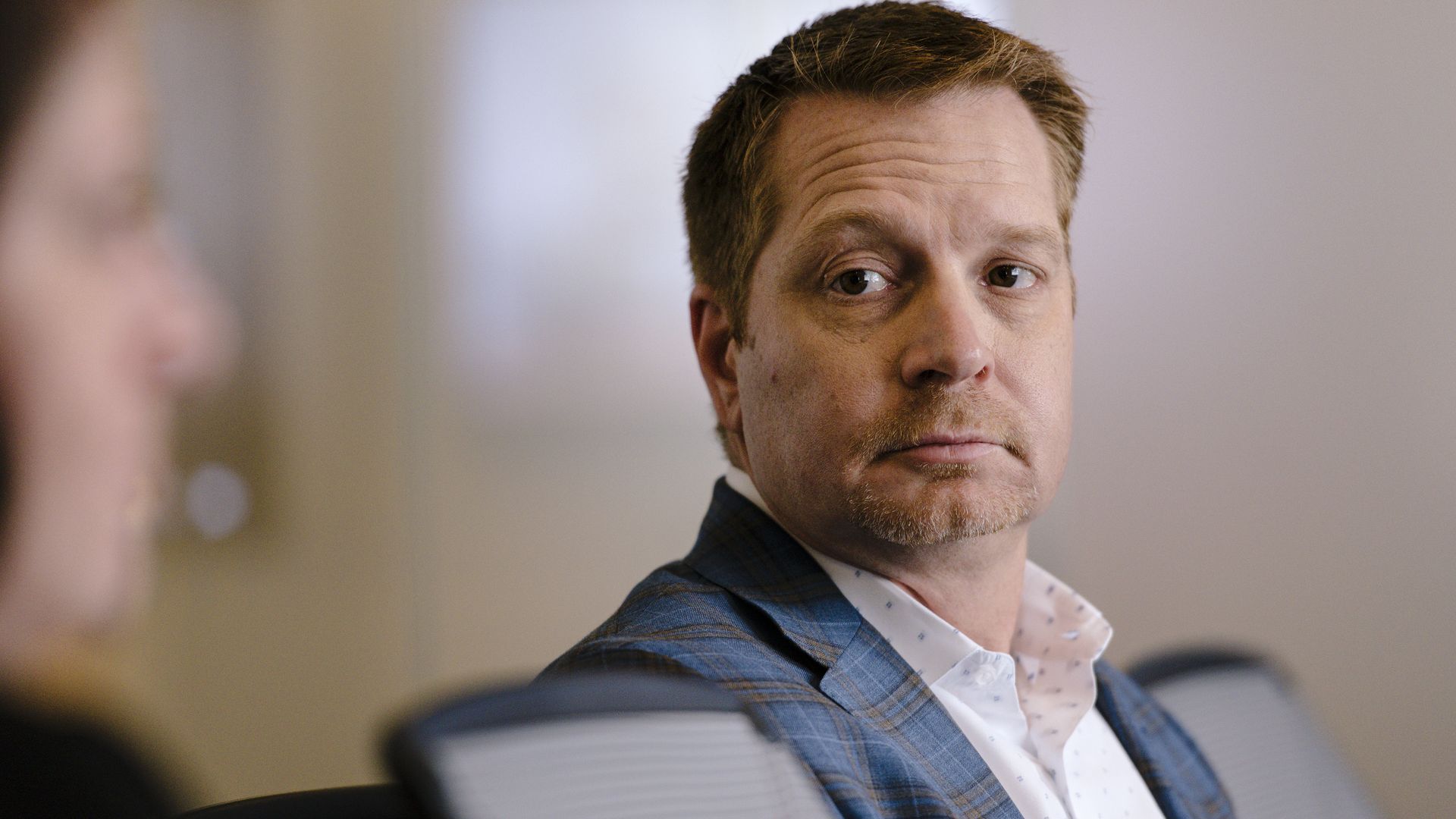
CrowdStrike CEO George Kurtz said in a LinkedIn post Thursday that 97% of the Windows sensors that went offline during last week's global IT outage are now back up-and-running.
Why it matters: Roughly a week after CrowdStrike shipped out a faulty update that bricked millions of Windows computers, the worst appears to be over.
Two AI systems from Google DeepMind together solved four of the six problems in this year's International Mathematical Olympiad — on par with silver medalists in the annual world math championship for high school students.
Why it matters: The ability to solve a range of math problems in step-by-step proofs is considered a "grand challenge" in machine learning and has been beyond the reach of current state-of-the-art AI systems.
OpenAI announced Thursday it would start testing a prototype of a new search-based AI tool called SearchGPT, kicking off the next phase of the search industry's rapid AI remodel.
Why it matters: Tech leaders believe that traditional search engines will give way to ChatGPT-style conversational interfaces as the dominant mode of information gathering online.
Leading AI company Anthropic does not support California's AI regulation bill, SB 1047, but is suggesting changes that could lead to a shift, per a letter shared exclusively with Axios Thursday.
State of play: SB 1047 from California State Sen. Scott Wiener passed the California Senate in May and could get a vote in the California Assembly next month.
What they're saying: "Ensuring the safe development of AI technology is a worthy goal, but the current version of SB 1047 has substantial drawbacks that harm its safety aspects and could blunt America's competitive edge in AI development," an Anthropic spokesperson told Axios.
"[Our letter proposes] to refocus the bill on frontier AI safety and away from approaches that aren't adaptable enough for a rapidly evolving technology."
What's inside: Anthropic's letter to Buffy Wicks, chair of the California Assembly Appropriations Committee, suggests the bill shift to "outcome-based deterrence" from "pre-harm enforcement," letting AI companies develop and deploy safety protocols and be held liable for any catastrophes they cause.
Amid a long list of proposed amendments, the company also suggests more narrowly tailoring regulations to focus on frontier AI safety to avoid some duplication of existing federal requirements.
Anthropic also wants to do away with creating a new state agency to regulate frontier models and give authority to the Government Operations Agency instead.
The bottom line: "We are optimistic that if the proposed amendments are adopted it will catalyze an era of innovation and experimentation in risk reduction practices, where companies have skin in the game and are thus incentivized to adopt the practices most likely to actually prevent catastrophic risks," Anthropic state and local policy lead Hank Dempsey wrote in the letter.
Google expects its Gemini AI assistant to be "maximally helpful" while avoiding responses that "could cause real world harm or offense," the company says in policy documents shared first with Axios and being released publicly Thursday.
Why it matters: The explanations follow a string of well-publicized incidents in which the company's AI summaries advised people to eat rocks, put glue on pizza and take other bizarre actions in response to what Google says were queries that were either very rare or malicious.
Tesla CEO Elon Musk says the automaker's self-driving technology will be good enough by next year to launch a long-awaited robotaxi service, but there are serious questions about the technology's readiness and how such a business would operate.
Why it matters: With Tesla's electric vehicle profits shrinking, Musk is now betting the company on an autonomous future involving both vehicles and humanoid robots.
Sam Altman, OpenAI co-founder and CEO, is calling for a "U.S.-led global coalition" to ensure a democratic vision for AI prevails over an authoritarian one — and says both Washington and state governments must act with more urgency.
"The future continues to come at us fast," Altman told Axios in a phone interview Wednesday. "I'm grateful that some stuff is happening [at the White House and on Capitol Hill]. But I don't think we're seeing the level of seriousness that this warrants."
Why it matters: In the face of China's determination to become a dominant AI player, Altman wants to goad governments at all levels into a more strategic, urgent AI approach.
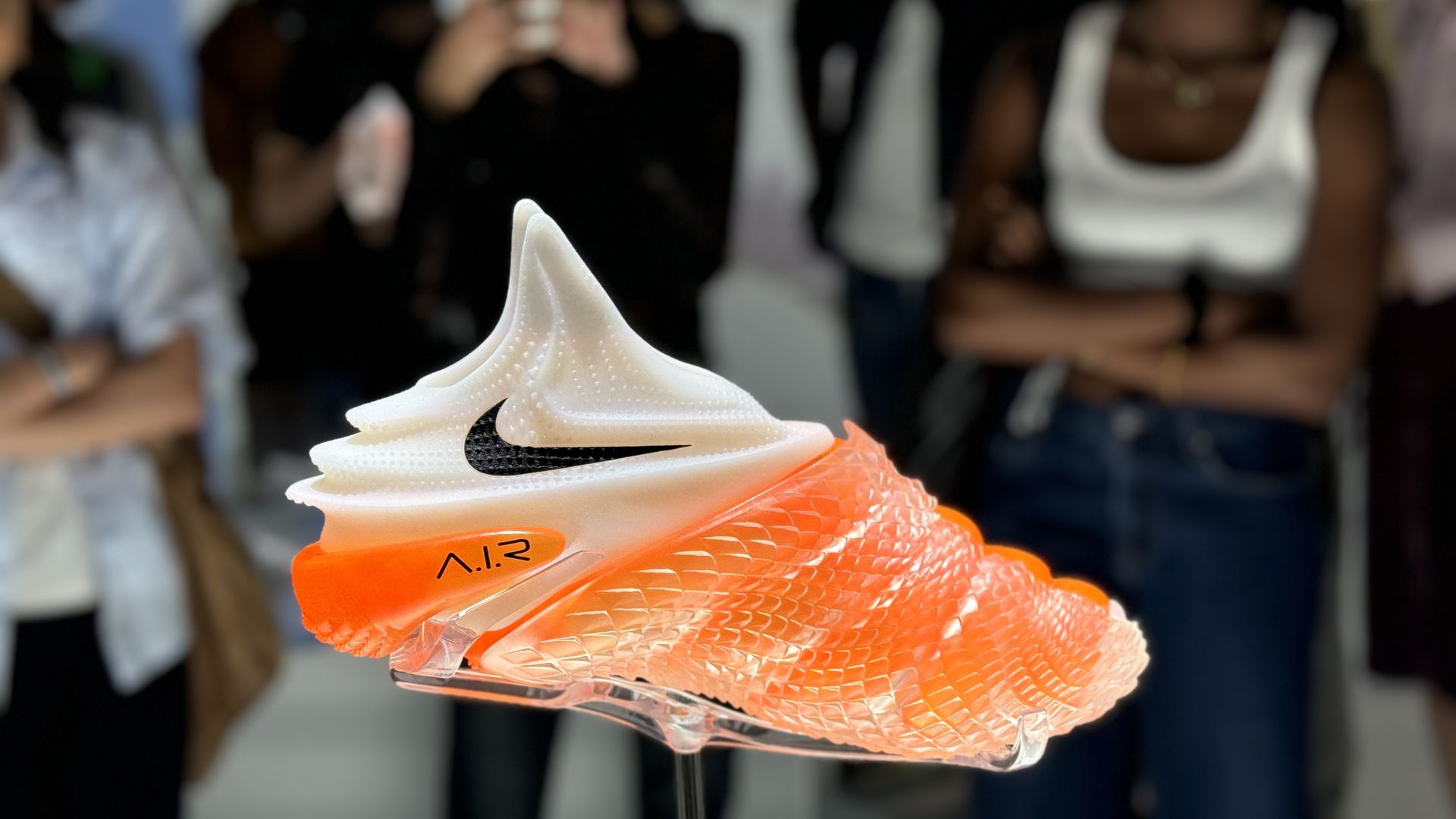
At a Paris building that helped inspire the first Air sneakers 37 years ago, Nike is using the Olympics here to show a future where generative AI is helping bring athletes the shoe of their dreams.
Why it matters: Much of the discussion around AI and design focuses on replacing human labor, while Nike's effort demonstrates that the technology can also be used to explore and expand creative possibilities.














/2024/07/25/1721921352651.gif?w=3840)