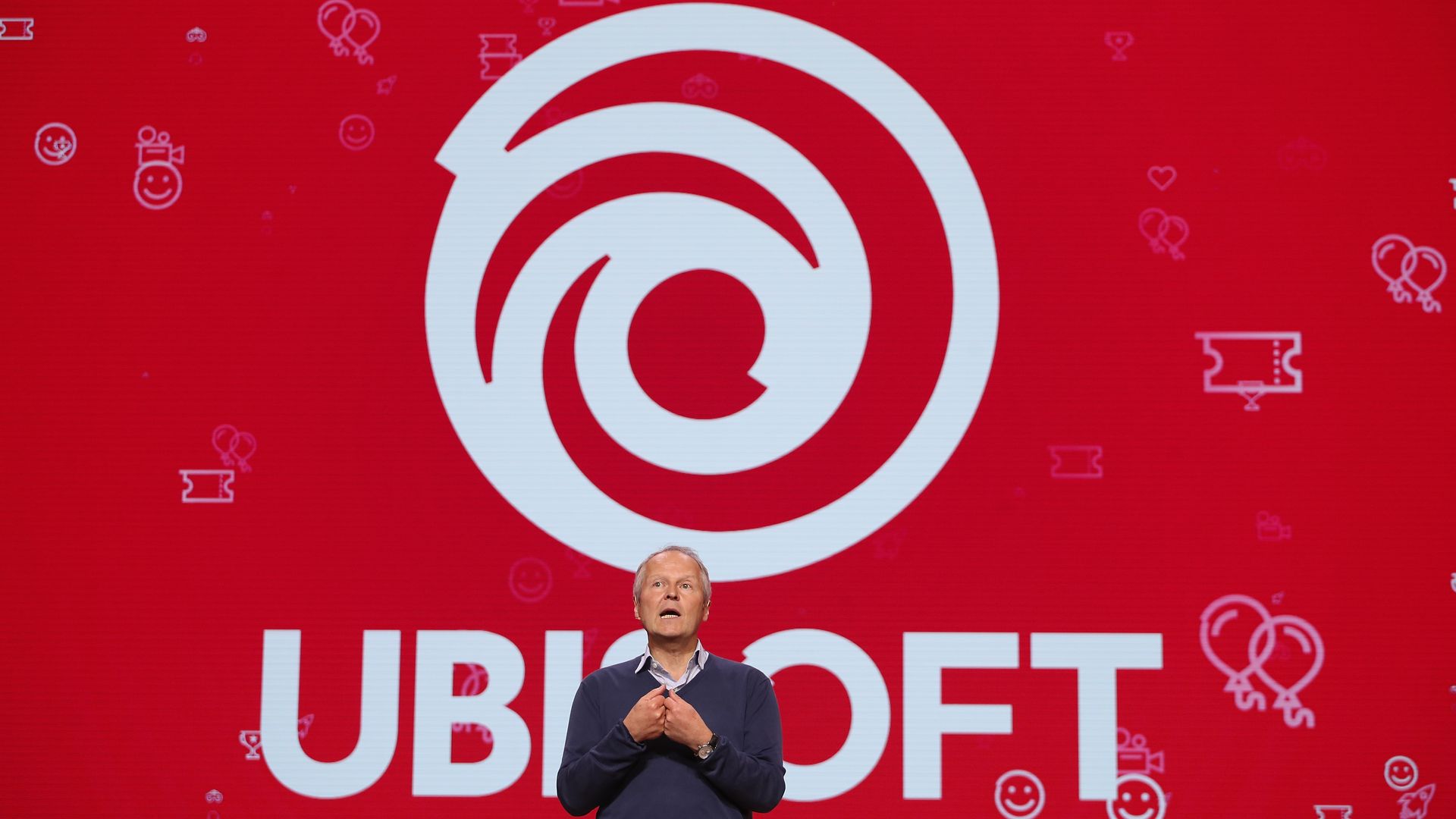
Ubisoft CEO Yves Guillemot is forgoing about a third of his annual compensation for the coming year, according to a recent company filing.
Why it matters: The unusual move signals just how rough things have been going for the Paris-headquartered mega-publisher of Assassin’s Creed and Rainbow Six.
Intel is postponing a groundbreaking ceremony to celebrate its planned $20 billion chip site in Ohio, as Congress stalls on passing a package meant to boost investment in the domestic semiconductor industry.
Why it matters: The delay signals Intel's frustration with Congress' lack of movement on the $52 billion in funding, which the company has said will impact its expansion.
Artist Amber Vittoria's step into the nonfungible token world helped her go "fully abstracted." Think ribbons of color or shapes scattered across the page.
Why it matters: The NFT boom of 2021 fed creatives. As coin prices took off, a marketplace where those coins could be spent blossomed. A downturn in coin values threatens what Vittoria refers to as "the digital art renaissance" — also the name of the panel she led at NFT NYC.
SumUp, a London-based maker of point-of-sale payments solutions for small businesses, raised €590 million in equity and debt funding led by Bain Capital Tech Opportunities at an €8 billion valuation.
Why it matters: This reflects softening valuations for European fintech, given reports from earlier this year that investors were floating a €20 billion mark for SumUp.
Salesforce and AT&T are teaming up to cut greenhouse gas emissions from Internet of Things (IoT) connected devices, such as construction equipment and transportation infrastructure.
Driving the news: AT&T said it's joining Salesforce's Net Zero Cloud, which allows users to track their carbon emissions.
Grindr is partnering with Spectrum Labs, tapping the startup's AI-based system to help filter postings on the LGBTQ dating service.
Between the lines: For years, Grindr has chosen not to implement an AI system for content moderation, not because it didn't want to augment its keyword-based filtering system, but because it was concerned that the models weren't sensitive enough to keep users safe without introducing other types of bias.
Instagram is the latest platform to launch new tools aimed at enforcing its age policies, as kids' screen time rises and regulators threaten greater scrutiny of social media's effects on children.
Why it matters: Social media giants are grappling with how to determine with certainty the age of their visitors to both evade regulatory crosshairs and create safer online experiences for children.
dydx, a major player in the Ethereum ecosystem, is jumping ship to build its fourth version in another blockchain ecosystem linked to Cosmos.
Why it matters: Ethereum is the world's second biggest blockchain and is home to all the blue chip decentralized finance (DeFi) protocols. The fact that dydx, one of DeFi's blue chip applications, is jumping ship to Cosmos is a major win for that ecosystem.
Antitrust action is desperately needed to reel in the practices of Big Tech companies, especially around privacy, Google's former head of advertising said Tuesday.
Driving the news: Competition in tech is needed to ensure people are able to have private online experiences, because large companies like Google will never truly care about user privacy, Sridhar Ramaswamy said during an onstage interview with Axios in Toronto at the Collision Conference.
Veza, an enterprise cybersecurity startup focused on cloud permissions and access management, tells Axios it raised $5 million in new Series C funding from Blackstone at around a $500 million valuation.
Why it matters: Many of the most devastating hacks, like the Colonial Pipeline ransomware attack, are born of one employee having amassed access to more data and systems than they require.
Two sharp controversies confronting Google over the past week — an employment lawsuit and an ethical argument about AI — share a dimension that should give Silicon Valley pause: They both center on religion.
Why it matters: God doesn't usually turn up in the conflicts that roil tech. But at a moment when the overturning of Roe v. Wade and the rise of the Christian right are spotlighting religion's role in politics, tech giants are going to have to sharpen their spiritual radar.