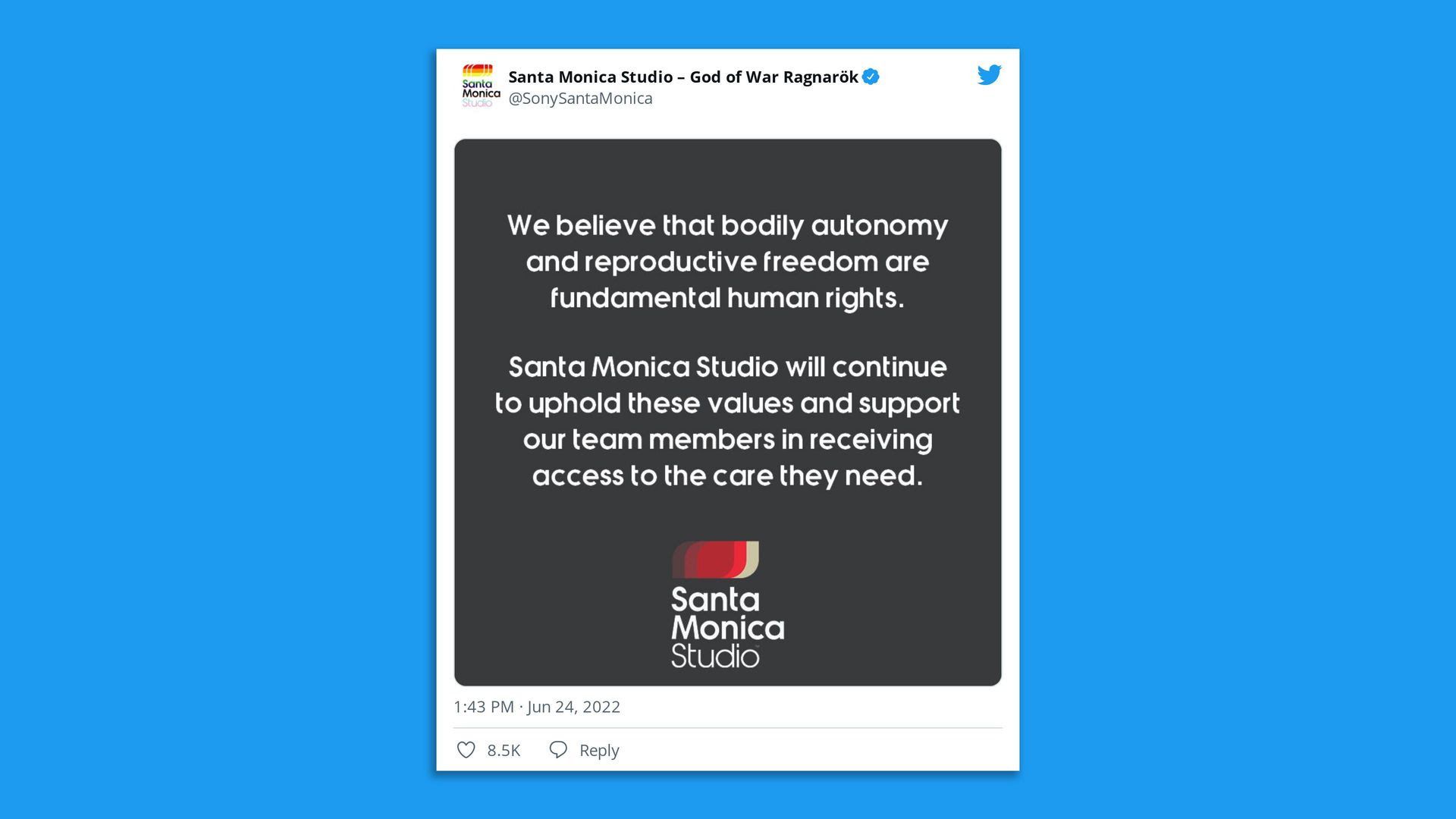
Several major game studios and the largest organization for international game developers explicitly or implicitly criticized today’s U.S. Supreme Court ruling removing federal protections for abortion in America.
Why it matters: The games industry is showing an increasing willingness to make political statements — and deal with the pros and cons of taking a stand.
Buyout firms Hellman & Friedman and Permira this morning announced a $10.2 billion deal to buy Zendesk, a San Francisco-based customer engagement software provider that's been under pressure from activist investor Jana Partners.
The big picture: Silicon Valley is full of stories about companies that boldly reject takeover offers, only to see their values subsequently skyrocket. This isn't one of them.
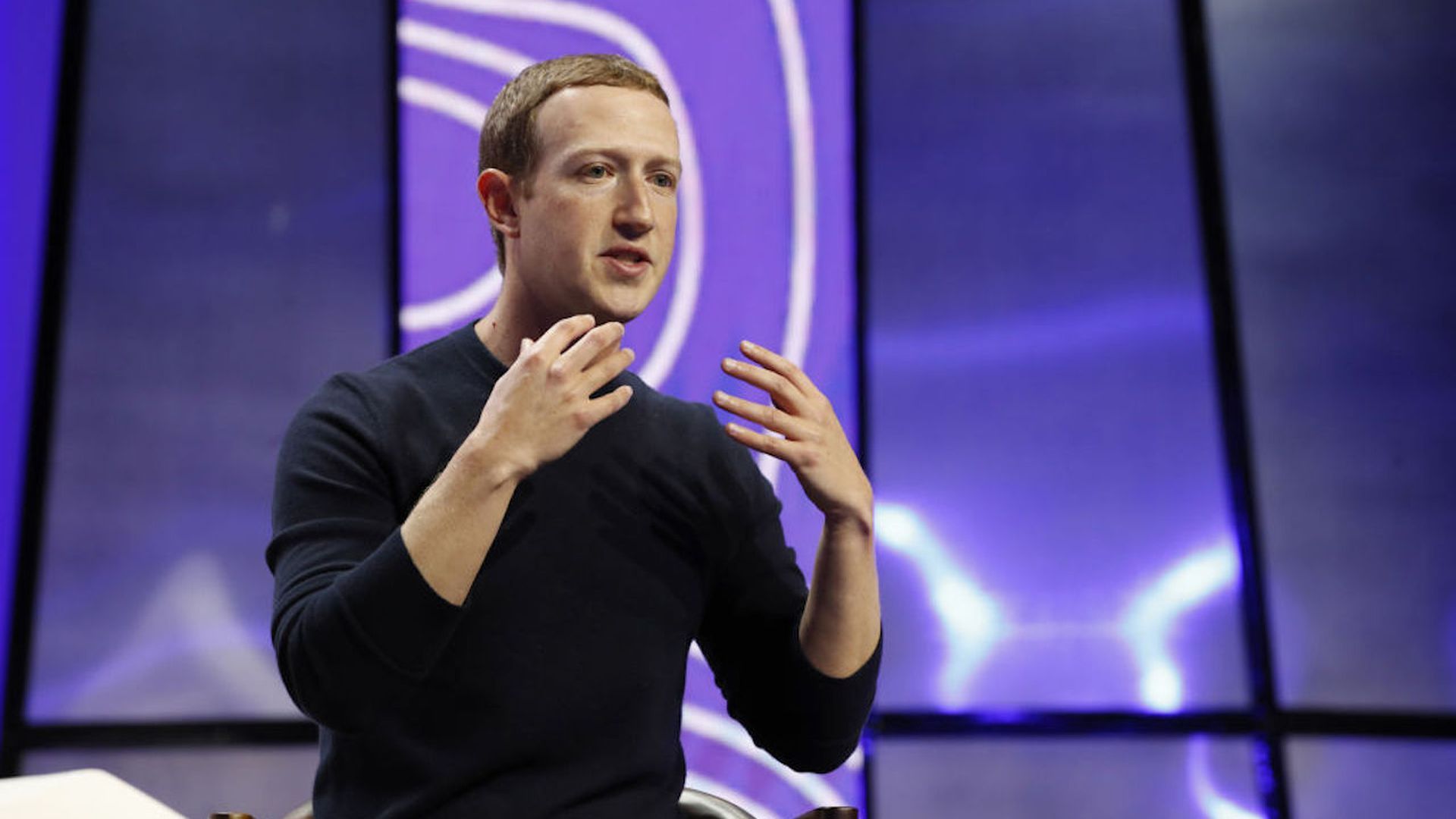
Meta CEO Mark Zuckerberg on Friday detailed advances in audio that he says will allow a concert in the metaverse to really sound like one is at a music venue. The same goes for making sound that resembles a living room or other more intimate space.
Why it matters: While much is made of the need to improve the visual quality of VR headsets, how the metaverse sounds is just as important to how well it is accepted, especially when it comes to mainstream consumers.
Congress' delay on passing key funding for chips could jeopardize a big opportunity to keep one of America's few tech manufacturing industries.
Why it matters: It's expensive to build semiconductors — a vital input for wide swaths of the economy — and other countries have already outpaced the U.S. in incentivizing manufacturing on their shores.
Ubisoft CEO Yves Guillemot is forgoing about a third of his annual compensation for the coming year, according to a recent company filing.
Why it matters: The unusual move signals just how rough things have been going for the Paris-headquartered mega-publisher of Assassin’s Creed and Rainbow Six.
Intel is postponing a groundbreaking ceremony to celebrate its planned $20 billion chip site in Ohio, as Congress stalls on passing a package meant to boost investment in the domestic semiconductor industry.
Why it matters: The delay signals Intel's frustration with Congress' lack of movement on the $52 billion in funding, which the company has said will impact its expansion.
Artist Amber Vittoria's step into the nonfungible token world helped her go "fully abstracted." Think ribbons of color or shapes scattered across the page.
Why it matters: The NFT boom of 2021 fed creatives. As coin prices took off, a marketplace where those coins could be spent blossomed. A downturn in coin values threatens what Vittoria refers to as "the digital art renaissance" — also the name of the panel she led at NFT NYC.
SumUp, a London-based maker of point-of-sale payments solutions for small businesses, raised €590 million in equity and debt funding led by Bain Capital Tech Opportunities at an €8 billion valuation.
Why it matters: This reflects softening valuations for European fintech, given reports from earlier this year that investors were floating a €20 billion mark for SumUp.
Salesforce and AT&T are teaming up to cut greenhouse gas emissions from Internet of Things (IoT) connected devices, such as construction equipment and transportation infrastructure.
Driving the news: AT&T said it's joining Salesforce's Net Zero Cloud, which allows users to track their carbon emissions.
Grindr is partnering with Spectrum Labs, tapping the startup's AI-based system to help filter postings on the LGBTQ dating service.
Between the lines: For years, Grindr has chosen not to implement an AI system for content moderation, not because it didn't want to augment its keyword-based filtering system, but because it was concerned that the models weren't sensitive enough to keep users safe without introducing other types of bias.
Instagram is the latest platform to launch new tools aimed at enforcing its age policies, as kids' screen time rises and regulators threaten greater scrutiny of social media's effects on children.
Why it matters: Social media giants are grappling with how to determine with certainty the age of their visitors to both evade regulatory crosshairs and create safer online experiences for children.