The central bank of Jamaica is one step closer to issuing digital currency backed by the state to be used as local legal tender.
Why it matters: Governments are pressing forward on so-called central-bank digital currencies, eager to provide faster more efficient payment options while preserving monetary and financial stability.
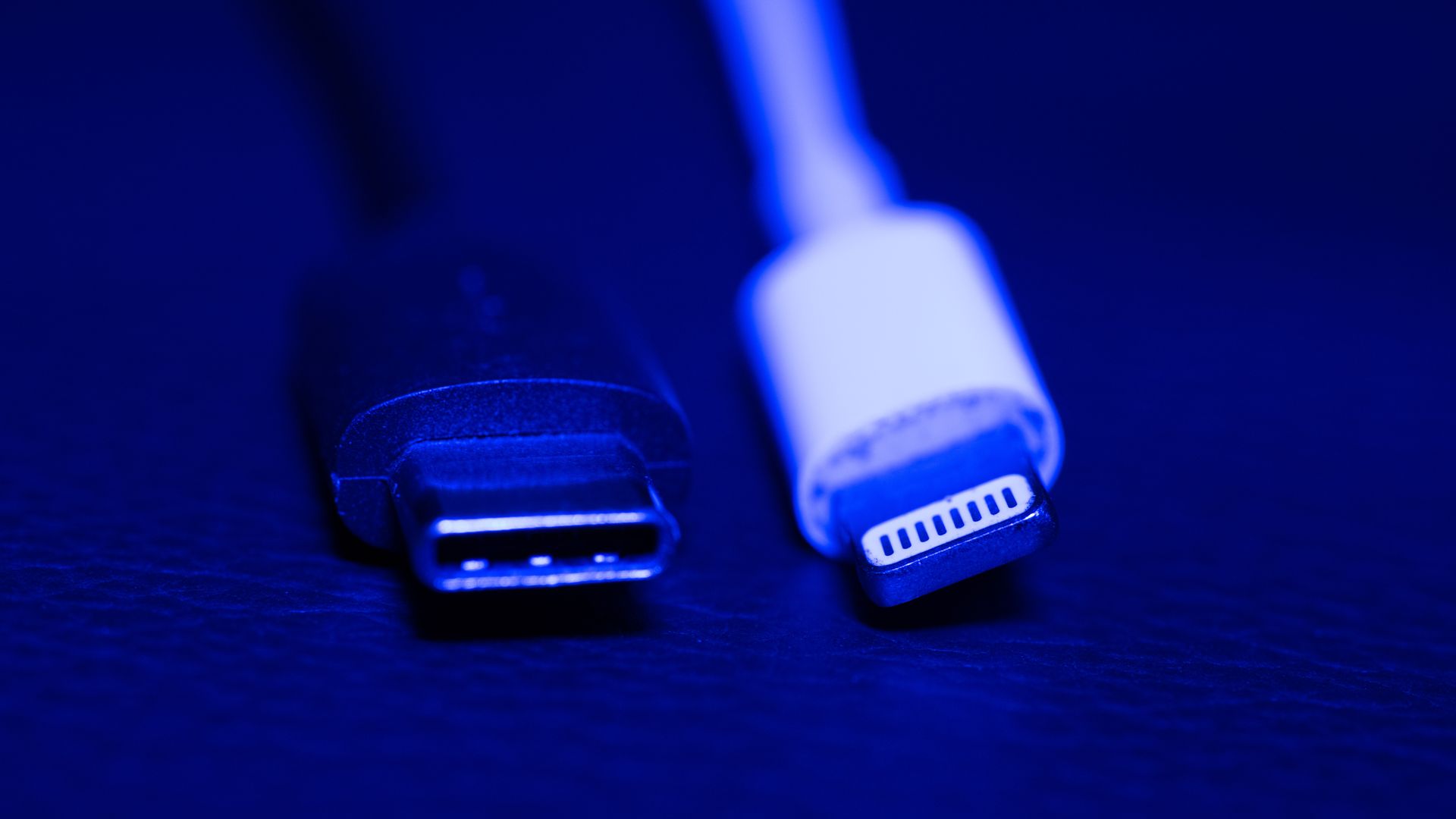
The European Union on Tuesday agreed to provisional legislation that will require phone manufacturers to use the same charging port in devices in an effort to reduce electronic waste and increase convenience for consumers.
Why it matters: Once the legislation is fully approved, all mobile phones, tablets and cameras sold in the EU will be required to have USB-C charging ports by fall 2024.
The number of Americans who play video games has declined slightly in 2022, likely due to the phasing out of pandemic-oriented lockdowns, according to a new report from the Entertainment Software Association.
Driving the news: The ESA’s new data, released this morning, shows the U.S. gaming population at 216 million, compared to 227 million for 2021.
Sarah Guo is stepping down as a general partner at venture capital firm Greylock to start her own fund, Axios has learned from multiple sources.
Why it matters: Guo is among a small number of general partners at major VC firms who are women, and she's just the second ever in Greylock's five-decade history.
There's a major new way for regular people to move between normal money and cryptocurrency, and it's via an app that many have likely been using for years: PayPal.
Why it matters: In a long-awaited announcement, PayPal, which claims over 400 million users, is giving them the option to take full control of crypto that they buy on the app. Now that withdrawals are enabled, the company becomes a piece of the infrastructure of the crypto economy.
Crowds in London waved at a hologram of Queen Elizabeth II in a golden carriage Sunday — not to Britain's actual queen. To Matthew Ball, leading expert of that theoretical parallel Internet world (or worlds), the gesture appeared to affirm the potential of what is not real.
Driving the news: "The Monarchy is in the Metaverse? Monarchyverse," Ball quipped via tweet. And the latest way to invest in its development comes from a partnership between Ball, investment firm Multicoin Capital and crypto index specialist Bitwise Asset Management.
Euler, a money market, has sold $32 million of its governance token at a $375 million valuation to a group of investors led by Haun Ventures, providing the project's treasury with stablecoins to build a reliable pool of resources as the crypto market becomes more sedate.
Why it matters: Decentralized finance promises to lower financial friction for everyone, and Euler's focused on making it easy for people to borrow all kinds of tokens.
Autonomous trucks developed by Gatik will soon be delivering paper plates and toilet tissue to Sam's Club stores throughout the Dallas-Fort Worth area.
Why it matters: It's a new frontier for self-driving truck technology, which has been primarily focused on long-haul semi-truck highway pilots.
Gatik instead is targeting the so-called "middle mile" between distribution warehouses and stores or fulfillment centers.
Tech giants, led by Google, are opening up a new front in D.C.'s immigration battles by urging the Biden administration to allow children of high-skilled immigrant workers to remain in the U.S. legally beyond their 21st birthdays.
Why it matters: Major companies say they need the administration to act to help them retain high-skilled parents who fear their children will be deported, amid a tight labor market and ongoing green card headaches.
There is a clear and growing link between Russian propaganda and online far-right extremism globally, according to a new study from researchers at the George Washington University.
Why it matters: The findings suggest the influence of Russian media on these communities is organic, which makes it harder to stop.
With little progress on gun control measures in Congress, some envision next-generation weapons detection technologies as a potential deterrent to mass shootings.
Why it matters: In theory, if authorities could use artificial intelligence to spot guns or identify potential shooters earlier, they might be able to head off gun violence like the school massacres in Uvalde, Texas, Oxford, Mich., and Parkland, Fla.