Video game creators should consider offering more complex depictions of interactive romance, designer Michelle Clough said in a talk at the Game Developers Conference in San Francisco.
Why it matters: More interesting in-game depictions of love, flirtation and courtship could attract players who crave more than the medium’s current simplistic approaches.
Katie Haun has raised $1.5 billion for a pair of crypto-focused VC funds, just months after leaving Andreessen Horowitz to form her own firm.
Why it matters: This appears to be the largest fund ever raised by a solo venture capitalist, let alone by a solo female VC, and reflects surging investor interest in web3.
News outlets are finding creative ways to get around the Kremlin's efforts to block independent reporting inside Russia, utilizing everything from carbon-copy websites to encryption tools and anonymous browsers.
Why it matters: While old-school circumvention methods like short-wave radio are being reintroduced, journalists trying to break through Russia's iron curtain for media argue sophisticated digital techniques can often be more effective and efficient.
The job of an airplane pilot may one day involve “flying” multiple aircraft at once without ever leaving the ground, according to the Aerospace Industries Association.
Why it matters: Aviation is about to undergo a huge transformation. Over the next decade or two, autonomous aircraft will become ubiquitous, taking on industrial jobs that are too difficult for humans and shuttling cargo among logistics hubs.
Depending on public acceptance, these "roboplanes" could also be ferrying passengers across cities.
An ominous part of social media apps like TikTok, Snapchat and Instagram is the proliferation of beauty filters, which subtly and realistically make you look more attractive.
Think fuller lips, thinner faces, lighter eyes and even the appearance of makeup.
Why it matters: These filters promote a certain beauty standard — and can quickly erode someone's sense of self-worth and confidence, especially when it comes to young people.
Never has the world seen a social media app spread more wildly — or an algorithm that anticipates your desires more precisely — than TikTok.
Why it matters: It's hard to find a kid who's not mindlessly scrolling this never-ending stream of short videos. Two-thirds of U.S. teenagers (63%) are on TikTok, according to the market research firm Forrester.
Actor and climate tech investor Robert Downey Jr. stirred controversy last week when he tweeted that “the technologies that suck carbon out of the air and capture it" are as equally important in global efforts to halt global warming, as "building new renewable energy."
Why it matters: To climate tech investors (and scientists), the topic is more nuanced, with the debate focused on the optimal scale and prioritization of carbon removal and capture as a tool to fight climate change.
The Justice Department has asked the judge overseeing its antitrust case against Google to sanction the company for allegedly training employees to "camouflage" business documents from being revealed by legal disputes, per a brief filed Monday.
Driving the news: The DOJ writes in its brief that Google teaches employees to request advice from counsel around sensitive business communications, thereby shielding documents from discovery in legal situations.
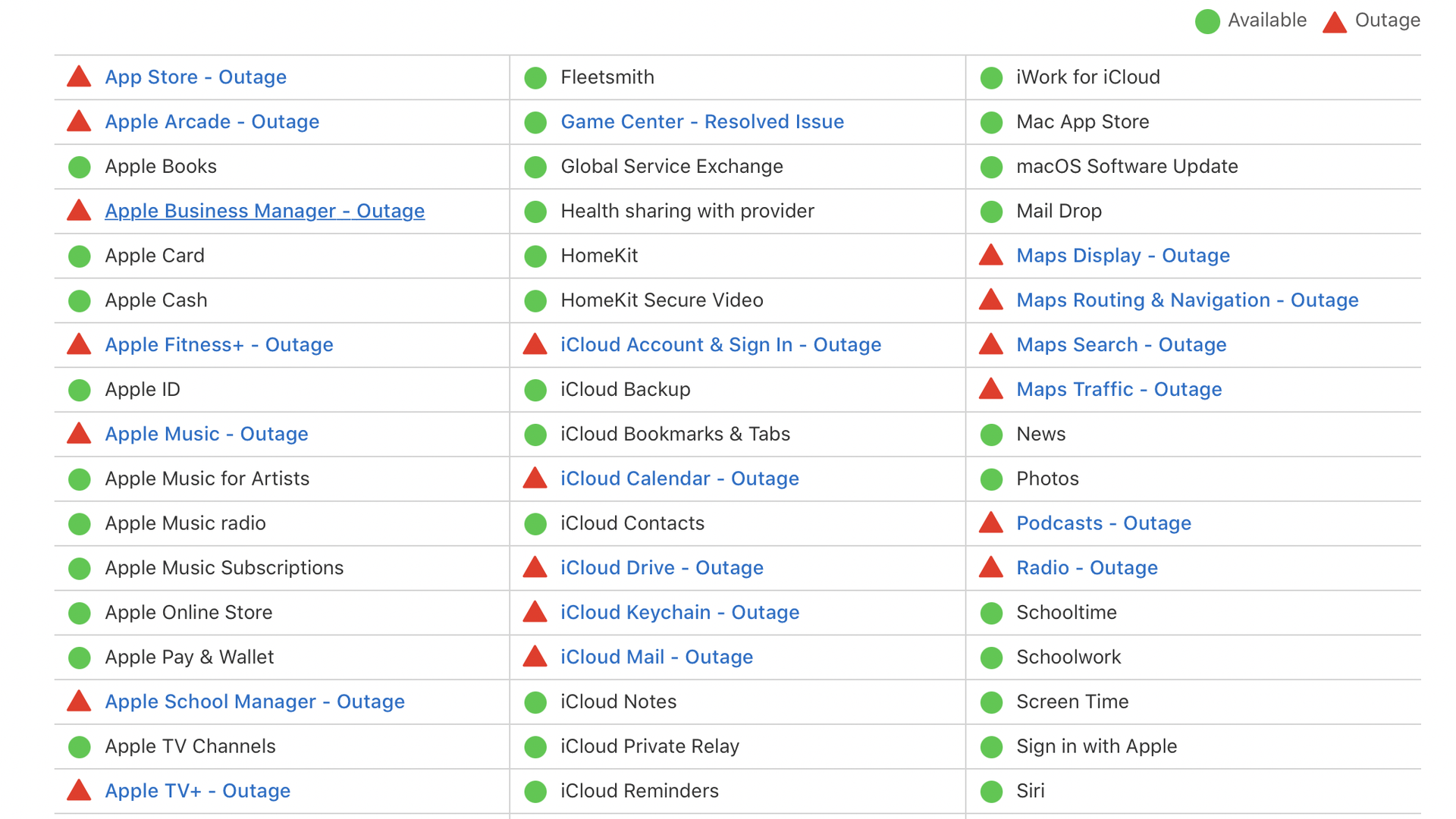
A number of Apple services, including iCloud, the iTunes store, Apple TV+ and Apple Maps, were experiencing outages on Monday.
Why it matters: In addition to consumer-facing services, Apple also relies on its cloud services to update and activate devices as well as for a chunk of its retail operations.
Meta's plan to demand mountains of information from up to 286 rivals is bringing the company's defense strategy into view as the government presses a lawsuit to break it up.
State of play: Meta —the parent company for Facebook, Instagram and WhatsApp — could drag hundreds of competitors into its legal battle, aiming to slow the Federal Trade Commission's prosecution and "bury" its lawyers in paperwork, as one expert put it.
The promise of a "smart home" — where you effortlessly tell your appliances what to do for you and can easily add new devices to your domestic mix — is edging closer to fruition.
Why it matters: When we're finally able to take full advantage of smart home technology, everything from our lights and garage doors to our entertainment and security systems could work together seamlessly and obey our voice commands — making our lives more convenient, enjoyable and energy-efficient.











/2022/03/21/1647900192475.gif?w=3840)





/2022/03/21/1647890393177.gif?w=3840)