Thursday's technology stories

U.S. testing robot dogs to help patrol the border

Robot dogs could soon help patrol the U.S.-Mexico border.
Why it matters: Both political parties have long said U.S. Customs and Border Protection needs more technology to monitor the 2,000-mile terrain, but some Democrats and advocates say the border is already overly militarized.

Exclusive: U.S. majority supports tech regulation to preserve democracy

Three-quarters of Americans say that U.S. democracy could be at risk without stronger regulation of false information online, according to a poll by bipartisan advocacy group the Future of Tech commission, results of which were shared first with Axios. The same survey found broad bipartisan support for stronger privacy regulation and increased spending on cybersecurity.
Why it matters: Congress is considering a range of new restrictions on tech, including bills related to privacy, competition and possible limits to Section 230 of the 1996 Communications Decency Act, which protects online platforms from being sued for user-contributed content.

Senators once more take up tech liability changes

Limiting tech's liability shield in the name of fighting online child sexual exploitation is once again on Congress' agenda.
Driving the news: The EARN IT Act, which removes tech platforms' immunity for violations of laws related to online child sexual abuse material, will be voted on by the Senate Judiciary Committee Thursday.

Gaming is antitrust regulators' blind spot

The biggest video game companies are gobbling up the competition faster than ever while so far escaping significant resistance from antitrust regulators.
Why it matters: Gaming has grown into one of the world's largest media industries but has yet to face the scrutiny other tech sectors routinely encounter over how business practices affect competition, consumers or workers.

Zynga outlines its ambitious NFT gaming plans

Mobile gaming powerhouse Zynga has big plans for blockchain and NFT-based gaming this year, including staff expansion, acquisitions and some playable games.
Why it matters: Zynga is taking more aggressive steps than other traditional gaming companies into the booming, but controversial, blockchain gaming sector.
Microsoft proclaims support for a more open gaming future
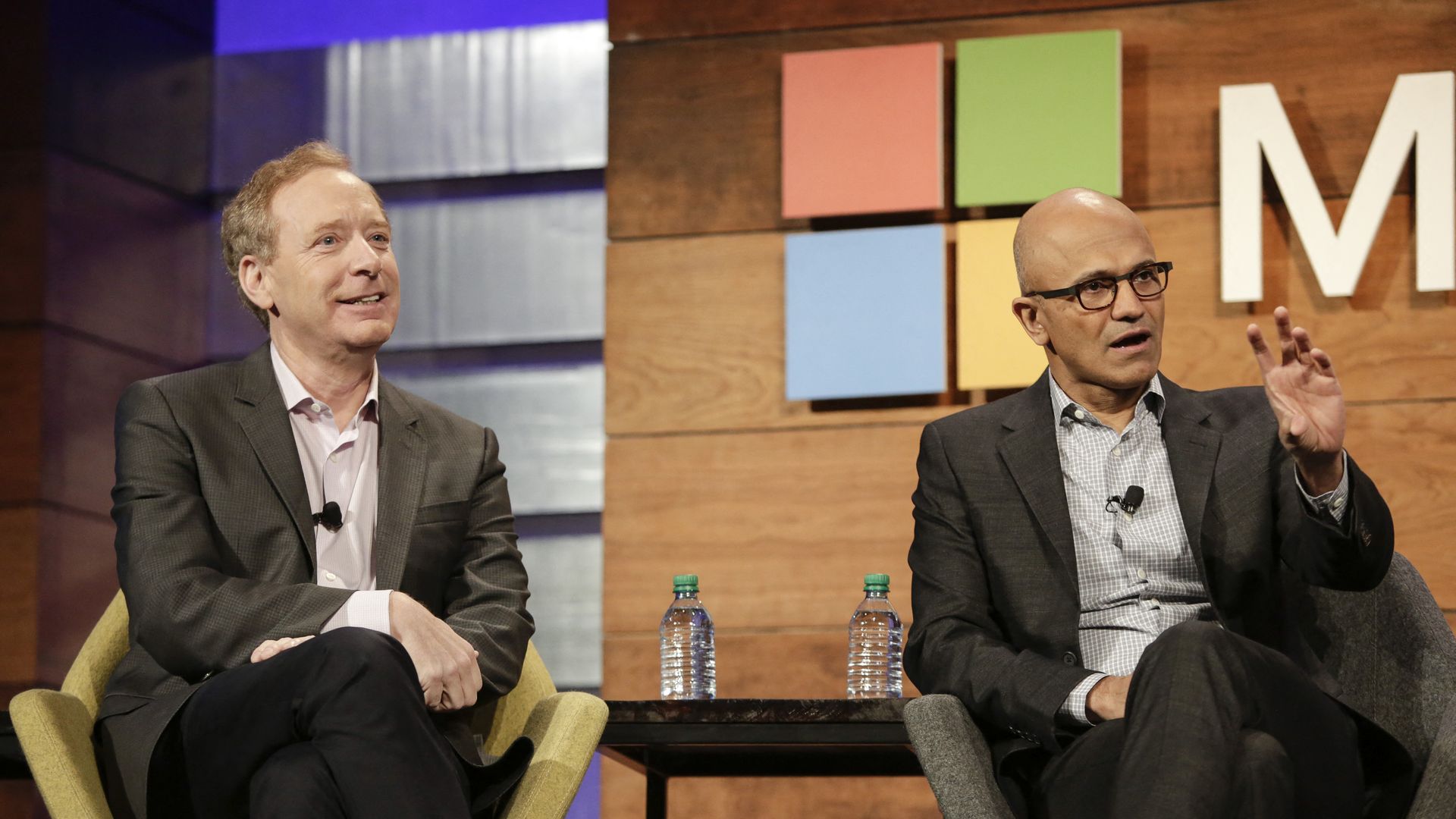
Microsoft executives are warming up regulators to their proposed acquisition of gaming giant Activision Blizzard in Washington by pledging a future that includes an open, "universal" app store.
Driving the news: On Wednesday, Microsoft announced a set of "Open App Store Principles" the company says will apply to the Microsoft Store on Windows and the next generation of its game marketplaces.
- "We have developed these principles in part to address Microsoft’s growing role and responsibility as we start the process of seeking regulatory approval in capitals around the world for our acquisition of Activision Blizzard," Microsoft president Brad Smith wrote in a blog post.
Why it matters: The company is trying to sell its proposed $69 billion acquisition of Activision Blizzard by committing to principles of interoperability in app stores and across devices as lawmakers consider proposals that would change how app stores operate.
What they're saying: "The Activision Blizzard acquisition is what has brought us to Washington, D.C.," Smith told reporters in a briefing along with CEO Satya Nadella and Xbox corporate vice president Sarah Bond. "We're more focused on adapting to regulation than fighting against it."
- "The game industry's structure, rules and business model was set on a paradigm when we used to buy [physical games]," said Bond. "That should change. It has put the device at the center of the experience. We think it should be the player at the center."
- The Federal Trade Commission is reviewing the deal in the U.S. Smith said the deal will require approval from 17 regulators globally.
Details: Seven of those principles center around security, privacy, quality, safety, accountability, fairness and transparency, and the company says it is committing to those principles starting today.
- The four remaining principles would change how developers use app stores by not requiring developers to use Microsoft's payment system, not giving its app store more favorable terms, not disadvantaging developers who use a different payment system and not preventing developers from communicating directly with customers.
- The company said it would "commit to closing the gap on the remaining principles over time."
Between the lines: Over the last year, Microsoft has been increasingly vocal about expanding its gaming services to as many platforms and devices as possible.
- But when it comes to platforms like Apple’s tightly sealed iOS, some may only open up through legislation.
- Putting marketplaces on tightly guarded platforms is what sparked Epic’s lawsuit against Apple.
The Open App Markets Act, recently approved by the Senate Judiciary committee, would cement many of these principles into law.
- Smith said Microsoft wants to "be on the right side of history" by committing to such principles before and whether the bill becomes law.
Be smart: Microsoft didn’t actually announce a new app store, only the principles it would use to guide a hypothetical one.
Thought bubble from Axios Gaming's Stephen Totilo: Microsoft included a crucial caveat in today's briefing, acknowledging that all of these principles don't currently mesh with the existing Xbox game store, but would over time.
- Microsoft justifies the current model, which grants Microsoft a 30% take of Xbox store revenue, as one based on consoles being sold at a loss (for what it's worth, Sony says it already profits from PS5 sales).
- In a new store, developers would someday be able to choose to use Microsoft's payment system and other services, such as streaming tech, or not. "We're going to evolve the business model to support how much of the functionality we're providing them that they adopt," Bond said.
Editor's note: This story has been updated with further context.

Report: Microsoft in talks to buy cybersecurity giant

Microsoft (Nasdaq: MSFT) is in talks to buy Mandiant (Nasdaq: MNDT), a Reston, Va.-based cybersecurity firm with a $4.4 billion market cap, per Bloomberg.
Why it matters: Not only isn't Big Tech pumping the brakes on multi-billion dollar acquisitions in the Biden era, it's ramping up. This would be Microsoft's second major play of the year, following its agreement to buy Activision Blizzard, and comes amidst reports that Amazon is kicking Peloton's tires (after already signing papers on MGM).
Battle over government use of face recognition rages on

Fresh on the heels of getting the IRS to end a controversial use of facial recognition, politicians and civil liberties groups are trying to get other government agencies to drop their use of the technology.
Why it matters: While a handful of cities have passed laws on government use of facial recognition, there are few limits on how the federal government can use such technology.

King Mark's unshakeable reign

Meta/Facebook's historic stock plunge slashed the company's value by roughly one-third over the past week and roiled markets but left one key figure unbowed: Founder-CEO Mark Zuckerberg may be poorer, but he's no less powerful.
Why it matters: Other CEOs facing such disasters have quit, or at least faced boardroom challenges or shareholder revolts. But Zuckerberg's ownership of a class of shares with special voting rights gives him effective and absolute control over the company.