Wednesday's technology stories

The benefits and risks of new tech will decide the future

The future we will live in will largely be a function of balancing the benefits that new technology brings with the risks and downsides it inevitably causes.
Why it matters: The pandemic has demonstrated both the value of accelerated technology and the penalty when it's held back by red tape and regulation — lessons that would be smart to take for a future that demands innovation.

Treyarch responds to harassment problems at Activision Blizzard

Call of Duty developer Treyarch issued its first public statement in response to ongoing harassment problems at Activision Blizzard, stating that its "culture has no room for sexism, harassment, racism, bigotry, discrimination, or bullying."
Why it matters: Treyarch, a part of Activision Blizzard, has not been without its own share of internal harassment.

TikTok surpassed Google as most popular site in 2021
TikTok beat out Google for the most popular domain in 2o21, according to data from web security and performance company Cloudflare's 2021 Year in Review of internet traffic.
Why it matters: Video-sharing platform TikTok rose to massive popularity in 2021. Surpassing mammoths like Google, Facebook, YouTube and Netflix in web traffic shows the speed and power of the ascent.

CES organizers press on despite Omicron threat

The Consumer Technology Association said Tuesday that it is going ahead with next month's CES trade show in Las Vegas even as a number of tech companies and publications say they won't be sending their employees.
Why it matters: The annual consumer electronics trade show is a key gathering point for the industry, but the pandemic forced it to go virtual in 2021.
Log4j attacks will expand, experts warn

Attacks based on a flaw in the widely used Log4j open-source library have continued in the week since the vulnerability was disclosed publicly. And cybersecurity experts warn there's no end in sight.
Why it matters: The problematic piece of code is used in hundreds of different pieces of enterprise software and networking gear, making it challenging for companies and governments to identify and patch all their affected systems.

What we're driving: 2021 Mercedes S-class
/2021/12/21/1640118813391.gif?w=3840)
Cars are getting more and more sophisticated, but you haven't seen anything until you've experienced the 3D driver display and augmented reality system in Mercedes-Benz's flagship S-class sedan.
- It's one of the most exciting technology features I've encountered in a vehicle.
Why it matters: Technology that debuts on the Mercedes S-class typically winds up in more plebeian vehicles five or 10 years later.
Details: I test drove the 2021 S580 sedan, which is everything you'd expect from a $131,500 Mercedes-Benz — smooth, luxurious and comfortable, all the way down to the 10 seat massage modes and the plush pillows in the headrest.
- And it's packed with technology, including Mercedes' next-generation infotainment system, featuring a nearly 13-inch touchscreen and voice-activated digital assistant.
What really blew me away, though, was the car's dazzling head-up display with augmented reality.
- I'm a big fan of head-up displays, which project key information like the speed and direction of travel onto the windshield to help drivers keep their eyes where they should be, rather than looking down at a center touchscreen.
- Adding augmented reality makes the technology even more useful.
How it works: I plugged in my destination, and a little blue arrow came to life on the windshield telling me when and where to turn.
- It felt like I was following an animated bird.
- The arrow multiplied and resembled a flock of birds, which grew larger as my turn approached.
- After completing the turn, the arrow shrunk again until the next maneuver.
- As I neared my destination, a floating checkered flag inside a map icon grew larger.
I also noticed that when driving with Mercedes' highway assisted-driving technology switched on, a green pathway projected on the windshield told me when and where it was safe to pass.
The augmented reality system works in concert with the super-cool 3D display on the instrument cluster behind the steering wheel, displaying the same information in a different format — but without 3D glasses.
- Images in the head-up display can also appear on the car's center touchscreen, if desired.
The bottom line: The 3D augmented reality package is a $3,000 option, but when you're already spending that much on a Mercedes, why not?
Exclusive poll: Americans want government action on tech
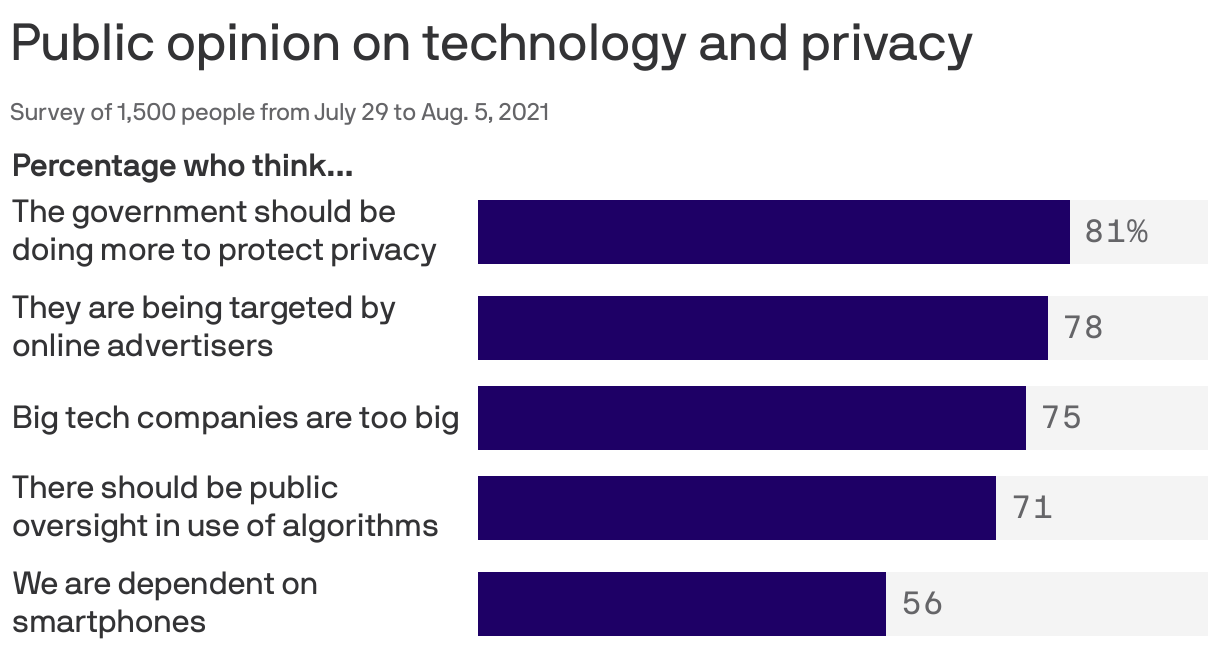
Big majorities of Americans think tech companies are too big and too nosy and want government to rein them in, an exclusive poll by Axios and the Illinois Institute of Technology finds.
Why it matters: As technology's role in American life increases, people on both sides of today's political divide have grown wary of its influence.
Xbox co-creator: "It's past time" to address online harassment
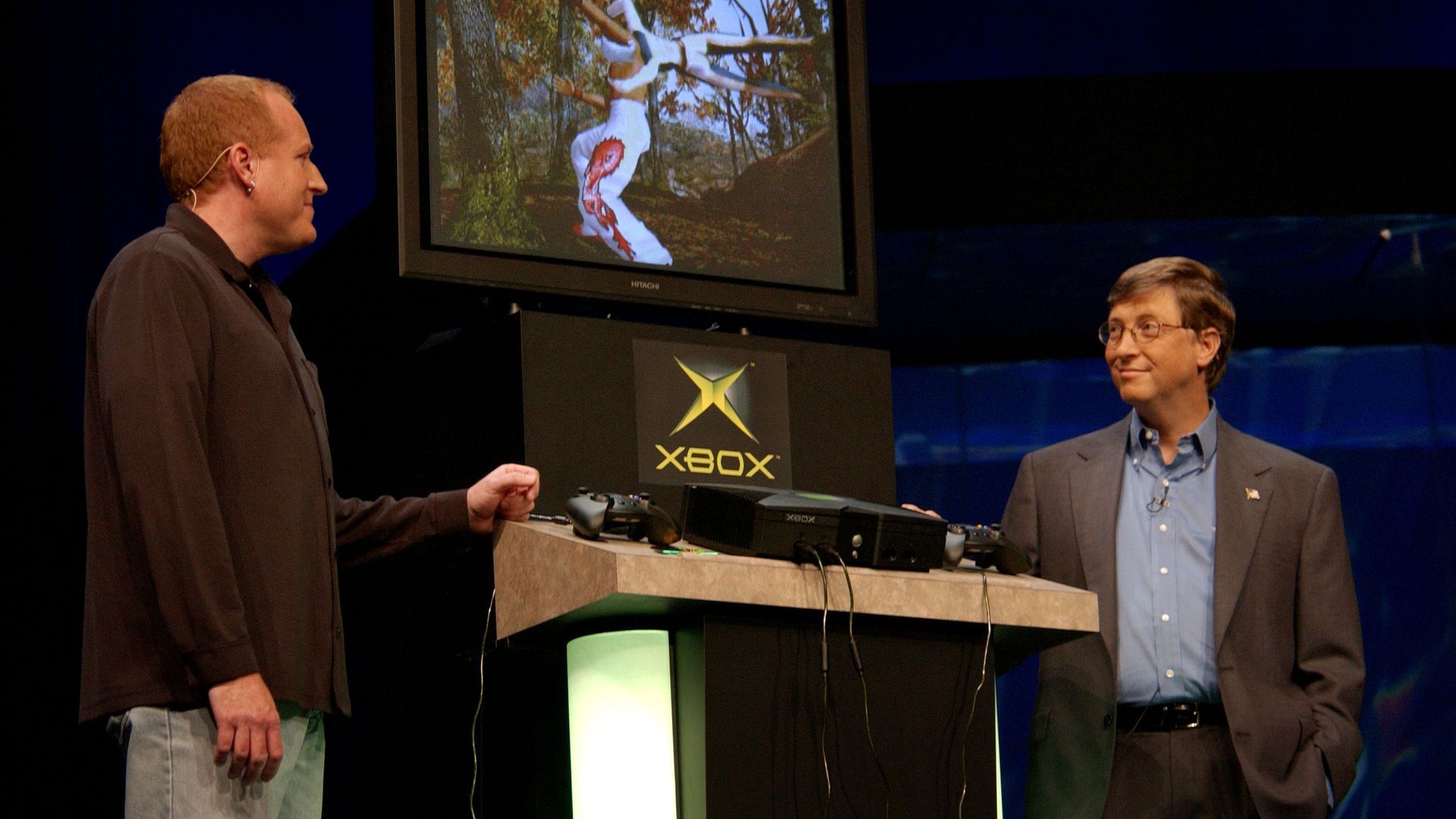
Xbox co-creator Seamus Blackley is calling on Microsoft and the video game community to address ongoing harassment in online spaces, noting that efforts "will take teamwork between players, devs and console manufacturers to change this and it’s time. It's past time."
Driving the news: On Dec. 19, Twitch streamer Grenade Queen posted a clip of two male players harassing her during a Halo Infinite match.


Scoop: Private investors plot Forbes buyout

Investment firm GSV is working on a bid to buy Forbes Media at a $620 million valuation as an alternative to Forbes' announced SPAC merger, Axios has learned.
Why it matters: BuzzFeed's public listing last week added to growing skepticism about the SPAC market for media companies. Its shares are down roughly 40% from its opening price, and 94% of investors redeemed their stock following the merger news.

Libraries enlist states in fight over ebook rules

Libraries are successfully convincing state legislatures to help them win better terms for ebook licenses from Amazon and other publishers.
Why it matters: Libraries say it is crucial for them to continue to service their communities, especially as digital access to books became even more important during the pandemic.
What's next: a digital butler for your car
/2021/12/20/1640024714609.gif?w=3840)
Your next car might well be able to read your mind, offering suggestions of where to go and what to do before you even ask it.
Why it matters: Artificial intelligence and machine learning are making vehicles smarter and safer than ever, and could potentially transform the relationship between driver and machine.
Driving the news: Cerence, a pioneer in vehicle voice-recognition, will be showing off an intuitive, AI-powered driving companion early next month at CES, the big consumer electronics show in Las Vegas.
- Its new Cerence Co-Pilot, announced Monday, is designed to anticipate the needs of drivers through AI and continuous learning — think of it as a butler for your car.
- Instead of drivers telling the car what to do with traditional wake-up words like, "Hey Alexa" or "Hey Mercedes," Co-Pilot will proactively offer to perform actions before drivers even need to ask.
How it works: The AI is integrated with the car's sensors and data to understand what's going on inside the vehicle and around it.
- Acting as the car's central brain, the technology analyzes input from a combination of voice, gaze, gesture and touch controls, along with driver preferences and real-time sensor data, to keep drivers informed and anticipate their desires.
For example, the system can suggest ordering and paying for a cup of coffee when the driver is a mile from their favorite coffee shop.
- Or, it could recognize a maintenance issue and offer to set up a service appointment.
- Knowing that the driver has a meeting 50 miles away tomorrow morning, Co-Pilot could suggest stopping for fuel today, even though the low-fuel warning light isn't on.
- It can also deliver real-time information such as severe weather approaching and offer to put the car in the appropriate driving mode.
Yes, but: Co-Pilot can also act like a backseat driver, pointing out that rolling stop you did at the last intersection, for example.
- You can control notifications, though, so the system will learn when you don't want to be bugged, Cerence CTO Prateek Kathpal tells Axios.
What to watch: The technology will debut next month on two unnamed models, Cerence says.
- Cerence Co-Pilot is just a taste of the news about smart car technology expected at CES starting Jan. 3.

New music gadgets: No lessons (or instruments) required

A new generation of portable music-making gadgets lets people use body movements to generate sounds, bypassing the laborious process of learning to play an instrument through practice.
Why it matters: In a world where anyone can be a Tiktok star, tech startups are betting that people will snap up devices that democratize music, helping them generate professional-sounding tunes quickly and easily.
- There's even an emerging body of academic research dedicated to haptic music-making, which is known as the "Internet of Musical Things."