A new generation of social media networks are planning to go public in 2022, while Big Tech rivals face massive regulatory and competitive pressures.
Why it matters: As more industries move online — including commerce, gaming and gambling — more social networks will rise and use Wall Street to finance growth.
The future we will live in will largely be a function of balancing the benefits that new technology brings with the risks and downsides it inevitably causes.
Why it matters: The pandemic has demonstrated both the value of accelerated technology and the penalty when it's held back by red tape and regulation — lessons that would be smart to take for a future that demands innovation.
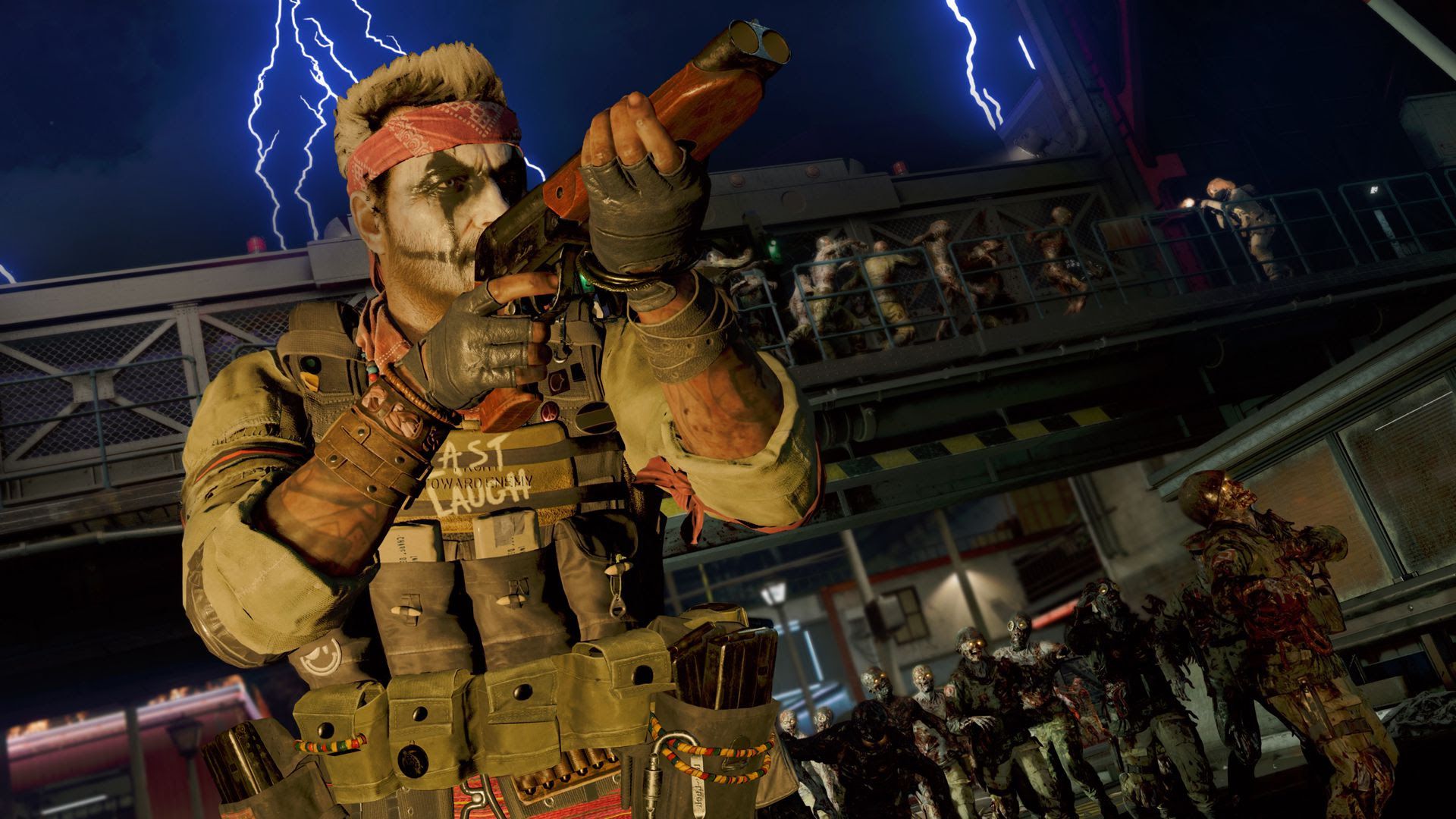
Call of Duty developer Treyarch issued its first public statement in response to ongoing harassment problems at Activision Blizzard, stating that its "culture has no room for sexism, harassment, racism, bigotry, discrimination, or bullying."
Why it matters: Treyarch, a part of Activision Blizzard, has not been without its own share of internal harassment.
TikTok beat out Google for the most popular domain in 2o21, according to data from web security and performance company Cloudflare's 2021 Year in Review of internet traffic.
Why it matters: Video-sharing platform TikTok rose to massive popularity in 2021. Surpassing mammoths like Google, Facebook, YouTube and Netflix in web traffic shows the speed and power of the ascent.
The Consumer Technology Association said Tuesday that it is going ahead with next month's CES trade show in Las Vegas even as a number of tech companies and publications say they won't be sending their employees.
Why it matters: The annual consumer electronics trade show is a key gathering point for the industry, but the pandemic forced it to go virtual in 2021.
Attacks based on a flaw in the widely used Log4j open-source library have continued in the week since the vulnerability was disclosed publicly. And cybersecurity experts warn there's no end in sight.
Why it matters: The problematic piece of code is used in hundreds of different pieces of enterprise software and networking gear, making it challenging for companies and governments to identify and patch all their affected systems.
Cars are getting more and more sophisticated, but you haven't seen anything until you've experienced the 3D driver display and augmented reality system in Mercedes-Benz's flagship S-class sedan.
It's one of the most exciting technology features I've encountered in a vehicle.
Why it matters: Technology that debuts on the Mercedes S-class typically winds up in more plebeian vehicles five or 10 years later.
Details: I test drove the 2021 S580 sedan, which is everything you'd expect from a $131,500 Mercedes-Benz — smooth, luxurious and comfortable, all the way down to the 10 seat massage modes and the plush pillows in the headrest.
And it's packed with technology, including Mercedes' next-generation infotainment system, featuring a nearly 13-inch touchscreen and voice-activated digital assistant.
What really blew me away, though, was the car's dazzling head-up display with augmented reality.
I'm a big fan of head-up displays, which project key information like the speed and direction of travel onto the windshield to help drivers keep their eyes where they should be, rather than looking down at a center touchscreen.
Adding augmented reality makes the technology even more useful.
How it works: I plugged in my destination, and a little blue arrow came to life on the windshield telling me when and where to turn.
It felt like I was following an animated bird.
The arrow multiplied and resembled a flock of birds, which grew larger as my turn approached.
After completing the turn, the arrow shrunk again until the next maneuver.
As I neared my destination, a floating checkered flag inside a map icon grew larger.
I also noticed that when driving with Mercedes' highway assisted-driving technology switched on, a green pathway projected on the windshield told me when and where it was safe to pass.
The augmented reality system works in concert with the super-cool 3D display on the instrument cluster behind the steering wheel, displaying the same information in a different format — but without 3D glasses.
Images in the head-up display can also appear on the car's center touchscreen, if desired.
The bottom line: The 3D augmented reality package is a $3,000 option, but when you're already spending that much on a Mercedes, why not?
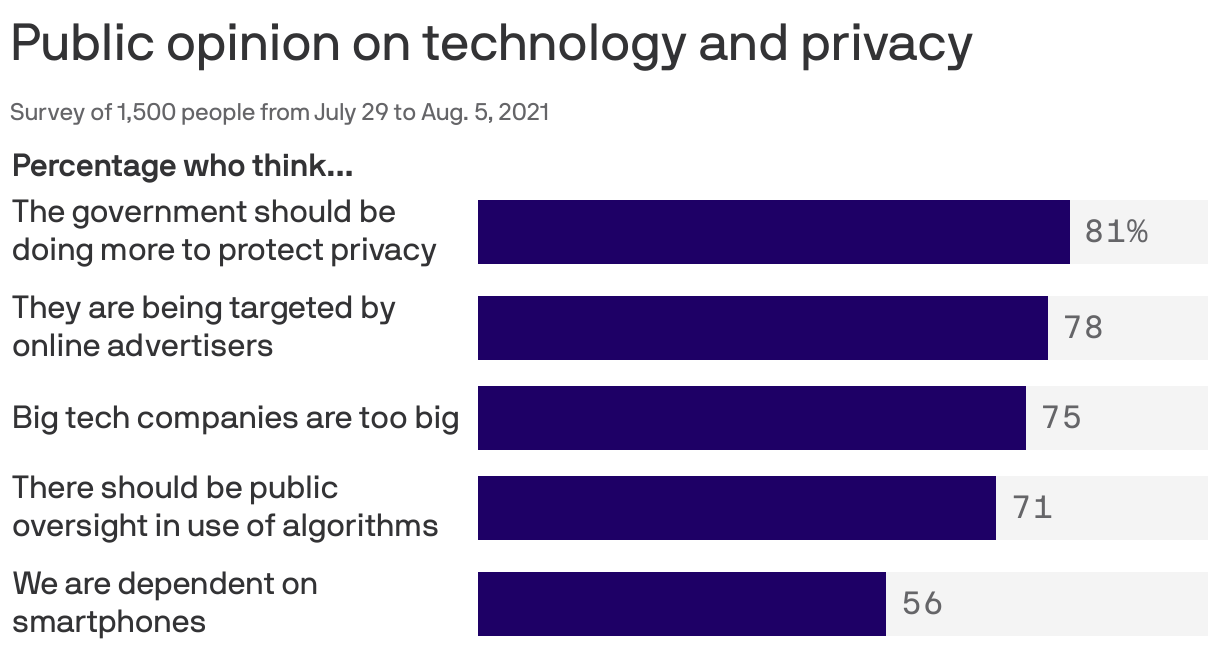
Big majorities of Americans think tech companies are too big and too nosy and want government to rein them in, an exclusive poll by Axios and the Illinois Institute of Technology finds.
Why it matters: As technology's role in American life increases, people on both sides of today's political divide have grown wary of its influence.









/2021/12/21/1640118813391.gif?w=3840)