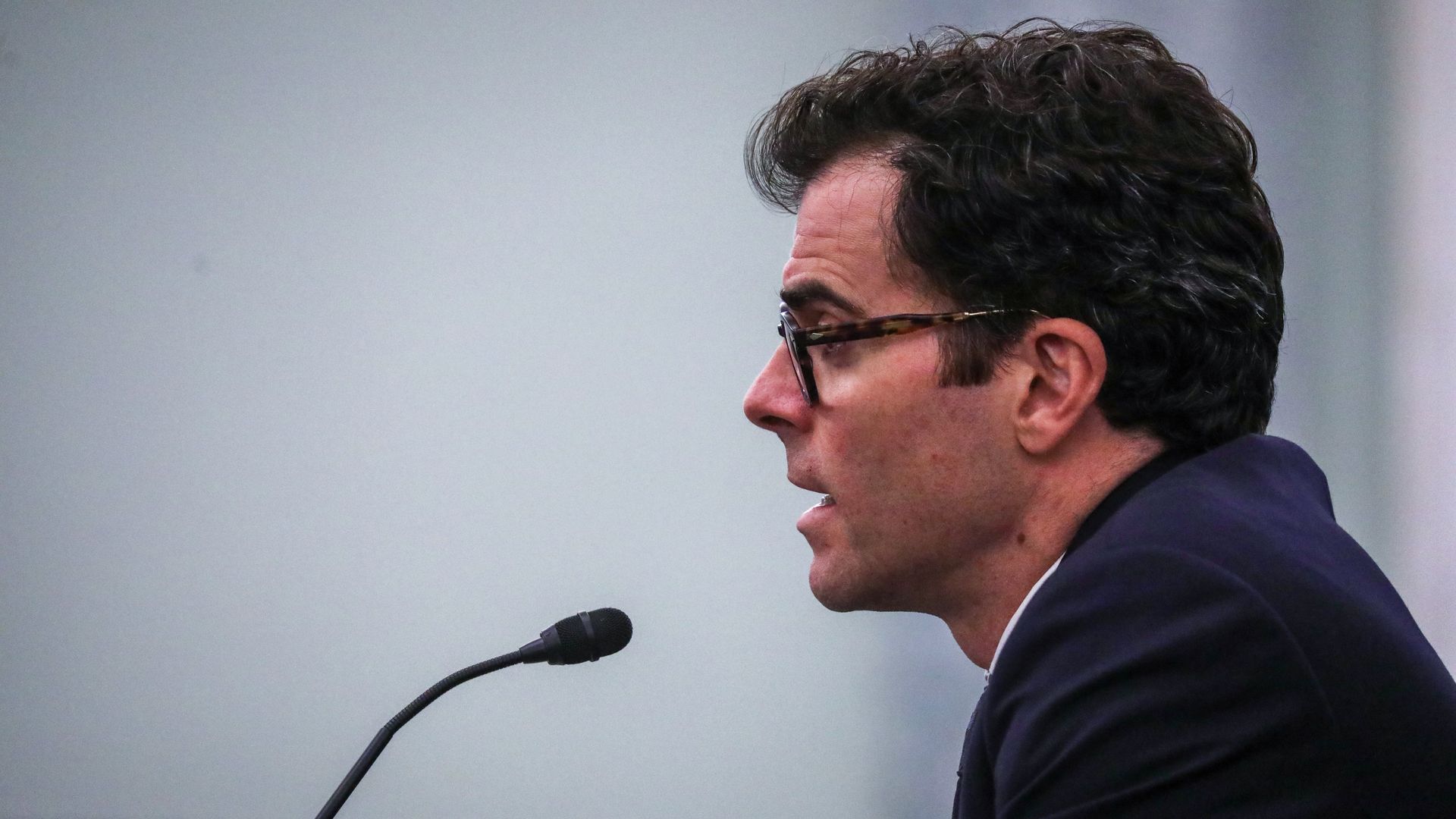
Instagram head Adam Mosseri testified before Senate lawmakers Wednesday and was pressed on the app's impacts on young children and teens.
Why it matters: Legislation to protect kids online is one area Congress has shown it's willing to regulate, as Axios previously reported. Wednesday's back-and-forth gave momentum to lawmakers eager to make more rules for social media platforms and how children and teens can use them.
Medical schools are experimenting with virtual and augmented reality technologies to help doctors-in-training practice their skills.
Why it matters: Replacing actors pretending to be patients with holographic videos that can be generated anywhere can make the hands-on part of medical education cheaper and more flexible.
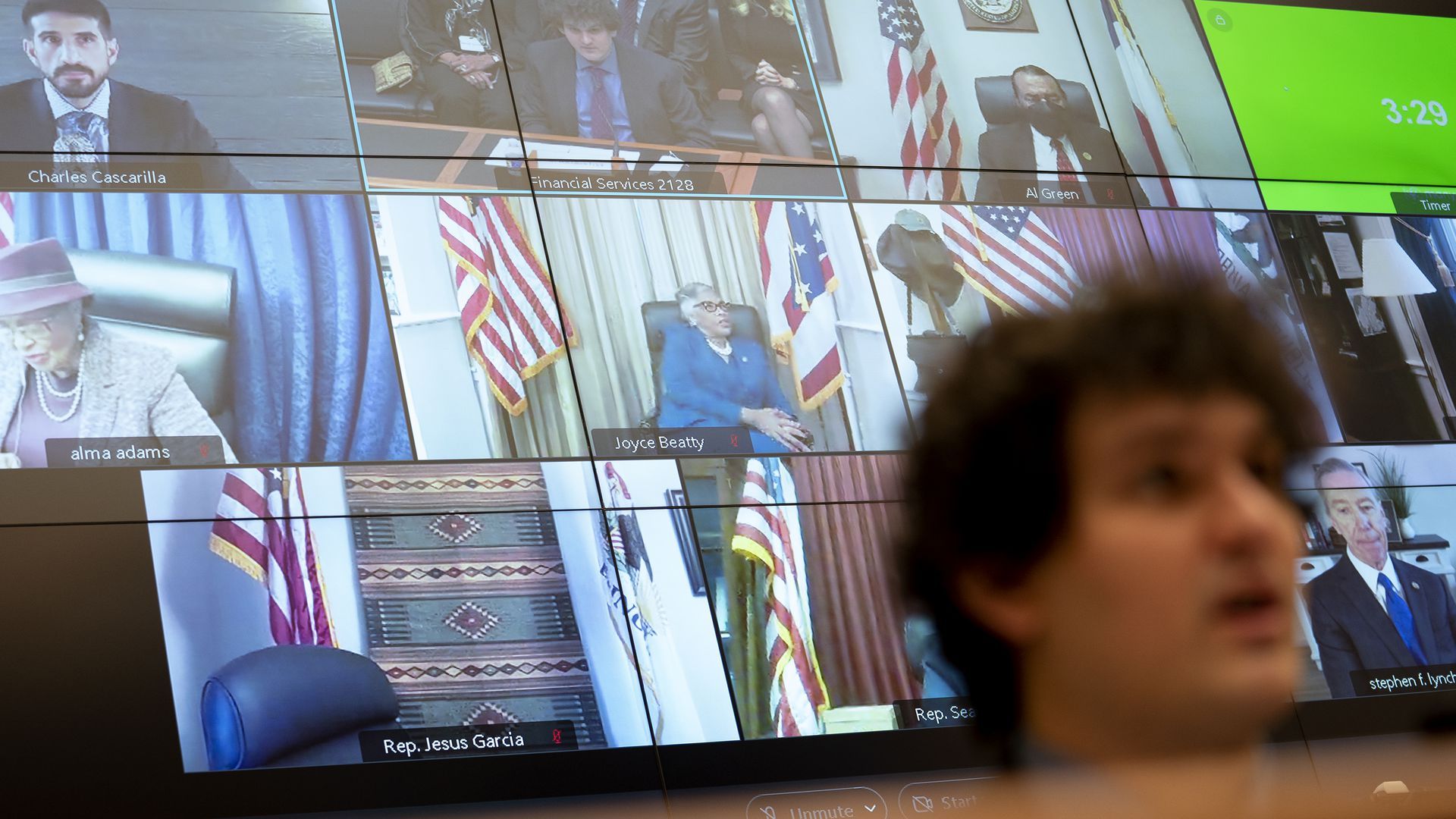
We're not the Wild West— but give us clearer rules of the road: This was the message to Congress from the heads of six cryptocurrency companies on Wednesday.
Why it matters: Never before have crypto executives been hauled to Washington like this. It was the highest-profile attempt by the industry to plead its case.
Why it matters: Apple can breathe a sigh of relief while its lawyers argue the case in coming months, knowing it does not have to open iOS to alternative in-app payment methods, as the trial court judge had ordered, until the appeal is resolved, Axios' Scott Rosenberg writes.
A current Blizzard employee and her prominent lawyer held a press conference outside of Blizzard’s Irvine, Calif. headquarters Wednesday, detailing harassment allegations and calling for a victims fund “in excess of $100 million.”
Why it matters: It was another first in the Activision Blizzard workplace abuse scandal, which has already seen some of the game industry’s most significant and unprecedented laboractions.
Buf, a Toronto-based startup focused on improving protocol buffers, tells Axios that it has raised over $93 million in funding since being founded last year.
Why it matters: The company is working to change how machines and computers communicate with one another, automating away a lot of API implementation work. Or, put more simply, it wants to help give engineers some of their time back.
The head of Instagram called for the creation of an industry body to develop best practices for protecting youngsters online during his first appearance before Congress, as Big Tech faces blowback from lawmakers over tech's harms to children.
Why it matters: Republicans and Democrats have found common ground in grilling tech companies on how their products harm children, especially after revelations in The Wall Street Journal about Instagram's potential harm to the mental health of teen girls.
Roku and Google have agreed to a multi-year extension for both YouTube and YouTube TV apps to be distributed on Roku.
Why it matters: Roku's deal with Google to distribute YouTube was set to expire this month. Without a deal, YouTube would've been removed from Roku's channel store, creating a big competitive disadvantage, especially during the holiday season.
Ubisoft military shooter Ghost Recon Breakpoint will get three limited-edition in-game NFT items on Thursday — a helmet, a gun skin (read: look) and leg armor — which players will be able to resell through a new platform called Quartz.
Why it matters: While big game companies including Zynga, Square Enix and Take-Two have dabbled with or expressed interest in NFTs, Ubisoft is the first big publisher to put them in a major game.
Google LLC has filed a lawsuit against a botnet named Glupteba, believed to be operated from Russia. It's a network that the company says has been infecting Google services on Windows computers for years.
Why it matters: Tech companies are taking the reins in fighting back against computer hackers, not just relying on law enforcement to do it.
Newspapers all over the country have been quietly filing antitrust lawsuits against Google and Facebook for the past year, alleging the two firms monopolized the digital ad market for revenue that would otherwise go to local news.
Why it matters: What started as a small-town effort to take a stand against Big Tech has turned into a national movement, with over 200 newspapers involved across dozens of states.
Overseastelecom providers, increasingly frustrated with American tech firms whose apps are gobbling up bandwidth, are pushing them to pay more for it.
Why it matters: Any effort to reslice the "cost of internet bandwidth" pie could shake up the entire industry, make new winners and losers, and put new pressure on U.S. tech giants.
Donald Trump's social media startup is under investigation by federal securities regulators, before it's even launched a product, and every new disclosure seems to invite new questions.
Why it matters: Trump Media & Technology Group was always bound to be controversial, but it's inviting extra scrutiny by keeping basic details secret and making wild promises.
Rohingya refugees accused Facebook in a $150 million lawsuit filed Monday of amplifying hate speech against the persecuted minority Muslims in Myanmar via algorithms and failing to take down inflammatory posts.



















/2021/12/06/1638825619054.gif?w=3840)