Dish Network says that T-Mobile has gone back on promises it made in order to win permission to buy Sprint and is asking the California Public Utilities Commission to enforce the company's pre-merger commitments.
Why it matters: The effort, which follows a complaint to the FCC, centers around T-Mobile's decision to end support for Sprint's older CDMA network at the beginning of next year — a network still used by the majority of Dish's customers.
Apple aims to spend more than $430 billion across the U.S. over the next five years through building new campuses, investing in data centers and 5G and funding Apple TV+ productions.
Driving the news: The company plans to spend over $1 billion in North Carolina to build an East Coast campus as it continues construction on a $1 billion campus in Austin, Texas.
Roku on Monday notified its users via email that YouTube TV may be forced off its platform entirely, alleging anti-competitive demands from Google that include requests for preferential treatment of its YouTube TV and YouTube apps.
Why it matters: It's one of the first big carriage disputes around anti-competitive behavior in the streaming era. Unlike most streaming TV carriage fights, Roku says it's not asking for more money, but for better terms around anti-competitive demands from Google — such as being asked to favor Google products in Roku search results.
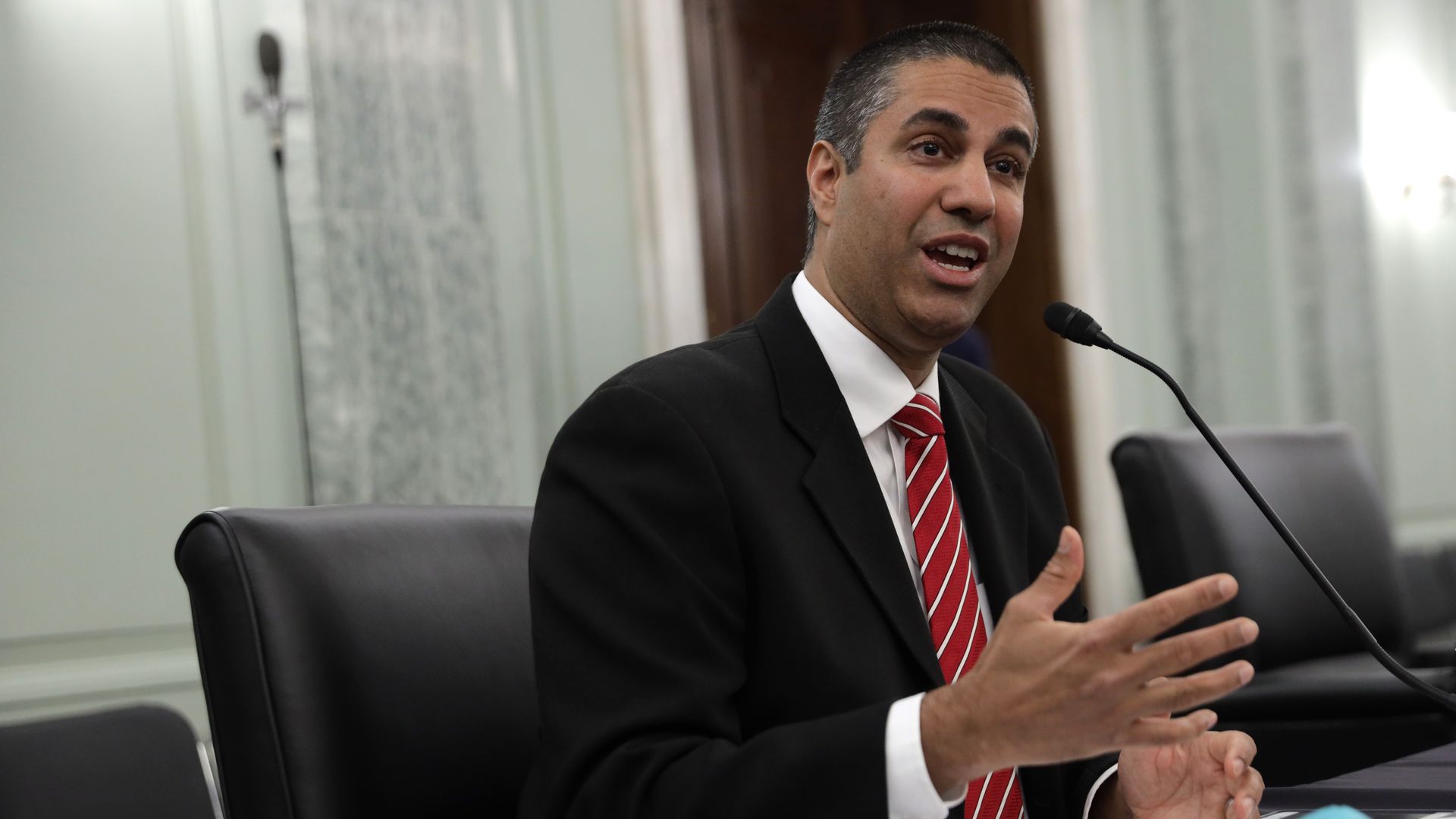
Ajit Pai, former chairman of the Federal Communications Commission, has joined private equity firm Searchlight Capital Partners as a partner.
Why it matters: Pai, who was an FCC commissioner before former President Trump picked him as chair, is best known for telecom deregulation efforts, including the repeal of net neutrality rules. Searchlight has several portfolio companies in the media and telecom space, including Univision, Uniti and Ziply Fiber.
Nearly every major social platform has recently introduced some form of tipping, allowing users to directly support their favorite personalities in real time.
Why it matters: Creators have been fueling engagement on social media platforms for years, but only now that the creator economy is maturing are they actually able to make money directly from their fans.
T-Mobile has long positioned itself as a disruptive underdog, but a year after the close of its purchase of Sprint, the "un-carrier" has fully joined Verizon and AT&T in the U.S. wireless-provider big league.
Why it matters: Nearly everyone in America has a cell phone, and most people send a significant chunk of change each month to one of the major carriers, making healthy competition in this market a must.
The U.S. has taken a hands-off approach to regulating self-driving cars, hoping to help the market thrive — but that approach could ultimately backfire, if it helps sow doubt about the technology's safety.
Driving the news: The U.S. auto safety agency is investigating 28 crashes of Tesla vehicles. And with no clear rules or accountability, these incidents risk undermining public confidence in a technology that's supposed to help the U.S. keep its global competitive edge.





/2021/04/25/1619388539043.gif?w=3840)