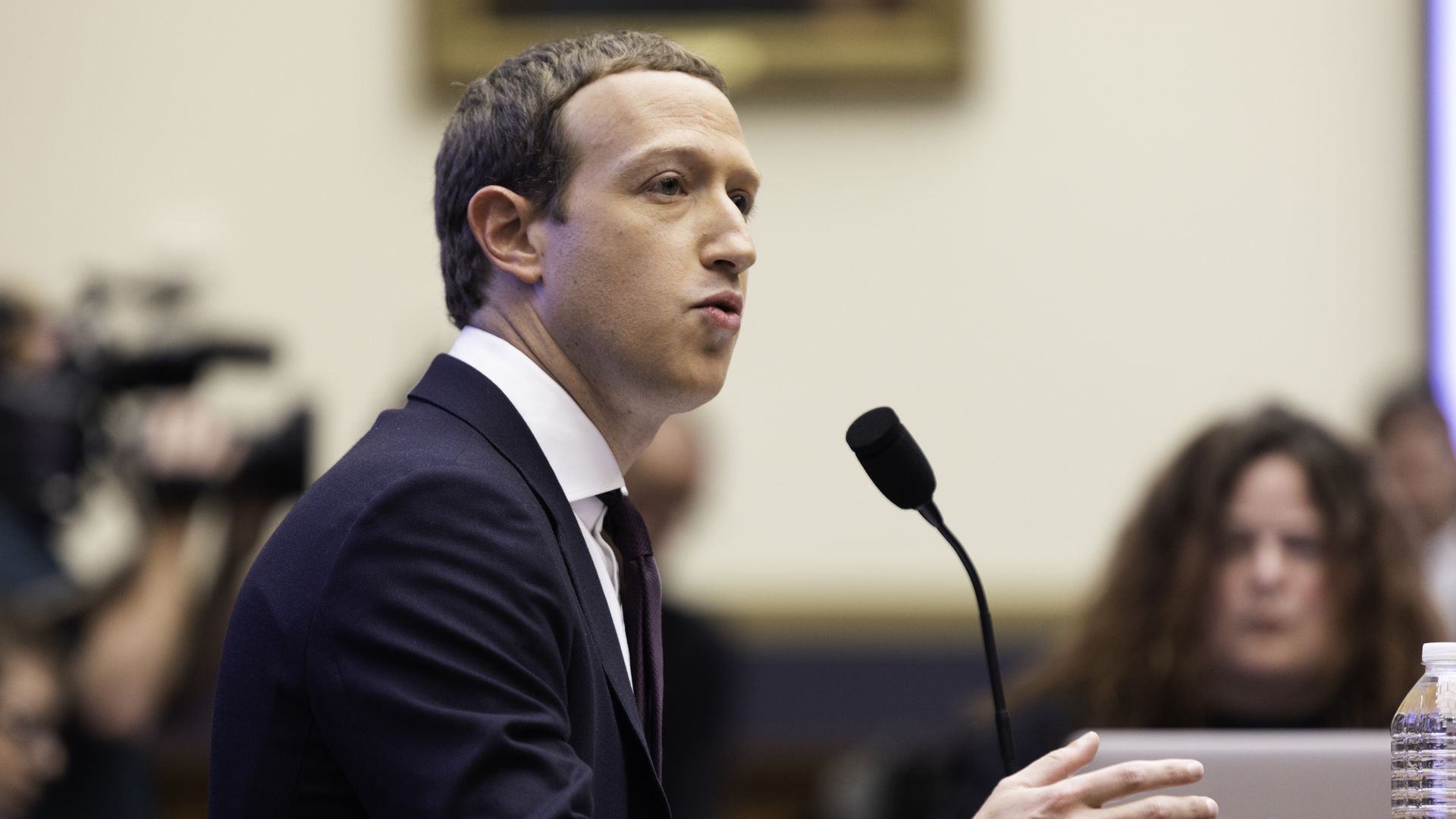
Congress on Thursday announced two tech-related hearings — one featuring major tech CEOs and another meant to kick off new antitrust legislation.
What's happening: On March 25, the House Energy and Commerce Committee will hear from Facebook CEO Mark Zuckerberg, Twitter CEO Jack Dorsey and Google CEO Sundar Pichai during a hearing about misinformation on online platforms.
A group of tech industry trade associations sued the state of Maryland Thursday over its newly enacted tax on digital ads targeted at state residents.
Driving the news: Last week, the Maryland legislature voted to overturn Republican Gov. Larry Hogan's veto of the state's first-in-the-nation digital tax law, which aims to raise money for education initiatives in the state by taxing digital advertising from the biggest companies.
Business is also feeling the bite from the Texas winter storm, with a number of chipmakers forced to suspend production.
Why it matters: Even a brief shutdown of chip production in Texas could exacerbate the global chip shortage that's already reducing production of everything from cars to computers.
Facebook is expanding the geographic reach of its recently launched online portal to counter misinformation about climate change, and will take new steps to steer users of the platform toward those resources.
Why it matters: Social media platforms have immense reach, and they've come under fire from activists and some lawmakers globally for doing too little to thwart the spread of inaccurate content.
When the Australian government told tech platforms they had to start paying publishers for the headlines and links that fill their users' posts, Google caved but Facebook walked.
Why it matters: These companies' moves Wednesday — as Google struck a deal with News Corp to evade Australia's forthcoming rules, while Facebook essentially barred news content there — could shape how news companies are compensated for their work online for years to come.
Nine of the world's biggest tech companies have come together to establish an industry framework for handling harmful content and conduct online.
Why it matters: Tech companies, facing a threat from U.S. lawmakers who are considering changing the rules around what content they are liable for on their platforms, are eager to win back public trust.
Facebook on Wednesday said it would restrict publishers and people in Australia from sharing or viewing Australian and international news content in response to a new law requiring tech platforms to reimburse news publishers.
Why it matters: The move sets a precedent for how Facebook may handle other global efforts to force it to pay news publishers for their content.
China, Russia and Iran — drawing on one another’s online disinformation — amplified false theories that the COVID-19 virus originated in a U.S. bioweapons lab or was designed by Washington to weaken their countries, according to a nine-month investigation by AP and the Atlantic Council’s DFRLab.
Why it matters: Through a series of overlapping, if slapdash, efforts, America's global adversaries benefited from mutually reinforcing counter-narratives propagated online that aimed to falsely place responsibility for the pandemic on the U.S. and often to sow doubt on its actual origin within China.
The COVID-19 pandemic transformed the world — and the afflictions of malware evolved with it, writes the security company Malwarebytes in its 2021 State of Malware report.
Why it matters: “The story of malware in 2020 … is a story of how the tools and tactics of cybercrime and cybersecurity changed against a backdrop of enormous changes to ordinary life,” says the report.
Federal investigators levied new charges Wednesday against three North Korean computer programmers accused of wide-ranging cyberattacks, including the 2014 Sony Pictures hack and schemes to extort more than $1.3 billion of money and cryptocurrency.
The big picture: The charges expand on the FBI's 2018 case on the cyberattacks targeting Sony Pictures and the WannaCry 2.0 ransomware attack.
Axiom Space, a Houston-based developer of what would be the world's first commercial space station, raised $130 million in Series B funding led by C5 Capital.
Why it matters: Axiom represents what many believe is the future of space, whereby NASA becomes a customer everywhere in low-Earth orbit so that it can focus on the Moon, Mars and beyond.
Verizon's $6.2 billion bid to buy wireless company TracFone has raised concerns that the deal could cut off access to affordable mobile phone service.
The big picture: The deal has flown under the radar, but TracFone is one of the nation's largest providers of subsidized cell phone service for low income people, an especially important program during the coronavirus pandemic — and one that Verizon hasn't traditionally focused on.
Epic Games is taking its legal battle against Apple global, filing an antitrust complaint in Europe against the iPhone maker.
Why it matters: The move adds another layer to the protracted dispute and brings it to a jurisdiction that has historically been tougher on U.S. tech companies.
New York Attorney General Letitia James filed a lawsuit against Amazon Tuesday night over its handling of worker safety during the pandemic, alleging the retail giant hasn't complied with workplace rules.
Details: In the suit, James also alleges that Amazon illegally retaliated when employees expressed concerns about conditions last spring, when it fired an activist following a protest by workers at a warehouse on New York's Staten Island.
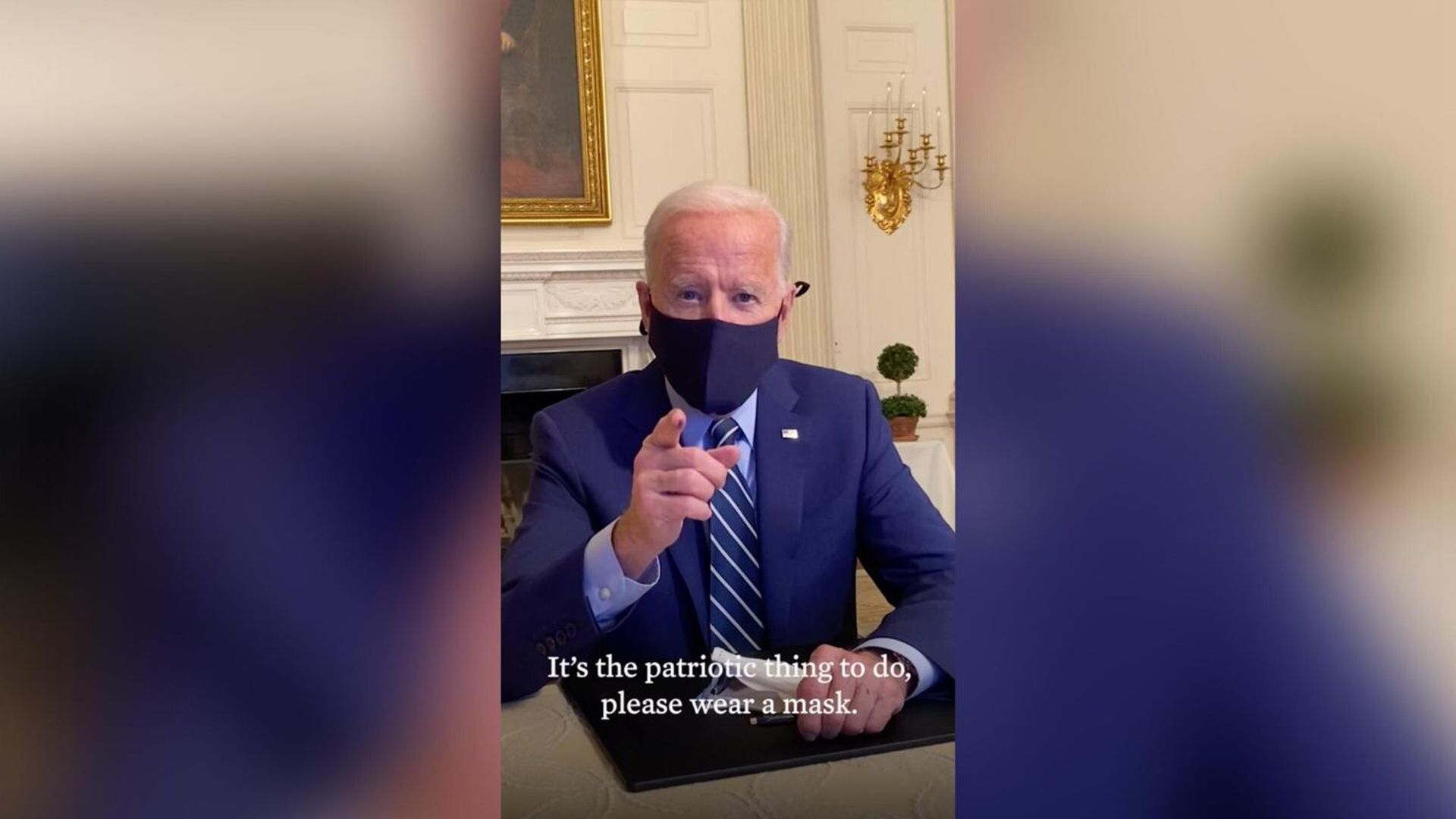
The White House marked a return to Snapchat with President Biden and his chief medical adviser, Anthony Fauci, appearing in public health video messages on the COVID-19 pandemic.
Details: In the White House Snapchat story, which appears on the "Discover" page of curated content, a masked Biden urges users to wear face coverings because "you're going to save lives."









/2021/02/17/1613583994384.gif?w=3840)




/2021/02/16/1613515038113.gif?w=3840)