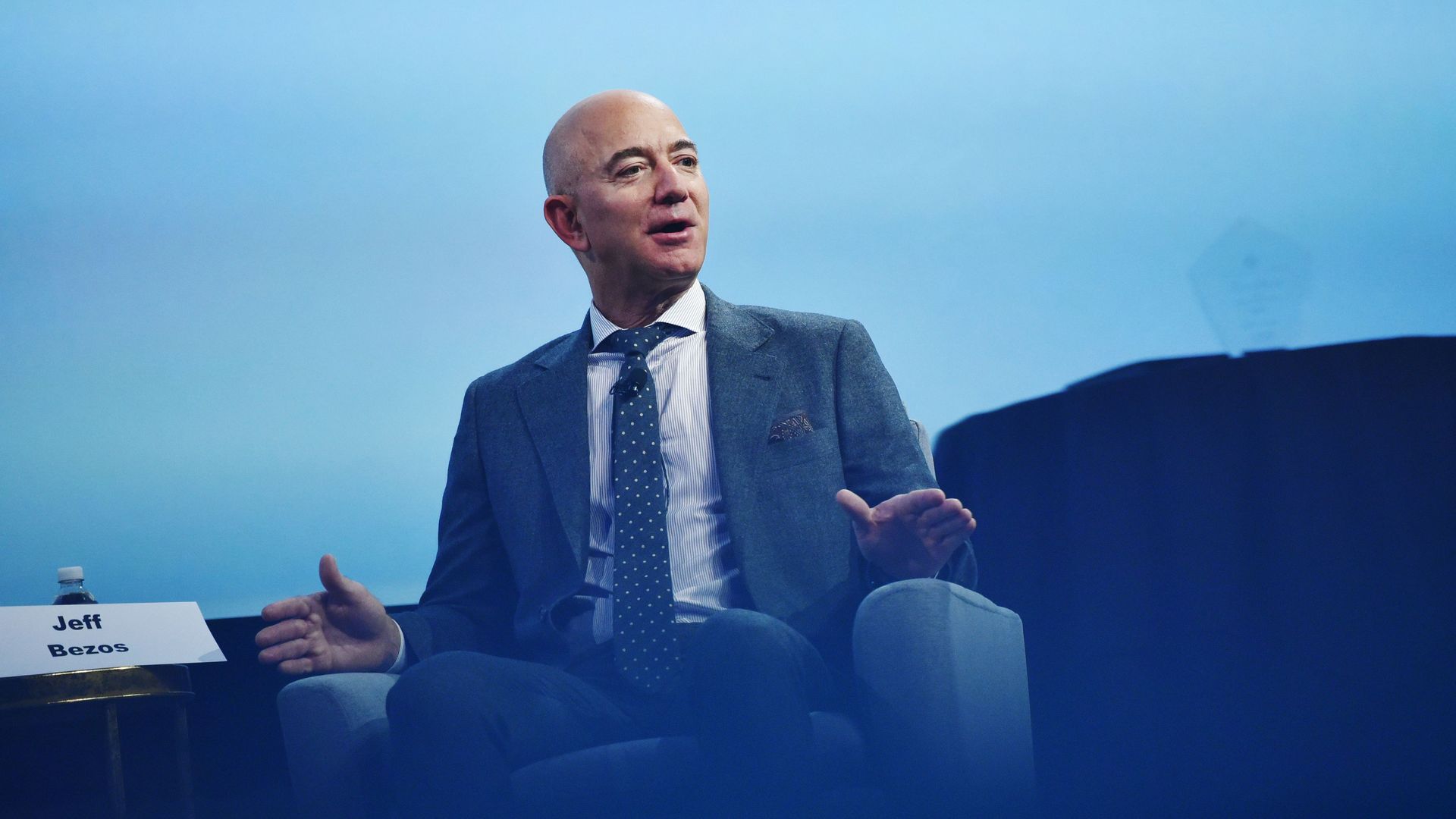
Amazon announced on Tuesday that founder Jeff Bezos will step down as CEO in the third quarter of this year and transition to executive chair of the company's board.
The big picture: Bezos will be replaced by Amazon Web Services chief Andy Jassy, who heads the booming cloud business division.
The House Financial Services Committee on Feb. 18 will hold a hearing titled “Game Stopped? Who Wins and Loses When Short Sellers, Social Media, and Retail Investors Collide." Among those expected to testify is Vlad Tenev, CEO of stock trading app Robinhood.
Axios Re:Cap speaks with Rep. Patrick McHenry (R-N.C.), the committee's ranking Republican, on what he hopes to learn and what legislation or regulation might follow.
Amazon on Tuesday unveiled new design details for its second headquarters, in Arlington, Virginia.
Details: The headquarters will include 2.8 million square feet of office space spread across three 22-story buildings. At the center will be "The Helix," a tree-covered office building that the company said "will feature two walkable paths of landscaped terrain that will spiral up the outside of the building."
Amazon will pay more than $61.7 million to settle charges from the Federal Trade Commission that it did not pay drivers in the Amazon Flex delivery service their full share of tips over a two and a half year period.
The big picture: Amazon faces a rising chorus of accusations that it underpays and overworks its warehouse workers and delivery drivers.
Integrated Media Company (IMC), the digital media investment arm of private equity giant TPG, has acquired the majority stake in StackCommerce, an e-commerce platform that connects publishers with brands to sell products through content.
Why it matters: "TPG is an investor in a lot of media companies," says Josh Payne, Founder and CEO of StackCommerce. "Those connections are incredibly valuable."
Transgender health needs, long neglected by the medical establishment, could get a needed assist from tech, as a pair of startups that focus on hormone treatment and other services today announce fresh venture funding.
Why it matters: Transgender and non-binary people can face enormous barriers to health care, from a scarcity of facilities that provide gender-affirming care to insurance company denials and outright discrimination.
Where there’s a coup, there will probably be an internet outage.
Why it matters: Internet disruptions in Myanmar early Monday morning coincided with reports that top politicians, including the country’s de facto leader Aung San Suu Kyi, were being rounded up by the military. That’s no surprise: Internet blackouts are now common around the world when power hangs in the balance.
Google has agreed to pay more than $3.8 million to settle Labor Department allegations that the search giant discriminated in hiring and pay against women and people of Asian descent.
The big picture: The deal ends the Labor Department case but the broader issues of discrimination at Google and other tech giants are far from settled.
Why it matters: There is perhaps no more visible a champion of “enterprise blockchain” than IBM. A company that once trotted out a slate of TV commercials on the promise of more efficient supply chains has now cut up to 90% of its blockchain headcount.
The Federal Communications Commission on Monday took a first step toward allowing schools to use a federal funding program to help students connect to the internet at home during the coronavirus pandemic.
Why it matters: Schoolwork has gone remote because of the pandemic, but the FCC funding that schools receive for internet connections doesn't extend beyond the physical classrooms.
Ford will install Google's Android operating system on all new vehicles starting in 2023, giving passengers access to more personalized services and potentially unlocking new lines of business for the automaker.
Why it matters: Ford's decision, part of a broader technology partnership with the tech giant, is an acknowledgment that carmakers need Silicon Valley's help to adapt to seismic changes in the transportation industry.
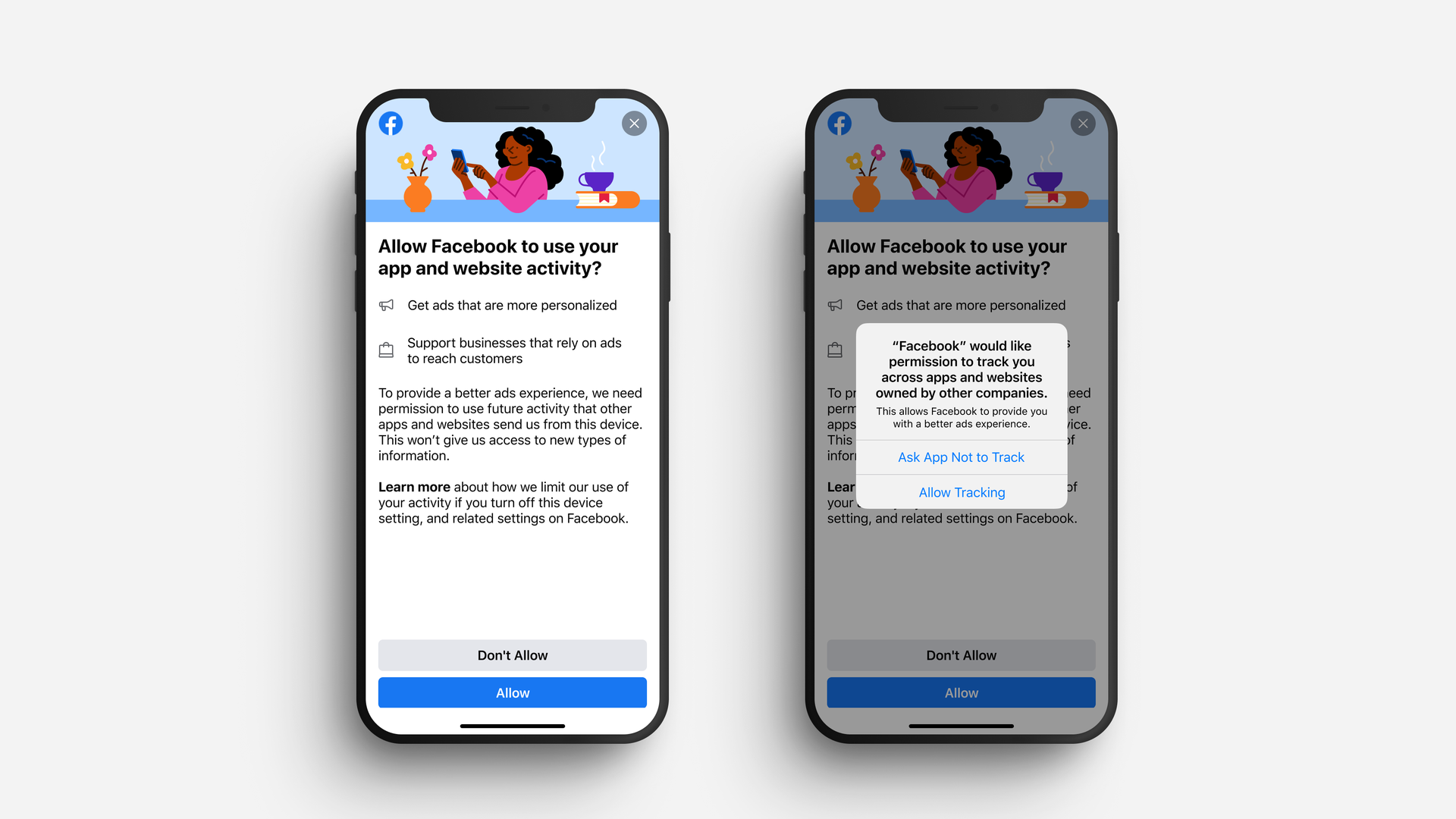
Facebook is testing a notification that notifies Apple iOS users about ways the tech giant uses their data to target personalized ads to them.
The big picture: The test is happening in light of upcoming changes to Apple's privacy settings that will make it harder for Facebook and others to collect data on Apple users for ad targeting.
Sen. Joe Manchin (D-W.Va.) is reviving his bipartisan bill that would add fresh carve-outs to tech's liability shield to force online platforms to report opioid sales and other illegal activity on their websites to law enforcement.
Why it matters: As the 117th Congress shifts into gear, tech companies will again be fighting attempts by lawmakers of both parties to tweak or curb Section 230 of the Communications Decency Act, which shields website operators like Facebook or Reddit from liability over content their users post.
Warning bells are sounding for the U.S. semiconductor industry as Intel grapples with internal and competitive challenges that could imperil the future of domestic chipmaking.
Why it matters: Chips are some of the only strategic tech products that are actually manufactured in the U.S., accounting for a quarter-million U.S. jobs. They're also a small but key piece in the power struggle between the U.S. and China.





/2021/02/02/1612251507788.gif?w=3840)


/2021/02/02/1612227940799.gif?w=3840)