Restaurant meal delivery company DoorDash on Tuesday evening raised $ 3.4 billion in its initial public offering, and will begin trading Wednesday on the New York Stock Exchange under ticker symbol DASH. CNBC earlier reported the news.
By the numbers: DoorDash priced at $102 per share, versus its upwardly revised range of $90-$95 per share, giving it a fully diluted valuation of around $39 billion. Its last private market valuation was $16 billion, secured over the summer.
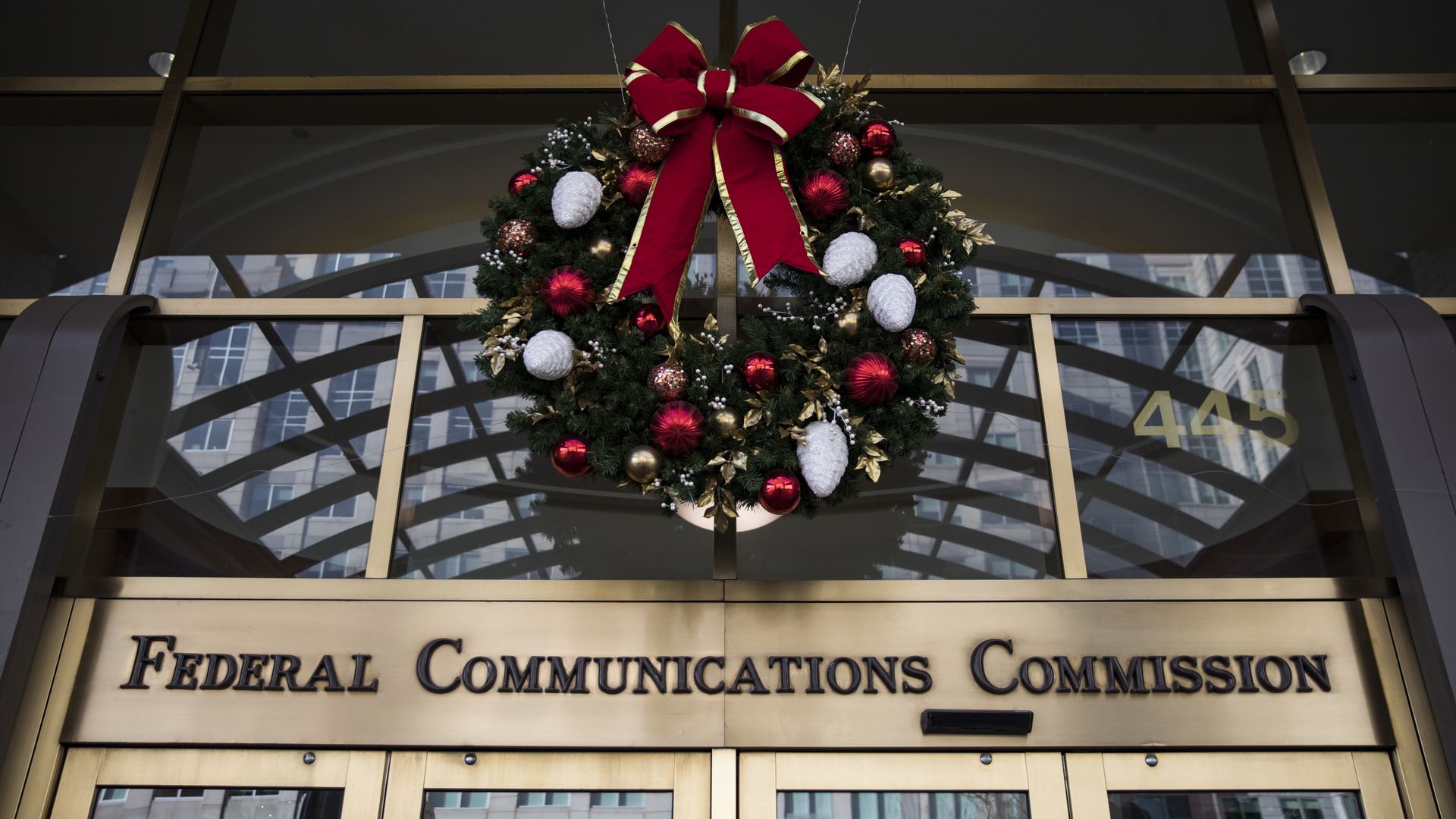
The Senate voted 49-46 Tuesday to confirm President Trump's nominee to the Federal Communications Commission, setting up the Biden administration to start with a deadlocked agency.
Why it matters: Nathan Simington's addition to the FCC will mean Democrats will lack a majority at the telecom regulator once Joe Biden takes office and will struggle to advance party priorities such as reinstating net neutrality rules.
Cybersecurity firm FireEye said Tuesday it had been hacked by what the company called “a nation with top-tier offensive capabilities," compromising its internal software and systems, the Wall Street Journal reports.
Why it matters: The company said the attacker accessed the firm's internal tools used to test the cyber defenses of its clients and sought information about its government customers. FireEye noted it had no evidence thus far that data belonging to its clientele had been jeopardized, and it's investigating the breach with the help of the FBI and industry partners, such as Microsoft.
Microsoft has a new tool called "Productivity Score" that lets managers track how often their workforces are using Word and Excel, how many emails they're sending on Outlook, and how many video meetings they're attending on Teams or Skype.
The big picture: After fielding backlash over privacy concerns, Microsoft no longer allows companies to collect individual employee data with the tool. Firms can just look at aggregate numbers to track how they're using different products.
Uber has agreed to sell Elevate, its "flying taxi" division, to Joby Aviation, the company said on Tuesday, confirming Axios' recent reporting. It's also investing $75 million into Joby as part of the deal.
Why it matters: Despite making a lot of noise about its ambitions for futuristic transportation, Uber has now sold off both its autonomous driving unit and its aircraft unit.
The ad market only ended up falling about 4.2% in the U.S. this year, thanks to digital media.
Why it matters: Analysts were initially expecting double-digit growth declines, but stronger-than-expected spend in social media and digital video helped to stabilize the ad sector as a whole.
Josh Richards is joining Remus Capital, an early-stage venture capital firm, as a Venture Partner, Axios has learned.
The backdrop: Richards, 18, has more than 22 million followers on TikTok and is an angel investor and chief strategy officer at Triller. Remus invests in startups that cater to Gen-Z, like boutique fitness app ClassPass.
Amazon announced a pair of significant cloud deals Tuesday, with ViacomCBS moving its media business to Amazon Web Services and Thomson Reuters having completed its own migration of thousands of servers to Amazon's cloud.
Why it matters: Amazon remains the leader in cloud services, but faces growing competition from Microsoft Azure and Google Cloud.
More than half of Americans say they have little or no trust in social media when it comes to information on the COVID-19 vaccine, according to Harris Poll data shared first with Axios.
Why it matters: For a vaccine to be effective in taming the pandemic, people will have to receive accurate information — and then be able to identify it as such. For many, that will mean receiving it elsewhere than on social media.
Activism and social movements dominated activity on social media this year, according to numerous data sets provided by big platforms and researchers.
Why it matters: Social media launched over a decade ago as a means of connecting people to friends and helping users express themselves. Now, it's one of the main vehicles used to push political change and raise awareness about social issues.
As Congress rushes to pass giant year-end funding bills, some members are taking last shots at the tech industry's giants by tacking on a range of measures the industry opposes.
The big picture: These funding bills are a favorite vehicle for advancing causes unrelated to government spending. This year, beating up on tech companies is a popular one — not just with Congress but with President Trump, who has campaigned relentlessly for legislators to use a must-pass defense spending bill to repeal a key tech-industry liability protection.