A group of Uber drivers, along with nonprofits Worksafe and the Chinese Progressive Association, have sued the ride-hailing company, arguing that in-app messages promoting a California ballot measure that would enshrine their status as independent contractors violate drivers' right to be free of political influence from their employer.
Why it matters: Uber and other gig-economy companies have poured nearly $200 million into the campaign, as classifying their workers as independent contractors instead of employees is central to their business models.
Shares of Intel fell as much 10% in after-hours trading Thursday — after the company posted quarterly revenue and earnings generally in line with expectations.
Why it matters: The chip giant is a bellwether for the PC industry, and small signs of weakness may be playing an outsize role in spooking investors.
Energetic Bear, a Russian state-sponsored hacking group, has stolen data from two servers after targeting state and federal government networks in the U.S. since at least September, the FBI and Cybersecurity and Infrastructure Security Agency said on Thursday.
Driving the news: Director of National Intelligence John Ratcliffe announced Wednesday that Iran and Russia had obtained voter registration information that could be used to undermine confidence in the U.S. election system.
Short-form video streaming app Quibi announced that it will cease operations, just six months after a high-profile launch backed by $1.75 billion in funding from studios and venture capitalists.
Axios Re:Cap digs into what went wrong and what happens next, with REDEF CEO Jason Hirschhorn.
The Facebook Oversight Board announced Thursday that some Facebook and Instagram users can now submit appeals to the Oversight Board for an independent review of their own content removals.
Why it matters: The board, a first-of-its-kind internet governance body, will begin hearing cases from users ahead of the U.S. election.
PayPal's decision to allow customers to hold bitcoin and other virtual currencies in its online wallet and shop using cryptocurrencies sent the value of bitcoin soaring on Wednesday.
Why it matters: With 346 million active accounts around the world and 26 million merchants, PayPal could bring cryptocurrencies into mainstream acceptance.
More than two-thirds of gig workers have seen their incomes drop during the coronavirus pandemic, with almost a third cutting back on food as they struggle to cover expenses, according to new data from an industry survey shared exclusively with Axios.
The big picture: The pandemic has put ride-share drivers, personal shoppers and others at heightened risk of contracting the coronavirus without netting them benefits or additional pay.
The Justice Department's antitrust suit against Google is a strong, straightforward monopoly case, competition lawyers and experts tell Axios. But that doesn't mean it'll be an easy journey for the government.
The big picture: Winning any antitrust case is a heavy lift. It's even more of a challenge to pull off victory in a future-looking case that seeks to make room for potential new competition to flourish.
President Trump and lawmakers reacted to Director of National Intelligence John Ratcliffe's announcement that Iran and Russia sought to influence the U.S. election by obtaining voter registration data in an attempt to spread false information.
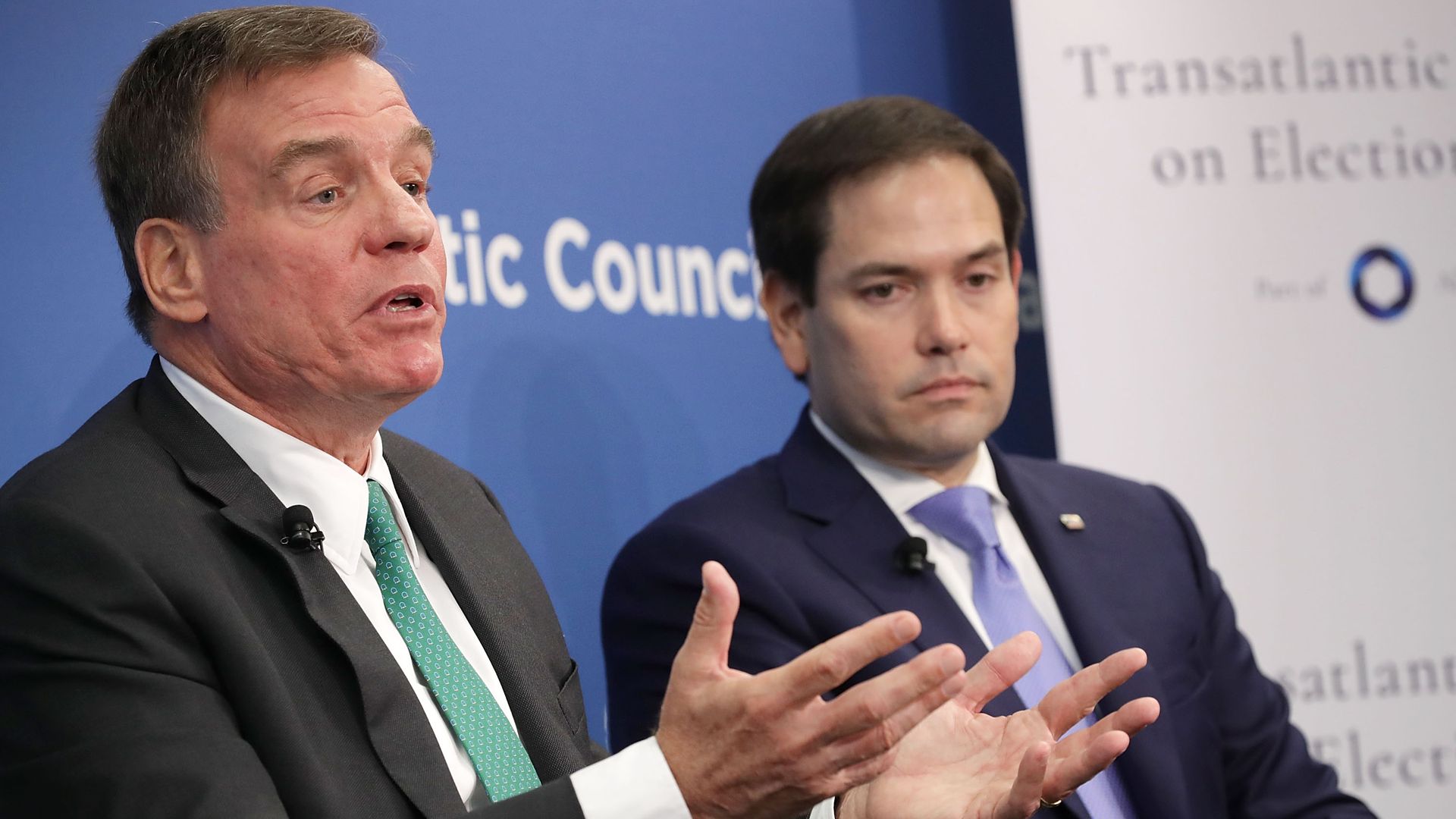
What they're saying: Senate Intelligence Committee Chair Marco Rubio (R-Fla.) and Vice Chair Mark Warner (D-Va.) urgedAmericans in a joint statement to "be cautious" ahead of the Nov. 3 election "about believing or spreading unverified, sensational claims related to votes and voting."
Quibi, the mobile-only video subscription streaming service, is shutting down, the company announced Wednesday. The company said the decision was made to preserve shareholder equity.
Why it matters: Quibi had struggled to hit its subscriber growth targets amid the global pandemic. The app launched six months ago.
New forms of "empathetic computing" are helping human users feel more comfortable in opening up to a program.
Why it matters: Our mental health has taken a major hit during the COVID-19 pandemic, while social distancing means it's harder to meet in person with therapists. That has opened a space for emotionally attuned machines to help us.
The Justice Department filed a 63-page antitrust lawsuit against Google related to the tech giant's search and advertising business. This comes just weeks after the House subcommittee on antitrust issued its own scathing report on Google and other Big Tech companies, arguing they've become digital monopolies.
Axios Re:Cap talks with Rep. David Cicilline (D-R.I.), chair of the subcommittee on antitrust, about Google, the DOJ's lawsuit and Congress' next move.
The recent firestorm over the New York Post’s publication of stories relying on data from a hard drive allegedly belonging to Hunter Biden shows the increasingly hazy line between domestic political “dirty tricks” and a foreign-sponsored disinformation operation.
Why it matters: This haziness could give determined actors cover to conduct influence operations aimed at undermining U.S. democracy through channels that just look like old-fashioned hard-nosed politics.
Google is expected to net more than 71% of the U.S. search advertising spending this year, down from roughly 74.7% of market share in 2017, per eMarketer.
The Justice Department fired the starter pistol on what's likely to be a years-long legal siege of Big Tech by the U.S. government when it filed a major antitrust suit Tuesday against Google.
The big picture: Once a generation, it seems, federal regulators decide to take on a dominant tech company. Two decades ago, Microsoft was the target; two decades before that, IBM.
It's taken Google two decades to transform from a beloved search innovator into a Big Tech behemoth.
Flashback: At Google's launch 22 years ago, it provided accurate, simple, fast results — unlike its competitors in search, which had become bloated "portals" — and quickly won the hearts first of Internet insiders and then of the broader public.
Microsoft's epic battle with the U.S. government from 1997-2002, the last major federal antitrust action in tech, casts a long shadow over today's Department of Justice lawsuit against Google — but the industry landscape today is profoundly different.
The big picture: Microsoft's legal ordeal came at a moment when its old competitors, like Apple, were on the ropes, and new competitors, like Google, were just launching. The antitrust case preoccupied Bill Gates and the rest of Microsoft's leadership for years and arguably gave all those competitors the breathing room to grow toward their current success.
More than 430,000 people tuned in simultaneously to Twitch on Tuesday night to watch Rep. Alexandria Ocasio-Cortez (D-NY) play a hit video game as part of an effort to promote voting.
Why it matters: The event brought in reportedly the third biggest audience ever for an individual Twitch stream, with Ocasio-Cortez playing Among Us joined by popular gamers as well as fellow Rep. Ilhan Omar.