Uber and Lyft must reclassify their California drivers as employees under a preliminary injunction granted Monday by a San Francisco judge.
Why it matters: The ride-hailing companies, along with other gig economy firms, are resisting classifying their drivers as employees, which labor advocates say would give the workers greater benefits and rights. A new California law codified stricter requirements before companies can classify workers as contractors.
Twitter is the latest to join the cast of the ongoing spectacle that is TikTok’s battle to stay open for business in the U.S., per a new report from the Wall Street Journal.
Why it matters: The saga to keep TikTok available to U.S. users is getting more complicated, with the company already in a President Trump-imposed time crunch and juggling a number of options.
Google could lose 20% of the mobile search market that it dominates if more users had the option to choose their default search provider via a preference menu, privacy-focused search engine DuckDuckGo argues in new research shared exclusively with Axios.
The big picture: DuckDuckGo has met with Justice Department regulators about requiring Google to create a preference menu so Android users can easily switch to a different search provider. This study fleshes out that idea and gives DuckDuckGo ammunition it can give authorities investigating Google for anticompetitive practices in the U.S., the U.K. and Australia.
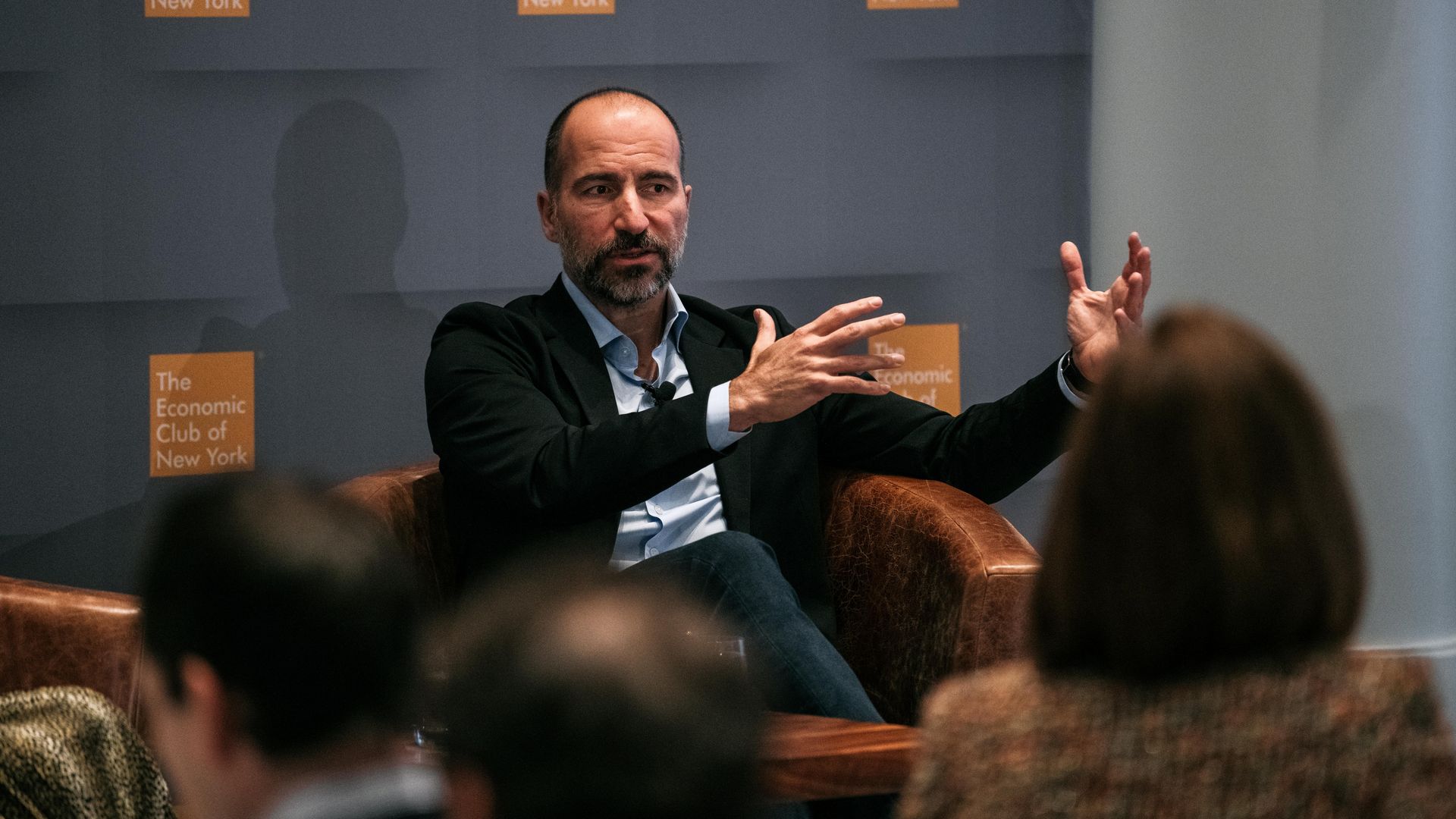
Uber CEO Dara Khosrowshahi called for establishing "benefits funds" for gig workers in a New York Times op-ed out Monday.
Why it matters: Gig workers, who remain independent contractors and not employees, have long pushed companies like Uber for benefits comparable to those received by traditional workers. The coronavirus pandemic and its resultant economic strain has broadened those calls.
The coronavirus pandemic, Black Lives Matter protests and a looming election have brought long-simmering conflicts between tech platforms and President Trump to a boil, as Facebook, Twitter and other services are starting to take presidential misinformation seriously.
What's happening: Wary of becoming arbiters of political speech, tech's platforms have carved out a range of exceptions and immunities for Trump and other political leaders — but that accommodation is coming undone.





/2020/08/06/1596737053739.gif?w=3840)