Two electric vehicle startups — Rivian and Lucid Motors — are best positioned to survive the fallout from the pandemic, industry experts tell Axios.
Why it matters: With solid funding and strong in-house technology, they've got a path to success — provided they can get back on track quickly as the economy recovers.
IBM announced layoffs Friday to its global force of approximately 350,000 workers, as a massive pandemic-inspired worldwide recession continues to take a toll on employment.
By the numbers: IBM won't say how many employees are being given notice in the cut, which was first reported by Bloomberg, but according to the Wall Street Journal the layoffs will hit several thousand workers.
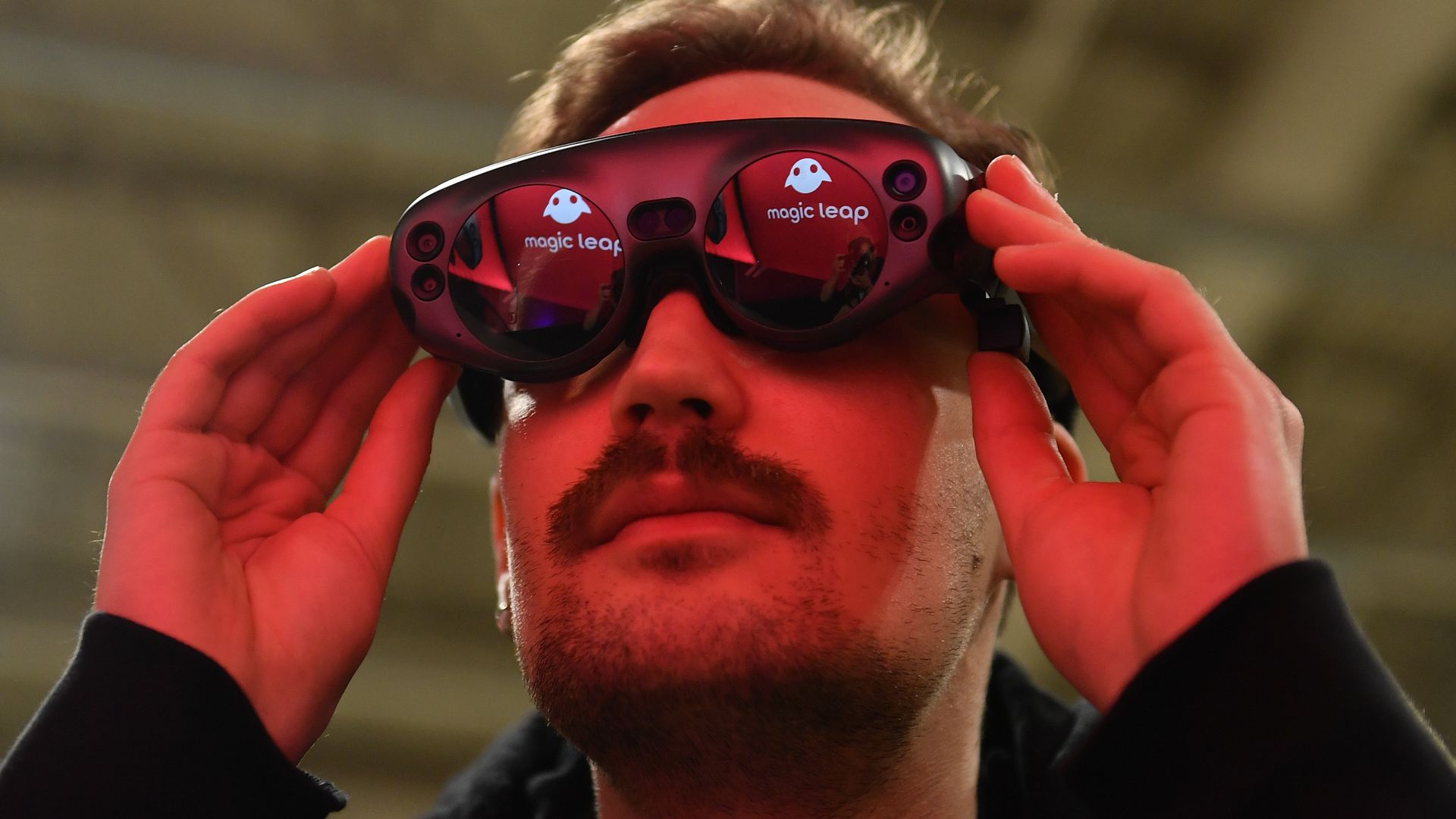
Magic Leap, a Florida-based maker of augmented reality devices, raised $350 million in new funding, according to a company memo first reported on by Business Insider.
Why it matters: It puts a whole new spin on the company's name. Magic Leap previously raised nearly $3 billion, repeatedly missed product launch targets and then, once it did launch to critical cackles, almost no one wanted to buy.
A team of Google veterans and others is launching the nonprofit CVKey Project to help communities restart amid the coronavirus pandemic. Its centerpiece, for now, is an app to let venues assess the health risk a particular person poses and whether to admit them.
Why it matters: There are a lot of ideas on how best to store data about coronavirus risk and exposures, but privacy concerns abound as well.
Why it matters: The moves came as the industry commemorated Global Accessibility Awareness Day on Thursday. The World Health Organization estimates that only one in 10 people with disabilities globally has the access they need to assistive technologies and products.
A new report from the U.S. Copyright Office is set to tee off another round in the long-running fight between tech platforms and the entertainment industry over copyright infringement.
Why it matters: Owners of music and movie libraries say piracy remains rampant online, and the entertainment lobby, which has long pushed tech platforms to do more to police for infringing material, now sees an opening to win concessions.
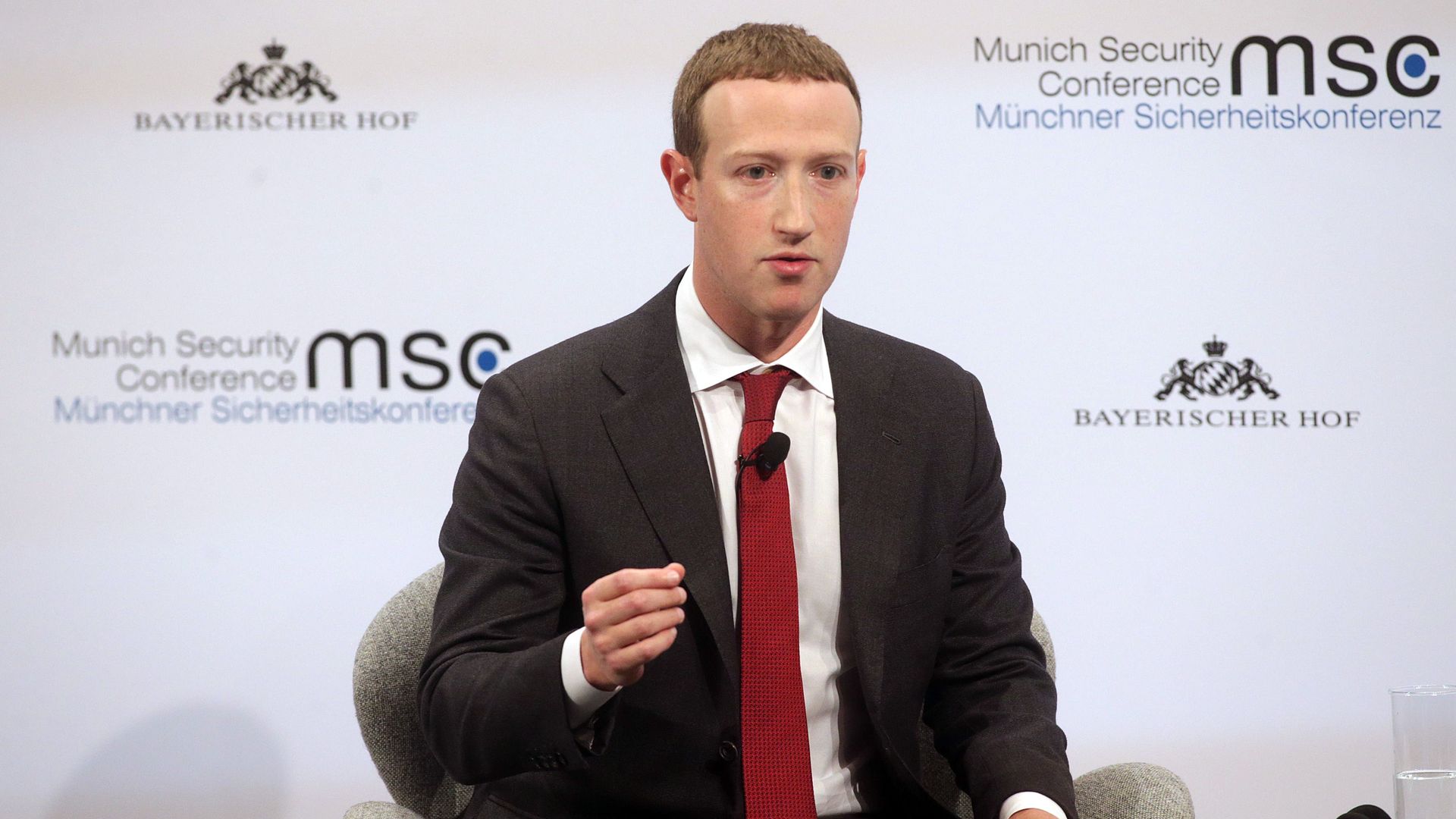
In an internal meeting with staff on Thursday, Facebook CEO Mark Zuckerberg said the company is planning to shift the majority of its workforce to be able to work remotely in the next 5-10 years.
Why it matters: The coronavirus pandemic has forced many companies to quickly adopt remote working strategies. Tech companies, which are well-equipped for remote work, are preparing to make remote work the new normal for most of their employees.
The process to get unlicensed versions of movies, music and other content taken off the internet isn't working as intended and should be updated, the Copyright Office said in an expansive report Thursday.
The big picture: Updating that system would require an act of Congress, which can now look to the Copyright Office's conclusions as it considers legislating on the matter.
A new consultancy run by former Customs and Homeland Security officials is teaming with Dcode, a government tech accelerator, to help spur new technologies to modernize security in air travel.
Why it matters: As they look to return to more typical volume, airlines face the tricky task of needing to securely screen passengers for both security and health risks, while also ensuring they don't create long lines and crowds that become a risk for coronavirus transmission.
AT&T has used the label "5G Evolution" and a 5GE logo on phones for months to describe a version of its LTE network, but the U.S. ad industry's review board found the designations misleading on Wednesday and recommended AT&T stop using the terms in advertising.
Why it matters: The designation was long bemoaned by journalists, analysts, competitors and even quietly by some at the company. AT&T said it has already stopped using the term in its advertising.
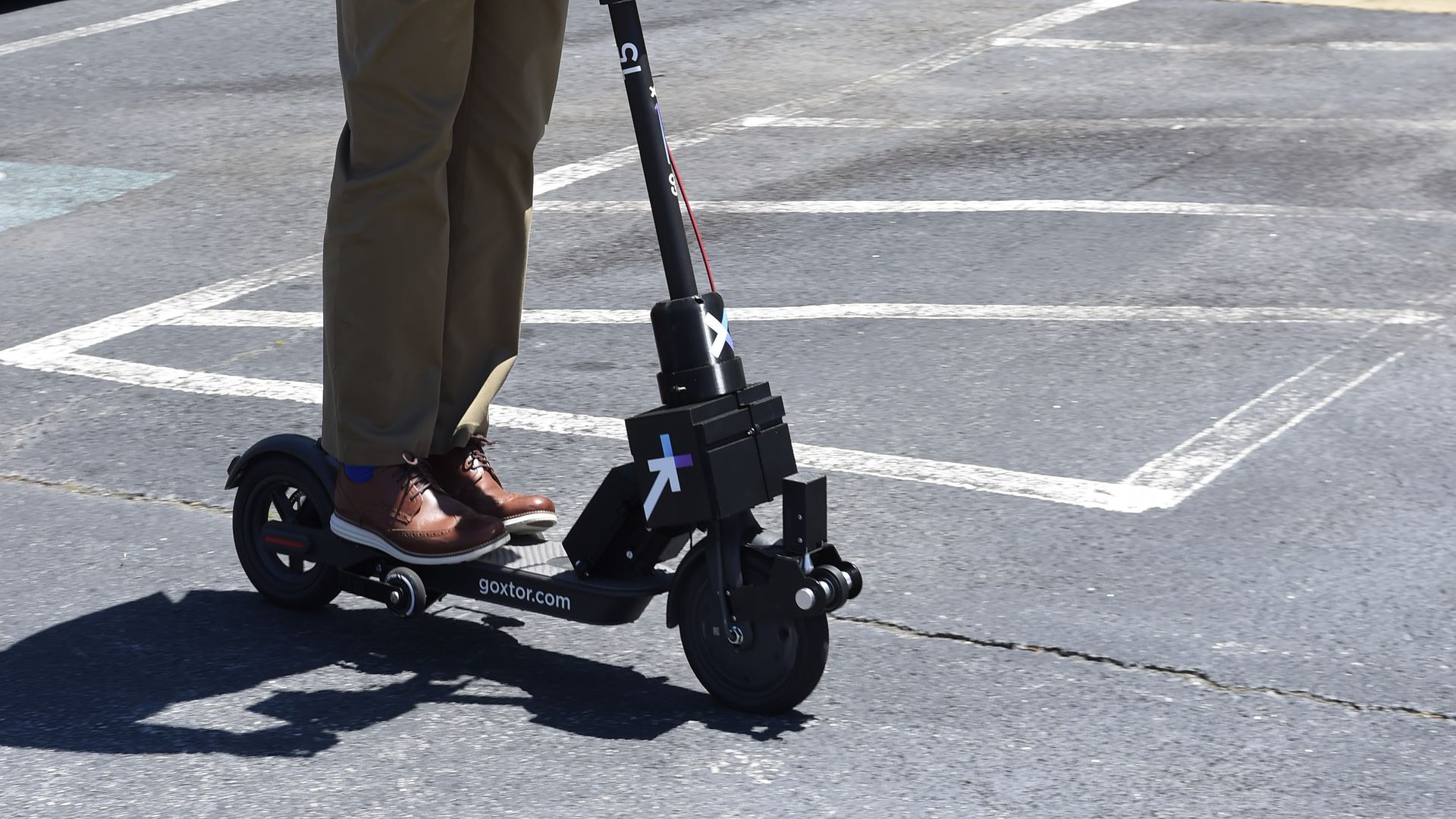
Scooters that (somewhat) drive themselves are now a reality — at least in Peachtree Corners, a suburb right outside of Atlanta.
Driving the news: Scooter rental company Go X and Tortoise, a startup that's aiming to build self-driving tech for scooters, are rolling out their first fleet of 100 scooters in the Georgia town as part of a six-month pilot program with local tech incubator Curiosity Lab.
It’s been no secret that India’s Jio Platforms has very big ambitions, but now it’s getting support from some of the biggest tech heavyweights in the world.
Driving the news: In less than a month, the company has raised nearly $9 billion from private equity firms Silver Lake, Vista Equity Partners, and General Atlantic, as well as Facebook — which invested more than the three others combined, bringing Jio's total valuation now to $65 billion.
Thursday the Financial Times reported that KKR is in "advanced talks" to plow another $1.5 billion into Jio.









/2020/05/20/1590001135654.gif?w=3840)