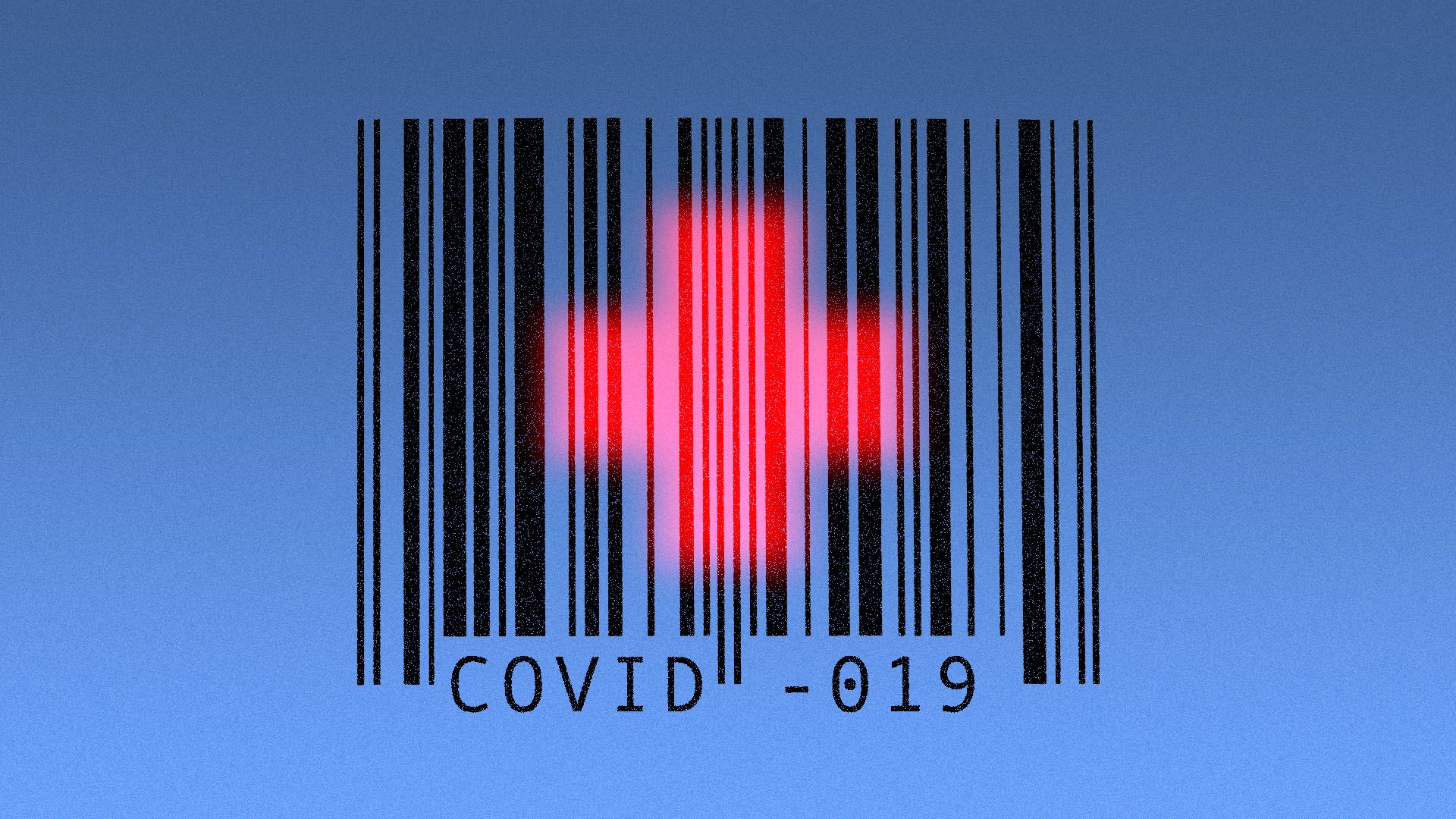
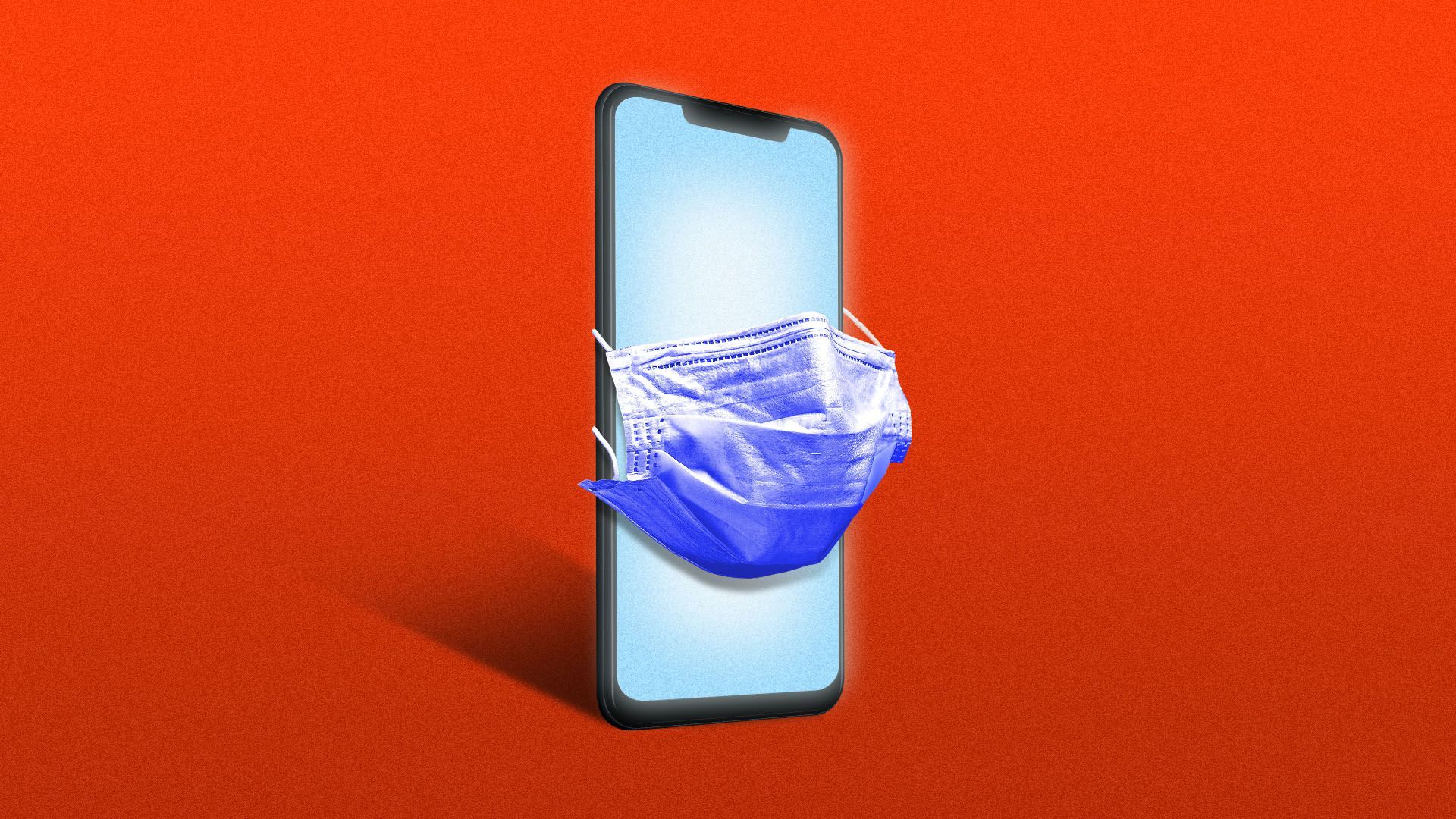
Employers emerging from lockdown are looking to new COVID-19 screening tools to help workers get back on the job.
Why it matters: Neither employees nor customers are likely to return to businesses if they fear infection, so there needs to be some way to separate the sick from the well. But manynew screening services are untested, and could open the door to intrusive health surveillance.
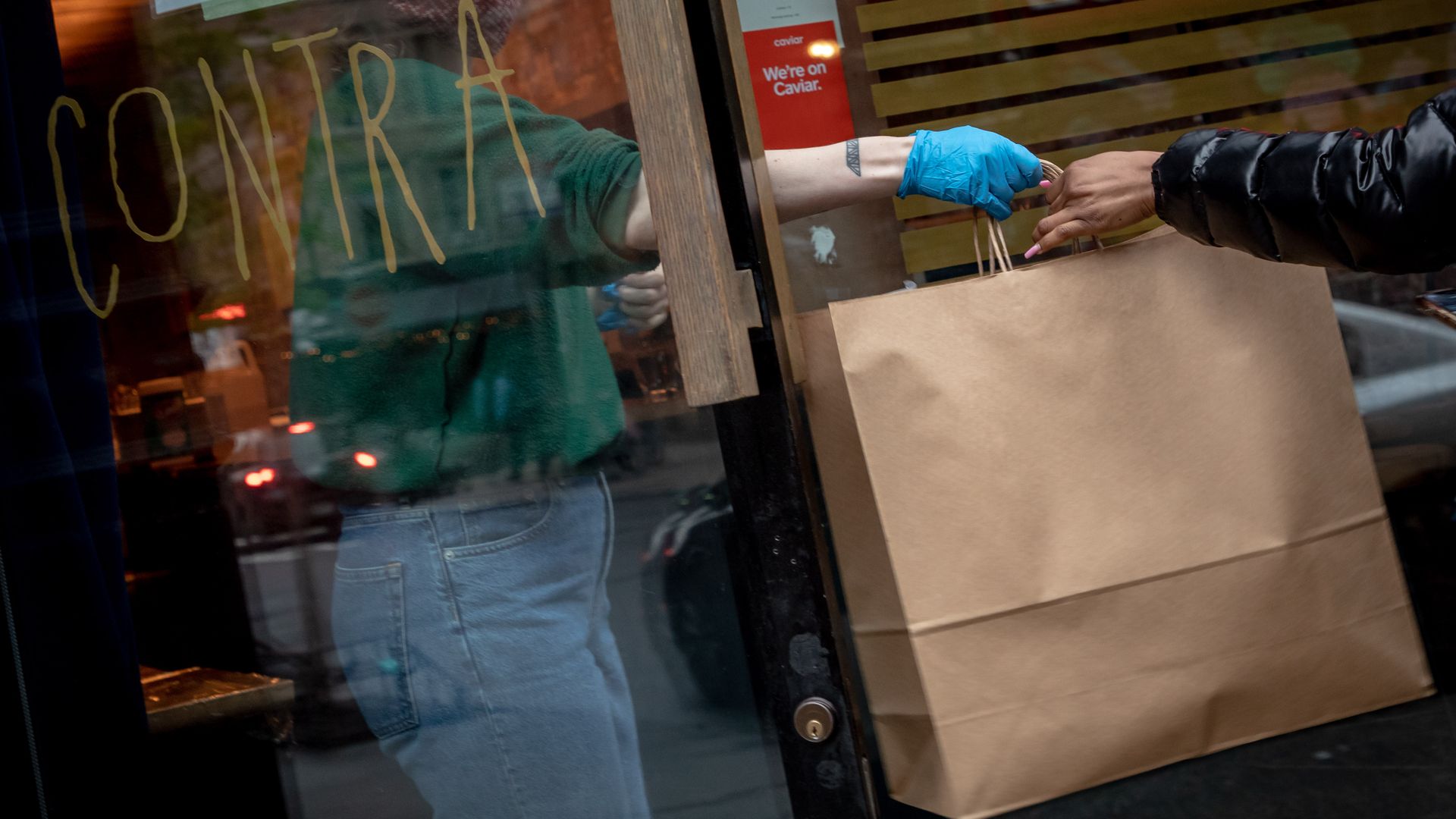
Why it matters: As restaurants turn to delivery and pickup to weather the COVID-19 storm, food delivery apps have been criticized for making it difficult for those eateries to stay afloat because of steep fees.
As some states and cities begin to ease shelter-in-place restrictions, Uber is introducing a slew of measures intended to make driver and passengers feel safer about resuming rides, including making face coverings mandatory.
Why it matters: Uber's ride-hailing business took an 80% hit year-over-year in April as the coronavirus pandemic forced many to stay home.
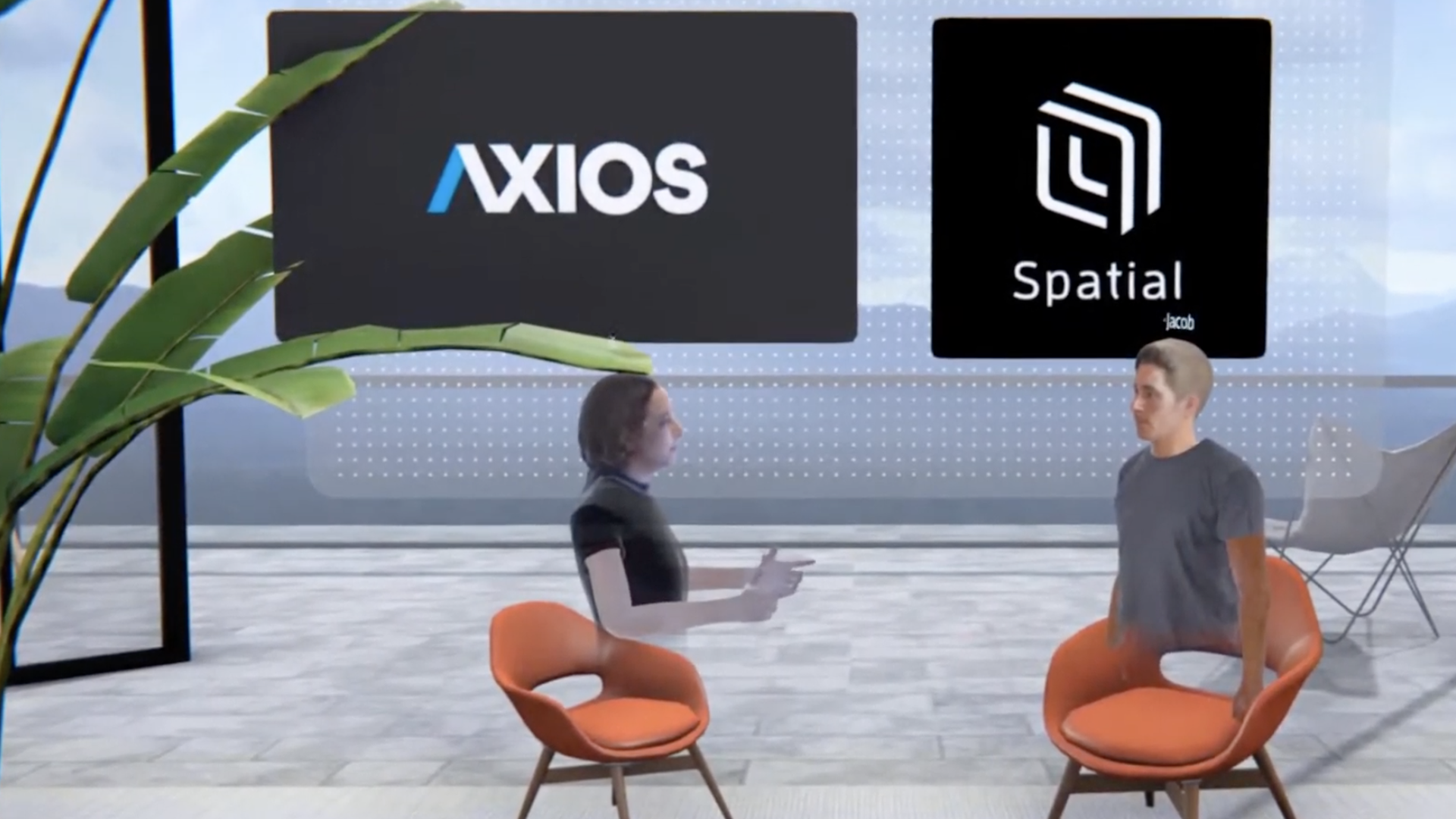
While two-dimensional video chat has become the standard for remote office meetings, a number of startups are working to bring that experience to VR.
Why it matters: VR has some advantages, including its immersiveness and the feeling of connection. However, as with other uses of VR, there are drawbacks, including challenges related to multitasking, or even taking notes.
Many have pointed out that, as hard as the pandemic is, it would have been much harder 10 or 15 years ago, without today's high-speed internet connections, multiple streaming services, and apps like Zoom, Slack and Google Classroom.
Yes, but: Another way to look at this is that in just a few years, the experience of sheltering in place might be way better, once augmented and virtual reality become mainstream.
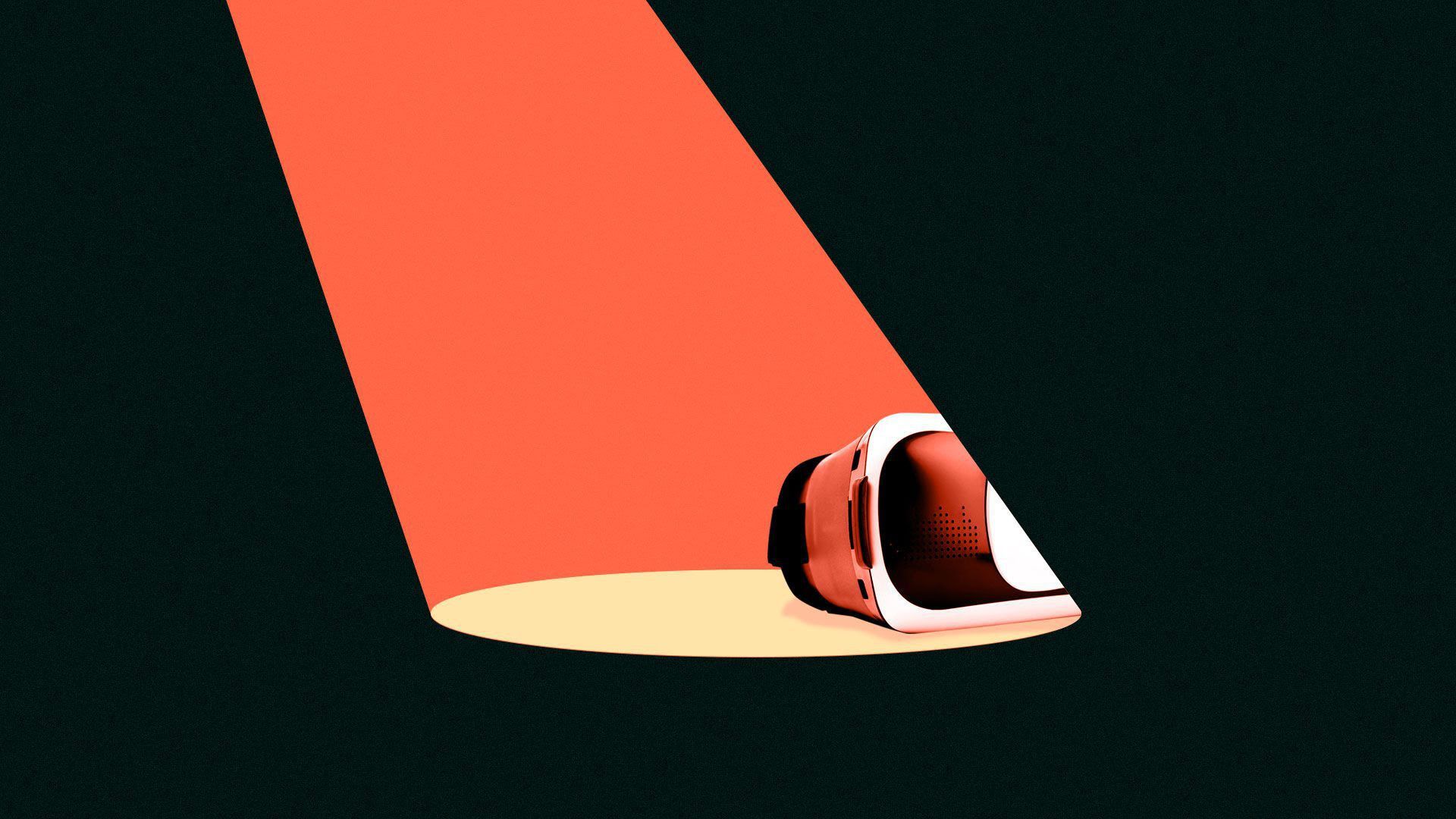
One simple reason VR isn't more popular today: You need special hardware to experience it, yet most people haven't been persuaded to buy a headset — and many of those who did so own a less capable model that's gathering dust.
Why it matters: VR lost its place in today's shelter-in-place survival kit because the industry failed to bring the right mix of products to market.
Virtual reality can bring faraway people together and take us places we can't physically go. That should make it the perfect breakout technology for both personal and professional life in the stay-at-home era — yet it remains a niche product.
The big picture: Virtual reality remains in its infancy, despite decades of on-and-off development, billions of dollars in investment and a ton of anticipation. Sales of VR headsets have repeatedly failed to live up to expectations. IDC reported 1.4 million units sold globally in Q4, down 23% from the prior year.
Facebook's latest Standards Enforcement Report, released Tuesday, details the scope of the company's efforts to police its platforms during the onset of the coronavirus pandemic, including massive efforts at labeling misinformation and relying more on artificial intelligence to weed out content that violates its standards.
The big picture: The pandemic is pushing the limits of Facebook's systems and policies in new ways, as it struggles to meet a commitment to take strong action against harmful or misleading public health information.
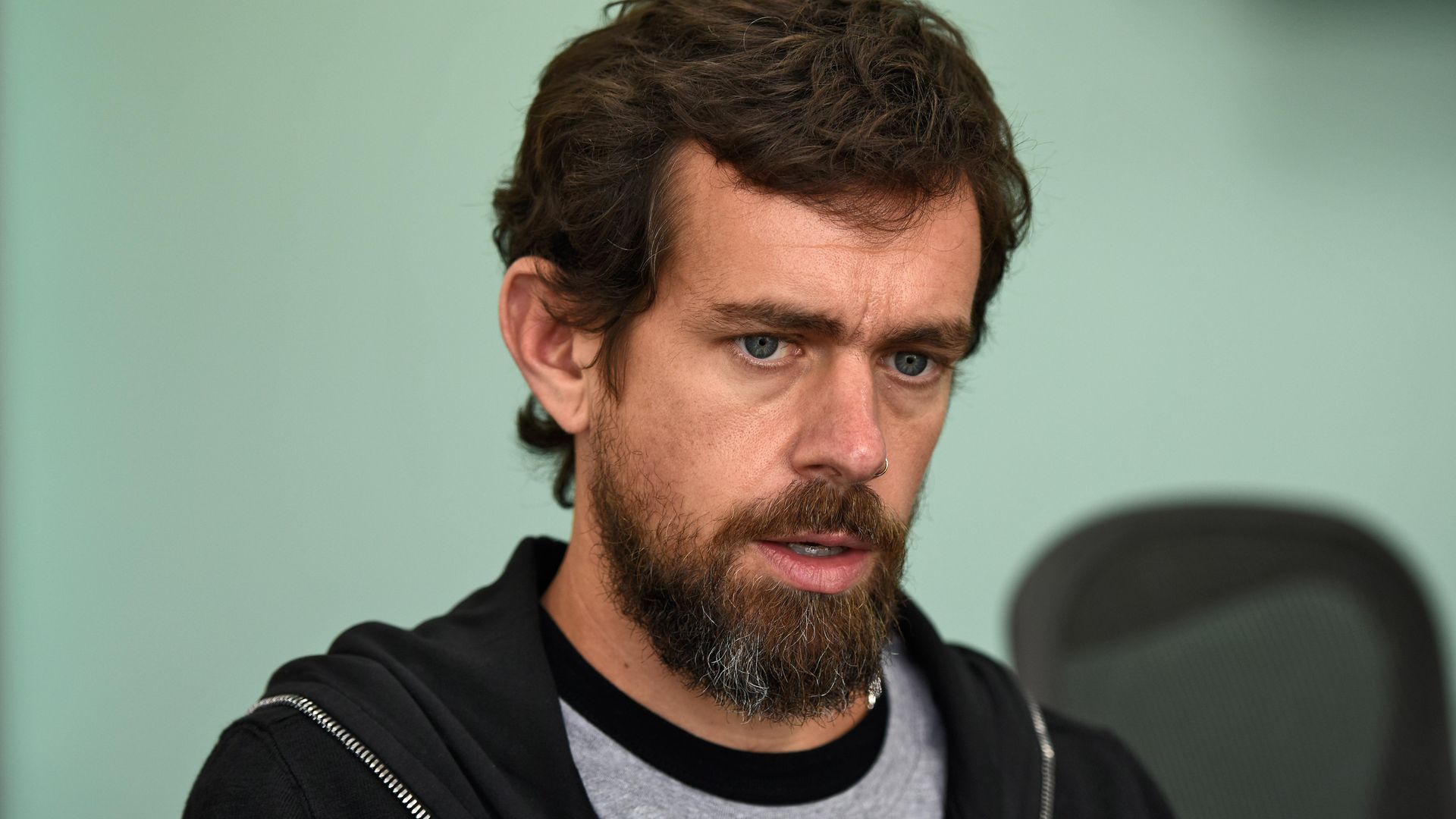
Twitter CEO Jack Dorsey will allow staff to work from home permanently even after states lift coronavirus lockdown measures, according to an internal memo obtained by BuzzFeed News.
Why it matters, per Axios' Ina Fried: Lots of jobs have traditionally accompanied tech office jobs, including shuttle drivers, janitorial staff and cooking staff. When tech employees work from home, those jobs won't be created.
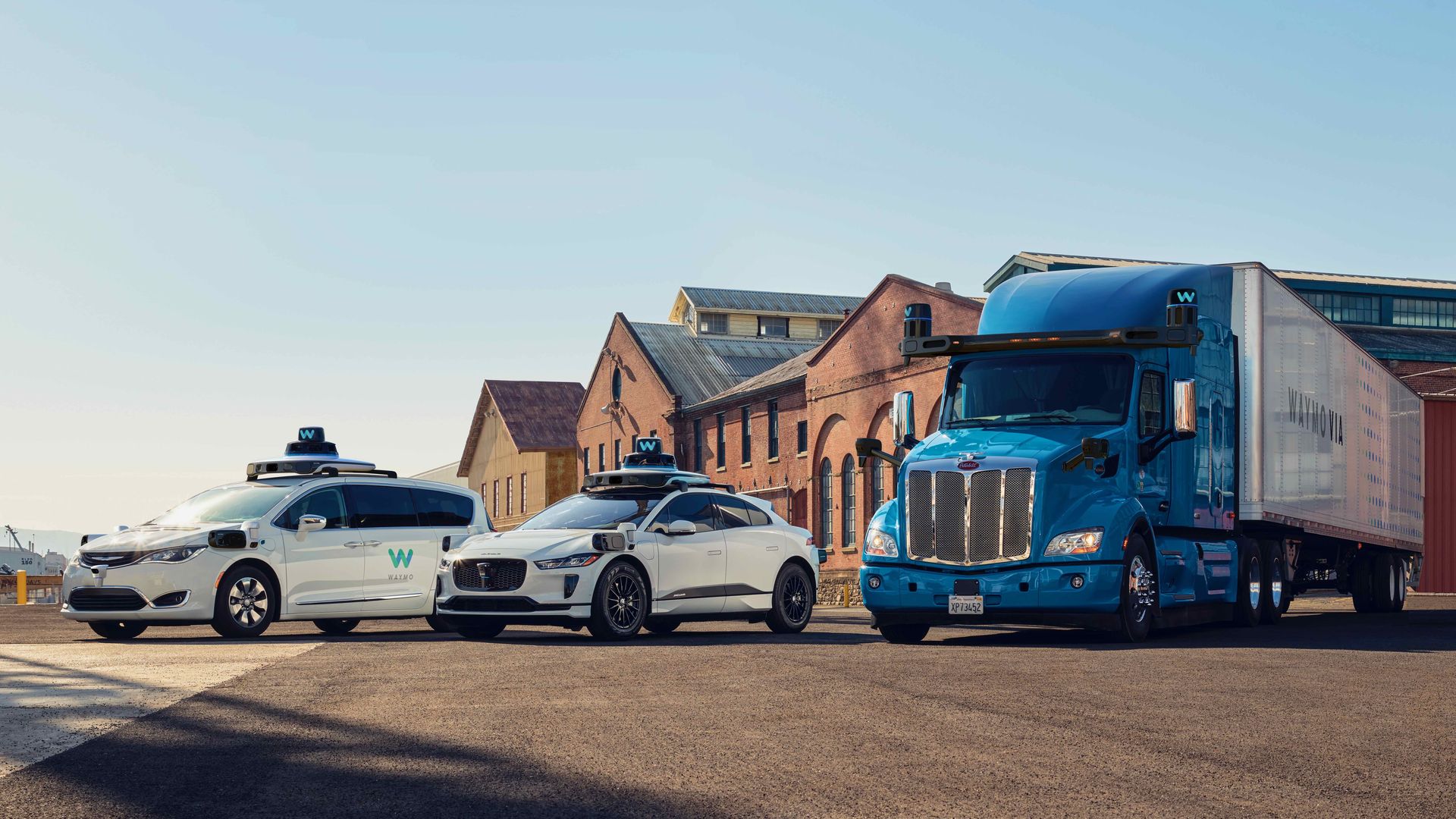
Waymo said Tuesday that it has raised another roughly $750 million for its self-driving technology, expanding the size of its first external investment round to $3 billion.
Why it matters: With the coronavirus pandemic likely to speed consolidation among self-driving tech firms, investors are lining up behind companies they see as the most likely winners.
NextGen Venture Partners has raised $52 million for its second fund, the early-stage investment firm tells Axios.
In context: Unlike many VC firms that are now shifting to work from home, NextGen has been distributed from the start, including an extensive network of 1,300 venture partners. Startup pitches via Zoom are routine, and NextGen even built its own social network-like software for managing deals.
Corporate America is getting closer to a return to the office, but Salesforce CEO Marc Benioff told "Axios on HBO" that it won't be a return to normal.
The big picture: When American office workers do start going back to work, they will find a host of new policies and practices, ranging from appointments to ride an elevator to temperature checks to restrictions on movement throughout the office.
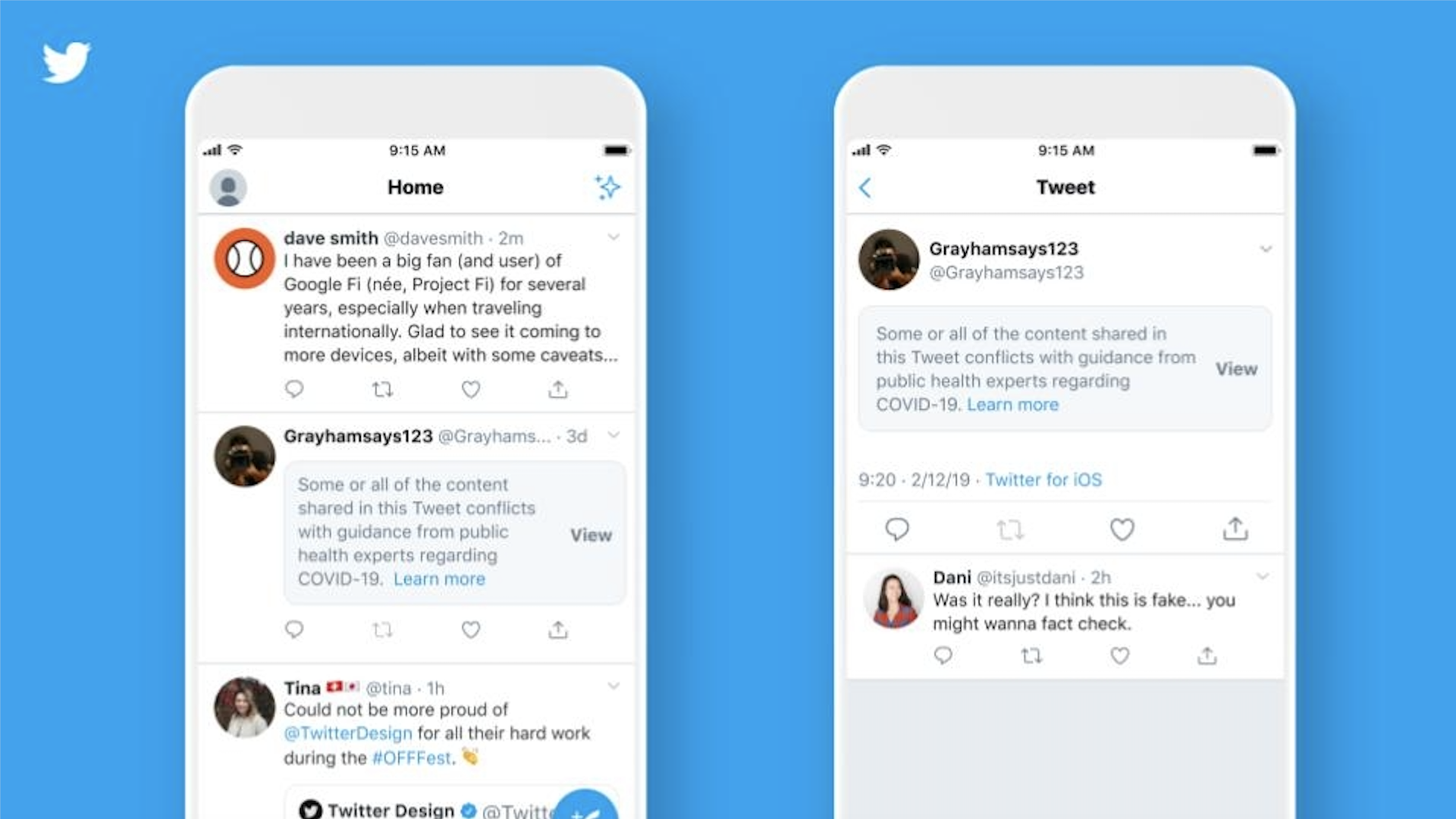
Twitter said Monday it will begin labeling coronavirus-related tweets that contain potentially misleading information but that don't clearly violate company misinformation policies.





/2020/05/13/1589378353692.gif?w=3840)