From getting a license to paying taxes, we routinely give cities granular data on who we are, where we live, what we do and how much we earn.
Why it matters: “City Hall has a treasure trove of information about you,” says Ann Cavoukian, a privacy expert at Ryerson University. “You have no choice but to give them information.”
A smart city can vacuum up details like your location or daily habits — even though you probably haven't agreed to it.
What's happening: Seattle, Oakland and New York City — among the few cities with chief privacy officers — have laid down privacy guardrails for how data gathered in the cities will be used. This month, Portland's city council unanimously approved detailed privacy guidelines. But few have binding rules yet.
Most Americans are comfortable living in a smart city (65%) and support the use of facial recognition technologies by local police and governments (61%).
Yes, but: A dichotomy emergesbetween young adults 18-to-34 years old and adults 65 and older, according to Axios-SurveyMonkey polls on smart cities and facial recognition. While wariness of smart devices and cities increases with age, so does support for surveillance technology.
If cities are only as "smart" as the data zipping between sensors and devices, the "smartest" places will be those equipped with the speediest broadband service to ferry the ever-expanding streams of data.
What's happening: All 4 national wireless companies have installed 5G service in parts of cities. T-Mobile, for example, released a 5G "boost" (if they have the Galaxy S10 5G phone) in parts of Atlanta, Cleveland, Dallas, Las Vegas, L.A. and New York on Friday.
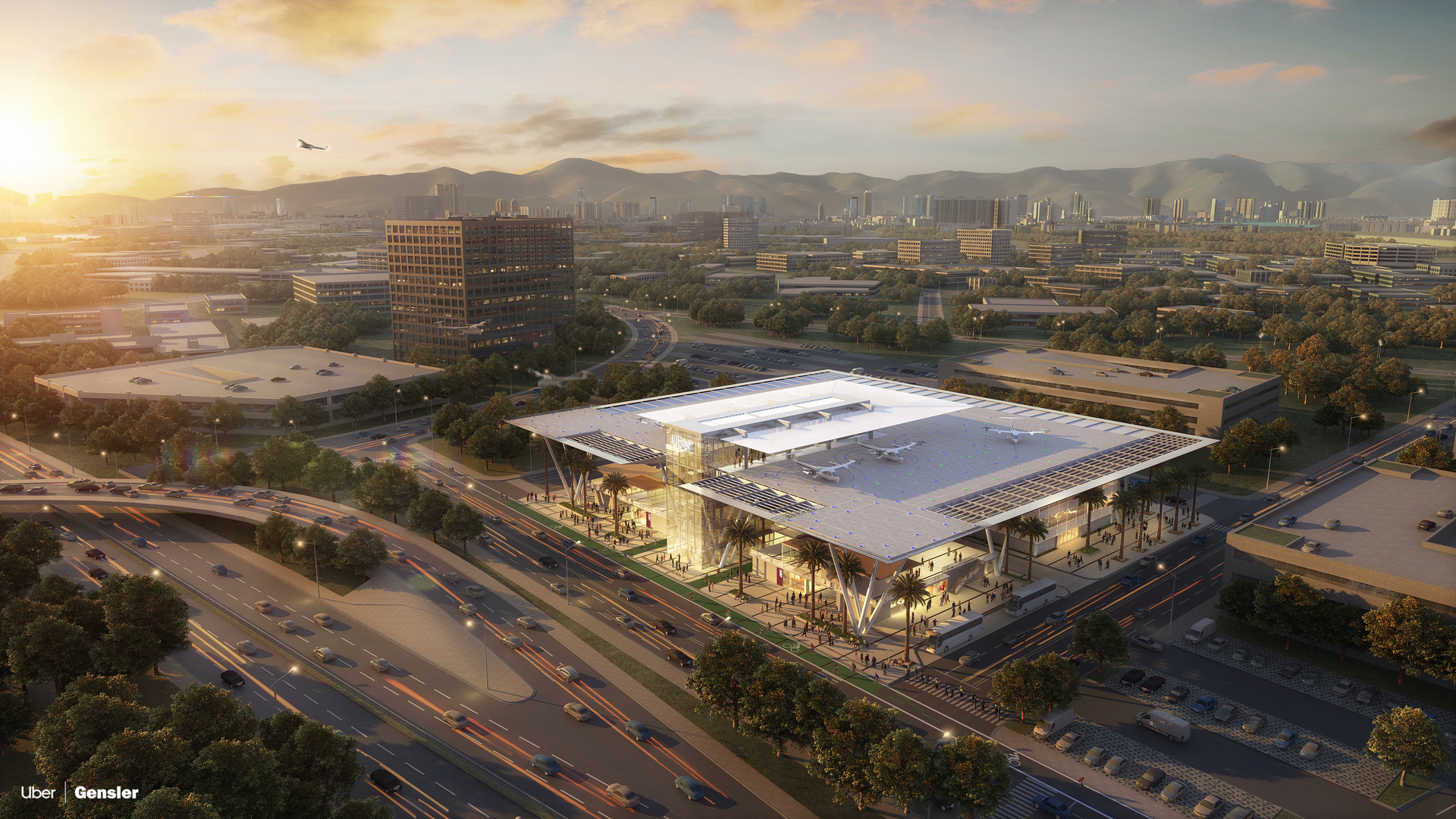
Traffic will someday shift to the sky. But future air taxis will need a place to land, and to connect to other forms of transportation, too.
What to watch: Skyport mobility hubs, like Gensler’s CitySpace concept, would be central community access points where air taxi passengers can feed into traditional ride-sharing vehicles, e-bikes, e-scooters and public transit.
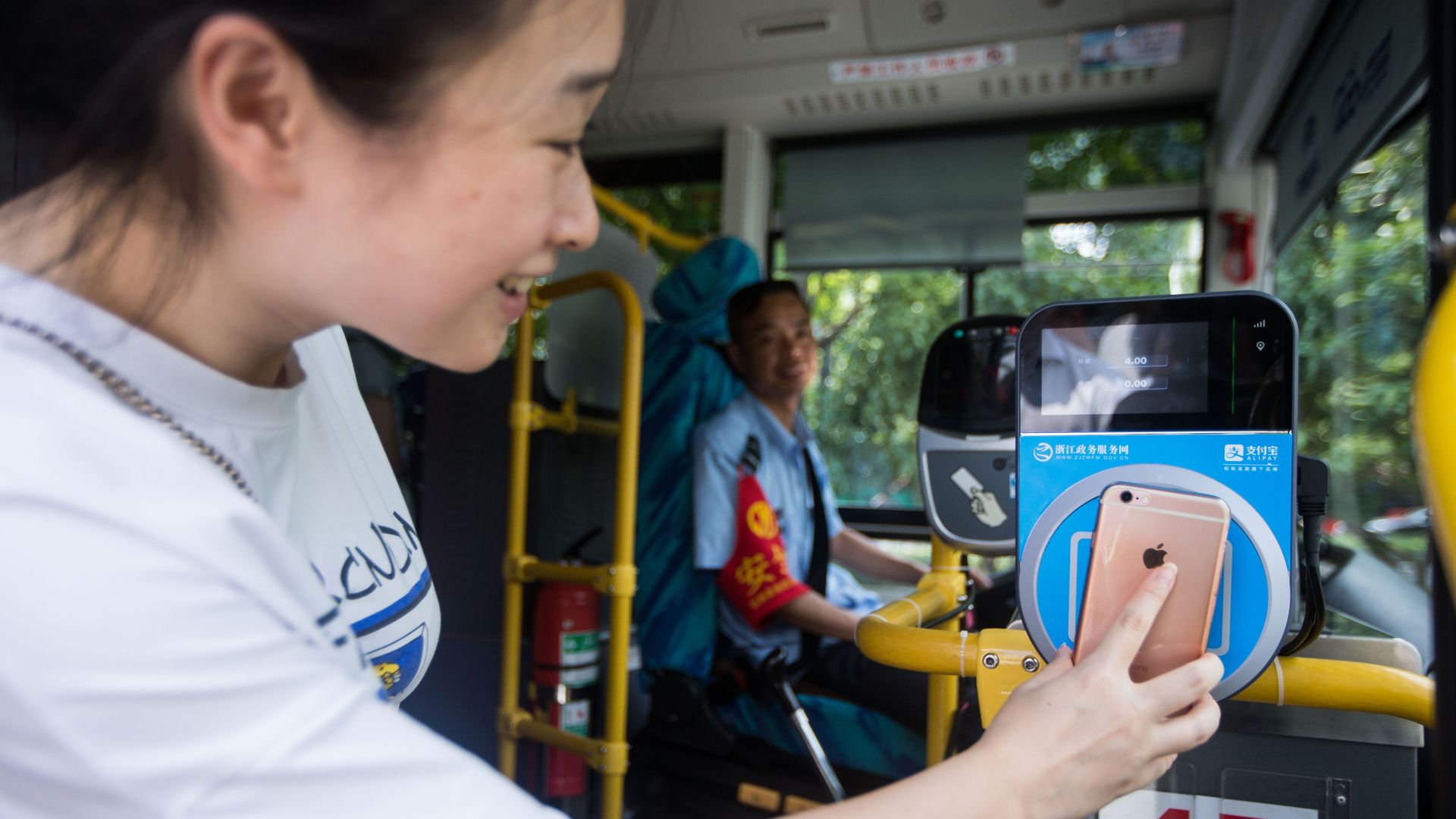
In a trend that has been coming for about a decade, the developing world is dragging the advanced economies into the age of cashless, credit card-less payments in which we will do most of our business by smartphone.
What's happening: Starting first in east Africa and spreading to China, internet-based, mobile payment systems may be on the verge of cracking the ultra-difficult U.S. and Europe markets, potentially threatening the long stranglehold of big banks and credit card companies.
With Facebook's announcing its Libra cryptocurrency, scammers have flocked to purchase domains that could easily be mistaken for legitimate Libra sites, say threat intelligence group Digital Shadows.
The big picture: Not all of the roughly 250 Libra and 100 Calibra sites that were registered within 24 hours of Facebook's June 18 announcement are scams.
"A lot of them are parked domains," said Digital Shadows' Harrison Van Riper, but the company has already found several sites deliberately trying to trick consumers into giving up cash.
This week I'm driving the sweet Audi RS 5 Sportback, a high-performance sedan with room for 5 and plenty of cargo. It's a car that is somehow practical and exhilarating at the same time.
The big picture: Gearheads will rave about its performance — the power of the 444-hp, 2.9-liter twin-turbo V6 engine, the sprint from 0 to 60 mph in 3.8 seconds, and the precision handling on tight turns.
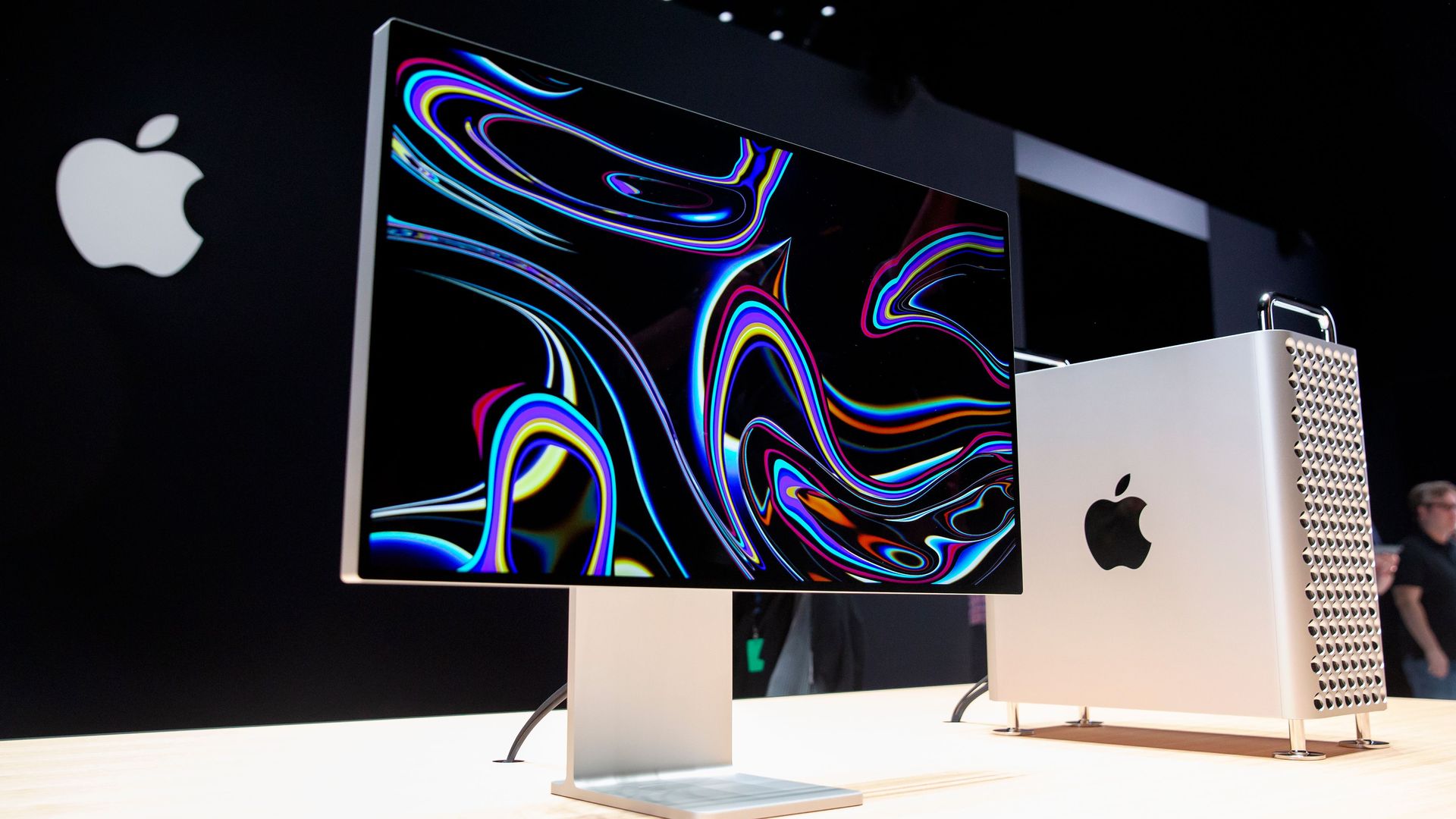
Apple is moving the production of its Mac Pro desktop from the U.S. to China — even as trade tensions grow between the 2 countries, the Wall Street Journal reports.
Why it matters: The company has invested hundreds of millions of dollars into manufacturing the computer in the U.S., and that money will now be going to China, says the WSJ. An Apple spokesperson told the WSJ that all products are still designed and engineered in the U.S., and some components are U.S.-made.
The big picture: The WSJ reports that although the Mac Pro isn't one of Apple's biggest products, the decision has outsized importance. Its dependence on Chinese manufacturers has become a sore point with President Trump as his trade war with China continues. Trump's tariff threats against China could raise the cost of Apple's products, such as the iPhone.
Apple invested $100 million in Austin, Texas, in 2013 to manufacture the computer following backlash over outsourcing to China, per WSJ.
Within the last 2 years, Apple announced a second campus in Austin for customer support and operations, but not plans for new manufacturing plants in the U.S.
Details: WSJ says shipping costs will be lower for Apple because of the proximity of the Apple facility in Shanghai to their other suppliers in Asia.
Sophisticated sensor technology can be misled by the way lidar beams reflect off of something as mundane as a puddle.
Why it matters: Semi autonomous and fully autonomous vehicles are largely expected to reduce accidents, but aspects of the tech stack can introduce risk. Simulation is one way to discover scenarios that may fool sensors and train perception algorithms accordingly.
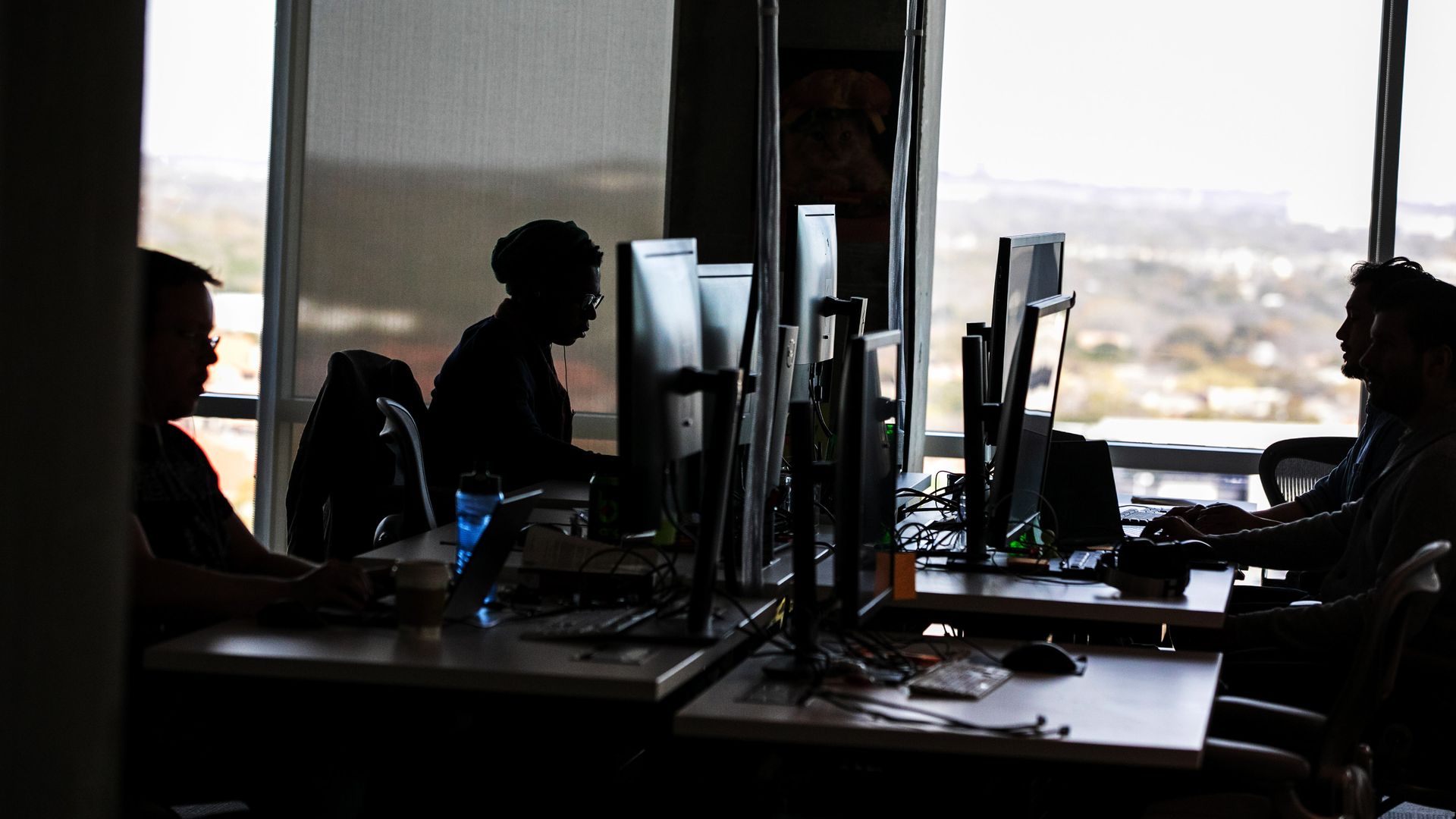
Reports of poor working conditions at Facebook contract facilities are casting a fresh spotlight on Silicon Valley's longstanding yet risky reliance on a two-tiered workforce.
Driving the news: Contract workers issued a letter on an internal forum Thursday calling for better pay and changes to non-disclosure agreements to ensure they can talk to outside therapists about issues they encounter at work. And those protests have been building for a while.
Casinos and gambling websites, already adept at tilting long-term odds in their favor, are getting a leg up from technology that could inject even more certainty into their profit calculations.
The catch: Experts worry that tweaks nudging gamers to play more — and bet bigger — could propel some toward excess and addiction.