Libra, the wildly ambitious and probably doomed Facebook-backed cryptocurrency, is innovative in many different ways. But there's one part of it that's deeply familiar — the way in which it sells itself as a way of bringing millions of people into the global financial system.
The big question: Can the private sector, and technology companies in particular, bring critical financial services to those who have been excluded from the global financial system?
From getting a license to paying taxes, we routinely give cities granular data on who we are, where we live, what we do and how much we earn.
Why it matters: “City Hall has a treasure trove of information about you,” says Ann Cavoukian, a privacy expert at Ryerson University. “You have no choice but to give them information.”
A smart city can vacuum up details like your location or daily habits — even though you probably haven't agreed to it.
What's happening: Seattle, Oakland and New York City — among the few cities with chief privacy officers — have laid down privacy guardrails for how data gathered in the cities will be used. This month, Portland's city council unanimously approved detailed privacy guidelines. But few have binding rules yet.
Most Americans are comfortable living in a smart city (65%) and support the use of facial recognition technologies by local police and governments (61%).
Yes, but: A dichotomy emergesbetween young adults 18-to-34 years old and adults 65 and older, according to Axios-SurveyMonkey polls on smart cities and facial recognition. While wariness of smart devices and cities increases with age, so does support for surveillance technology.
If cities are only as "smart" as the data zipping between sensors and devices, the "smartest" places will be those equipped with the speediest broadband service to ferry the ever-expanding streams of data.
What's happening: All 4 national wireless companies have installed 5G service in parts of cities. T-Mobile, for example, released a 5G "boost" (if they have the Galaxy S10 5G phone) in parts of Atlanta, Cleveland, Dallas, Las Vegas, L.A. and New York on Friday.
Traffic will someday shift to the sky. But future air taxis will need a place to land, and to connect to other forms of transportation, too.
What to watch: Skyport mobility hubs, like Gensler’s CitySpace concept, would be central community access points where air taxi passengers can feed into traditional ride-sharing vehicles, e-bikes, e-scooters and public transit.
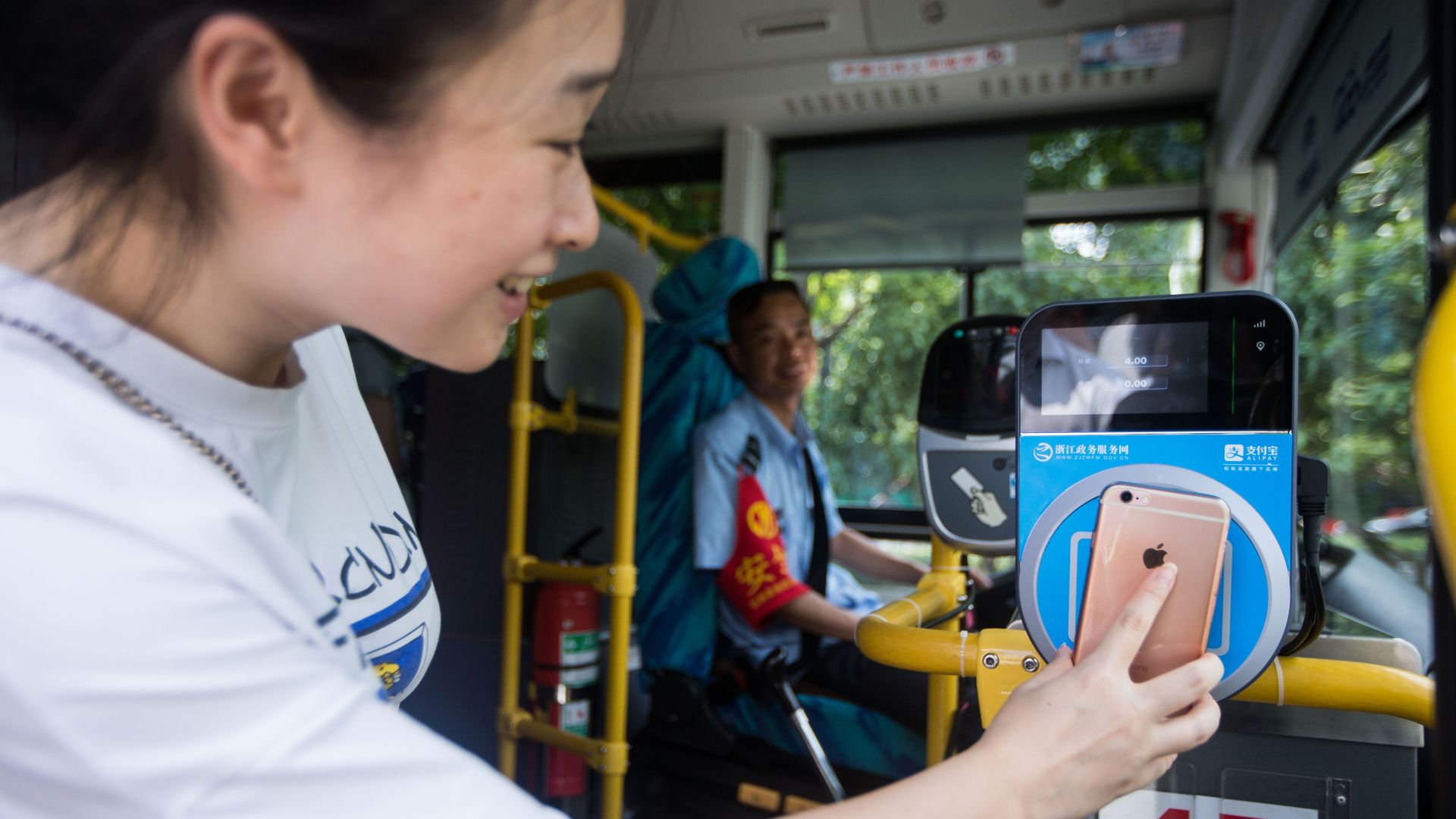
In a trend that has been coming for about a decade, the developing world is dragging the advanced economies into the age of cashless, credit card-less payments in which we will do most of our business by smartphone.
What's happening: Starting first in east Africa and spreading to China, internet-based, mobile payment systems may be on the verge of cracking the ultra-difficult U.S. and Europe markets, potentially threatening the long stranglehold of big banks and credit card companies.