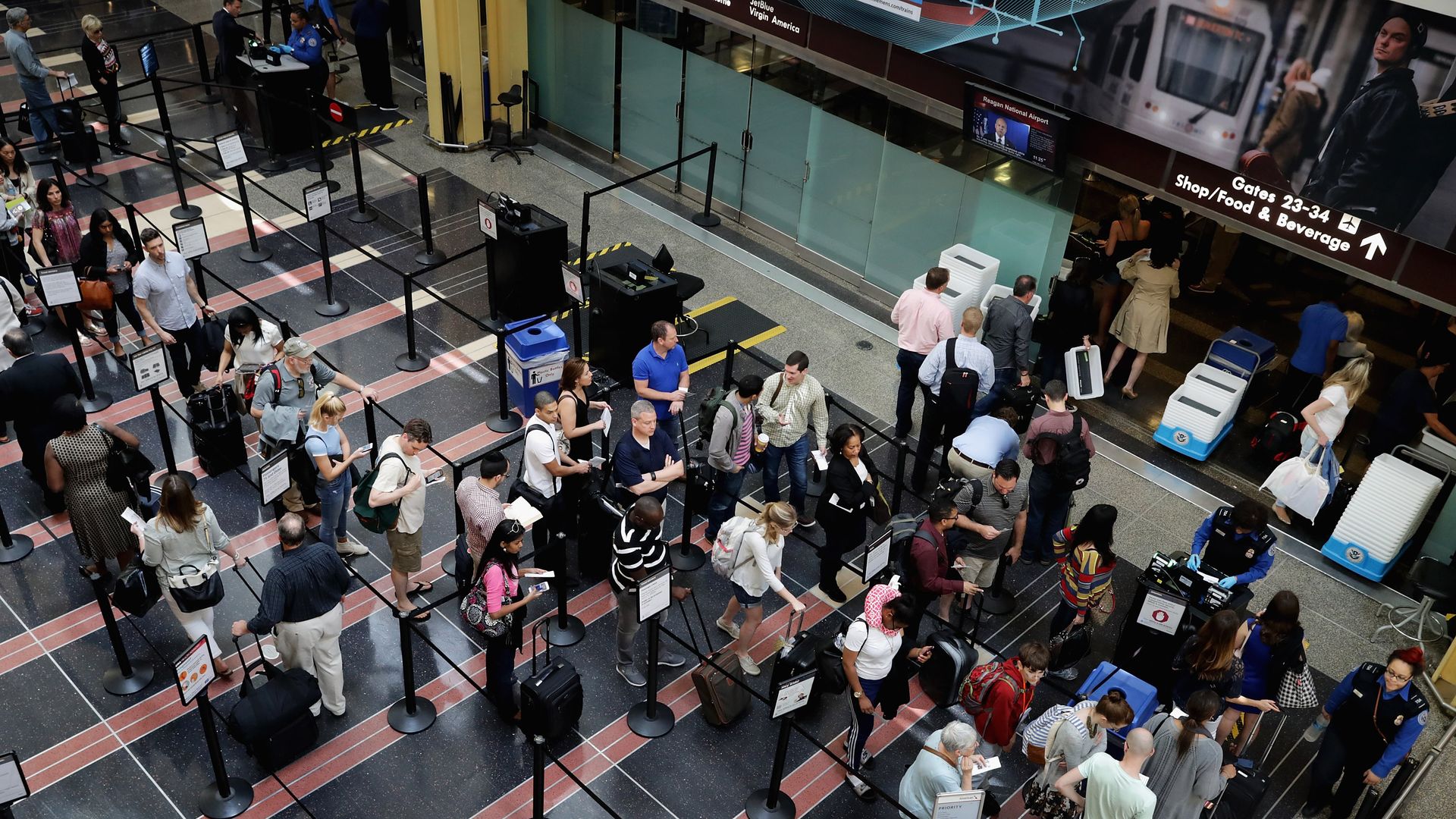
Implementing automation at airport bottlenecks could expedite drop-off, check-in, security, and boarding for flyers and employees.
Why it matters: Between 2016 and 2019, the number of passengers using U.S. airlines has increased by 10.9%. Last year, 1 in 7 travelers in the U.S. missed a flight due to long security lines.
Silicon Valley is notably absent from the Trump administration, after having enjoyed an open-door (or sock on the door?) policy during the Obama administration.
Driving the news: Trump this morning told Fox Business Network: "We should be suing Google and Facebook and perhaps we will," related to alleged political bias, sending both companies' shares tumbling.
Last week, for likely the first time, a heavy-duty commercial truck drove for 9.4 miles on the Florida Turnpike with no one inside. The "driver" was 140 miles away, operating the rig remotely.
The big picture: Automated freight delivery is expected to begin long before self-driving cars are here, and at least a half dozen truck companies are working on the technology, with tests in various stages of development. Starsky Robotics' Florida demonstration was believed to be the first unmanned, high-speed test of a heavy-duty commercial truck on a public highway.
One of the more striking parts of Tuesday's Senate Commerce Committee hearing on the ways tech companies manipulate users was a Google executive's insistence that the company doesn't employ "persuasive technologies," aka "dark patterns," on YouTube or anywhere else.
What they're saying: "Dark patterns and persuasive technologies [are] not core to how we design our products at Google," Google's Maggie Stanphill said, in response to a question from Sen. Brian Schatz (D-Hawaii).
Simulation is a crucial tool in the development of self-driving cars, but it has constraints, especially regarding the speed at which it takes in data and makes decisions.
Why it matters: In the absence of significant amounts of data from autonomous vehicle road testing, companies like Waymo, Uber and Tesla are investing in self-driving simulations, with billions of miles in virtual simulation tested to-date.
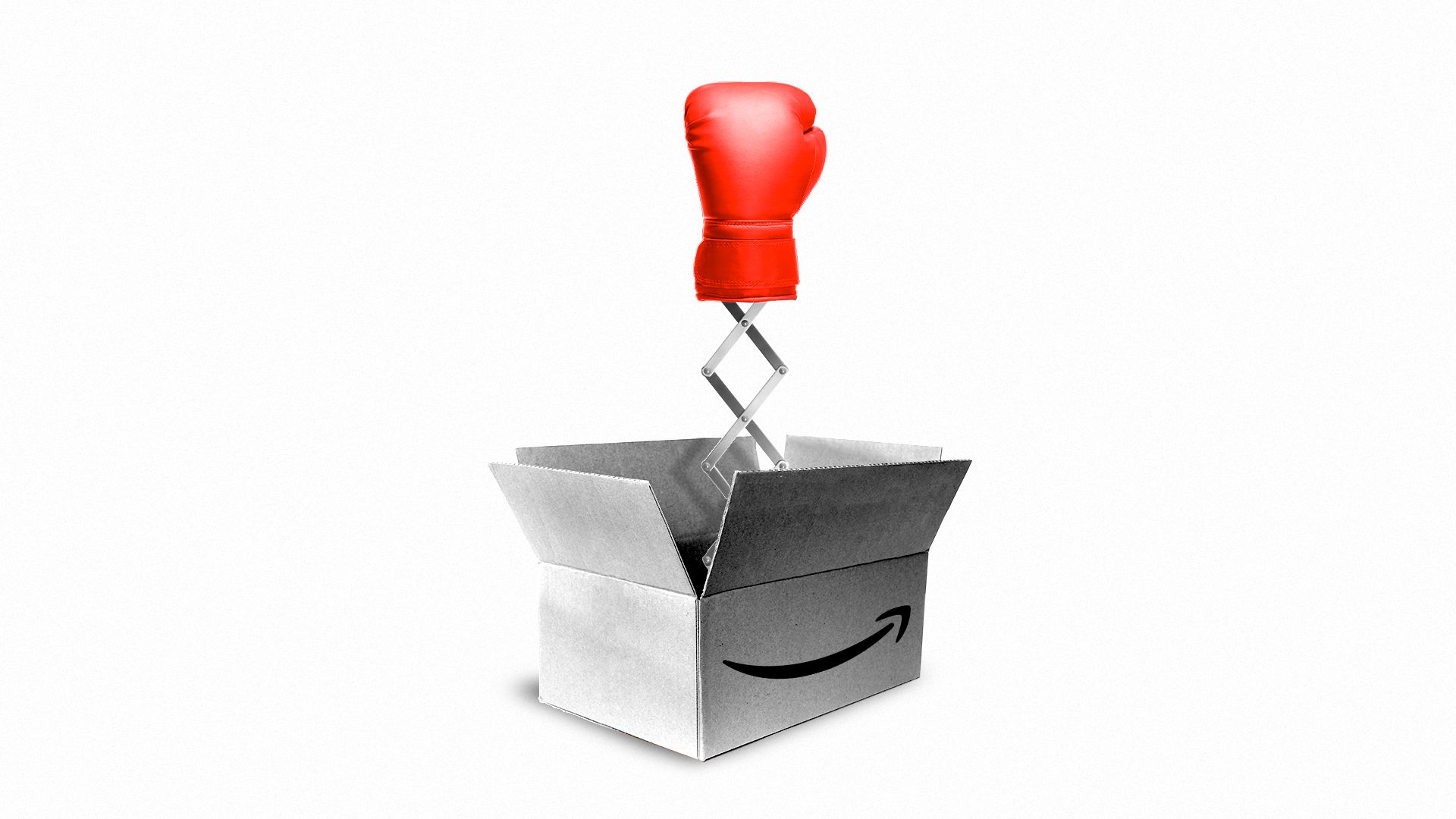
Amazon has a strategy in the face of attacks from several Democratic presidential candidates: hitting back.
Why it matters: A Democratic administration could mean tougher antitrust enforcement, and some candidates have gone as far as promising they will try to break up Amazon and other tech giants.
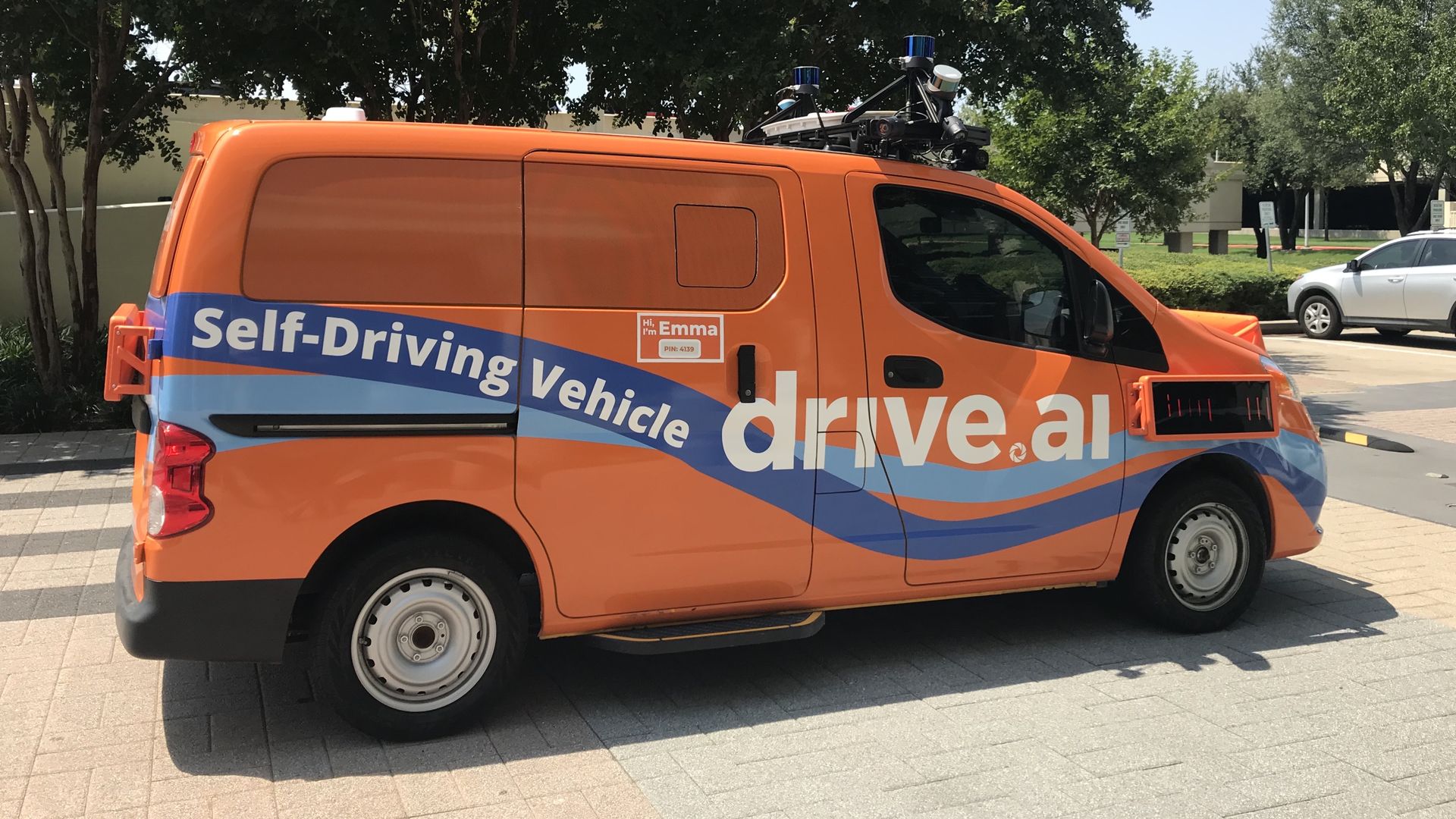
Apple bought Drive.ai, an autonomous driving startup once valued at $200 million, and has hired dozens of Drive.ai engineers, Apple confirmed to Axios on Tuesday.
Why it matters: The deal and hires confirm that Apple hasn't given up its autonomous driving project.
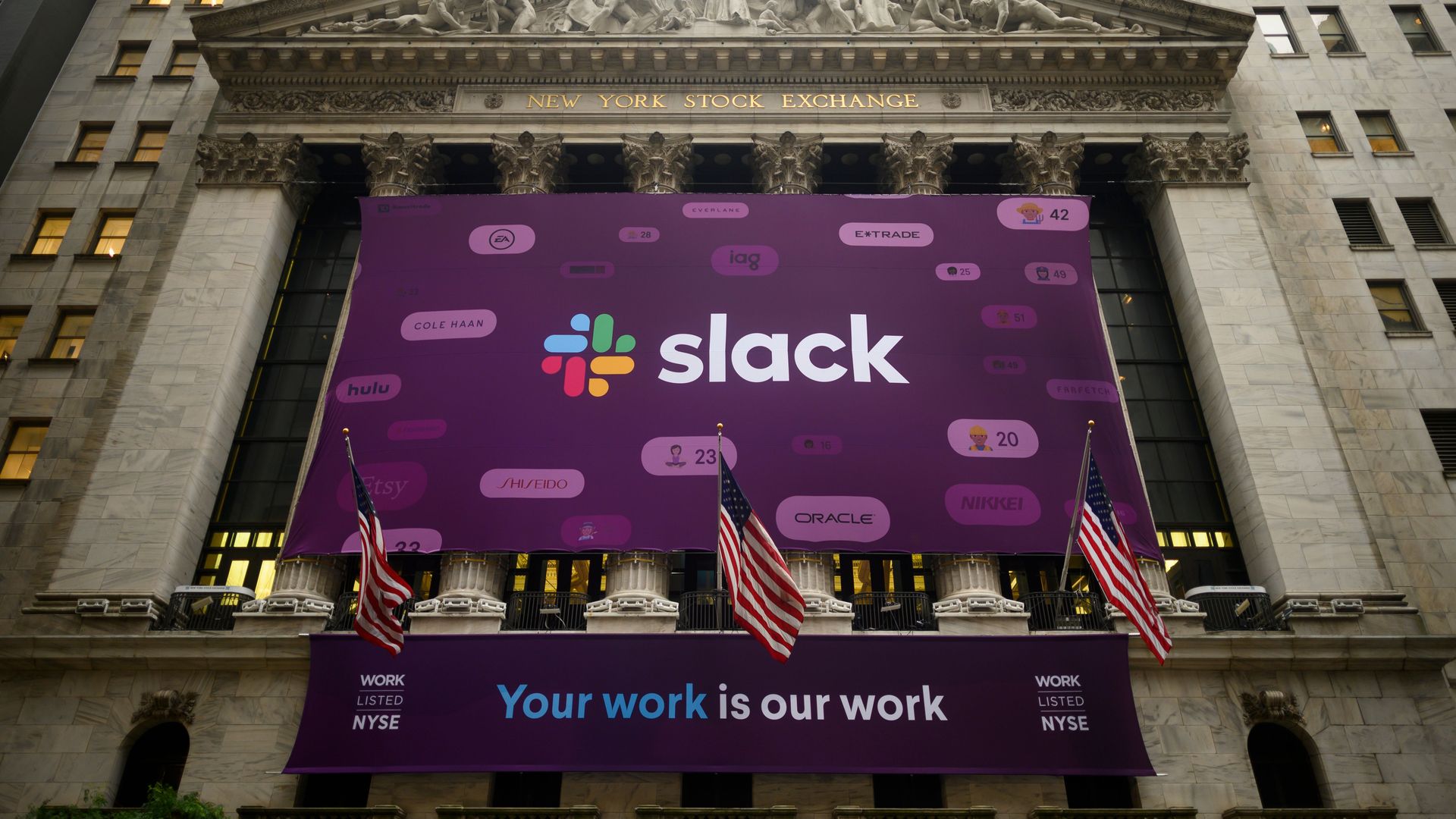
When Slack went public last week via a direct listing, it got the benefits of algorithmic market pricing, speed and lower fees. But it didn't raise any capital for what remains a money-burning enterprise, as it would have via a traditional IPO, nor did it get to pick its new investors.
The big picture: The question, therefore, is if IPO and direct listing structures could be combined so as to receive the best of both floats. The answer is yes. Probably.
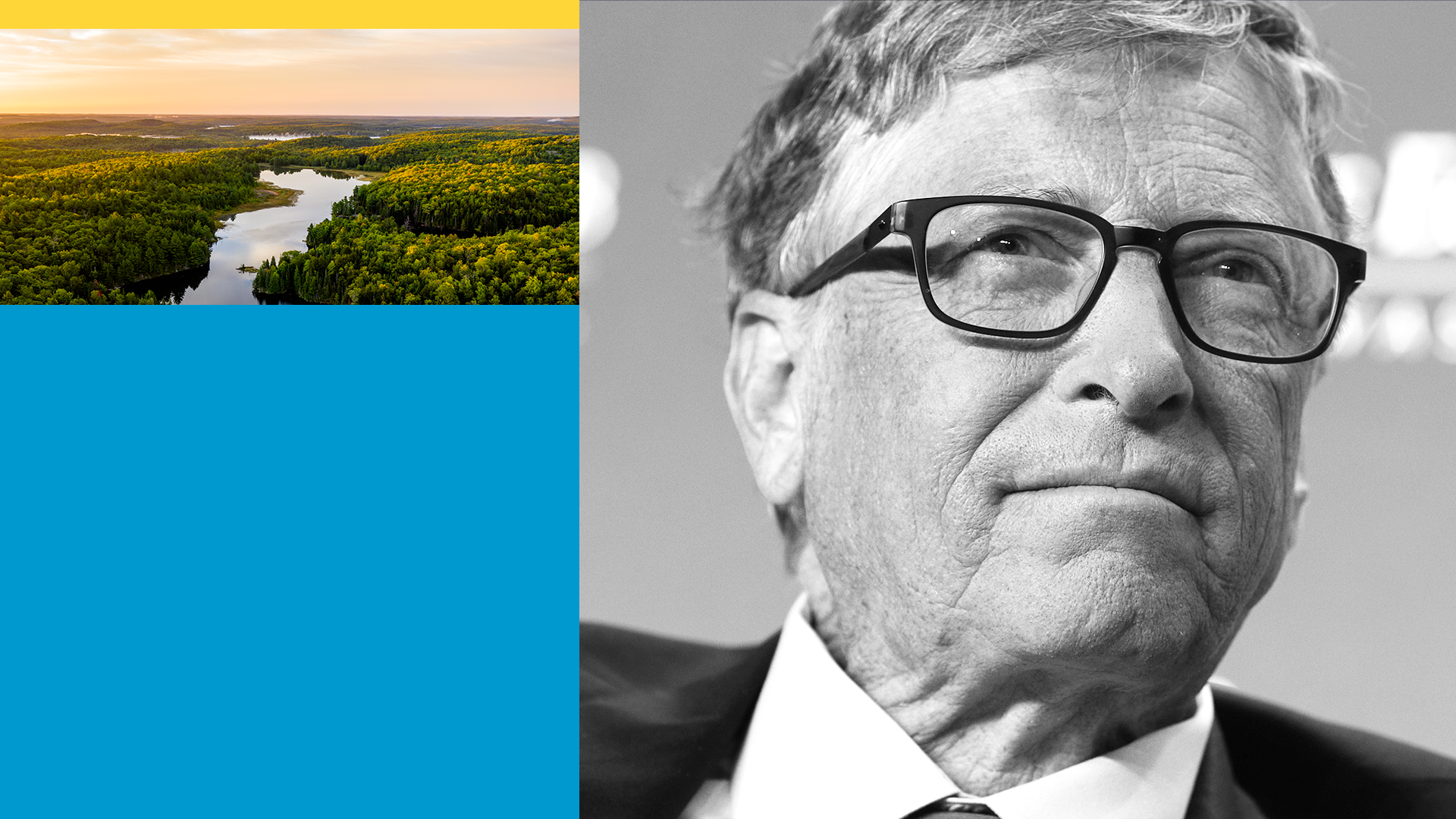
A Bill Gates-led venture fund that invests in next-wave climate technologies wants to get bigger.
The big picture: Gates, chair of Breakthrough Energy Ventures, said Monday that the $1 billion fund that began investing in 2017 plans to raise another $1 billion to $1.5 billion late next year.
Africa is the world's fastest urbanizing region, but limited public transit in most cities has led to severely congested roads, creating an acute need for investment and innovation in transportation.
Why it matters: Traffic takes a toll on both economic output and quality of life in Africa's megacities. But with mobile phone penetration approaching 50%, new technology platforms could help motorbike taxis and other services bridge the gaps in the continent's urban transportation systems.
Apple again led S&P 500 companies in buybacks, spending a new record $23.8 billion in Q1, more than doubling its spend from the previous quarter, data from S&P Global shows.
Context: Apple has long been a buyback behemoth. The company holds 8 of the 10 all-time records for quarterly buybacks, and has spent more than $75 billion on buybacks over just the past year.
Linkedin will today announce algorithm changes made over the past 12-18 months to favor conversations in its Feed that cater to niche professional interests, as opposed to elevating viral content, its executives tell Axios.
The big picture: News feeds that were fundamentally built to connect one voice to many are struggling to deliver on value as communication trends move to more personal and ephemeral conversations.
Around the world, companies big and small are feverishly plotting our future lifestyle — smart cities, driverless vehicles, wearable technology, internet-connected everything at home, and more, all of them activated by our voices and thoughts.
What's happening: For almost two decades, a tiny handful of companies — Google, Facebook, Microsoft, and China's Alibaba and Tencent — have sought to know every possible thing, public and private, in real time, about you and every other reachable individual on the planet — where they go, what they do, say, and feel.