Canadian Prime Minister Justin Trudeau said in a statement Saturday that he had asked for and received the resignation of John McCallum, the country's ambassador to China, CBC reports.
The big picture: The firing comes at an unusually tense time in China-Canada relations, with the detention of Huawei CFO Meng Wanzhou last month sparking what many believe to be retaliatory arrests of Canadian citizens by the Chinese government. Earlier this week, McCallum told reporters that it would be "great for Canada" if the U.S. dropped Meng's extradition request and listed arguments that could be used to bolster her case. McCallum was later forced to walk back the controversial comments.
Every year, it becomes less and less likely that a human being composed the upbeat jingle you just heard in the background of a video.
What's happening: Simple online tools have turned music generation into a matter of a dozen clicks, and can crank out pleasant if somewhat boring background music in a few seconds. These algorithmically generated ditties end up in product videos, news clips and occasionally even on musicians' albums.
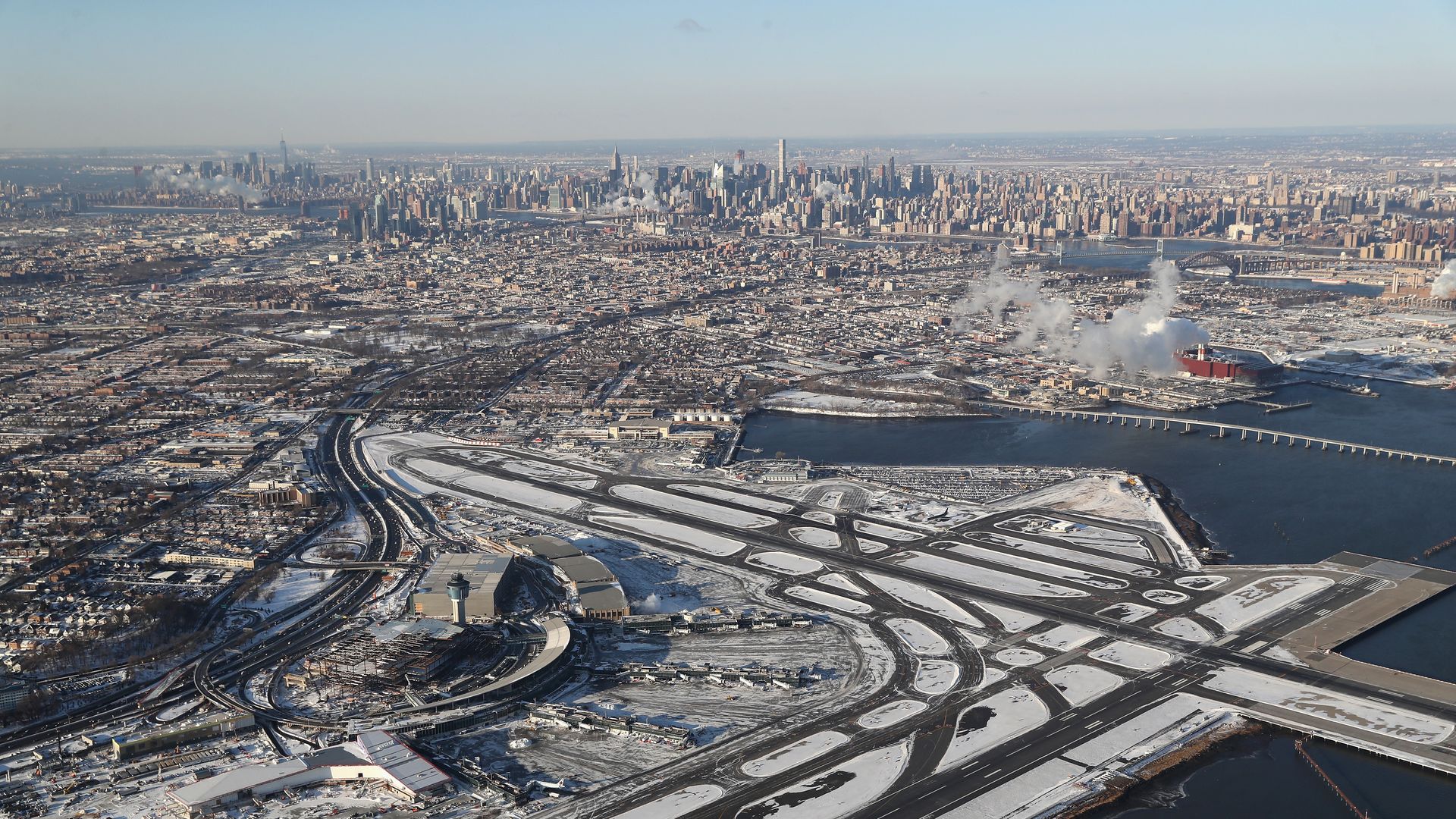
The Federal Aviation Administration has begun to limit flights to New York City's LaGuardia Airport along with Newark and Philadelphia, citing staff shortages for air traffic controllers.
Why it matters: TSA and air traffic control workers are calling out sick at higher numbers than usual, since they're not being paid as a result of the partial government shutdown. Friday's delays are the first time air traffic control staffing has affected flights. Per Axios' Jonathan Swan, Republican members of leadership have been privately speculating that it would take an airport crisis to break the shutdown impasse.
AV companies are understandably focused on trying to perfect their technology to address trust issues among the general public, but meanwhile, they're working on designs for those who could benefit most from mobility technology — the elderly and people with disabilities.
Why it matters: AVs will need to have accessible control panels, chassis modifications that accommodate wheelchairs, and advanced human-machine communication technology, not only to realize industry promises around mobility access, but also to be ADA-compliant once they begin to operate as commercial transportation services.
Technological advances are set to transform not only vehicles — as they take on more autonomy and connectivity — but also transportation infrastructure.
Why it matters: Developing technology for AVs to communicate with other vehicles as well as infrastructure like streets, traffic lights and road signs could both improve safety and decrease congestion.
The field is wide open for autonomous vehicle developers, making it hard to predict winners and losers. But look closely: the ones inching toward commercialization are quietly putting important building blocks in place.
Why it matters: There are many brilliant teams working on driverless car technology. But enabling a robot vehicle to drive from Point A to Point B is just the start—commercializing AVs will take a lot more work. To scale up, companies need the right leaders and experienced partners.







/2019/01/24/1548365038678.gif?w=3840)