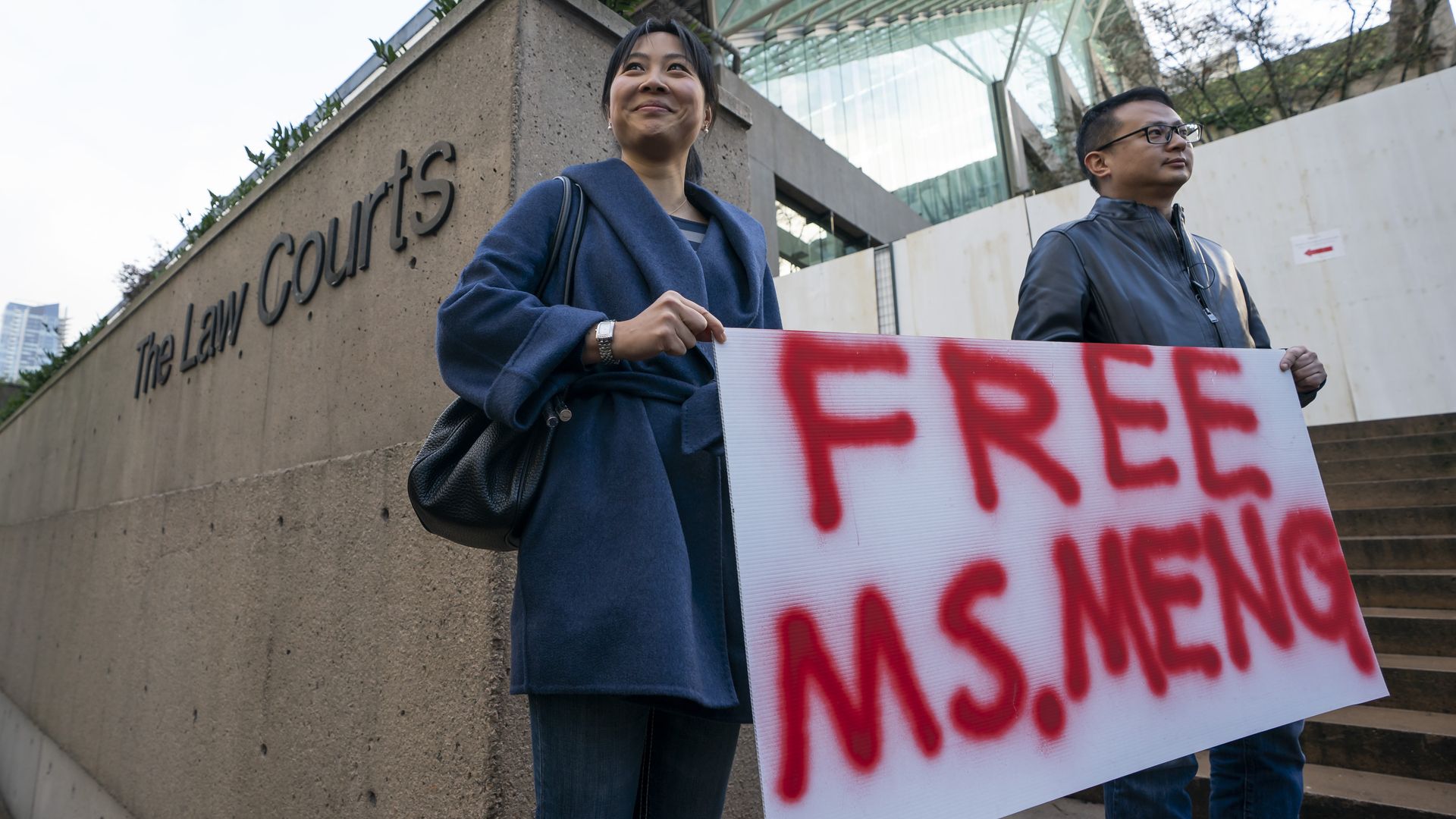
The Department of Justice announced Monday it has brought charges against Meng Wanzhou, chief financial officer of the Chinese electronics giant Huawei, related to violating trade sanctions against Iran. A second case announced today involves charges against individuals affiliated with Huawei for stealing intellectual property related to robotics.
Why it matters: The indictment ofMeng, the daughter of Huawei's founder, is only one chapter in a book-long series of international disruptions of one of China's biggest businesses. Huawei is currently dealing with international bans on its 5G equipment over potential espionage concerns and recently had a employee arrested in Poland for espionage.
Ireland's data protection regulator on Monday asked for an "urgent briefing" on Facebook's nascent plans to integrate the infrastructure of Facebook Messenger, Instagram messaging and WhatsApp.
What they're saying: "The Irish DPC will be very closely scrutinising Facebook’s plans as they develop, particularly insofar as they involve the sharing and merging of personal data between different Facebook companies," it said in a statement.
Facebook is building new operations centers and programs around the world that will focus on election integrity and help fight fake news and voter suppression.
Why it matters: The company has not been able to get ahead of constant abuses on its platforms to manipulate elections, drawing ire from regulators that are already wary that the platform is too big to manage itself.
Facebook’s decision to unite the technical guts of its three giant messaging services could not only cement its dominance of instant messaging but also help fend off future break-up attempts by antitrust cops.
Why it matters: Uniting the back-end technology that runs Instagram, Facebook Messenger and WhatsApp is more than just an engineering call. It will bring together users of all three apps in a single network, database and community — enabling new features and opening the door to even more anticompetitive challenges, privacy troubles and social conflicts.
Despite being blackballed from the American market as U.S. regulators explore legal and possibly criminal action against the company, Huawei has been growing its share of the smartphone market and has an ambitious goal for the end of the year.
“Even without the U.S. market we will be number one in the world,” Richard Yu, Huawei’s consumer division chief, said at a new-product news conference in Beijing this week. “I believe at the earliest this year, and next year at the latest.”