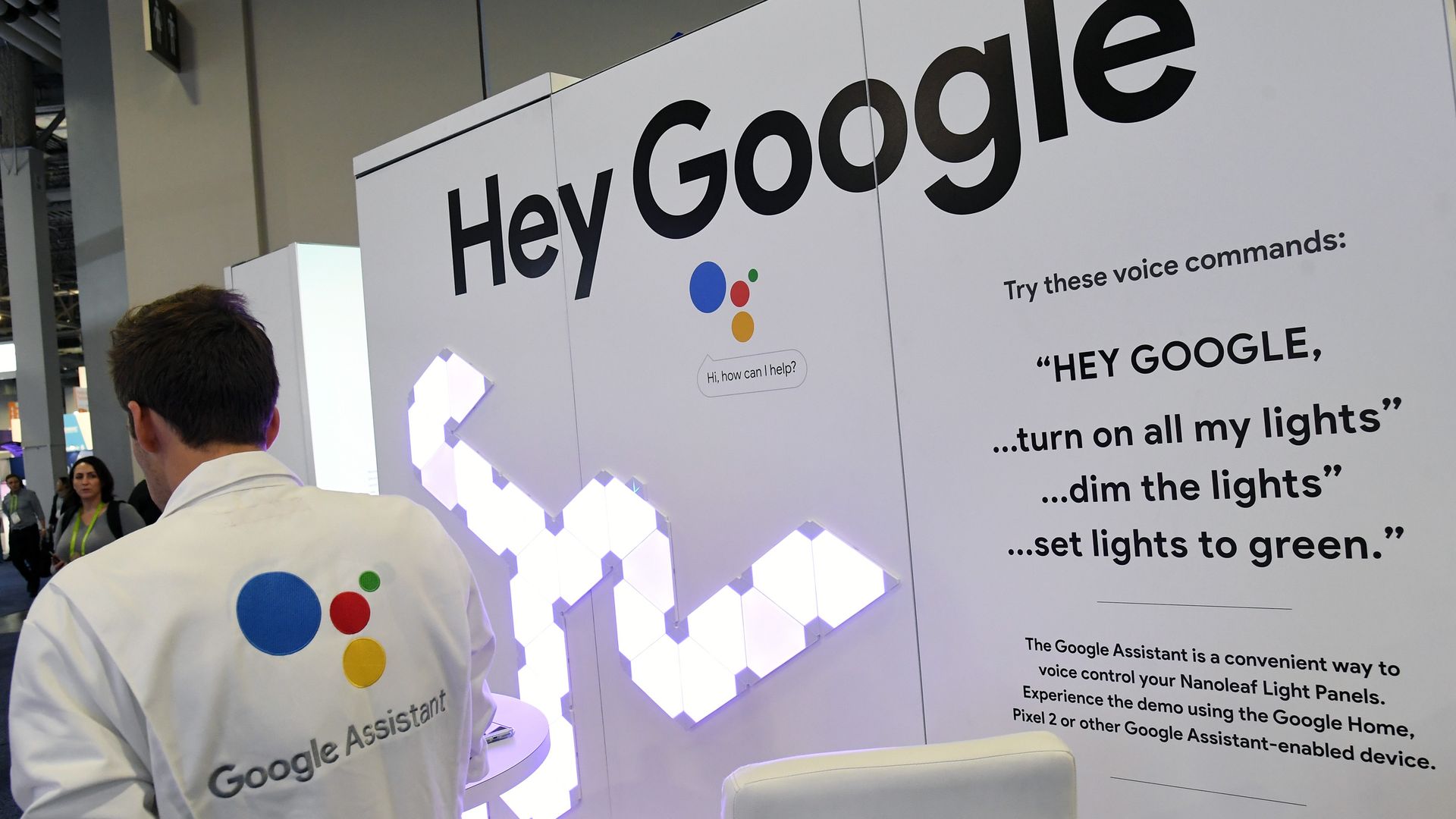
Amazon's senior vice president of devices and services, Dave Limp, told The Verge that more than 100 million Alexa-enabled devices have been sold.
The big picture: That number puts Alexa significantly behind other intelligent assistants like the Google Assistant and Siri, which are pre-installed on cellphones, but Limp said he isn't worried about competitiveness with other products. He said there will be "multiple players in the foreseeable future," and he doesn't think "there's going to be one winner." He also told The Verge he believes in "multiple assistants" and having them "interact in lots of different ways."
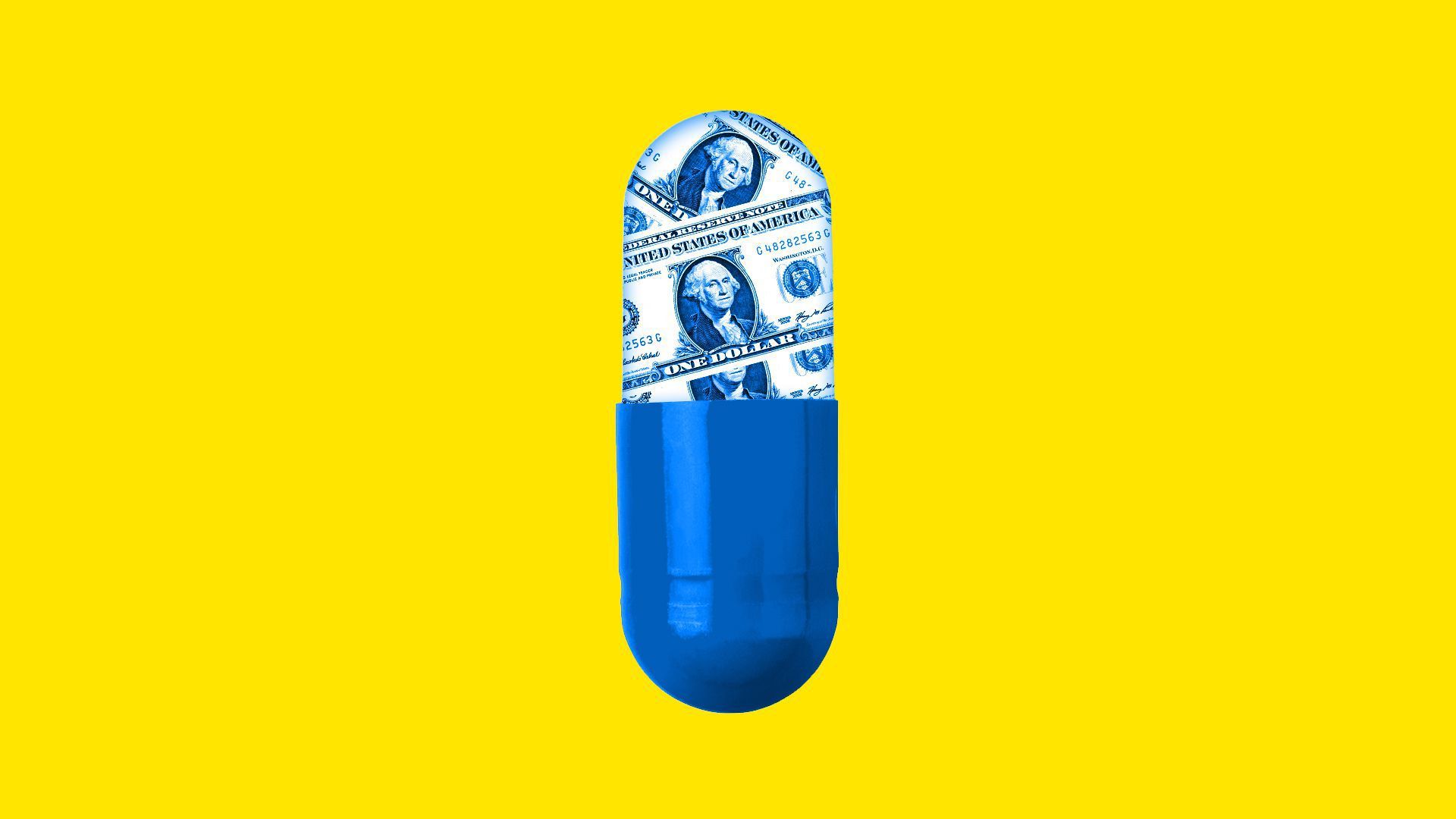
Verily, a life sciences research and engineering organization formed by Google parent Alphabet, announced Thursday that it has raised $1 billion in new equity funding from Silver Lake, Ontario Teachers’ Pension Plan and "other global investment management firms."
Why it's a big deal: Because it suggests that Alphabet is open to eventually spinning Verily out as an independent company.
Liz Fong-Jones, a longtime Google engineer known for speaking out on a wide range of employee concerns, is leaving the tech giant to work at a startup.
Why it matters: Fong-Jones was early to challenge her employer on a range of issues from sexual harassment to its work on controversial projects.
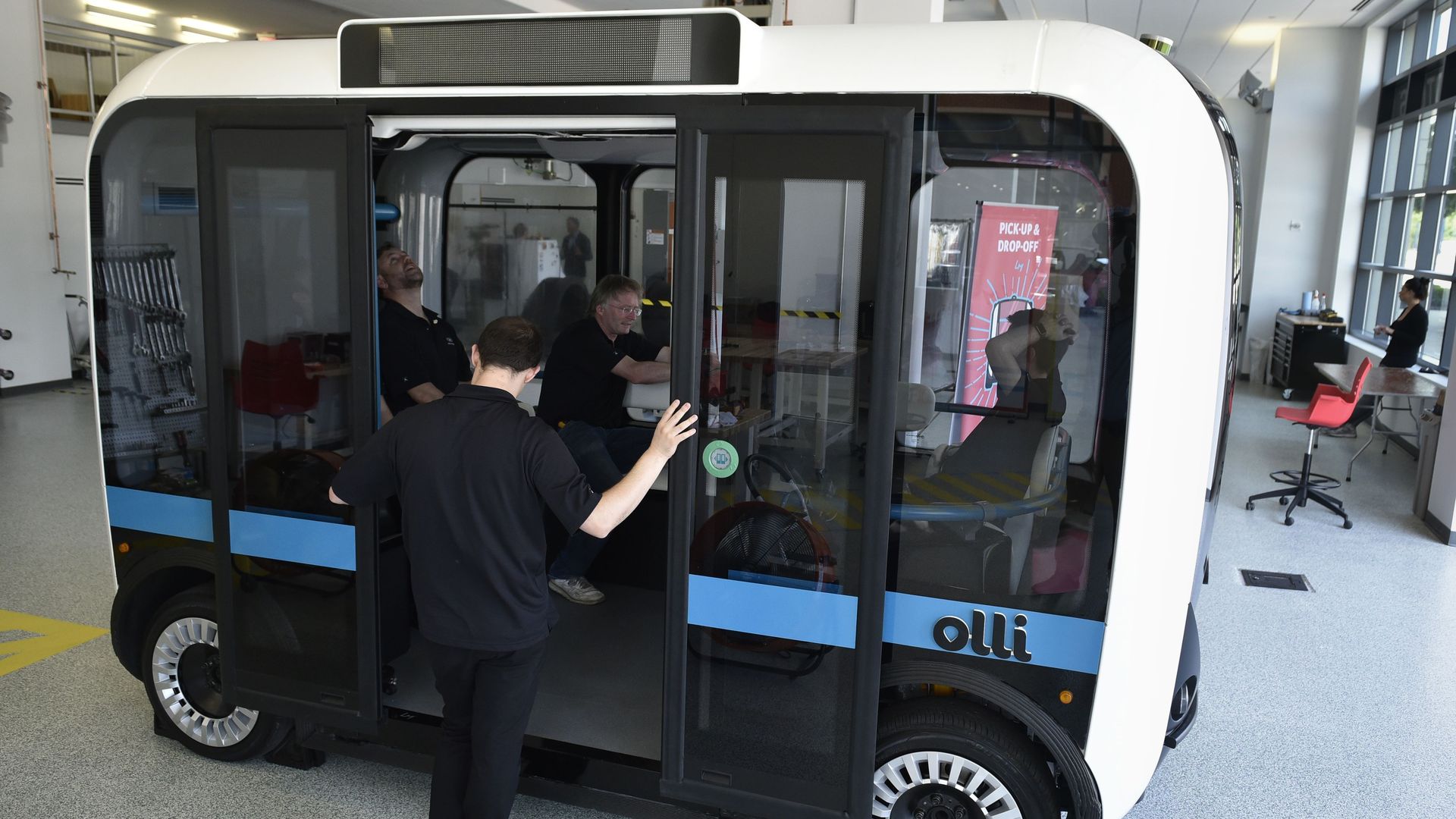
One AV trend set to pick up speed in 2019 is universities, cities and transit agencies piloting autonomous shuttles and circulators, typically carrying 10–12 passengers, to provide first- and last-mile links to other transit options.
Why it matters: These programs will be a chance to test AVs in new situations and environments, shape public perception of AV technology, and assess needed infrastructure improvements.
Ride-share congestion at airports, stadiums and shopping malls may be foreshadowing the chaos at popular destinations if AVs begin making most pickups and dropoffs.
The big picture: As transportation options diversify to include more car-sharing, ride-sharing and AVs, cities will need to invest in new infrastructure to keep traffic flowing safely and smoothly at transportation hubs and other high-activity areas.
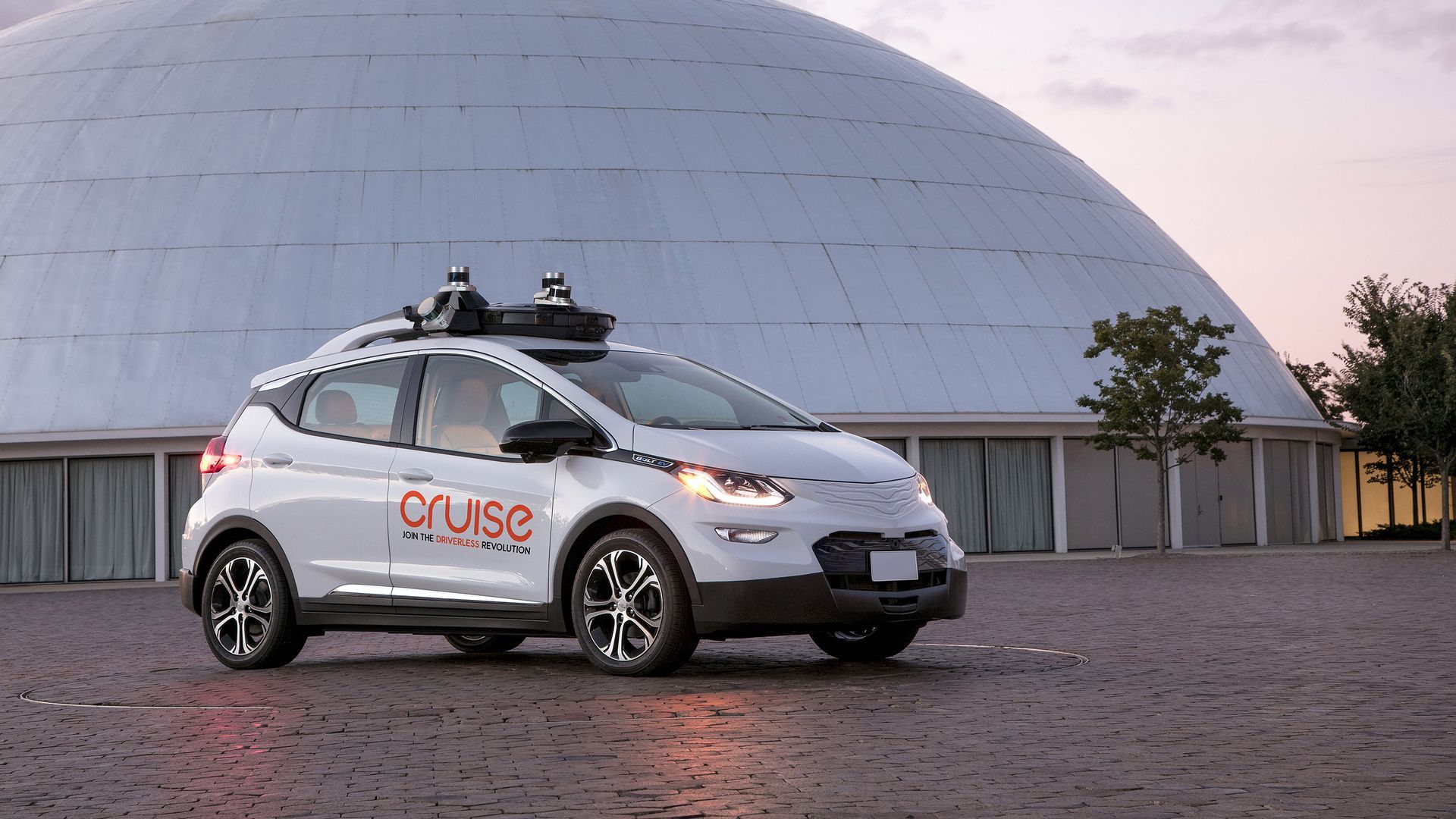
GM's autonomous driving unit, Cruise, will begin testing food delivery for some of DoorDash's San Francisco customers in March, the companies announced on Thursday.
Why it matters: After years of focusing on the technology, companies developing autonomous driving vehicles recently began turning their attention to business models.
Dan and Axios' Ina Fried discuss Apple's surprise earnings warning, and if it's more a story about China's economic slowdown or a saturated smartphone market.
There was a collective thud Wednesday as Apple warned that its holiday quarter revenue would fall billions short of expectations amid exceptionally weak business in China.
The backdrop: There are two important factors to consider when trying to make sense of the news: The problems Apple saw in China go far beyond just Apple. But Apple's iPhone problems extend far beyond China, too.
Google has quietly acquired Superpod, a startup that had built a question-and-answer mobile app, Axios has learned. Google paid less than $60 million to “acqui-hire” the founders and purchase some of Superpod's assets, according to a source.
The bigger picture: The search giant hasn’t been shy about its ambitions for Google Assistant, the voice-activated virtual assistant that it debuted in 2016. Superpod, which lets users ask questions and receive answers from experts, could help Google bolster its virtual assistant’s ability to answer users’ questions.






/2019/01/03/1546552629874.gif?w=3840)


/2019/01/03/1546528145282.gif?w=3840)