The U.S. Securities and Exchange Commission has charged venture capitalist Mike Rothenberg with “overcharging investors to fund personal projects, including sending millions of dollars to his own virtual reality production company,” according to a press release.
Why it matters: Without admitting or denying the charges, Rothenberg and his firm have agreed to settle the lawsuit, which is subject to approval from federal court. They have also agreed to be barred from the brokerage and investment advisory business for five years. This comes as Rothenberg has been working to revive his venture capital career and profile since the firm initially ran into troubles. His firm was known for hosting extravagant parties, which were paid for in part by investors' funds, according to the SEC.
At an event on cyberbullying on Monday morning, First Lady Melania Trump — who has made cyberbullying her key issue — said that social media "can be used in many positive ways, but can also be destructive and harmful when used incorrectly.”
Why it matters: At the same time, the president was tweeting insults and attacks toward former CIA director John Brennan. Melania's communications director Stephanie Grisham told reporters that the first lady is "aware of the criticism but it will not deter her from doing what she feels is right. The President is proud of her commitment to children and encourages her in all that she does."
Islands, a chat app for college students that's growing in popularity, is rolling out a new version that adds a student directory to the service. That's exactly where Facebook started, nearly 15 years ago.
Why it matters: Teens’ social media preferences have changed since then in major ways, such as a preference for ephemerality (Snapchat) over permanence (Facebook). But some social-media needs transcend generations, as Islands’ makers discovered, and chat apps could end up building new Facebooks for their Facebook-averse users.
Why it matters: These findings are surprising in light of the constant news of security breaches and privacy scandals, and suggest that consumers are becoming numb to the growing threats to their personal data.
Bill Gates writes on Gates Notes: The Blog of Bill Gates that when he entered Harvard in 1973, the drawing below "was basically how the global economy worked."
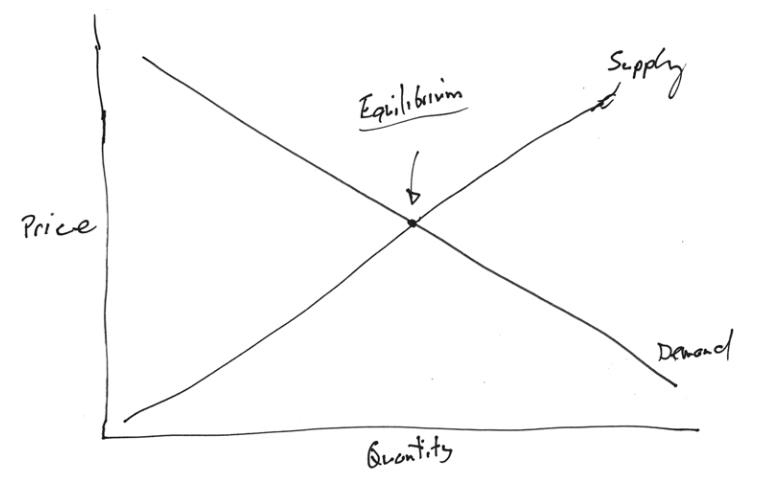
The big picture: "There are two assumptions you can make based on this chart. The first is still more or less true today: as demand for a product goes up, supply increases, and price goes down. If the price gets too high, demand falls. The sweet spot where the two lines intersect is called equilibrium. ... Everyone wins."