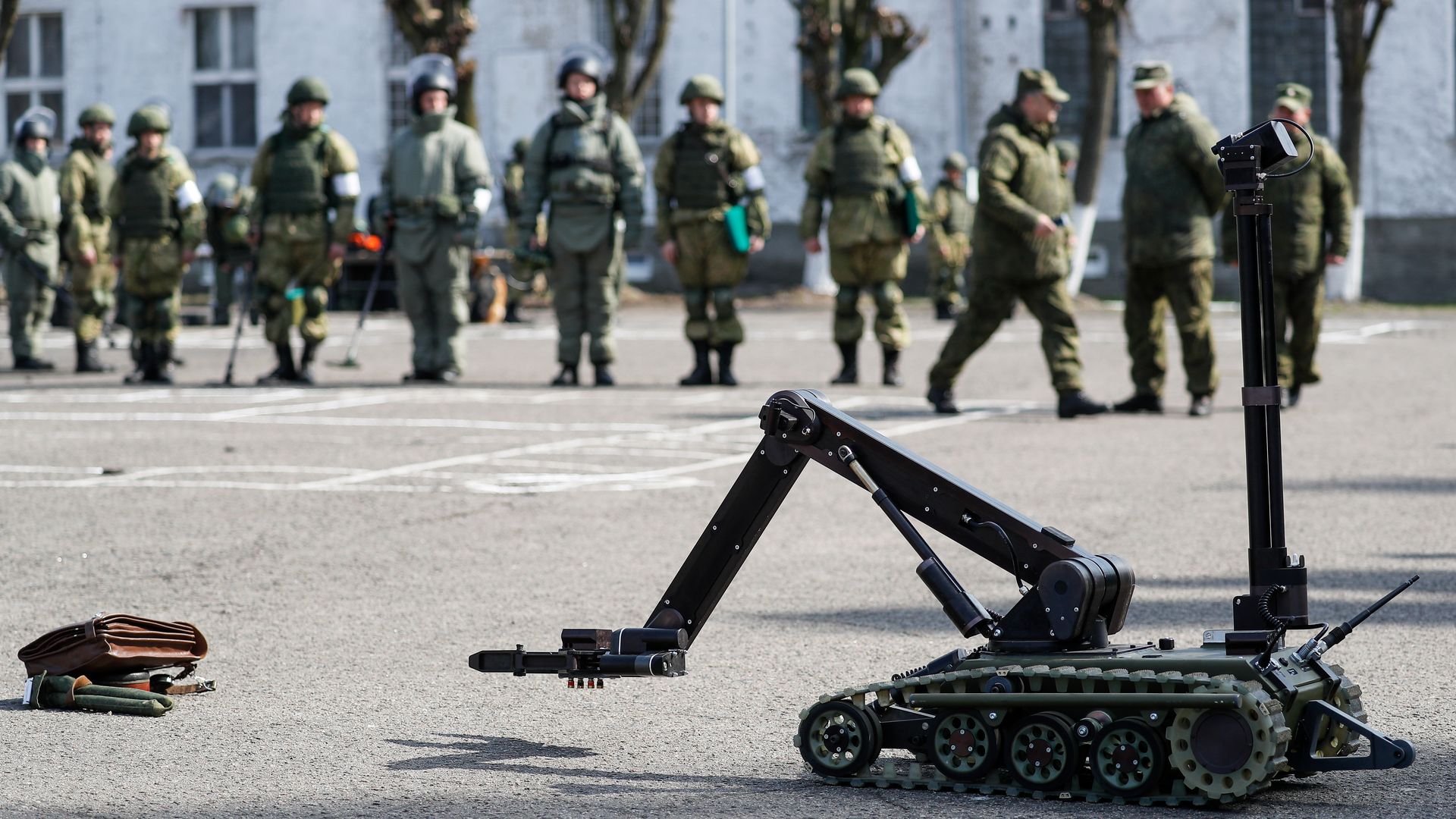
Researchers at the United States Army Research lab and the Robotics Institute at Carnegie Mellon University are developing a new technique that teaches robots new traversal patterns that allow them to navigate autonomously in environments while carrying out missions humans expect of them with minimal oversight, reports Science Daily.
Why it matters: If successful, these new techniques could allow soldiers to complete missions faster and develop situational awareness in more dangerous situations and investigations through their robot partners.
Tech companies are billing products as AI-powered for that future-wow factor — even if artificial intelligence is only a small part of the equation. In The Guardian, Olivia Solon charts the rise of "pseudo-AI" products that have humans quietly do the dirty work.
Why it matters: Some experts warn of an impending "AI winter" if currently high expectations for the technology are disappointed and investment wanes. Revelations that AI is just underpaid people could spark just that kind of disillusionment.
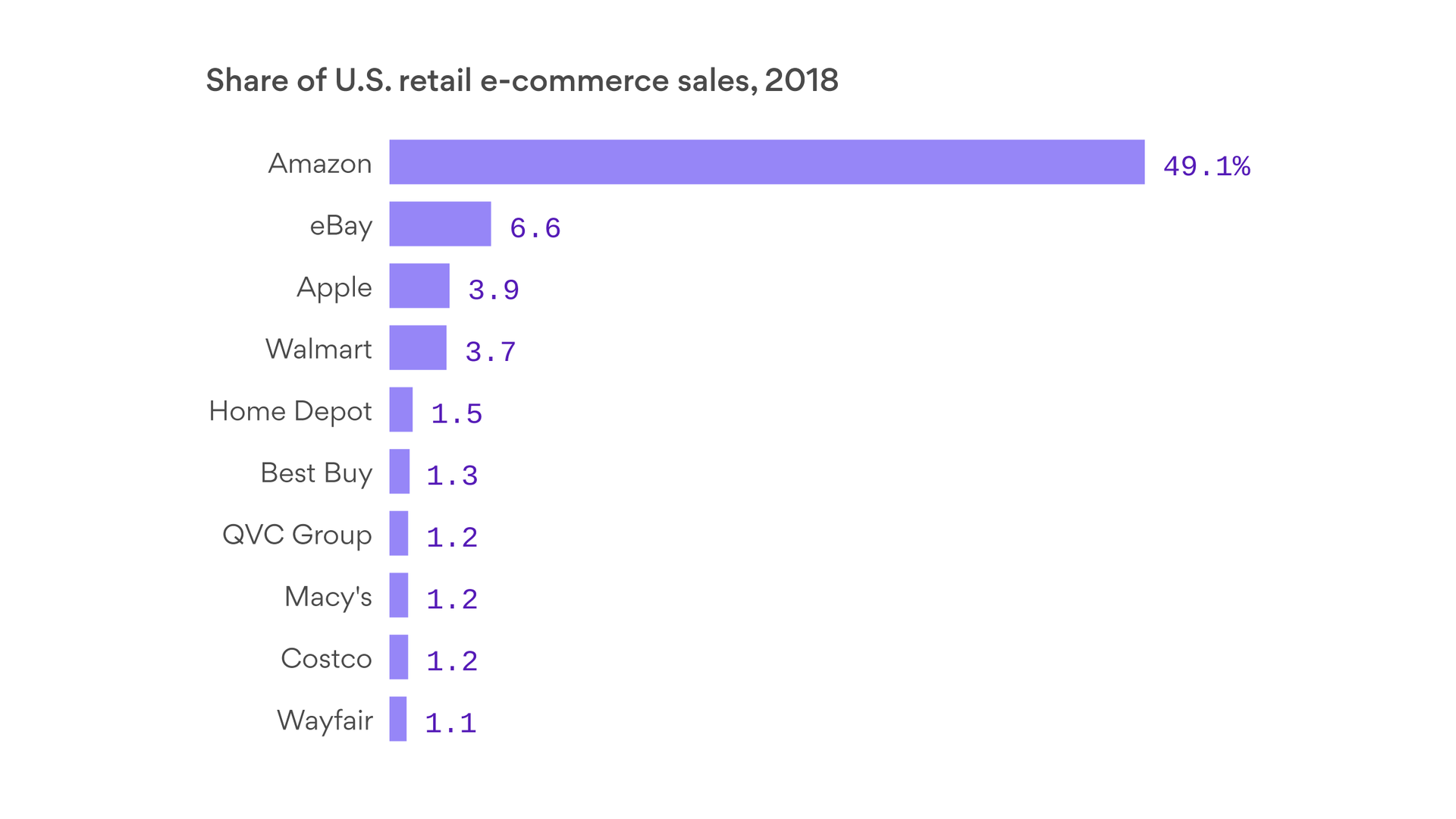
Amazon’s e-commerce sales are expected to top $258 billion this year, up 30% from one year ago with projections for 2018 even more staggering in each Amazon category, according to a survey by eMarketer.
Why it matters: The survey shows the reality of Amazon’s untouchable advantage against other retail companies. E-commerce giant eBay, is second to Amazon and only has 6.6% of the market share. The projections of each category on Amazon are more staggering, as each one is expected to grow in 2018 by massive margins.
The details: Twitter removed these accounts in an effort to instill confidence and authenticity to its platform, per a blog post from Vijaya Gadde of Twitter. Accounts that were removed were locked as a result of sudden changes detected in account behavior. Most people saw a follower change of about four users, the post said, but some bigger names lost millions of followers.
Facebook is drawing fire for a post defending its decision not to ban InfoWars and other entities that repeatedly post debunked conspiracy theories.
Why it matters: Facebook has promised to boost the information quality on its social network. It has also been struggling to find more favor with conservative activists and groups who accuse it of bias against them.
Microsoft wants the U.S. government to start thinking about what limits should be set on the use of face recognition technology. In a blog post, Microsoft also said it is consulting with outside groups to help set its own policies for how it will use and sell such technology.
Why it matters: Face recognition can be used for a range of purposes, from reuniting missing kids to mass surveillance. Currently, there are few rules for those using or selling the technology.
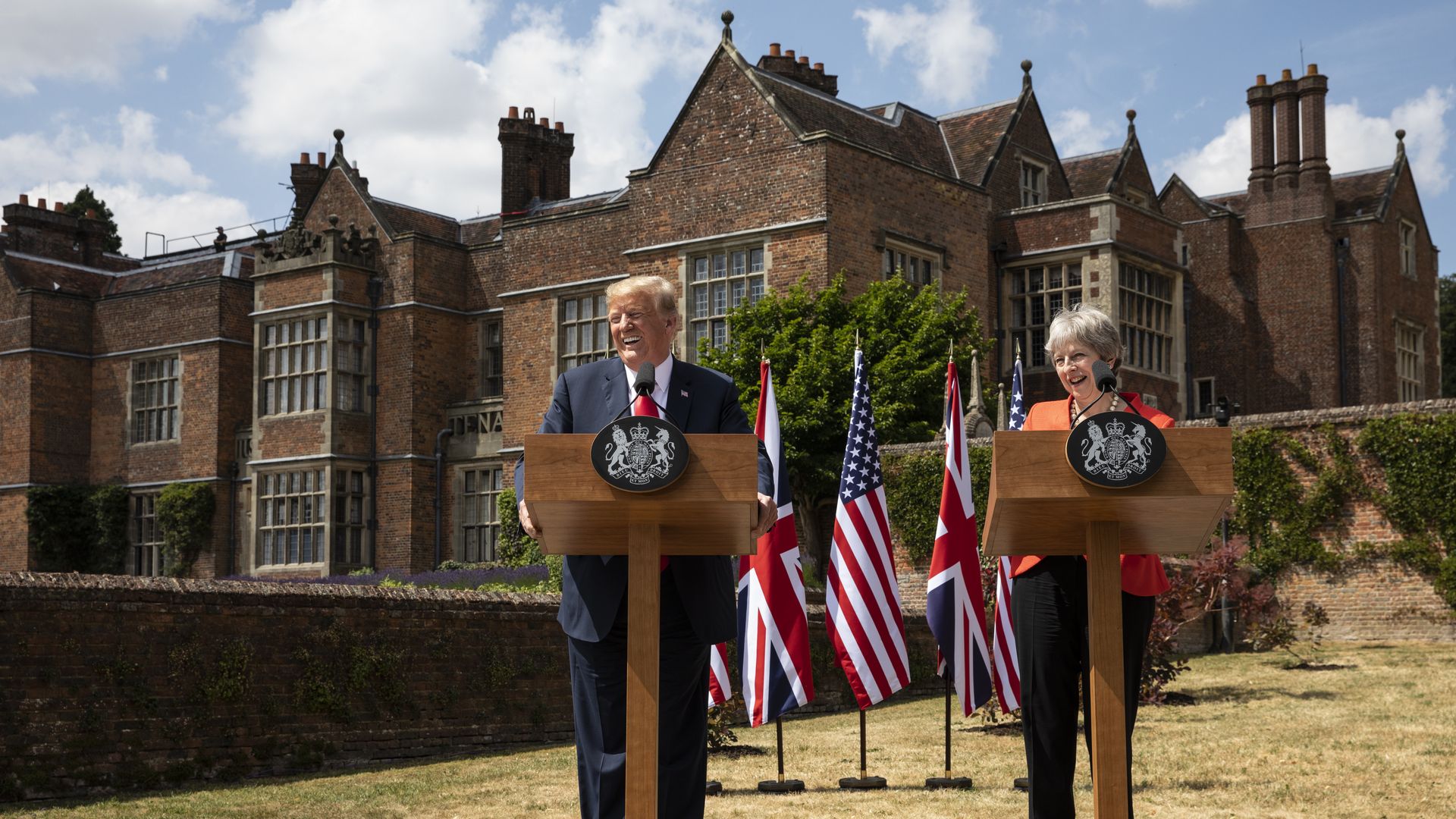
Speaking at a joint press conference Friday, President Trump insisted that he did not criticize British Prime Minister Theresa May in his interview with The Sun and accused the British tabloid of being "fake news," despite the interview being on tape.
"“I didn’t criticize the prime minister. I have a lot of respect for the prime minister and unfortunately there was a story that was done which was generally fine, but it didn’t put in what I said about the prime minister... And I said tremendous things... they didn't put it in the headline, I wish they put that in the headline. And she's a total professional, because when I saw her this morning, I said, 'I want to apologize, because I said such good things about you.' She said, 'Don't worry, it's only the press.'"
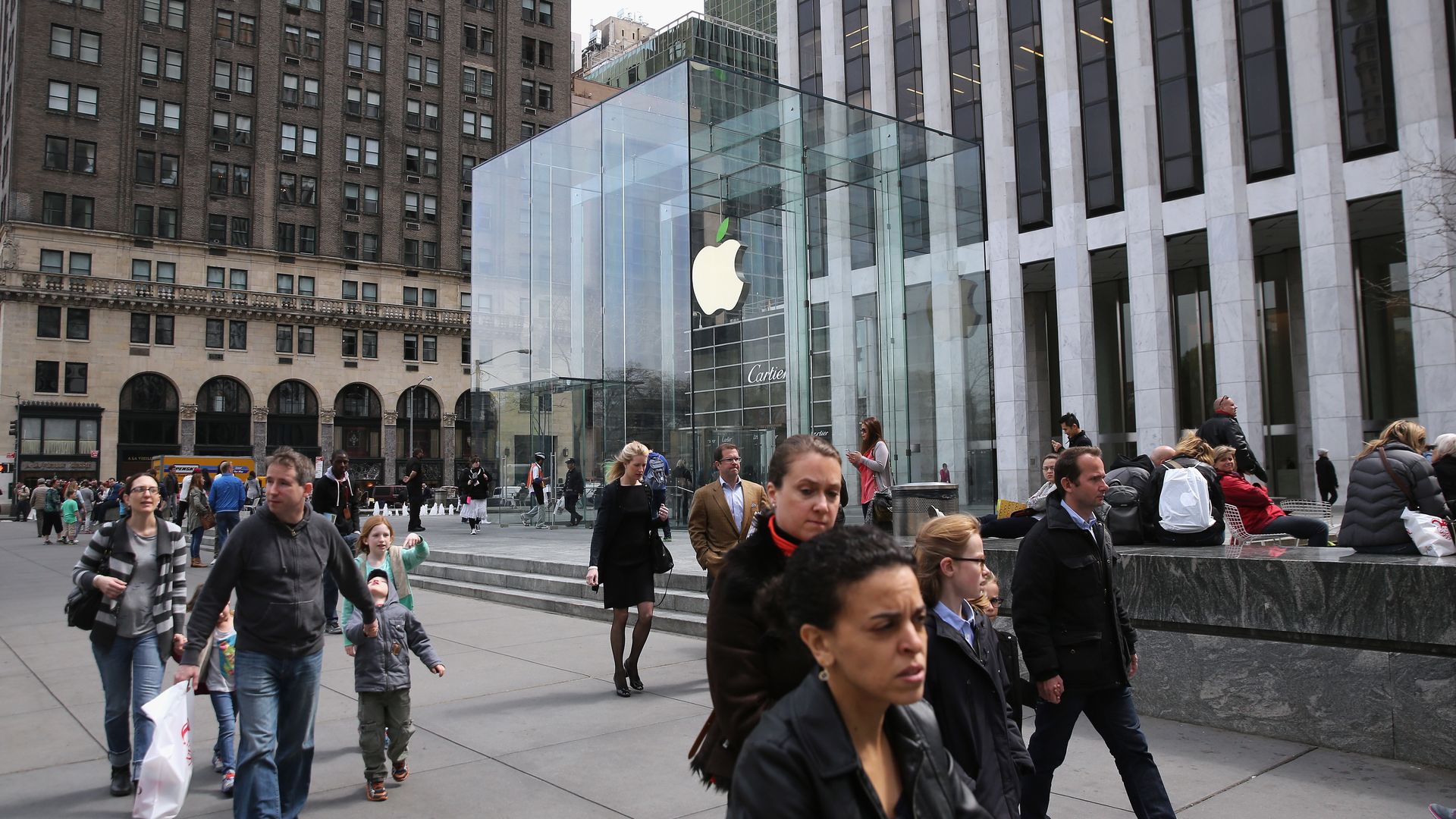
Apple said yesterday that it's joining with 10 suppliers to launch a new $300 million "China Clean Energy Fund" to enable its large supplier network there to expand renewable power use.
Why it matters: Corporate sourcing is increasingly a driver of renewable power deployment, and Apple's move show how it can evolve to fold in supply chains too.