Now that AI's brightest minds earn six- and seven-figure salaries, it's worth remembering that the field didn't always command the big bucks. I was reminded of this last week on stumbling over reactions to a famous 18-year-old Wired essay by computer pioneer Bill Joy.
What's going on: As in all other work, AI salaries are a function of supply and demand — there are relatively few genuine AI researchers, and extremely high demand for them. Ph.D. salaries could return to Earth if the fever diminishes — if, for example, investors sour on AI.
American tech companies and research institutions — involved in the development of artificial intelligence in both the U.S. and China — face elevated ethical questions as the two superpowers race for dominance in the field.
Why it matters: U.S.labs face the real possibility that collaborations with Chinese companies and universities will end up bolstering Beijing's goal of dominating global civilian and military AI.
After decades of dominance by a few key players, the semiconductor race has been blown wide open. The shift is driven partly by a new demand for AI-specific chips, according to a report from Andy Patrizio in Ars Technica.
Why it matters: There's a lot of new money pouring into a lucrative sector, setting up an explosion of new players — and another venue for the AI arms race between the US and China.
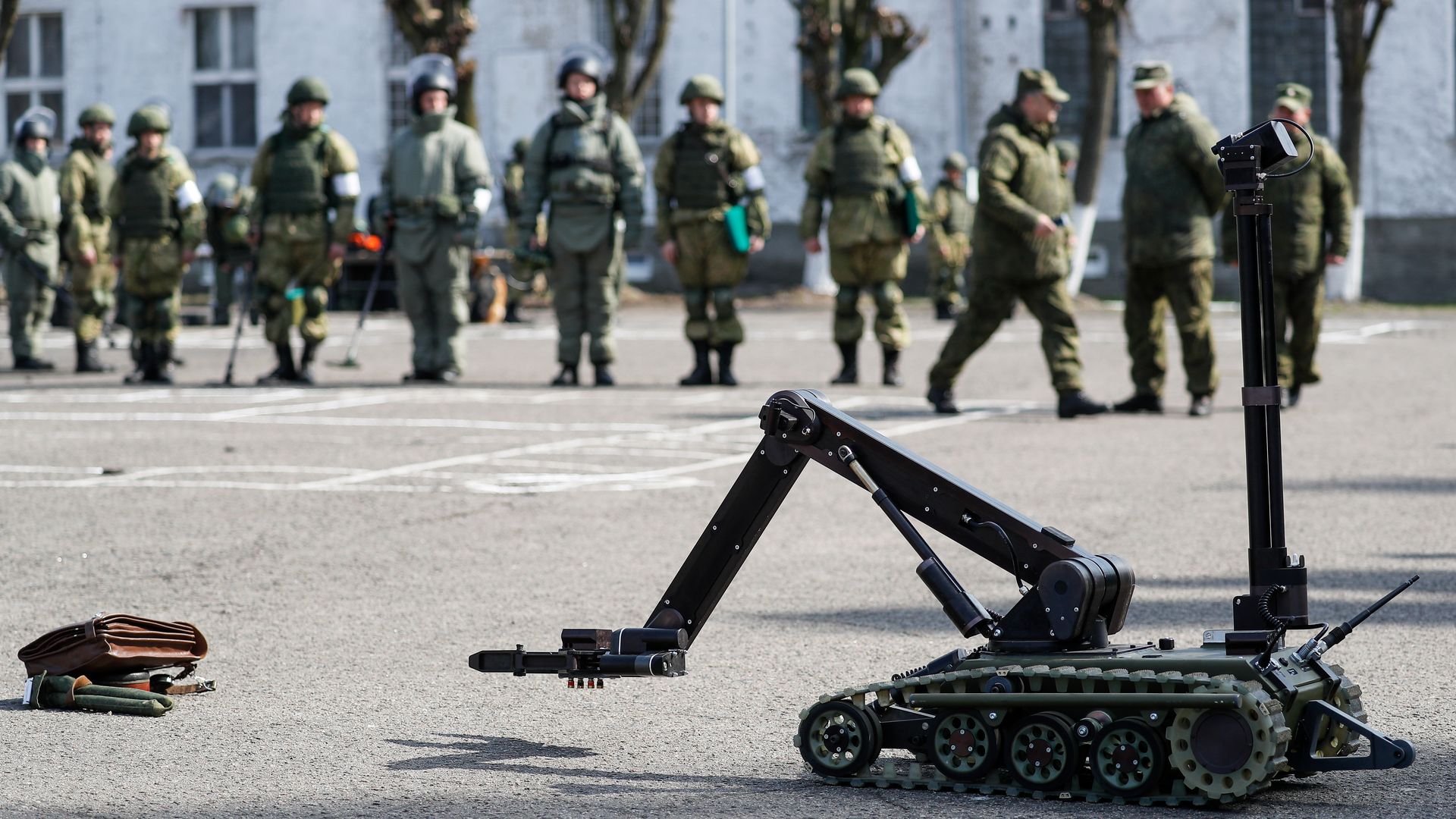
Researchers at the United States Army Research lab and the Robotics Institute at Carnegie Mellon University are developing a new technique that teaches robots new traversal patterns that allow them to navigate autonomously in environments while carrying out missions humans expect of them with minimal oversight, reports Science Daily.
Why it matters: If successful, these new techniques could allow soldiers to complete missions faster and develop situational awareness in more dangerous situations and investigations through their robot partners.
Tech companies are billing products as AI-powered for that future-wow factor — even if artificial intelligence is only a small part of the equation. In The Guardian, Olivia Solon charts the rise of "pseudo-AI" products that have humans quietly do the dirty work.
Why it matters: Some experts warn of an impending "AI winter" if currently high expectations for the technology are disappointed and investment wanes. Revelations that AI is just underpaid people could spark just that kind of disillusionment.
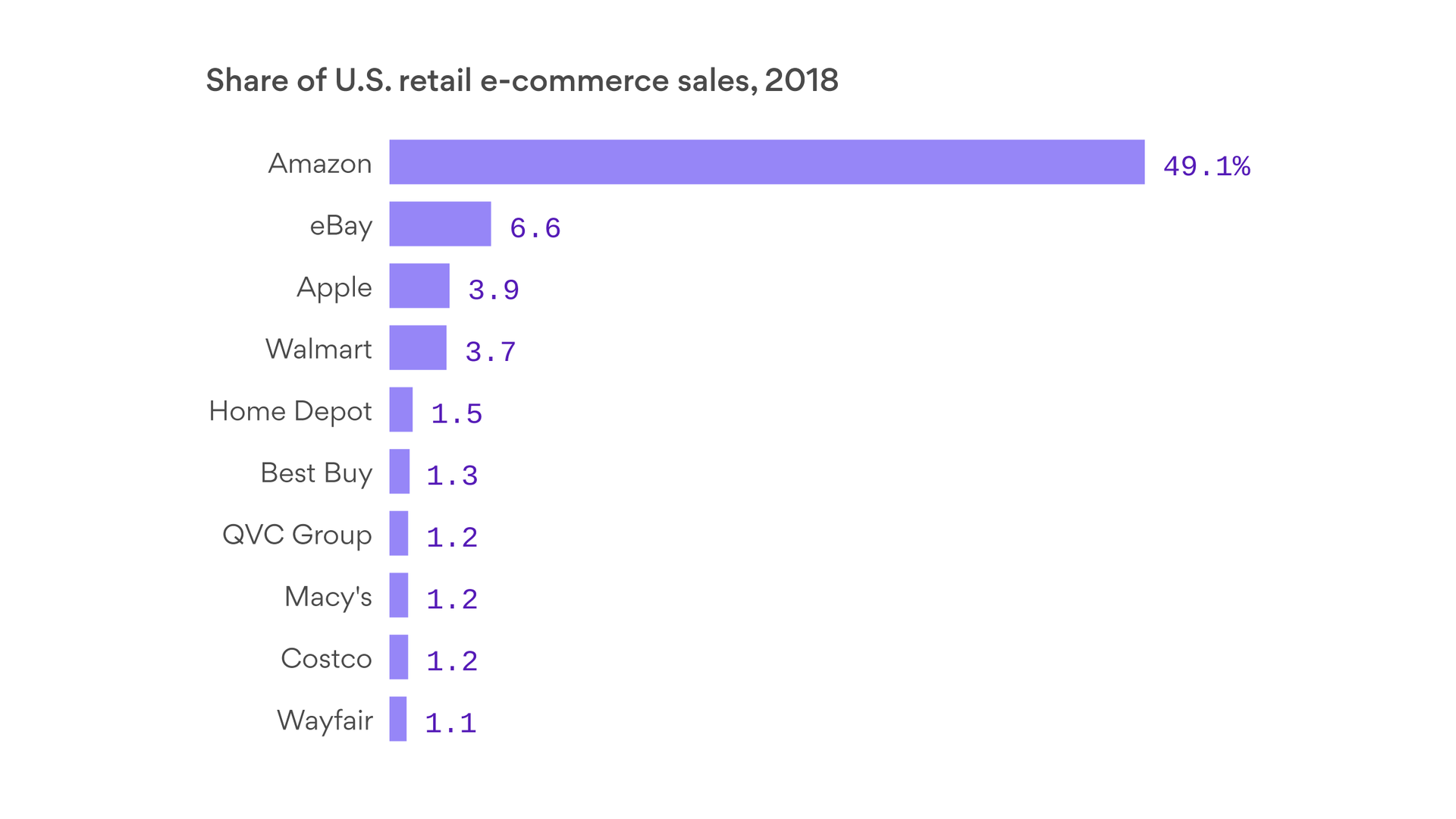
Amazon’s e-commerce sales are expected to top $258 billion this year, up 30% from one year ago with projections for 2018 even more staggering in each Amazon category, according to a survey by eMarketer.
Why it matters: The survey shows the reality of Amazon’s untouchable advantage against other retail companies. E-commerce giant eBay, is second to Amazon and only has 6.6% of the market share. The projections of each category on Amazon are more staggering, as each one is expected to grow in 2018 by massive margins.


/2018/07/15/1531674139833.gif?w=3840)