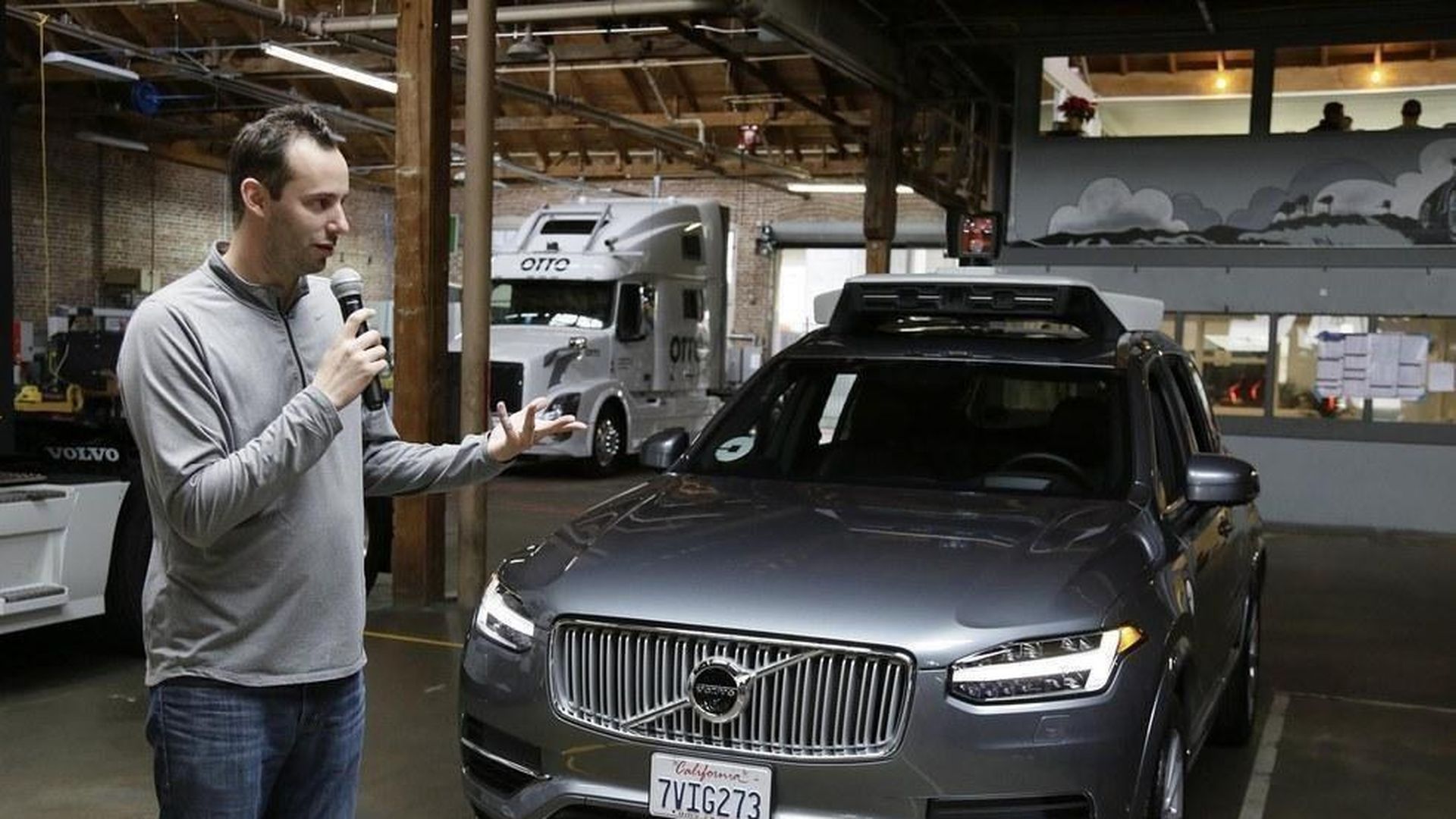
A federal judge has denied Uber's attempt to use a key argument to explain why a former employee downloaded files prior to leaving his job at Waymo, Alphabet's self-driving car unit.
What's next: Uber still has to show that it didn't know about Levandowski's alleged downloading of Waymo files (at least until this meeting in March), and that it was not as part of a plan to steal Waymo's technology. The case is set to go to jury trial in October.
"We had hoped that the jury and the public could hear the reasons Levandowski gave for his downloading files, which had nothing to do with Uber," Uber said in a statement. "The fact remains, and will be demonstrated at trial, that none of those files came to Uber."
The creamy middle: Eagle-eyed enthusiasts noted that one of the accompanying files to a Google+ post had Oreo teaser in the file name, so that could well be the dessert-themed name for O.
The bottom line: Of course, what really matters is when the new software starts to show up on phones. Expect existing Google devices like the Pixel to be the first to get the update. As for new devices, the next Pixel will almost certainly be running O. And Samsung is due to debut the next Galaxy Note on Wednesday. It's either going to be one of the last flagship devices running Nougat or one of the first to pack Android O
We reported this morning on the mounting pressure on major web platforms over their role in moderating content. A conservative activist named Phil Kerpen circulated a confidential memo earlier this year on the mechanics and politics of how to regulate the political neutrality of major web companies like Google and Facebook. Find the full text below.
Why it matters: Moves to turn these ideas into concrete policy or regulation haven't happened. But the memo is certainly getting attention, especially as major web platforms try to walk the fraught line of removing extremist content while also maintaining an open platform for free speech in the wake of the Charlottesville attack.
Worth noting: "The unpublished draft memo represents preliminary thoughts on complex issues," Kerpen said when contacted by Axios.
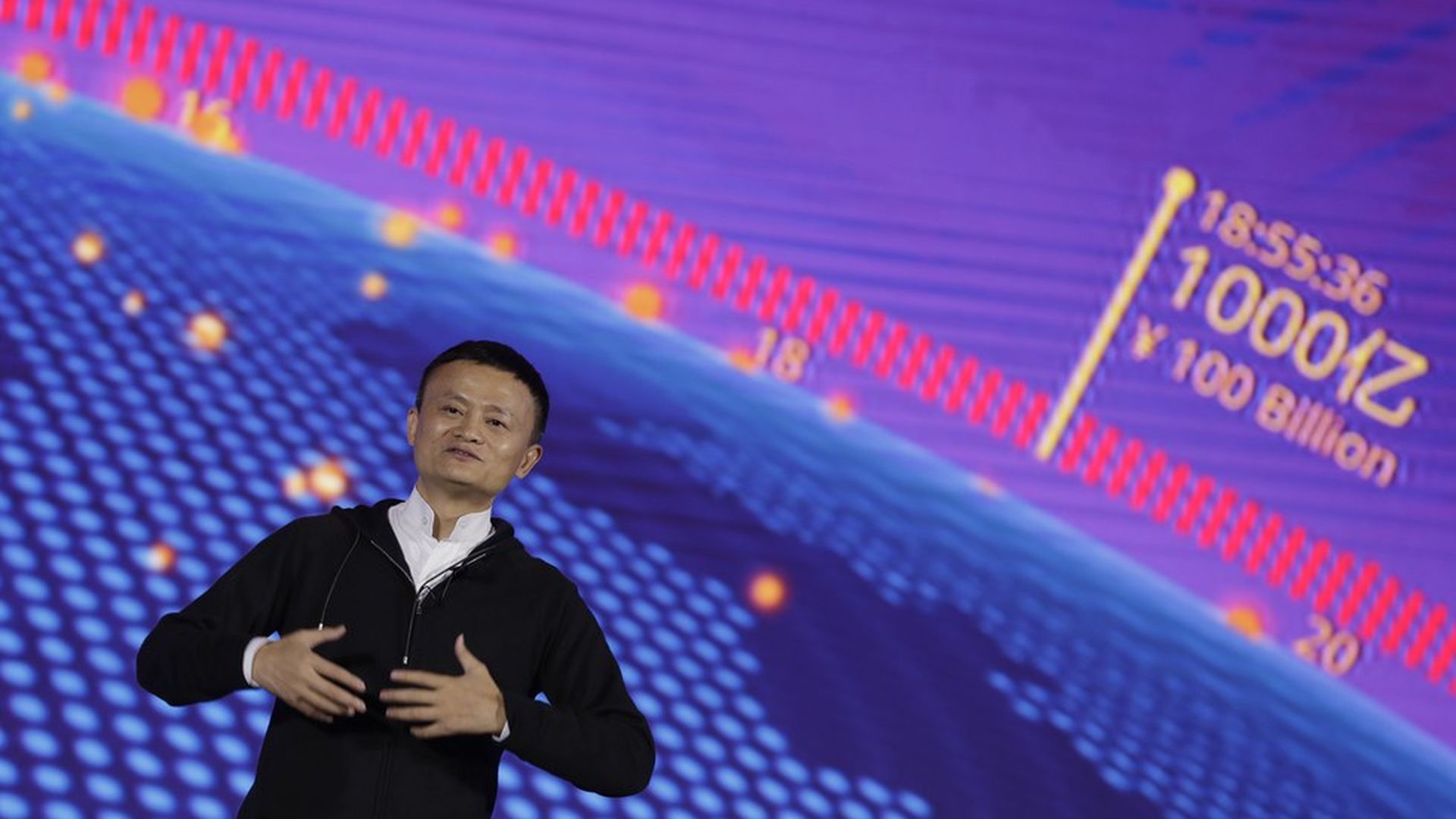
Shares of Alibaba, the Chinese e-commerce and mobile pay company, are up 85% this year, catapulting it alongside the big U.S.-based tech icons as a global juggernaut.
Led by its charismatic founder, Jack Ma, Alibaba is now worth $392 billion, moving up on Amazon, whose market value is about $475 billion and share price is up about 27% this year. Alibaba shares rose 2.7% on Thursday alone.
It's not quite Amazon: Alibaba commands an estimated three-quarters of on-line sales in China, but its $7.4 billion in second-quarter revenue was dwarfed by Amazon, which reported $38 billion, five times as much.
But why it still matters: Alibaba's quarterly revenue, reported Thursday, was up 56%, and profit increased by 94% — to $2.17 billion — from a year ago. Alibaba has more than 500 million monthly active users for its online shopping apps, per the NYT, 42% more than the entire U.S. population. Similar to Amazon chief Jeff Bezos, Ma is enormously ambitious, pushing into competition, for instance, with Amazon, Microsoft and Google for business in cloud services.
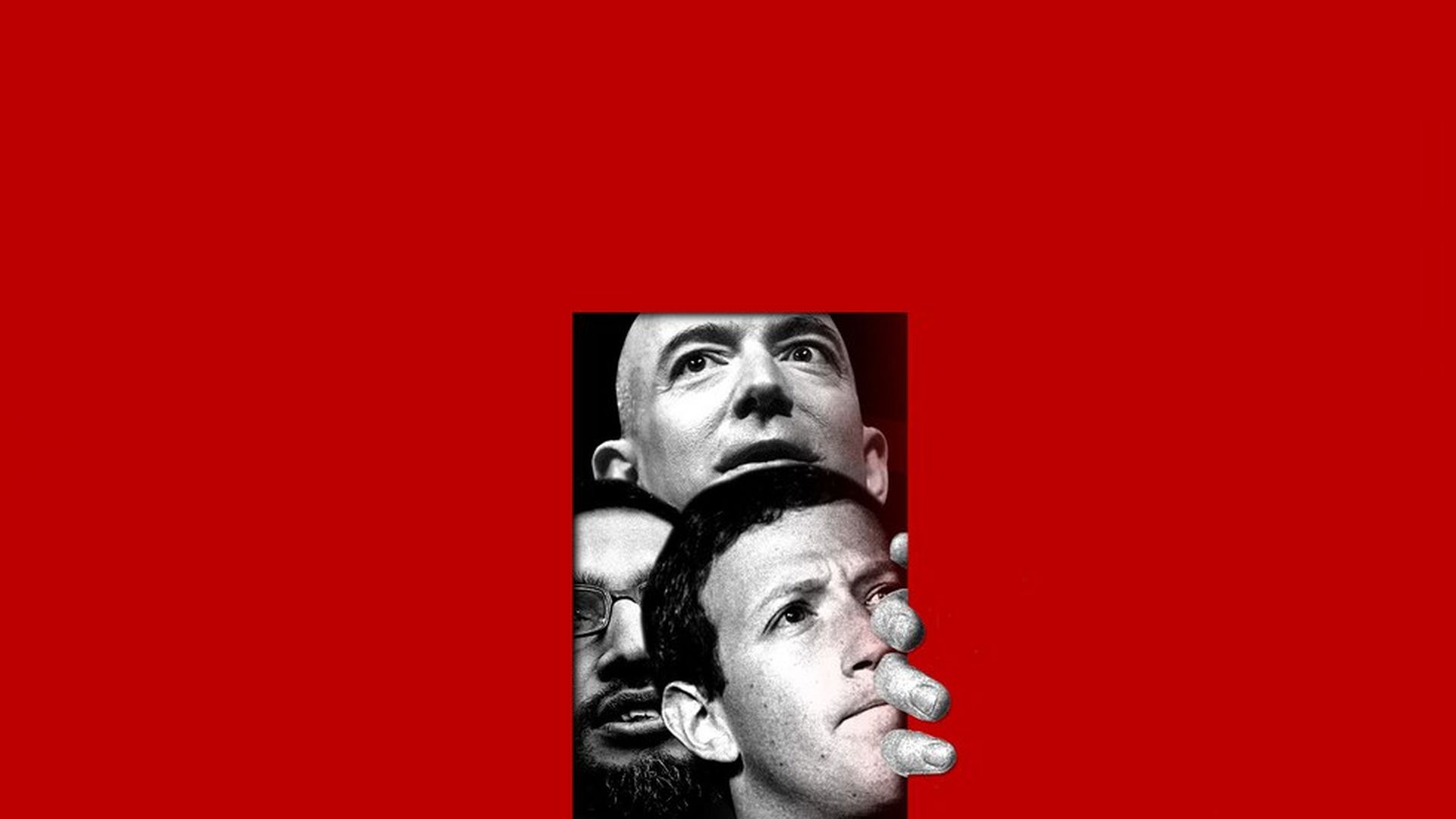
Tech behemoths Google, Facebook and Amazon are feeling the heat from the far-left and the far-right, and even the center is starting to fold.
Why it matters: Criticism over the companies' size, culture and overall influence in society is getting louder as they infiltrate every part of our lives. Though it's mostly rhetoric rather than action at the moment, that could change quickly in the current political environment.
Walmart reported earnings and sales that beat expectations for the second quarter this year, with e-commerce sales growing for U.S. stores 60%, per a Walmart press release. Revenue was at $123.36 billion compared to an estimated $122.84 billion. Earnings were at $1.08 a share.
Why it matters: Walmart is largely avoiding the struggles hitting the rest of the industry — its size and scale enable it to compete on price with Amazon.
Data: Money.net; Chart: Andrew Witherspoon / Axios
FORTUNE has its annual "40 under 40" list up, ranking the most influential young people in business under the age of 40 — "a litany of fresh-faced leaders upending industries and helming some of the world's most important businesses, not to mention the largest global economies."
Emmanuel Macron, president of France
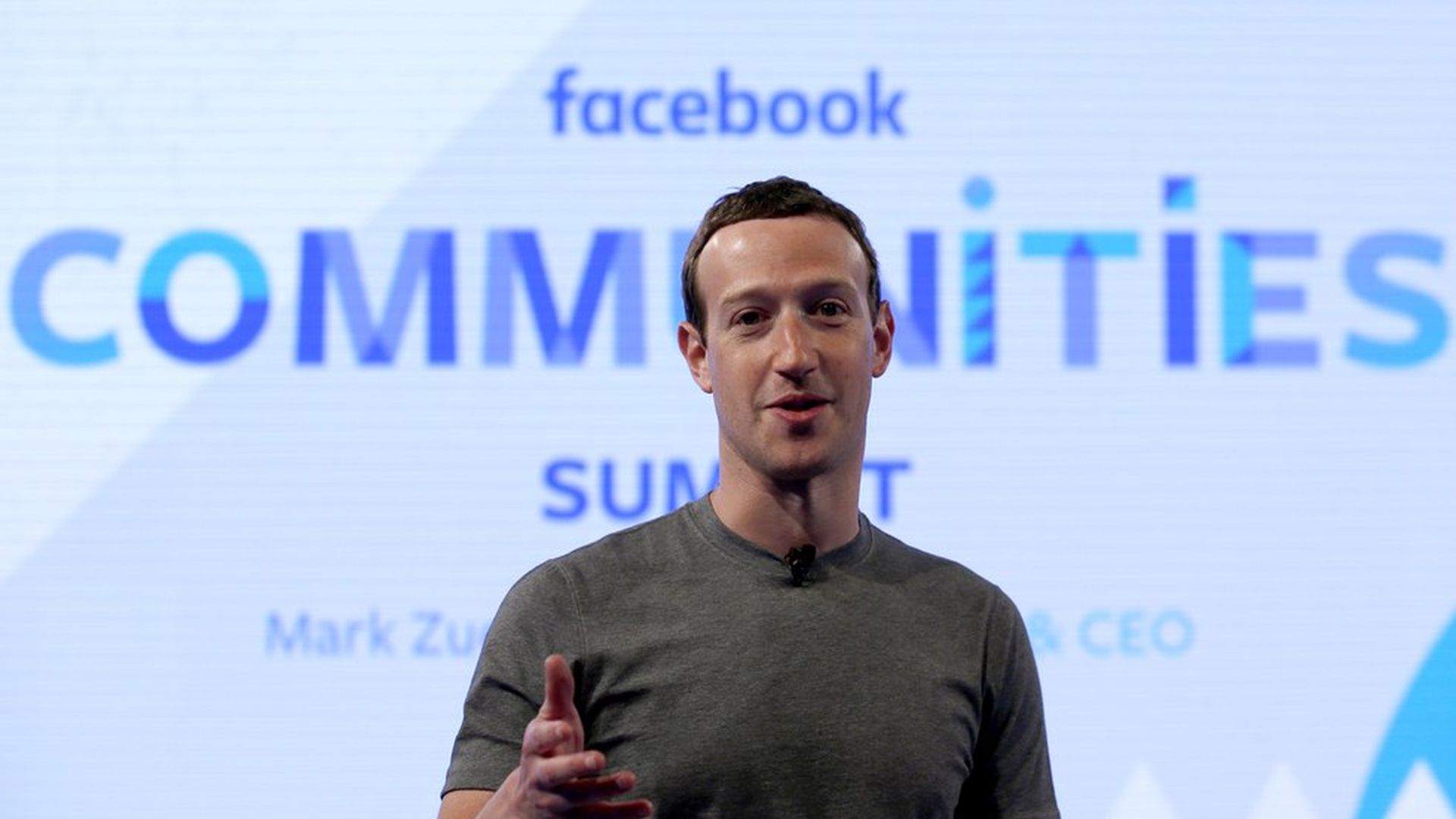
Mark Zuckerberg, CEO and founder, Facebook
Cheng Wei and Jean Liu, co-founders, Didi Chuxing
Brian Chesky, Airbnb CEO; Nathan Blecharczyk and Joe Gebbia, Airbnb co-founders
Leo Varadkar, Ireland prime minister
John and Patrick Collison, Stripe co-founders
Serena Williams, living tennis legend
John Zimmer and Logan Green, Lyft co-founders
Daniel Schwartz, CEO, Restaurant Brands
Brian Armstrong, CEO, Coinbase; and Vitalik Buterin, co-founder, Ethereum
Bonus: Axios' chief tech correspondent and author of our Login newsletter, Ina Fried, is named to the Advocate's "50 Most Influential LGBT's in Media," along with Kara Swisher, NYT columnist Charles Blow, Frank Bruni, Jonathan Capehart, Anderson Cooper, MSNBC's Steve Kornacki, Rachel Maddow, HuffPost editor-in-chief Lydia Polgreen, Robin Roberts, Nate Silver, Shep Smith...
Several major tech firms are reevaluating their core value of openness as they clamp down on white supremacist rhetoric on their platforms. After protests turned violent in Charlottesville, companies are taking a harder line against hateful content than they have in the past.
Why it matters: The tech industry's vision has been to create open, neutral platforms that allow all viewpoints. Every time it filters content or restricts users' access, it has to balance that goal with concerns about hate speech that could lead to violence. This week's events have caused many companies to recalibrate that balance. Many are still grappling with where to draw the line between free speech and dangerous extremism.
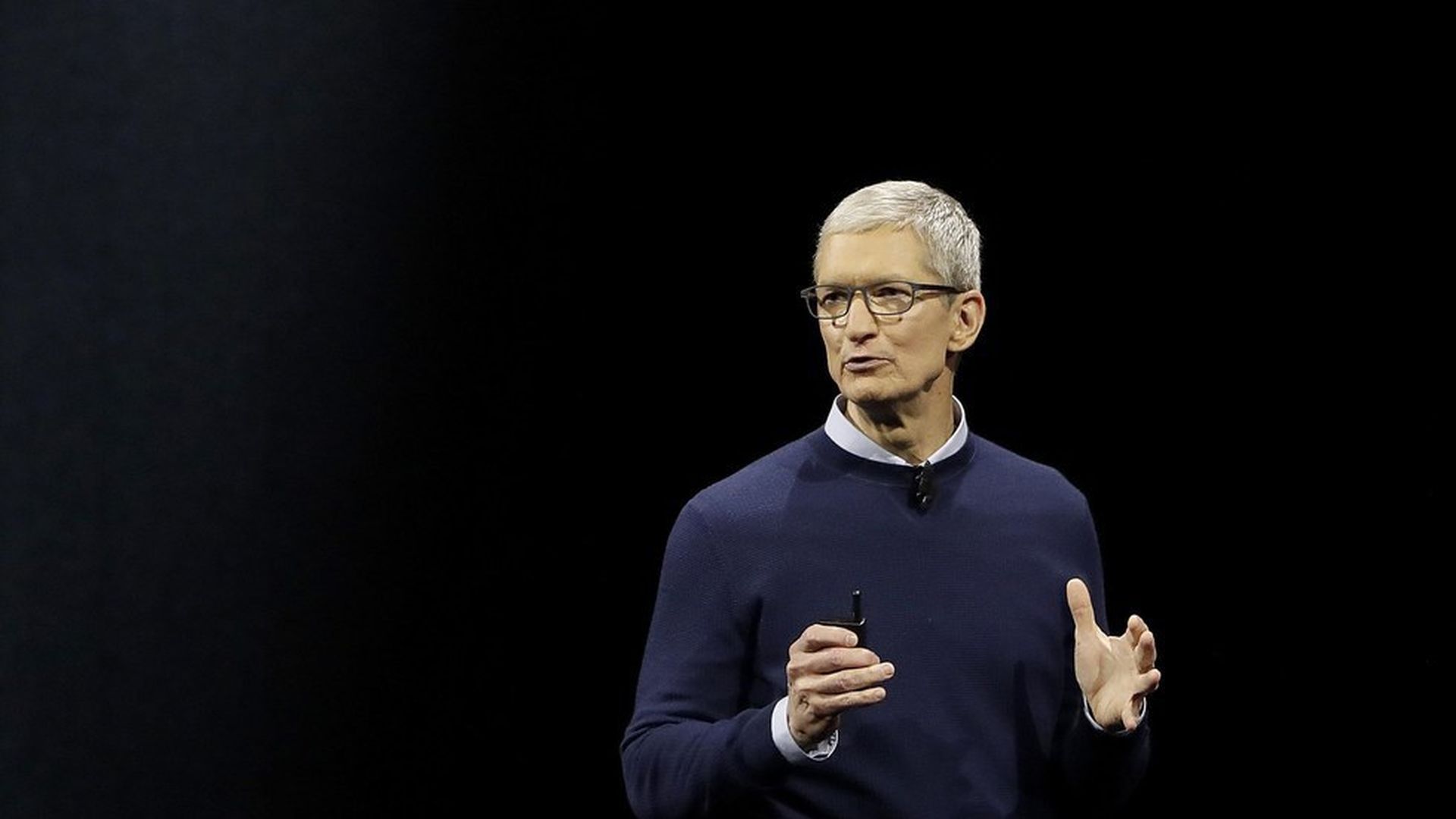
Apple CEO Tim Cook issued a passionate e-mail to employees Wednesday night, pledging to use Apple's cash and stature to fight the kind of hateful messages embraced in Charlottesville last weekend.
Cook said in an e-mail to employees across the globe and obtained by Axios:
"Hate is a cancer, and left unchecked it destroys everything in its path... Its scars last generations. History has taught us this time and time again, both in the United States and countries around the world."
"I disagree with the president and others who believe that there is a moral equivalence between white supremacists and Nazis, and those who oppose them by standing up for human rights. Equating the two runs counter to our ideals as Americans."