Saturday's technology stories

Uber board "disappointed" in Benchmark dispute with Kalanick

The rest of Uber's board is not happy that Uber investor (and board seat holder) Benchmark filed a lawsuit against Travis Kalanick, the company's former CEO, alleging he deceived the board when he made a move to gain control over more seats.
The Board of Directors is disappointed that a disagreement between shareholders has resulted in litigation. The Board has urged both parties to resolve the matter cooperatively and quickly, and the Board is taking steps to facilitate that process. At a time when thousands of employees around the world are working hard to serve our drivers and riders and continue to innovate, our priority remains to select Uber's new CEO as quickly as possible. We are fortunate to have several outstanding candidates who share our belief in Uber's great future.
Yasir Al-Rumayyan, Garrett Camp, Ryan Graves, Arianna Huffington, Wan Ling Martello, & David Trujillo
Why it matters: Now Uber is likely looking at a civil war on its board while it's trying to hire a CEO and keep the company going

Mattis: Pentagon should leverage artificial intelligence

During a West Coast swing that included visits to Google and Amazon this week, Defense Secretary James Mattis acknowledged in an interview with Wired that the Pentagon isn't keeping up with the tech industry when it comes to putting artificial intelligence to use. "It's got to be better integrated by the Department of Defense, because I see many of the greatest advances out here on the West Coast in private industry," he said.
Our thought bubble: It's pretty common for the federal government's tech efforts to lag behind the tech industry's fast pace of innovation. His predecessor in 2015 opened the Defense Innovation Unit Experimental, which aims to foster collaboration between smaller tech companies and the Defense Department. Mattis said he wants to see the organization speed up the deployment of AI in the department. Trump's proposed budget would increase funding for it, but cuts the budget of the National Science Foundation, which supports AI research.


Facebook reportedly authorized copycat app for China

Facebook has signed off on a new photo-sharing app in China through a local company, the New York Times reports — absent any public ties to the tech giant. The Times published screen shots of the app, called Colorful Balloons, that looks similar to Facebook's Moments app.
Why it matters: Tech companies want in on the Chinese market, but that comes with rules — including an infamous censorship regime. Facebook has been trying to penetrate the country, with Zuckerberg learning Mandarin and making entreaties to officials. But its relationship with China remains complicated: China announced that Facebook-owned WhatsApp would be blocked in the country a few weeks ago. Facebook was banned in China in 2009.
Our thought bubble: The big question for companies here is whether they're willing to adhere to local regulations around the world even when they conflict with American norms.

Exclusive: Uber shareholder group wants Benchmark off board

A group of Uber investors has asked that venture capital firm Benchmark step down from the company's board of directors, Axios has learned. It also wants Benchmark to divest enough shares so as to no longer have board appointment rights, claiming to have enough investor interest to handle more than a $6 billion sale. The move comes one day after Benchmark sued former Uber CEO Travis Kalanick for fraud, in an attempt to have him removed from the board.
Benchmark has not yet responded to a request for comment.
- Details: The shareholder group communicated its request via a petition-style email sent earlier this morning to other Uber investors and its board of directors, which has a meeting scheduled for today. Its basic argument is that Benchmark's action only complicates the company's already-troubled search for a new CEO, and effectively violates Benchmark's fiduciary duty to the company.
- Who signed the request? Shervin Pishevar (Sherpa Capital, although signed as an individual), Ron Burkle (Yucaipa Cos) and Adam Leber (Maverick).
- Why it matters: It was shocking enough for a major venture capital firm to sue the CEO of a highly-valuable portfolio company. For other VC firms to then make this sort of counter-move against a peer is similarly unprecedented. It's a brave new world in Silicon Valley.

Apple hit with antitrust complaint in China
App developers in China have filed a complaint against Apple with Chinese regulators, claiming antitrust violations against the tech giant's alleged unexplained removal of apps from the App Store and a refusal to communicate regarding issues with developers in Chinese, per the WSJ.
- Apple's response: The company told WSJ that most Chinese submissions to the App Store get approved within 48 hours, reiterating that all of its guidelines apply equally across the world.
- Why it matters: The complaint comes at a fraught time for Apple in China, as it attempts to both maintain its foothold in its massive market and comply with the Chinese government's online scrutiny and censorship — highlighted by its recent removal of VPN apps from the App Store used to bypass the nation's Great Firewall.
Expert: Gender differences in tech aren't about ability
Among the many opinions of the infamous "Google memo" that surfaced last weekend, one notable commentator is social psychologist Jonathan Haidt, whom, coincidentally, the memo's author has cited as an influence in interviews.
- Tackling the memo's claims about gender differences and tech jobs, Haidt and Heterodox Academy colleague Sean Stephens parsed relevant meta-analyses, "which are studies that integrate the findings from many other studies."
- The most striking part of their conclusions: "Population differences in interest may be part of the explanation for why there are fewer women in the applicant pool, but the women who choose to enter the pool are just as capable as the larger number of men in the pool."
- Another key conclusion: "This distinction between ability and interest is extremely important because it may lay to rest one of the main fears raised by Damore's critics: that the memo itself will cause Google employees to assume that women are less qualified, or less "suited" for tech jobs, and will therefore lead to more bias against women in tech jobs."

Toyota, Intel and Ericsson in a self-driving consortium
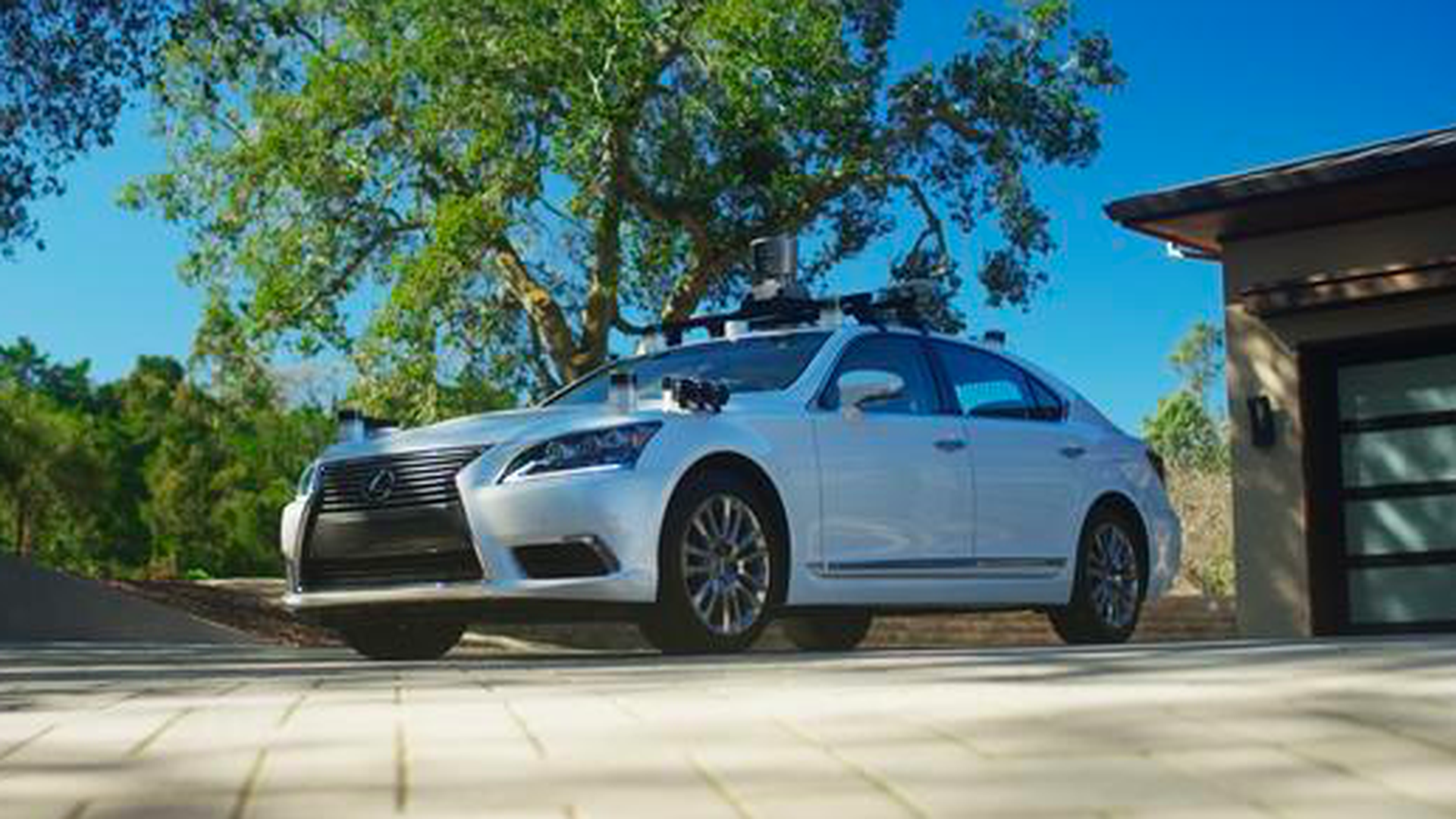
Toyota and Intel — in a tense race to own what they see as a gigantic future self-driving industry — have announced yet another new international consortium in order to beat their rivals to the perceived prize.
The new group — which also includes Swiss telecoms company Ericsson and Japanese auto parts maker Denso — seeks to standardize a system to handle an extraordinary expected leap in data created by self-driving vehicles and services like realtime mapping apps, and stored in the cloud.
In a statement yesterday, Toyota forecast that the volume of data to be transmitted between vehicles and the cloud will grow by 10,000 times over the next eight years — to 10 exabytes per month, equal to 10 billion gigabytes.
Why it matters: The announcement is yet another sign of a frenzy around an uncertain yet broadly accepted forecast: that the world's roads will soon be zooming with autonomously driven vehicles. It is a given that light autonomous vehicles — able to stay in freeway lanes, warn of impending accidents, and park themselves — will be here soon. What is not knowable is when fully autonomous cars will be here — in five years, or more like two decades or longer. Until they are, such partnerships may be premature.