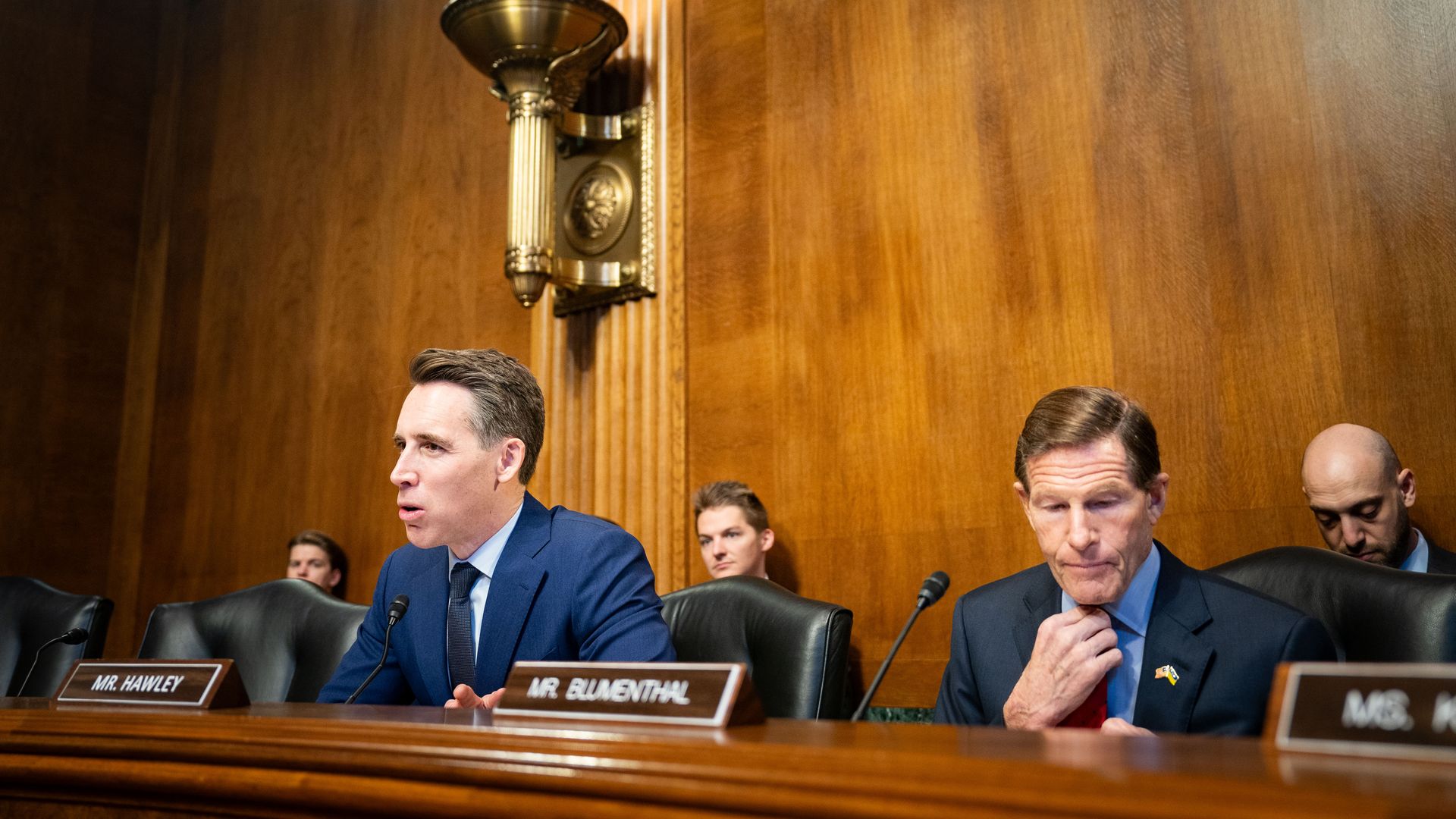
Sens. Josh Hawley (R-Mo.) and Richard Blumenthal (D-Conn.) are introducing an AI risk evaluation bill on Monday, per an announcement shared exclusively with Axios.
Why it matters: There's still bipartisan appetite on Capitol Hill to address the biggest risks of AI — even as the White House warns regulation could hamper innovation and U.S. competition with China.
Feeling more anxious? More unsure? Unless you're heavily sedated, you should be: We've never witnessed so many population-wide shifts simultaneously in our lifetime.
Three titanic tectonic plates are shifting at once: our technology, our governing and our reality-shaping. Washington, D.C., is the epicenter of all three.
Why it matters: You can't navigate business, politics, social media or life generally without understanding the speed, consequence and interconnectedness of these shifts.
Think of this as a wide-angle lens on the world unfolding before you in real time.
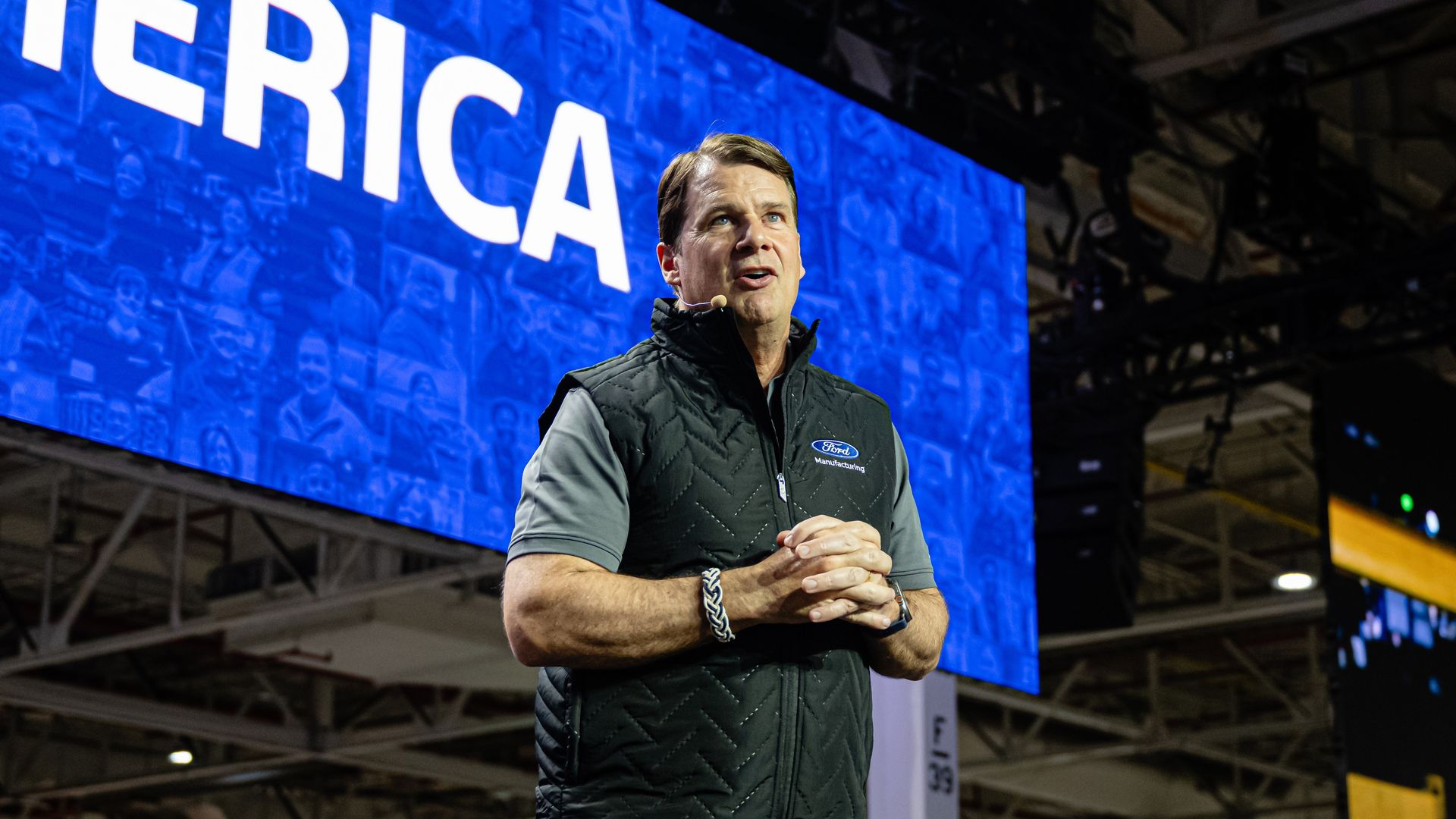
The Trump administration's ambition to lead in high-tech manufacturing and AI won't succeed if it ignores foundational blue-collar industries, Ford CEO Jim Farley tells Axios in an interview.
Why it matters: For all the talk about how AI will wipe out white-collar jobs (including from Farley himself), he says not enough attention is paid to the "essential economy" — industries like construction, maintenance and skilled trades.
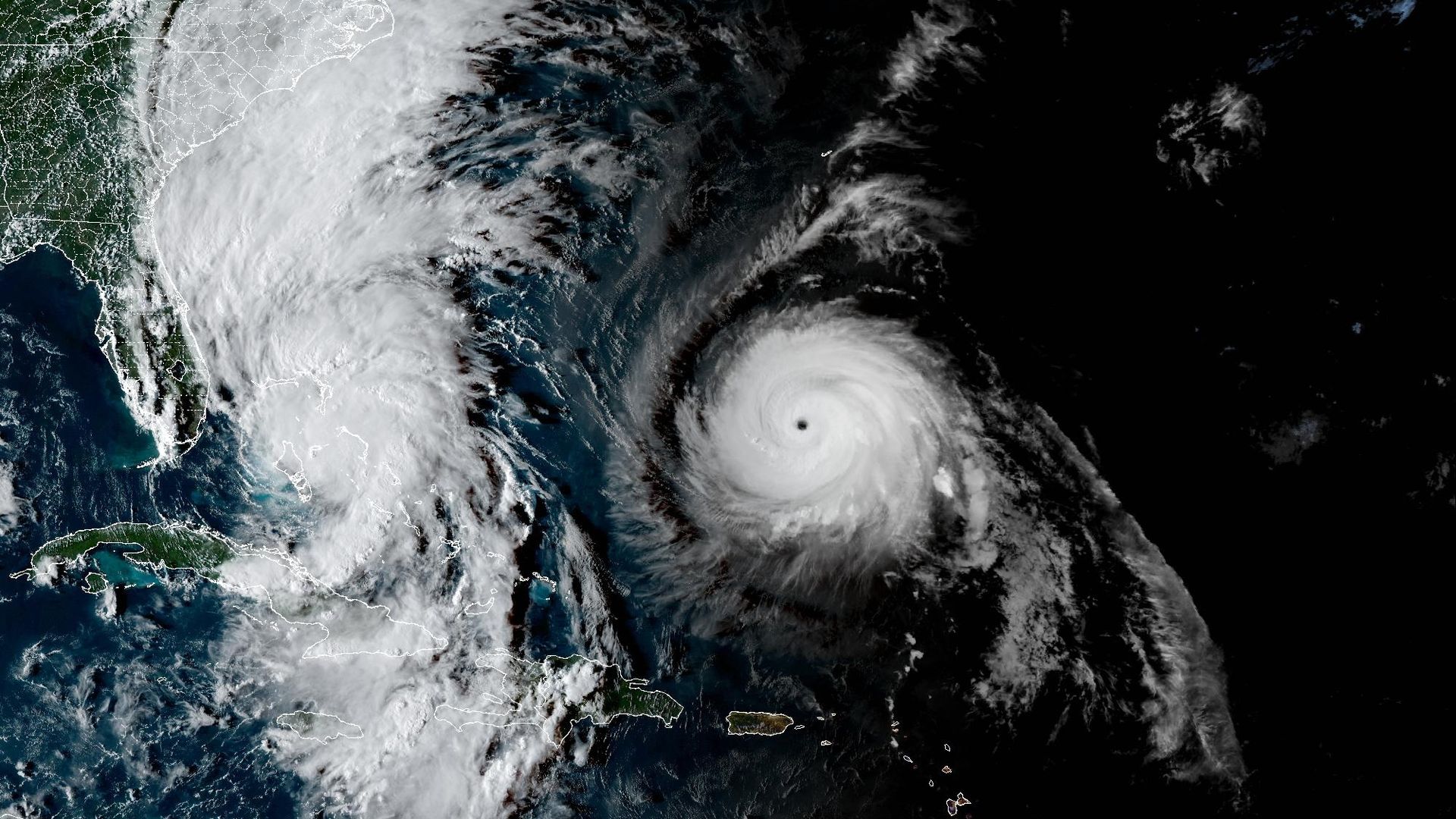
Tropical Storm Imelda formed Sunday, joining the monster Hurricane Humberto in the Atlantic, and forecasters warned it'll likely bring heavy rains to the Carolinas.
The big picture: Imelda is expected to strengthen over the Bahamas on Monday and become a major hurricane that night or early Tuesday. Forecasters expect the U.S. East Coast to be spared the worst of it — though there's a chance of heavy rainfall in the Southeast, and the Carolinas could see several inches of rain that may trigger flooding.