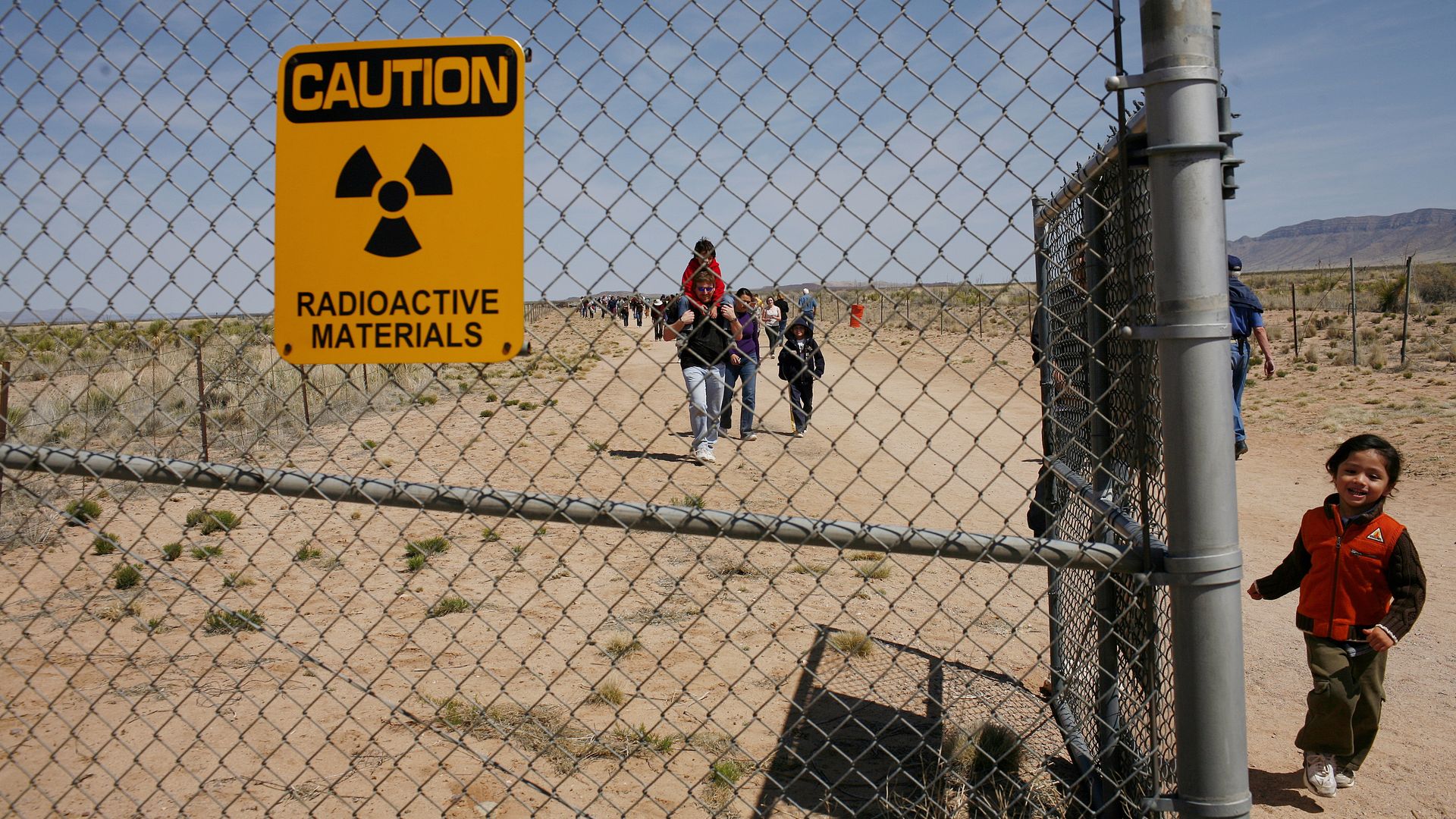
J. Robert Oppenheimer's shadow still looms over New Mexico — as a scientific hero who helped reshape one of the nation's poorest states, and as a villain who generated a trail of human destruction still felt there today.
J. Robert Oppenheimer has a scientific legacy that stretches beyond his work as the "father of the atomic bomb."
Why it matters: Oppenheimer is best known for leadingthe Manhattan Project, but before turning his attention to the building of the atomic bomb, he made his mark on a number of scientific problems.
The stifling heat wave that has affected large parts of the U.S. for more than a month will not loosen its grip anytime soon, forecasters warn.
Why it matters: The longer the extreme heat lasts, the greater the economic and human health effects will be. In addition, the high temperatures are expected to contribute to drought conditions in Texas and the Southwest.
J. Robert Oppenheimer and the science he oversaw reshaped the world — but the political and cultural forces of the day also shaped the science he pursued.
The big picture: In the abstract, science is often extolled as a search for truth untouched by politics and traveling on a separate track, but in practice science, politics, culture and society can strongly influence one another.
Today's nuclear weapons are far more powerful than the first atomic weapons, developed during the 1940s by Robert Oppenheimer and the Manhattan Project.
Background: The Manhattan Project was responsible for the development of two types of atomic bombs — named Little Boy and Fat Man — that were detonated above the Japanese cities of Hiroshima and Nagasaki during World War II.