After a year on Mars, NASA's Perseverance rover is preparing to set off on its longest trip yet on the surface of the Red Planet, driving stretches of the journey all by itself.
The big picture: The mission to Mars, designed to search for evidence of ancient life on the planet and collect samples that could be brought back to Earth for the first time by a future mission, hints at how robots will help humans explore the solar system in the future.
At least 94 people died and dozens remain missing after heavy rain triggered flooding and mudslides in the Brazilian city of Petrópolis this week, Reuters reports.
The big picture: The death toll is expected to rise as rescue workers continue to wade through the destruction left in Brazil's so-called "Imperial City." Hundreds have been displaced.
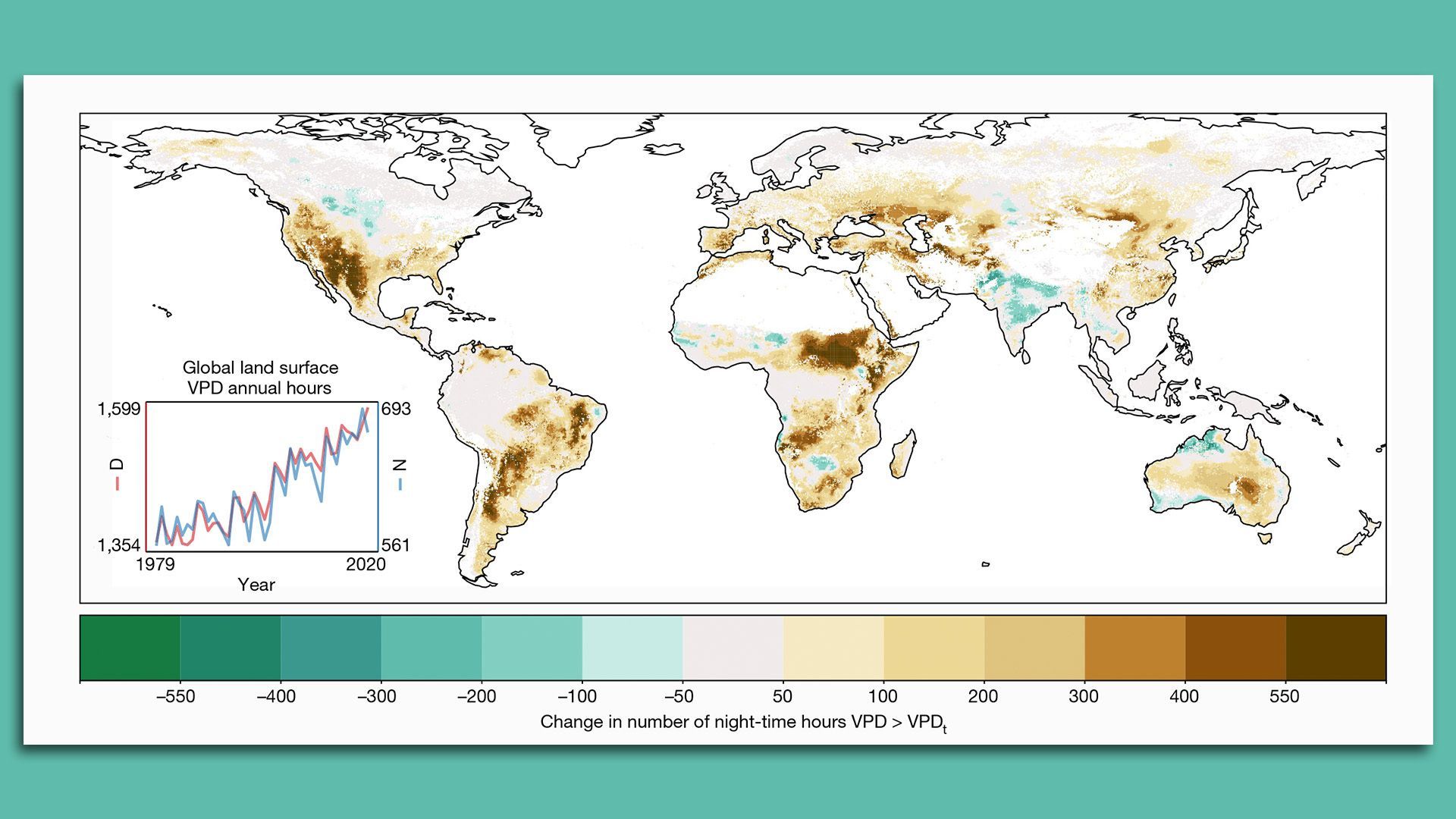
A new study found that the West is experiencing an increasing occurrence of hot, dry nights that are contributing to more intense wildfires.
Why it matters: The trends identified in the study, published in the journal Nature, mean that wildfires are able to grow larger and destroy more structures than they used to. It also means less rest for firefighters.
The plume from an undersea volcanic eruption near the uninhabited island of Hunga Tonga-Hunga Ha‘apai last month reached the mesosphere — the third layer of Earth's atmosphere, according to NASA.
Why it matters: NASA scientists estimate that it was likely the highest volcanic plume ever recorded, with gas, steam and ash rising 36 miles after the explosion, the aftereffects of which killed at least three people in Tonga.
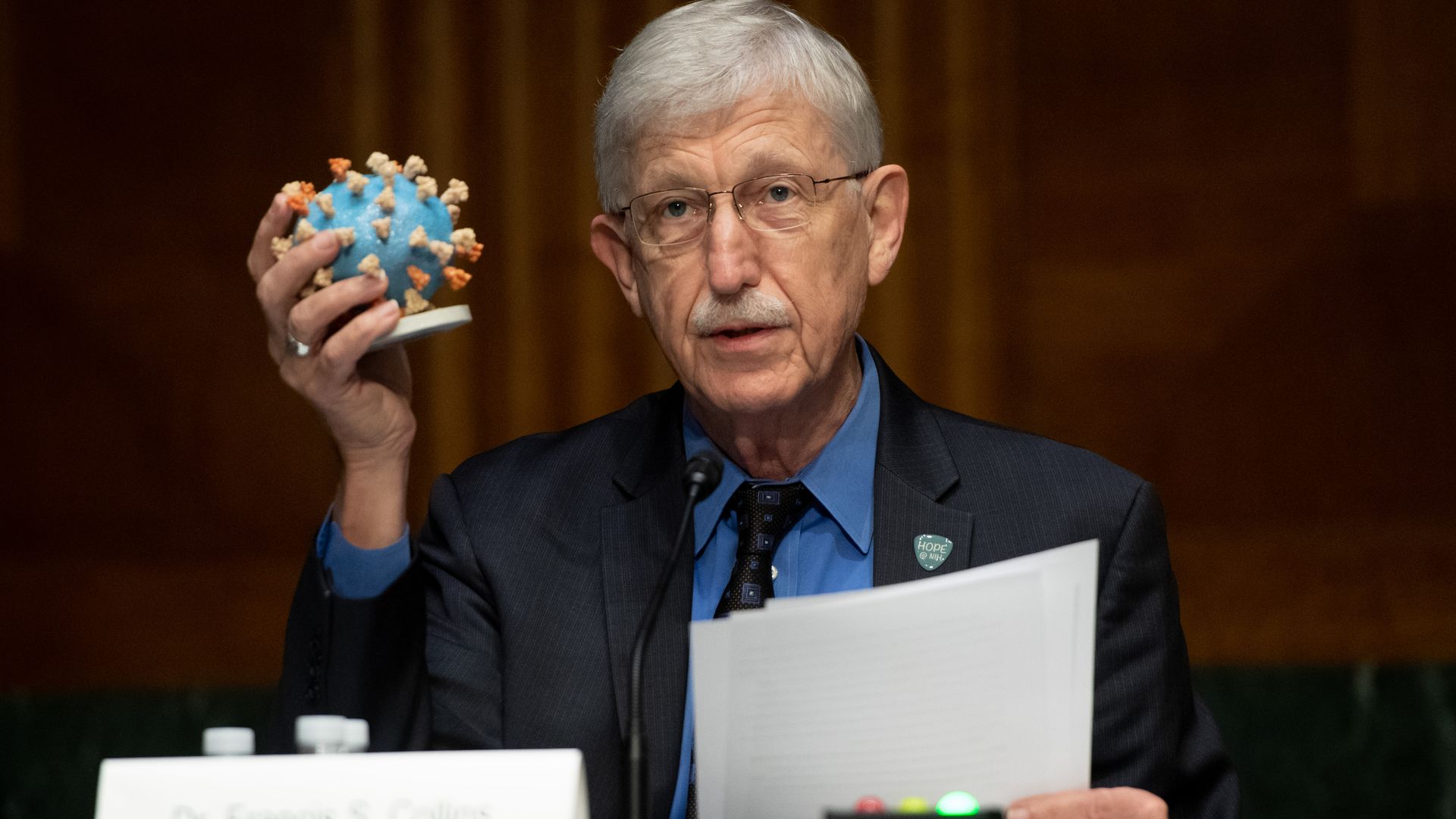
Former longtime National Institutes of Health director Francis Collins will step in as interim science adviser to President Biden, while Alondra Nelson — the deputy director at the Office of Science and Technology Policy — will step into the top role at that agency, the White House announced Wednesday.
Why it matters: The moves establish leadership for the White House in terms of climate policy, in the fallout of the resignation of Eric Lander, who was found to have violated the Biden administration's workplace policy by bullying staff.
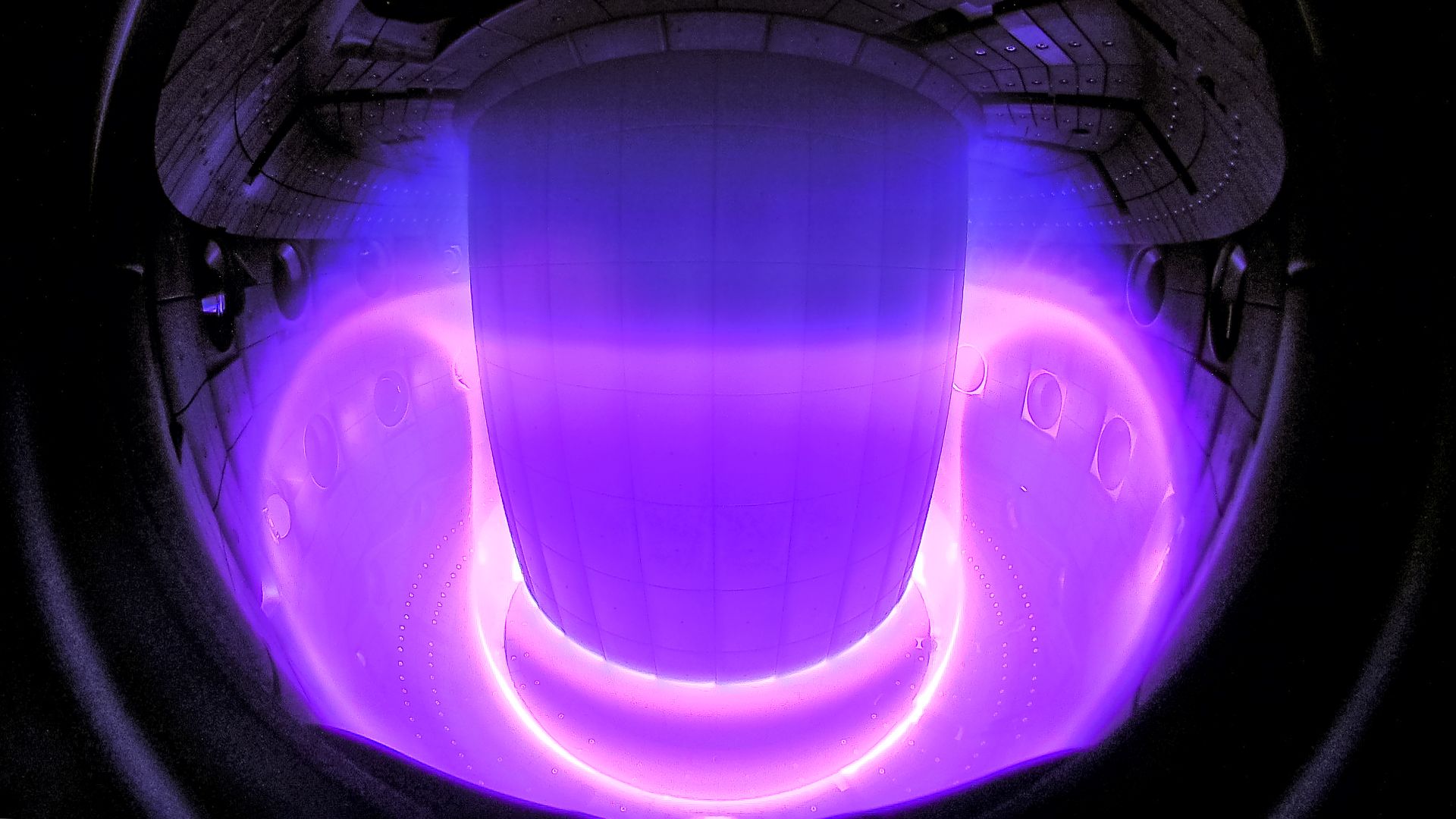
Researchers have developed an algorithm to control the hot, chaotic plasma that fuels fusion energy reactors.
Why it matters: The plasma in fusion reactors needs to be controlled in order to extract energy from the reactions. Fusion is a potential source of clean fuel that has long been promised — but not yet delivered.
The U.S. is poised to see as much of a rise in sea levels through the year 2050 as it has experienced in the past century, with additional increases through 2150, according to a comprehensive new federal report out Tuesday.
Why it matters: Sea-level rise is one of the most tangible present-day effects from human-caused climate change that is being felt in the U.S., with coastal flood events becoming far more common and damaging in just the past few decades.
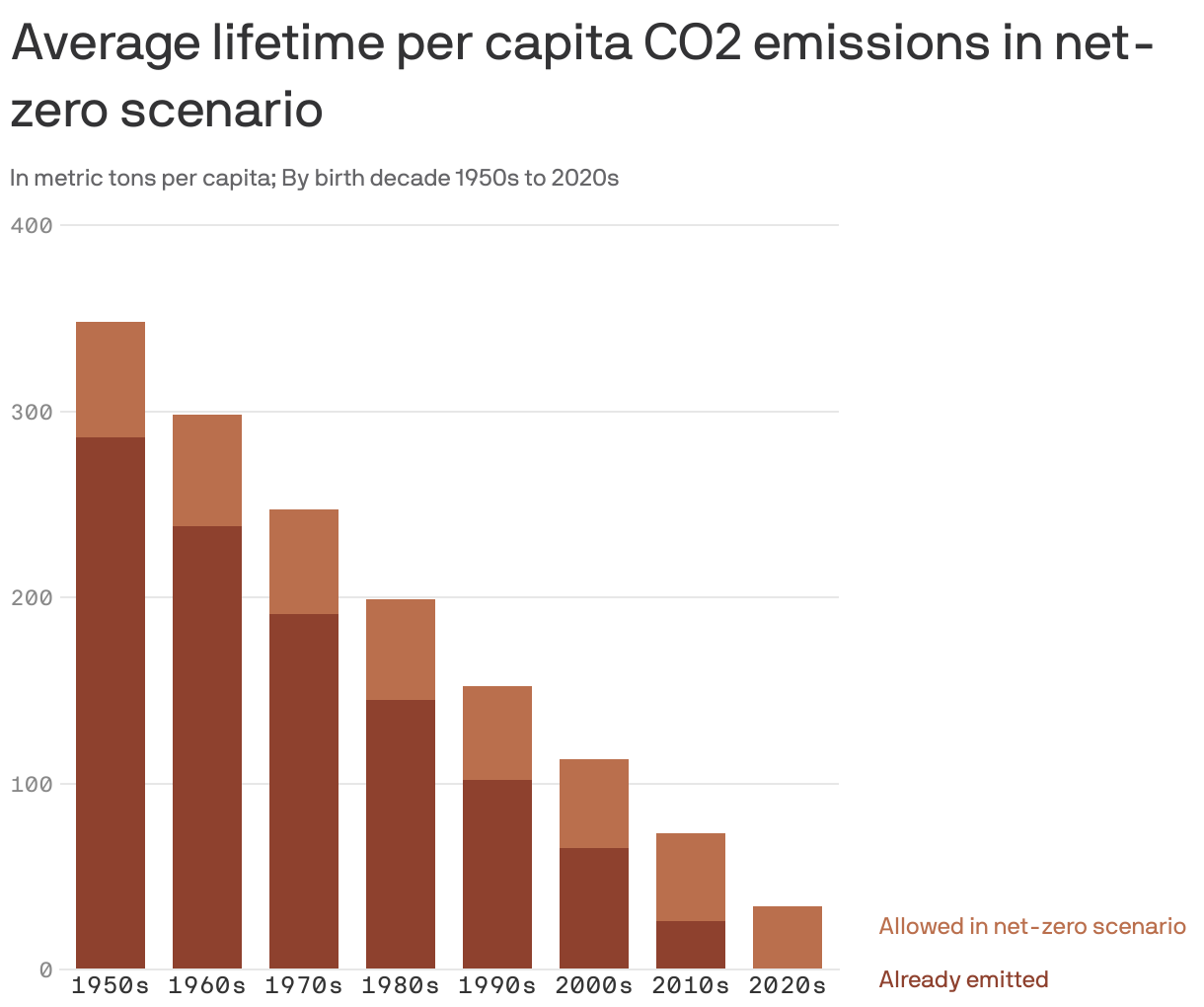
A new analysis offers a sobering window into the challenge of slashing emissions enough to meet the temperature-limiting goals of the Paris Agreement.
Driving the news: The International Energy Agency explores per-capita emissions of people born in different decades that would be consistent with a pathway to net-zero global emissions by 2050.