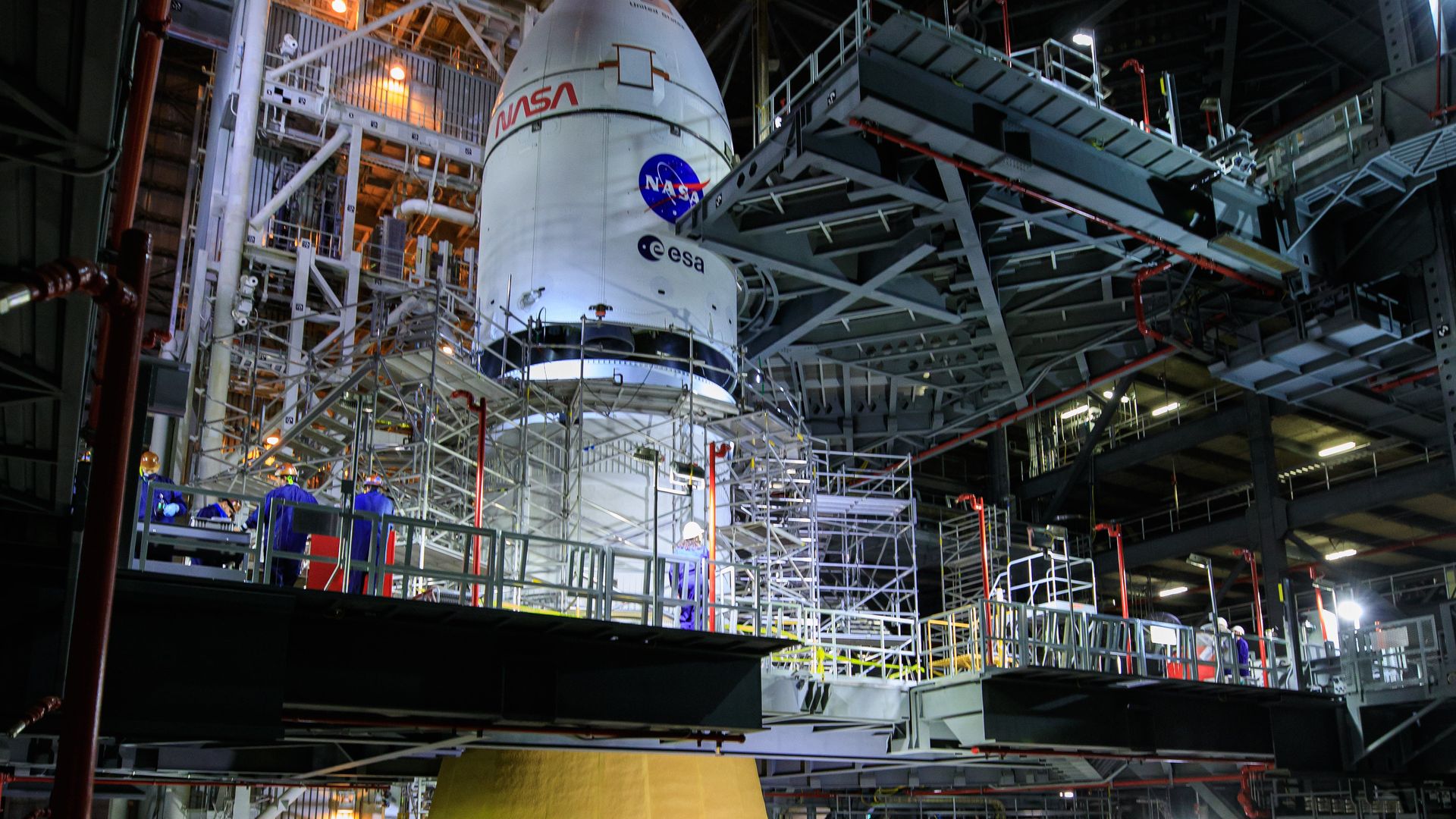
NASA's Space Launch System rocket won't make its first flight until early next year, the agency announced today.
Why it matters: The SLS is a key piece of technology needed to bring NASA astronauts back to the surface of the Moon in the coming years, and this first flight will mark a major milestone for the program.
Terrafuse AI, a climate and weather risk forecasting developer, launched a free public tool Thursday, known as Wildfire AI, that provides predictive modeling to track the changing risks of wildfires.
Why it matters: Climate change and land use are leading to a huge increase in the risk of large wildfires in the West, especially California, posing challenges for the insurance industry and homeowners.
From conference presentations to scientific papers to databases, English is the lingua franca of science — but as a result, science published in languages other than English often goes unread.
Why it matters: Overlooking or excluding science that isn't communicated in English could hinder global responses to pandemics, the loss of biodiversity and climate change.
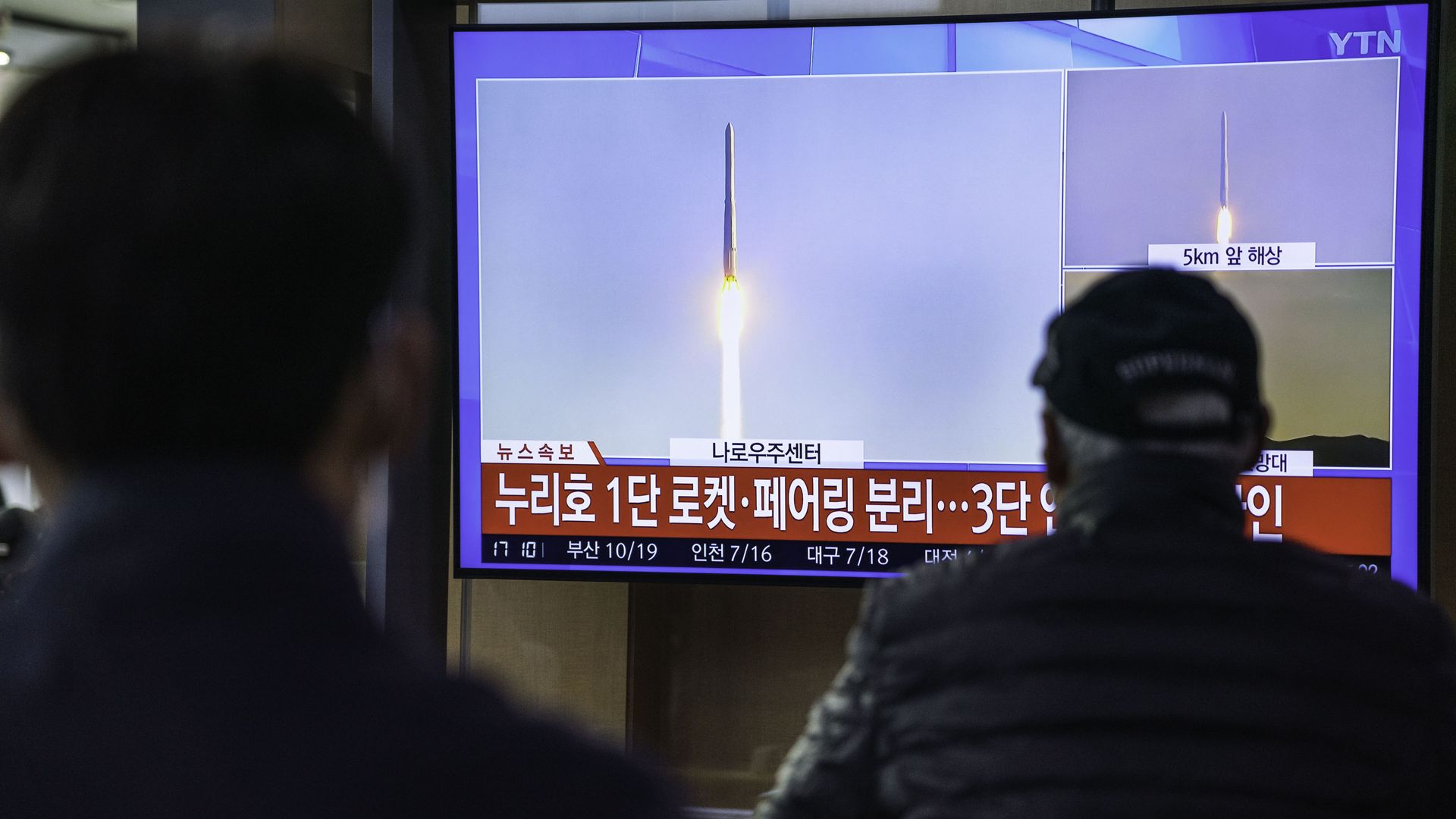
South Korea launched its first domestically produced space rocket on Thursday but failed to deliver a test satellite into orbit after the rocket's final stage shut down early, according to Reuters.
Why it matters: The test of its Nuri — or "world" — rocket was a major step forward for South Korea, an up-and-coming space power, but shows that it still has room for improvement in future trials.
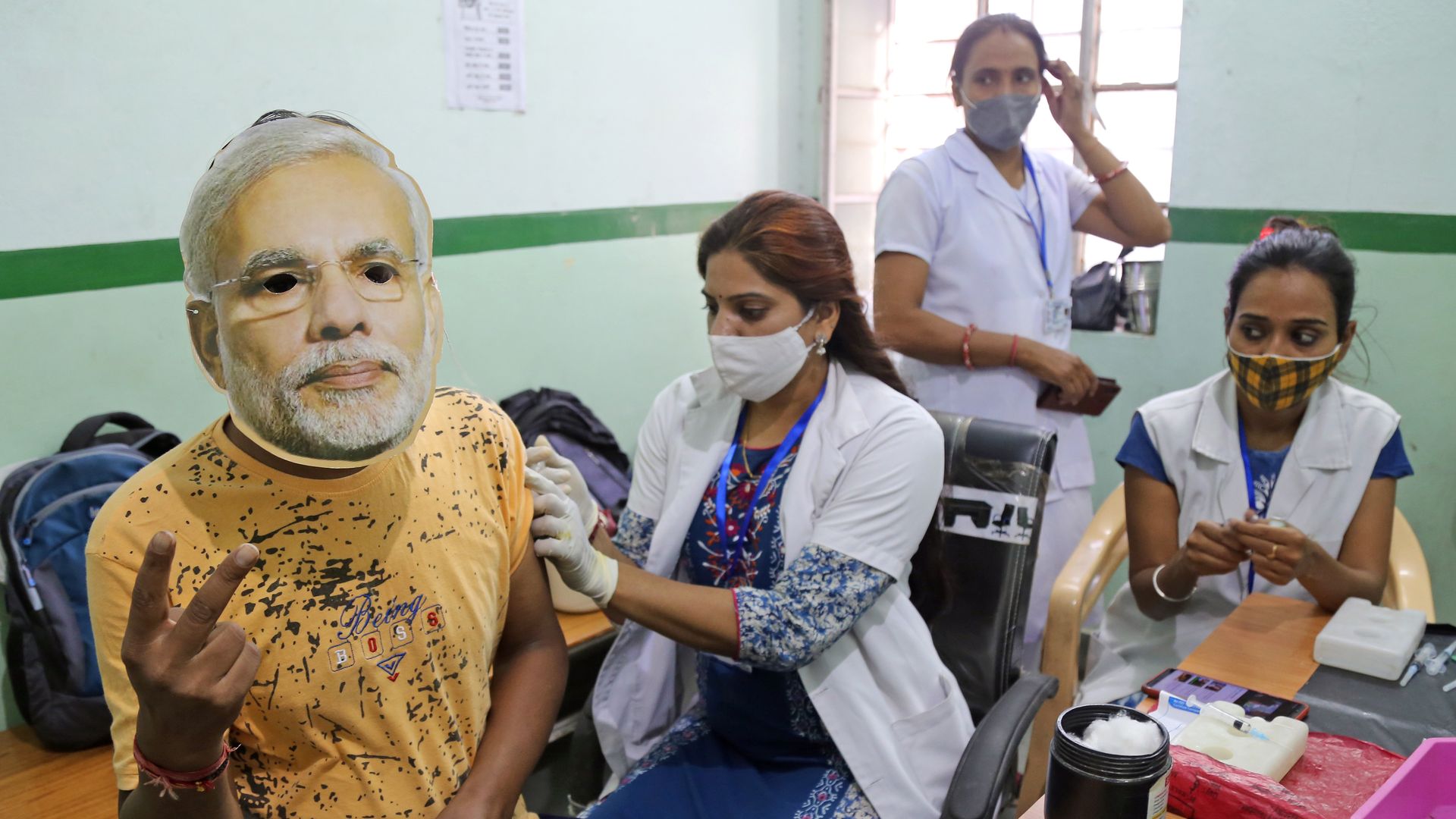
India's Prime Minister Narendra Modi announced Thursday that the country's health workers have now administered more than 1 billion COVID-19 vaccines doses.
Of note: While this is a significant milestone for the country of 1.4 billion, which has been devastated by the coronavirus, only about 30% of the eligible population has been fully vaccinated against the virus, per AP. Roughly 75% have received at least one dose.


/2021/10/22/1634907890258.gif?w=3840)