Indoor vertical farming, where crops are raised in automated stacks, often in or near cities, offers a way to sustainably meet the growing demand for food — if its energy demand can be reduced.
Why it matters: With the global population still rising — albeit more slowly — and more people moving to urban areas, the world needs ways to produce more food without clearing land for conventional farms.
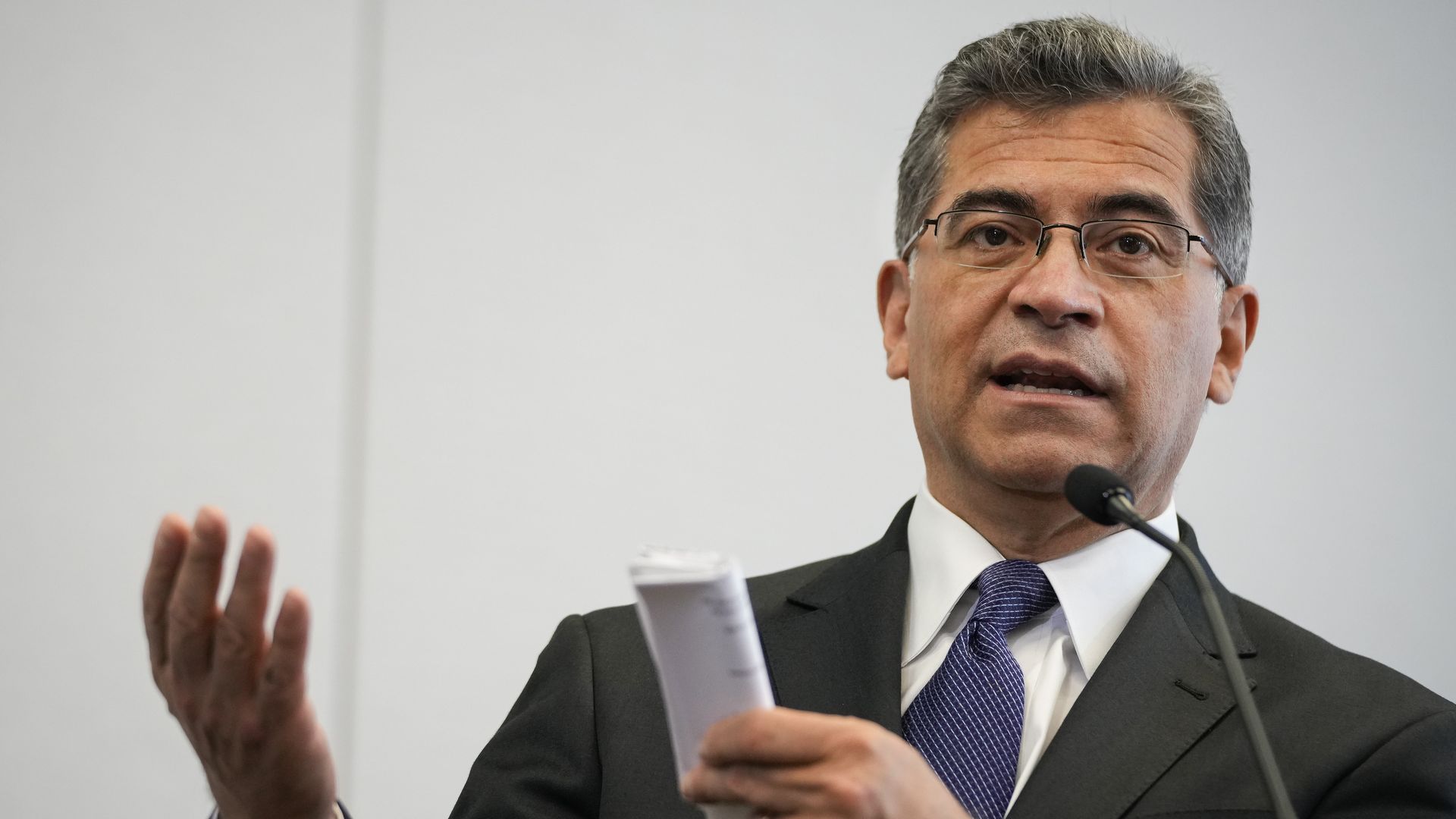
Health and Human Services Secretary Xavier Becerra told a virtual World Health Assembly meeting Tuesday there needs to be a "transparent, science-based" follow-up investigation into the origins of the COVID-19 pandemic.
Why it matters: The original investigation by a team of scientists assembled by the World Health Organization and China's government returned inconclusive findings in March and was criticized by top officials including Secretary of State Antony Blinken.
A team of scientists is embarking on a five-year mission to map 30 million galaxies.
Why it matters: By locating the galaxies in relation to one another, the researchers hope to get closer to answering some of the biggest outstanding questions in astronomy and cosmology today, including how galaxies form and what spurs on the expansion of the universe.
The White House is providing fresh details of a major satellite program that administration officials call poised to reveal vital information about climate change and extreme weather events.
Why it matters: Known as the "Earth System Observatory," the program consists of at least five satellites to be launched through 2029 that will enhance, or in some cases revolutionize, the capabilities of the space agency's existing fleet of Earth-observing satellites.
From competitions to send ordinary people to space to ambitious Mars landings and Moon missions, space is increasingly center of mind for people around the world.
Why it matters: The public has never before been presented with so many space activities going on at the same time. But experts still aren't sure that interestwill help transition parts of the space industry away from its government reliance into a sustainable industry.
Alabama Gov. Kay Ivey (R) on Monday signed into law a bill banning state agencies, schools and businesses from requiring COVID-19 vaccine passports to access services.