Trump allies Sunday pushed back on a Washington Post report that alleges Secretary of Defense Pete Hegseth ordered additional strikes on survivors of attacks on suspected drug trafficking boats from Venezuela.
Why it matters: Legal experts have warned that the attacks could be illegal as the Trump administration ramps up its military presence around Venezuela, placing pressure on President Nicolás Maduro.
The suspect who shot two National Guard members near the White House last week was "radicalized" since coming to the U.S. from Afghanistan, Homeland Security Secretary Kristi Noem said Sunday.
The big picture: Noem said the investigation is ongoing, but initial interviews suggest the suspect was in contact with "connections" in Afghanistan that may have contributed to his radicalization.
As the U.S. grows more diverse, a quiet civil war is unfolding within American Christianity over who deserves empathy.
Why it matters: Conservatives ranging from evangelical pastors to Elon Musk have started framing empathy not as a virtue but as a vulnerability on immigration, racial justice and LGBTQ+ rights.
Rep. Troy Nehls (R-Texas), one of President Trump's most steadfast allies, said Saturday he will retire from Congress rather than seek reelection in 2026.
Why it matters: Nehls joins a rapidly growing group of House members in both parties who have decided to call it quits, either to run for higher office or simply leave politics entirely.
Retirement seems scariest before you take the leap, experts say. But there are things workers can do now to prepare and feel less anxious — no matter your age:
The big picture: Take a look at the numbers.
Make a budget, and figure out what you need. Take everything into account — not just your retirement account, but housing wealth too, if you have it.
"It's important to step back," says Kerry Hannon, co-author of the recently published book, "Retirement Bites: A Gen X Guide to Securing Your Financial Future."
Save money. It's obvious but worth repeating.Take advantage of those 401(k)s and any kind of employer match. If you're older and need to catch up, increase your contributions if you can.
"It's really when people get into their 30s that ramping up their retirement contributions makes sense," Andrew Biggs, an economist at the American Enterprise Institute, tells Axios. "Their incomes have risen, so they've got more to save, plus their taxes are higher, so the tax break may be worth more."
If you don't have a workplace plan, you can set up a plan for yourself. There are options like a SEP-IRA or solo 401(k), says Diane Harris, deputy editor of Kiplinger Personal Finance magazine.
A key thing to do is automate your contributions, with the money going directly from your paycheck to the account. "Harness the power of inertia," says Harris, who runs the magazine's retirement coverage.
Prioritize paying down high-interest debt. This is especially important for young workers, Biggs says.
"Lots of research shows debt is the biggest buzzkill for retirees, the big obstacle to happiness," Harris says. "The stress will really get you."
Take care of yourself. Medical expenses are one of the biggest expenses in retirement — get regular checkups, think about nutrition and exercise. "Health is wealth," says Hannon.
Delay. Most experts say to keep working, if you can.
"For someone who's later in life and hasn't saved enough, delaying retirement is a more powerful tool than saving more," says Biggs, who was principal deputy commissioner of the Social Security Administration in the early 2000s.
When you continue your job past full retirement age, your Social Security benefit increases by about 7%annually when you do retire. The annual increase stops at age 70. Plus you get a similar increase to your retirement savings courtesy of more contributions and interest, and you reduce the amount you'll need to save.
It's not all about money. Non-financial things matter more for your happiness as you age — health and relationships in particular, says Harris.
"People make do, and the vast majority of retirees report being pretty happy. People are more resilient than they give themselves credit for."
For decades, people have fretted about the financial sustainability of America's bedrock retirement income program. Now, Social Security's precarious fiscal state is an issue for the here and now.
How to fix it is set to be a defining political fight of the next several years, with millions of Americans' benefits and the fiscal future of the United States at stake.
Why it matters: There is a tug-of-war between the benefits future retirees receive and the taxes that working-age people pay. Something has to give, and surprisingly soon.
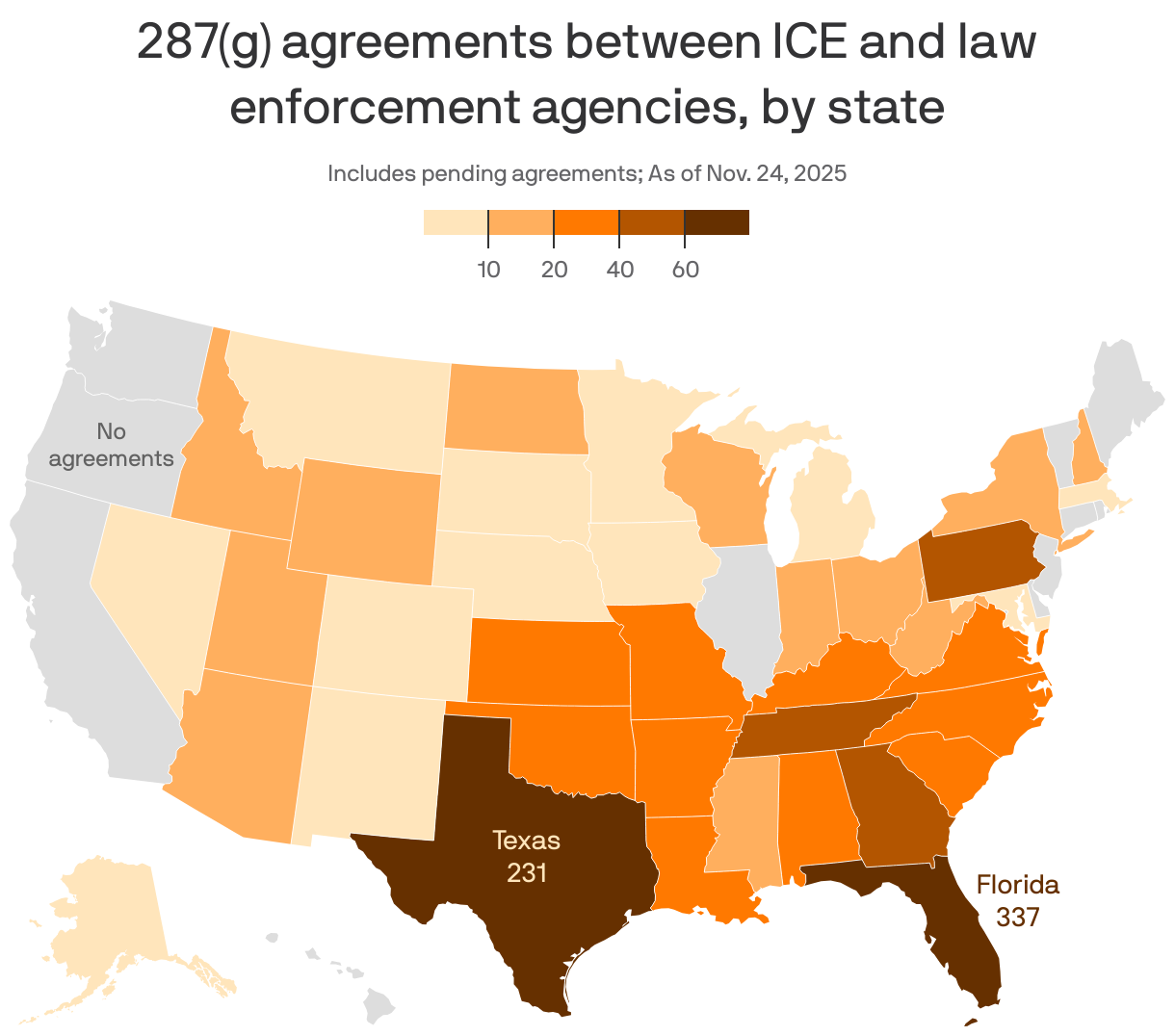
The Trump administration doesn't have the Immigrations and Customs Enforcement (ICE) agents to meet its deportation goals. But it's placed a huge bet that thousands of local cops can help.
Why it matters: ICE has signed 1,100+ agreements this year for local law enforcement to cooperate on immigration arrests and detentions. The agency is dangling financial incentives from President Trump's "big, beautiful bill."
In the past year, federal, state and institutional decisions have gutted major pillars of America's civil rights protections and racial equity infrastructure, wiping away public data, slashing research funding and erasing Black history.
Why it matters: Taken together, these moves amount to an unprecedented rollback of civil rights progress, historians say — the largest since Reconstruction.
MAGA hopes the holiday season — and renewed attention on its favorite bogeymen — can produce a ceasefire in the pro-Trump movement's burgeoning civil war.
Why it matters: MAGA entered the year at the apex of its power, but has become mired in its most bitter infighting since its founding by President Trump in 2015.