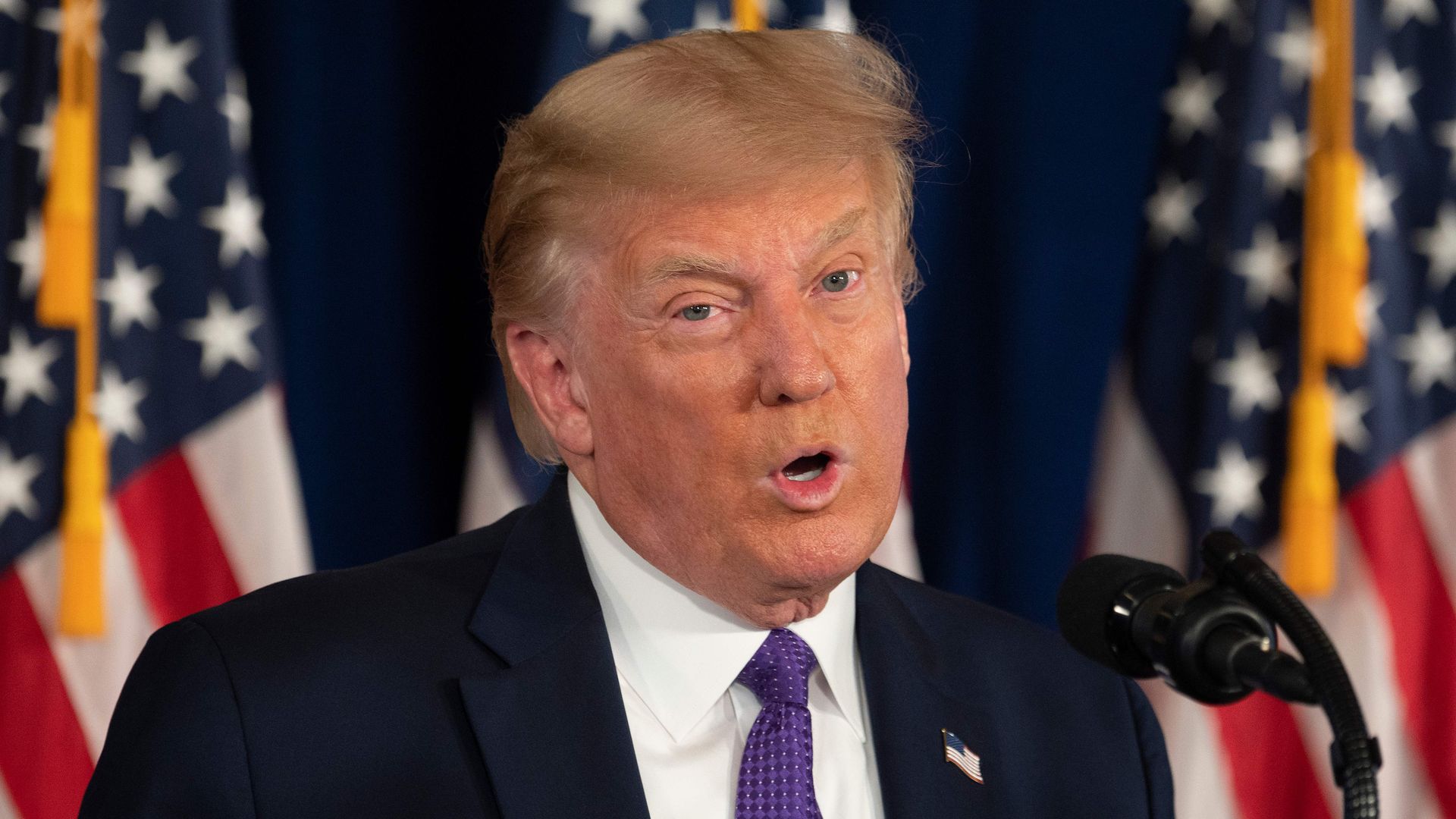
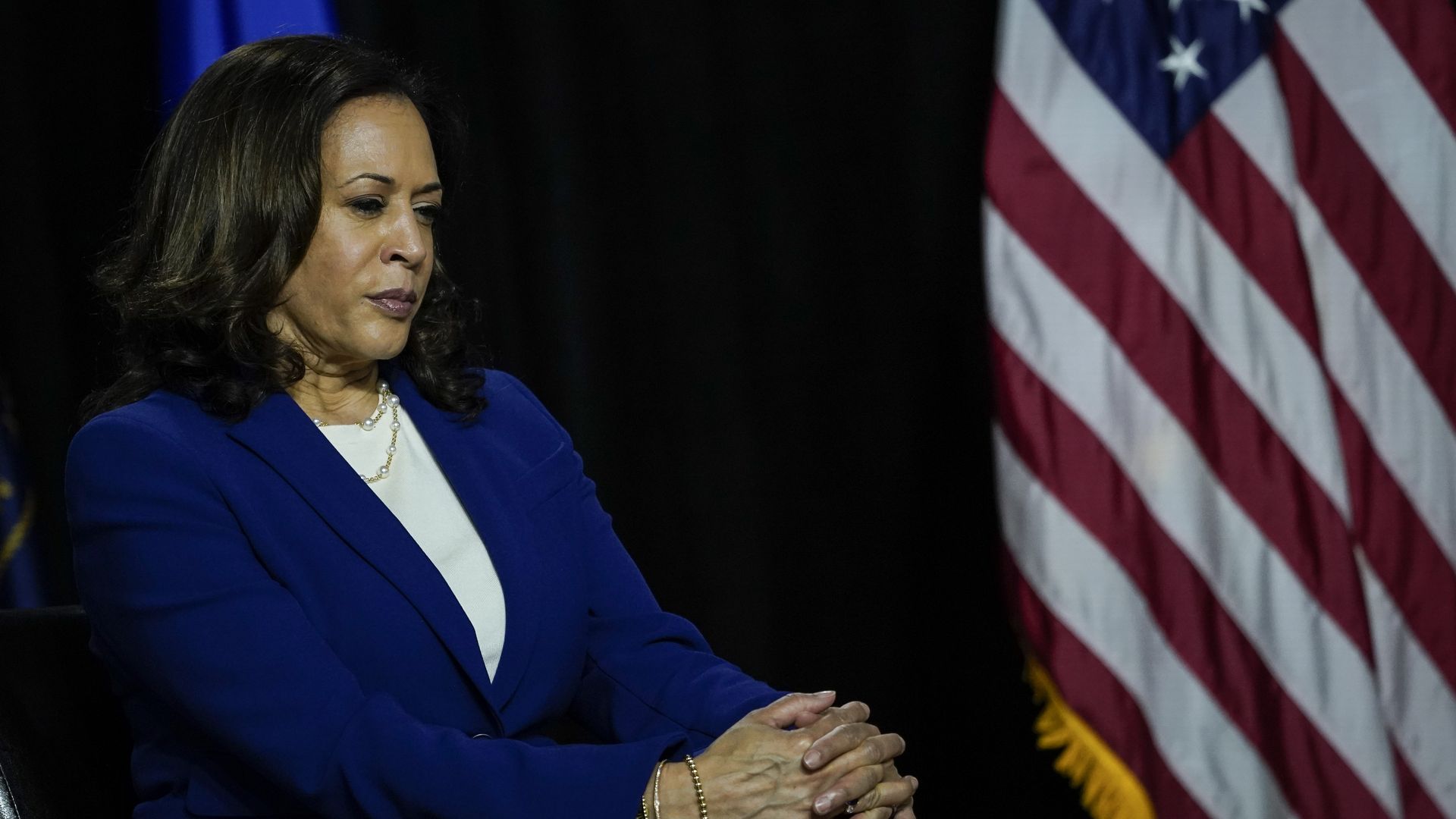
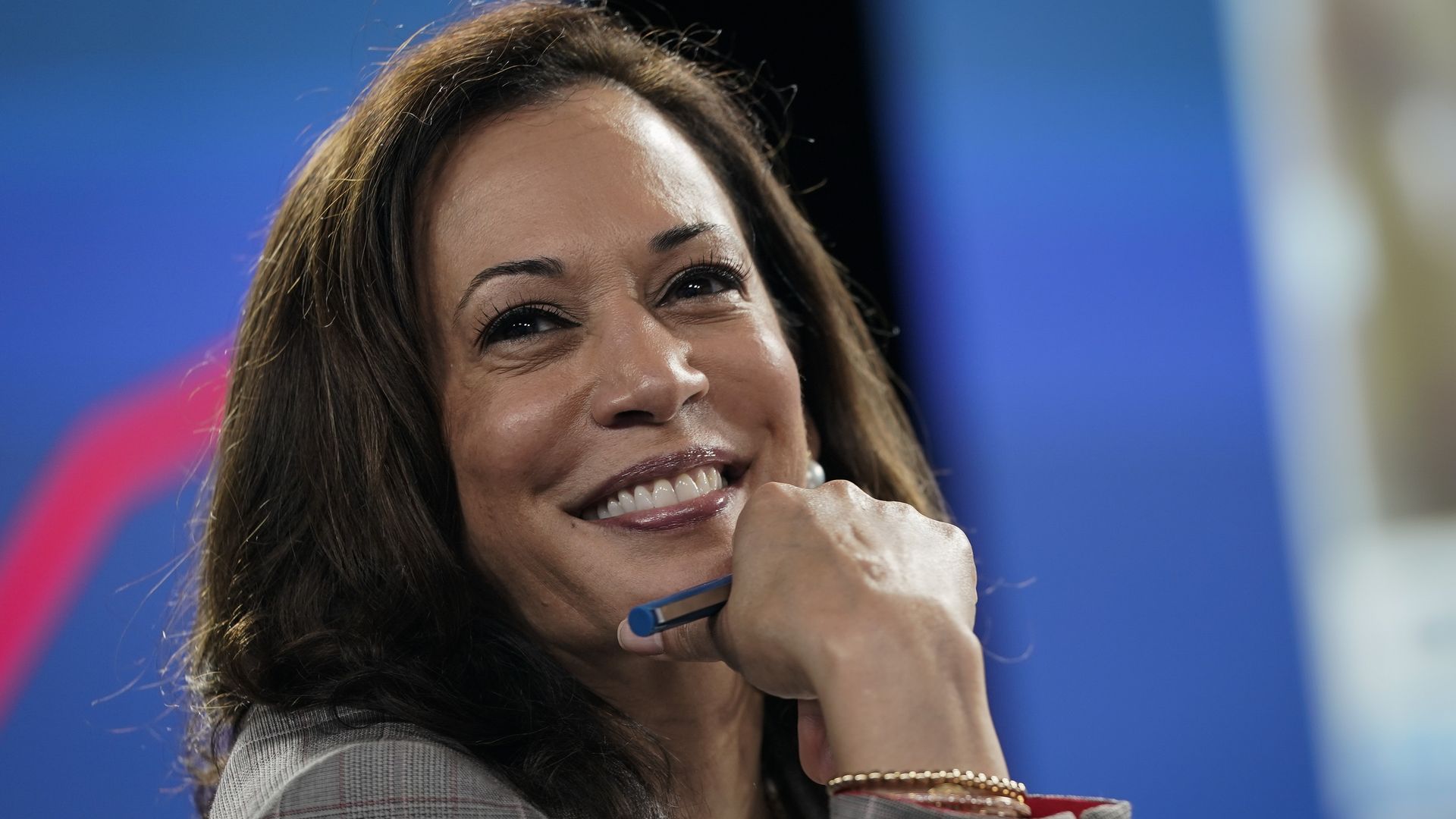
President Trump told reporters Saturday his presidential campaign will "not be pursuing" a baseless claim that Sen. Kamala Harris, Joe Biden's running mate, may be ineligible to serve as vice president because both her parents were not naturalized citizens at her birth.
Why it matters: Harris was born in Oakland, California. She is an American citizen and is eligible for the office. Critics, including some Republicans, denounced an op-ed published by Newsweek this week as a new attempt at "birtherism" — the conspiracy theory that President Obama was not actually born in the U.S. — targeting the first woman of color on a presidential ticket.
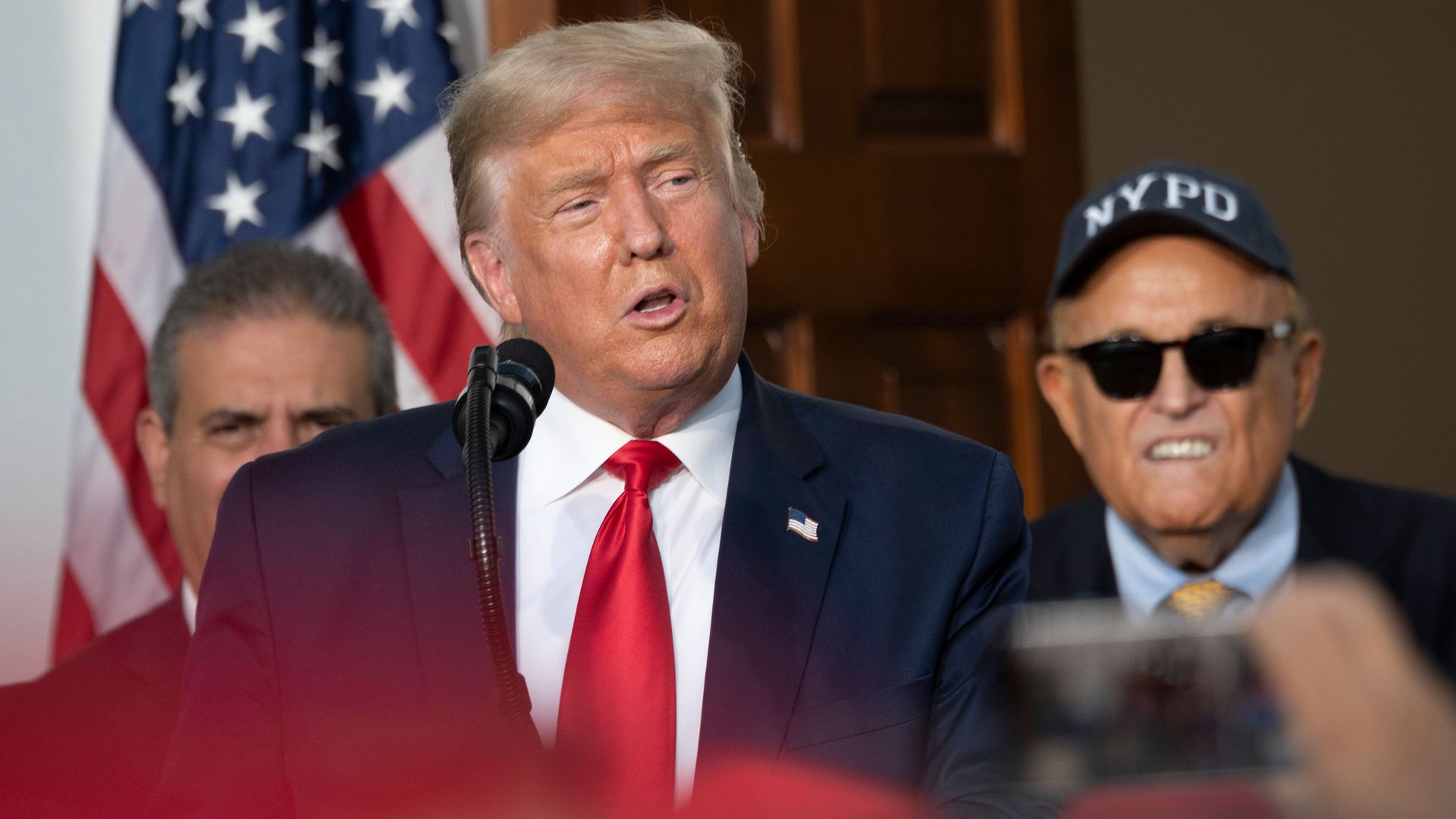
President Trump continued his ongoing attacks on mail-in voting during a press conference Saturday, claiming without strong evidence that voting by mail will make the U.S. a “laughingstock."
What he's saying: When asked if Postmaster General Louis DeJoy's has Trump's backing, the president responded: "Yeah, he wants to make the post office great again."
The Trump campaign will launch a four-day digital advertising push during the Democratic National Convention, the New York Times reports.
Why it matters: "It’s an attempt to be as digitally ubiquitous as possible during a nearly all-digital convention, and the Trump campaign will be tailoring its message to a direct attack on the Democratic platform as a far-left manifestation of a Republican’s worst fears," the Times writes.
Perhaps the most jarring reality of the COVID-19 pandemic for families has been the sudden and dramatic disruption to all levels of education, which is expected to have deep social and economic repercussions for years — if not decades — to come.
Why it matters: As millions of students are about to start the school year virtually, at least in part, experts fear students may fall off an educational cliff — missing key academic milestones, falling behind grade level and in some cases dropping out of the educational system altogether.
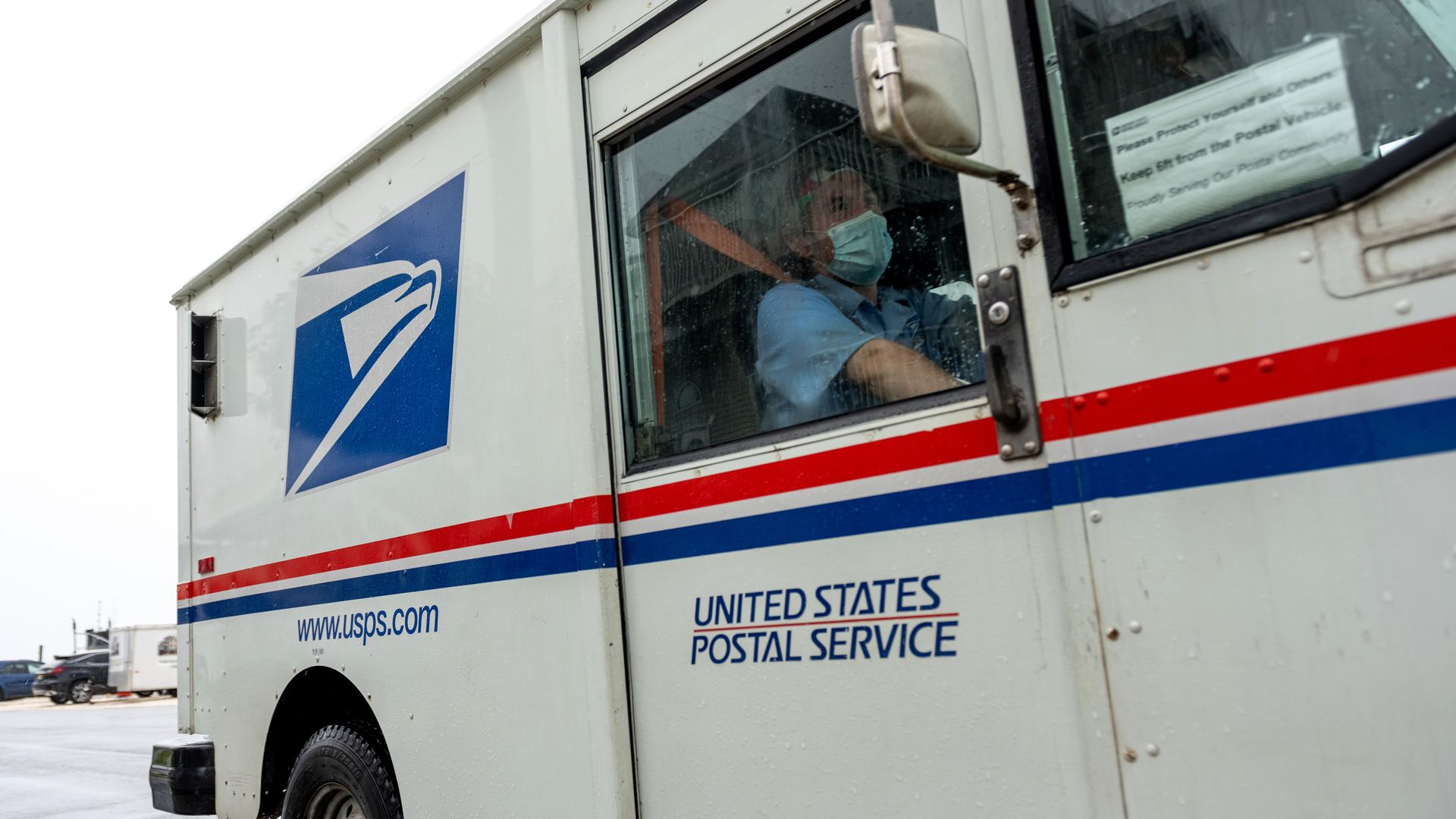
State and local officials have come down on the Trump administration for changes to the U.S. Postal Service implemented by Postmaster General Louis DeJoy and threats from the president to block stimulus funding carved out to help the agency as it prepares to processes mail-in ballots for the November general election.
Why it matters: Lawmakers fear that cost-cutting measures and modifications to election mail processing practices could delay election mail, which could disenfranchise voters and delay election results.
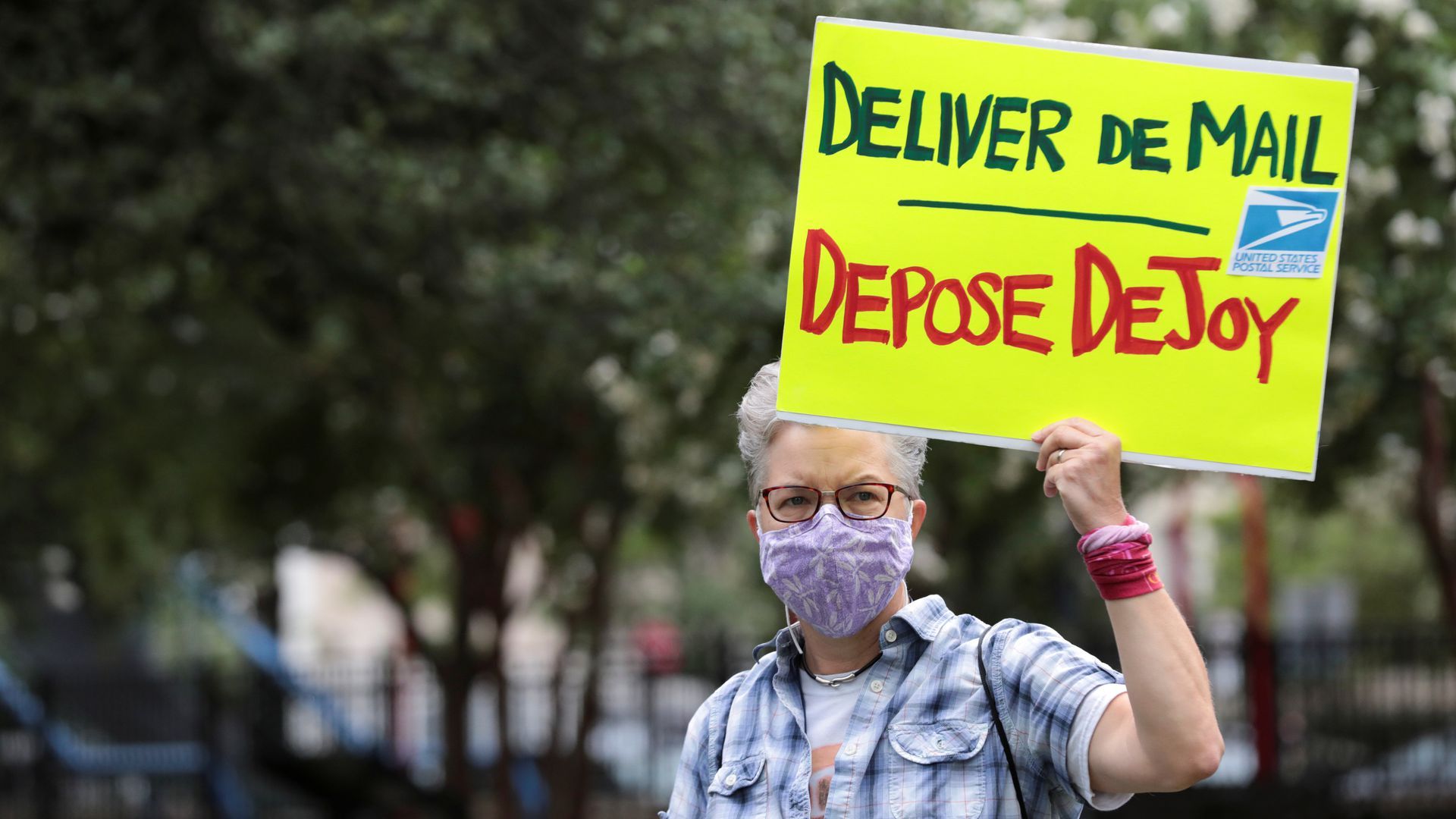
Demonstrators on Saturday gathered outside the home of Postmaster General Louis DeJoy to protest his leadership amid allegations of limiting mail-in voting ahead of the 2020 general election.
The state of play: Congress is seeking $25 billion in aid for USPS ahead of an anticipated spike in mail-in voting this November due to the coronavirus pandemic.
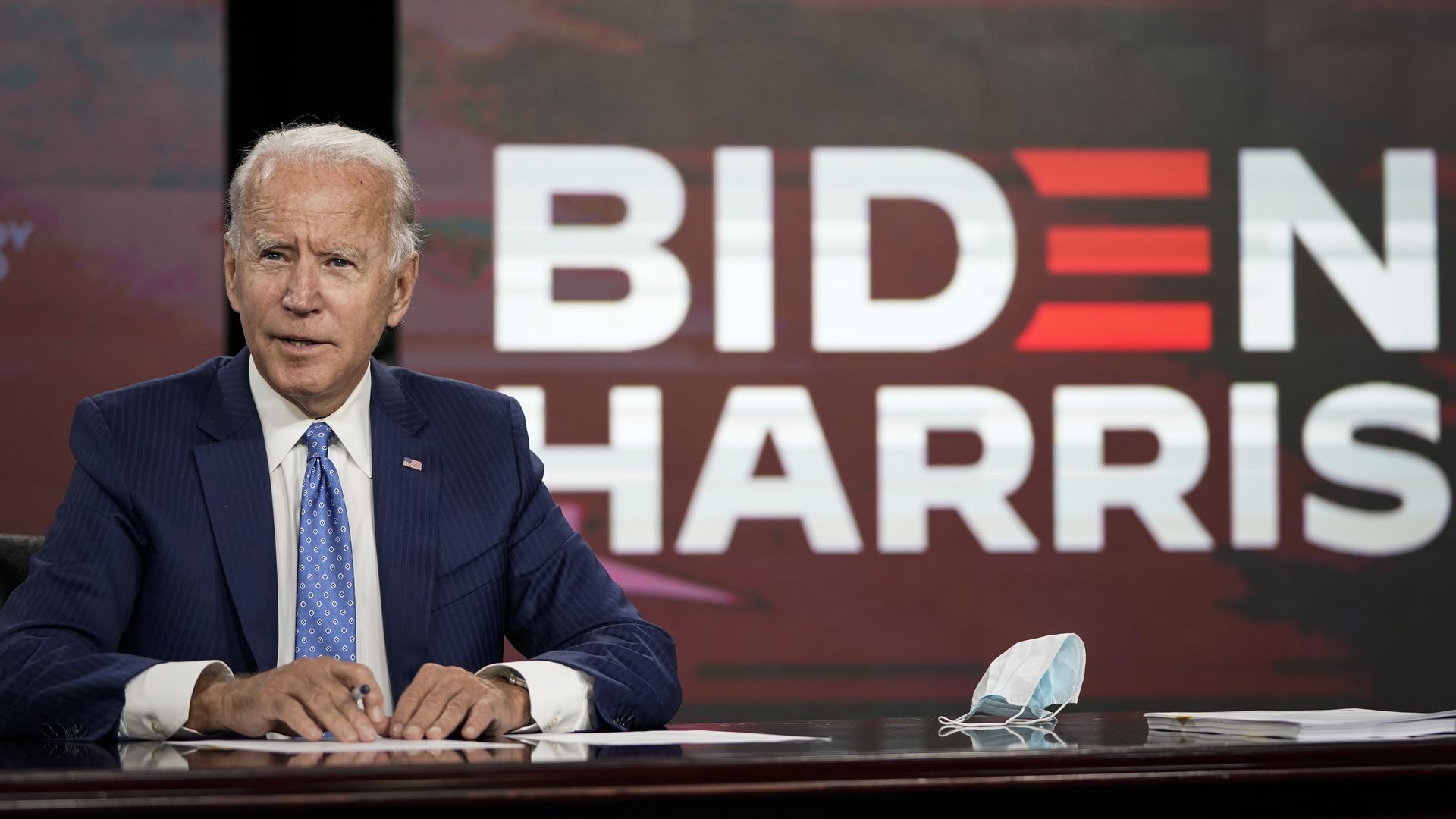
Rahm Emanuel, former Chicago mayor and White House chief of staff, writes in the Wall Street Journal that "this campaign looks like a repeat of 1980."
What he's saying: Emanuel writes that Democrats this year "have an opportunity to chisel off a demographic that will come to be known as "Biden Republicans."
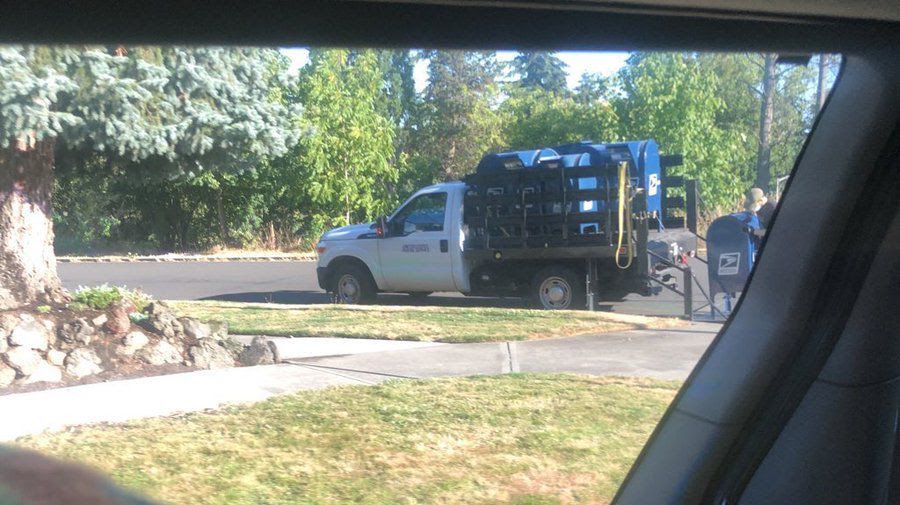
Freelance writer Mark Delaney tells me he took this photo Aug. 8 of a postal worker in Portland, Ore., removing mailboxes. Via Twitter
In 24 hours, signs of a pre-election postal slowdown have moved from the shadows to the spotlight, with evidence emerging all over the country that this isn't a just a potential threat, but is happening before our eyes.
Why it matters: If you're the Trump administration, and you're in charge of the federal government, remember that a Pew poll published in April found the Postal Service was viewed favorably by 91% of Americans.
The Postal Service has urged state election officials to pay first class for mail ballots, which Senate Democratic Leader Chuck Schumer says could nearly triple the cost.
Why it matters: Senate Democrats claim that "it has been the practice of USPS to treat all election mail as First Class mail regardless of the paid class of service."
Newsweek in an editor's note on Friday night apologized for an op-ed published earlier this week that inaccurately claimed California-born Sen. Kamala Harris may be ineligible for the vice presidency because both her parents were not naturalized citizens at her birth.
Why it matters: The op-ed written by John Eastman, a law professor at Chapman University, drew immediate backlash, including from Republicans, who denounced the piece as a fresh attempt at "birtherism" — the racist conspiracy theory circa 2008 that accused President Obama of not being born in the U.S.
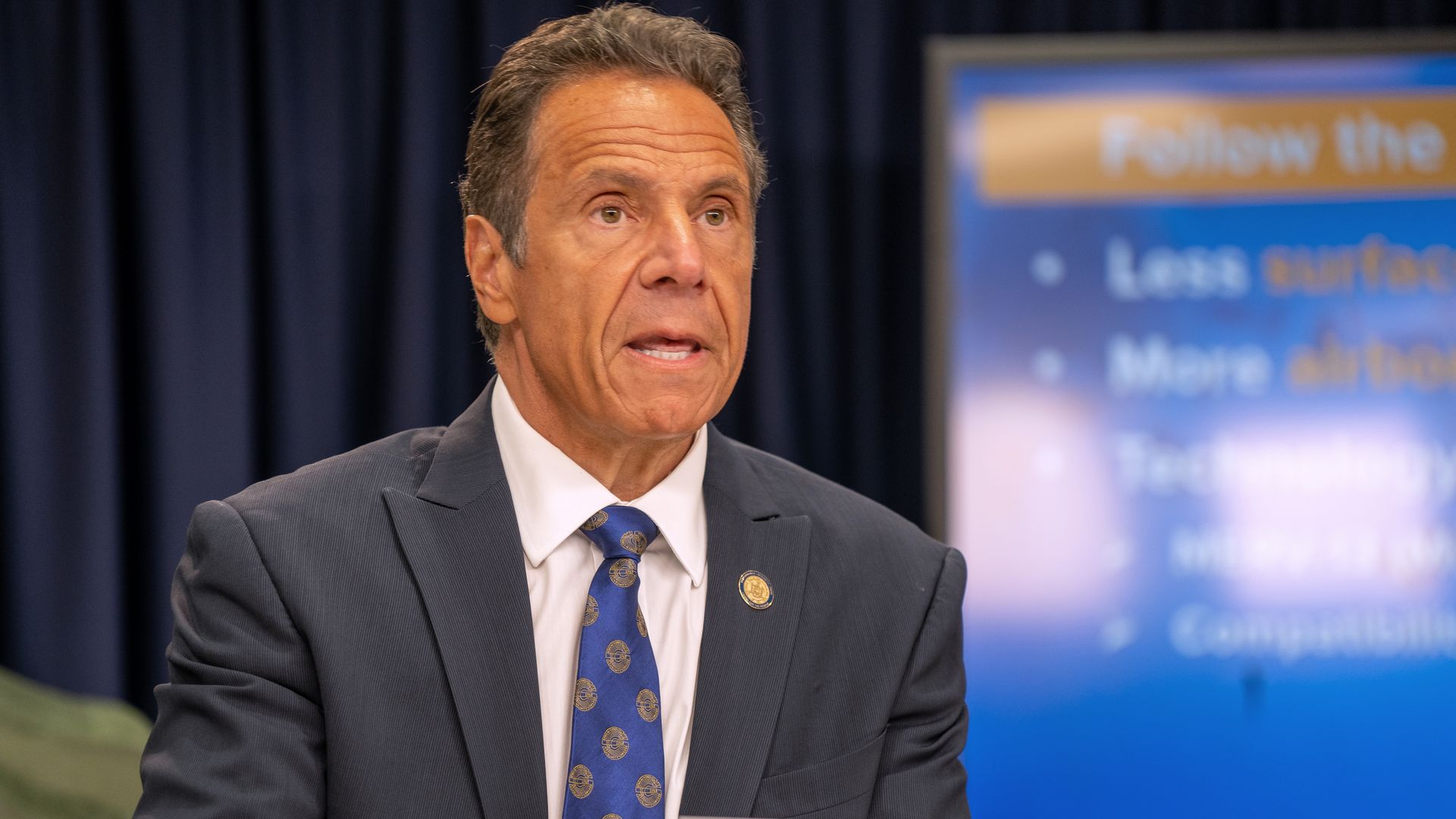
New York will allow museums, gyms and bowling alleys across the state to reopen with capacity restrictions, mandated face coverings and social distancing requirements starting August 24, Gov. Andrew Cuomo announced.
Why it matters: The decision marks a significant turning point for the state, which was seen as the epicenter of the COVID-19 pandemic throughout the spring. Since, case levels have steadily declined following intense social distancing and lockdown measures.
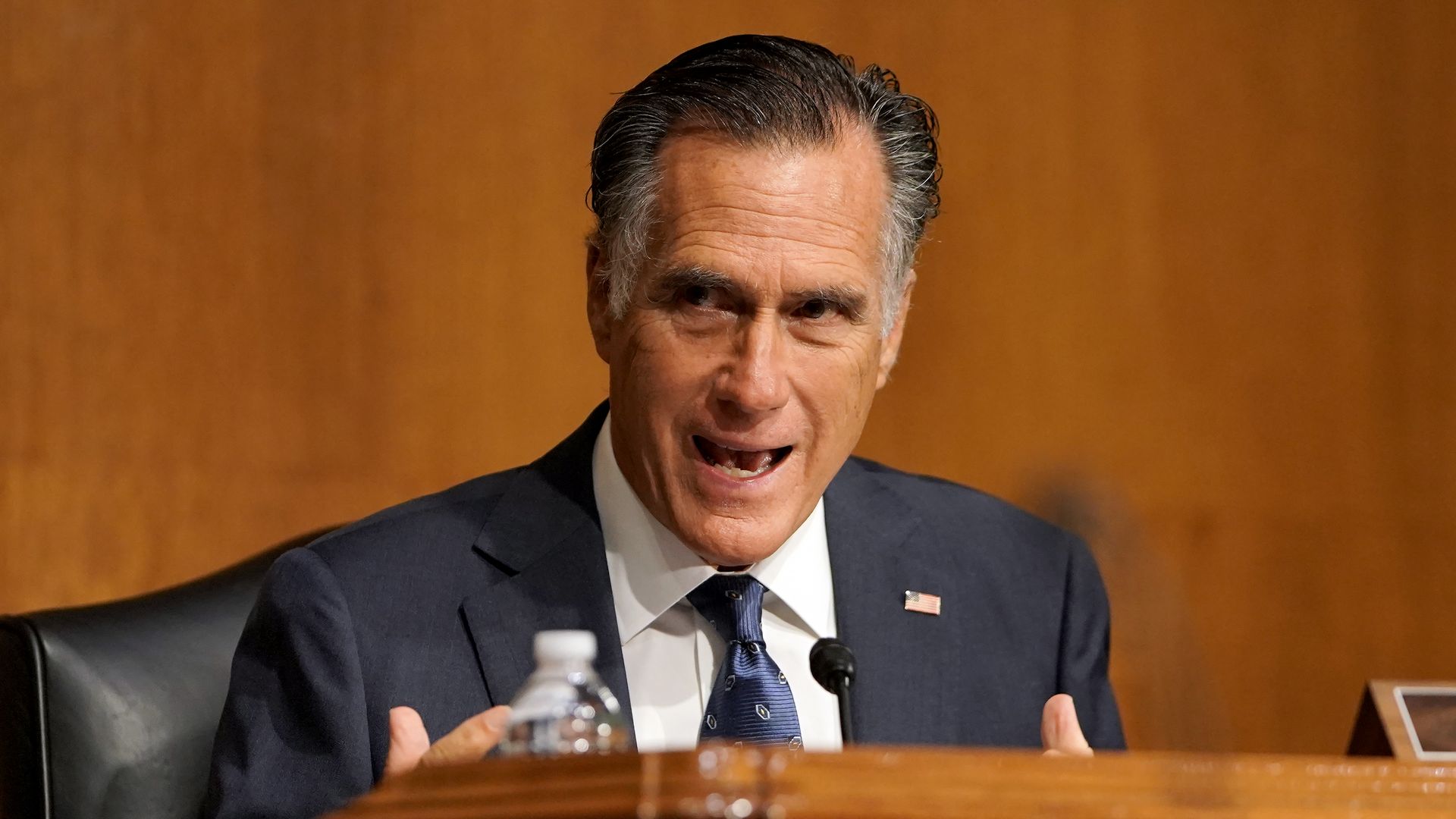
Sen. Mitt Romney said on Friday that he's unaware of "any evidence that voting by mail would increase voter fraud," countering repeated claims from President Trump that mail-in voting will lead to rampant fraud.
What he's saying: "My biggest concern, frankly, with regards to voting fraud has been that there would be some kind of hacking of our voting electronic systems, and that voting machines or tabulating equipment would be hacked," Romney said in an interview with the Sutherland Institute.
When Democrats next week formally nominate the daughter of an Indian immigrant to be vice president, it'll be perhaps the biggest leap yet in the Indian American community's rapid ascent into a powerful political force.
Why it matters: Indian Americans are one of the fastest-growing, wealthiest and most educated demographic groups in the U.S. Politicians work harder every year to woo them. And in Kamala Harris, they'll be represented in a major-party presidential campaign for the first time.
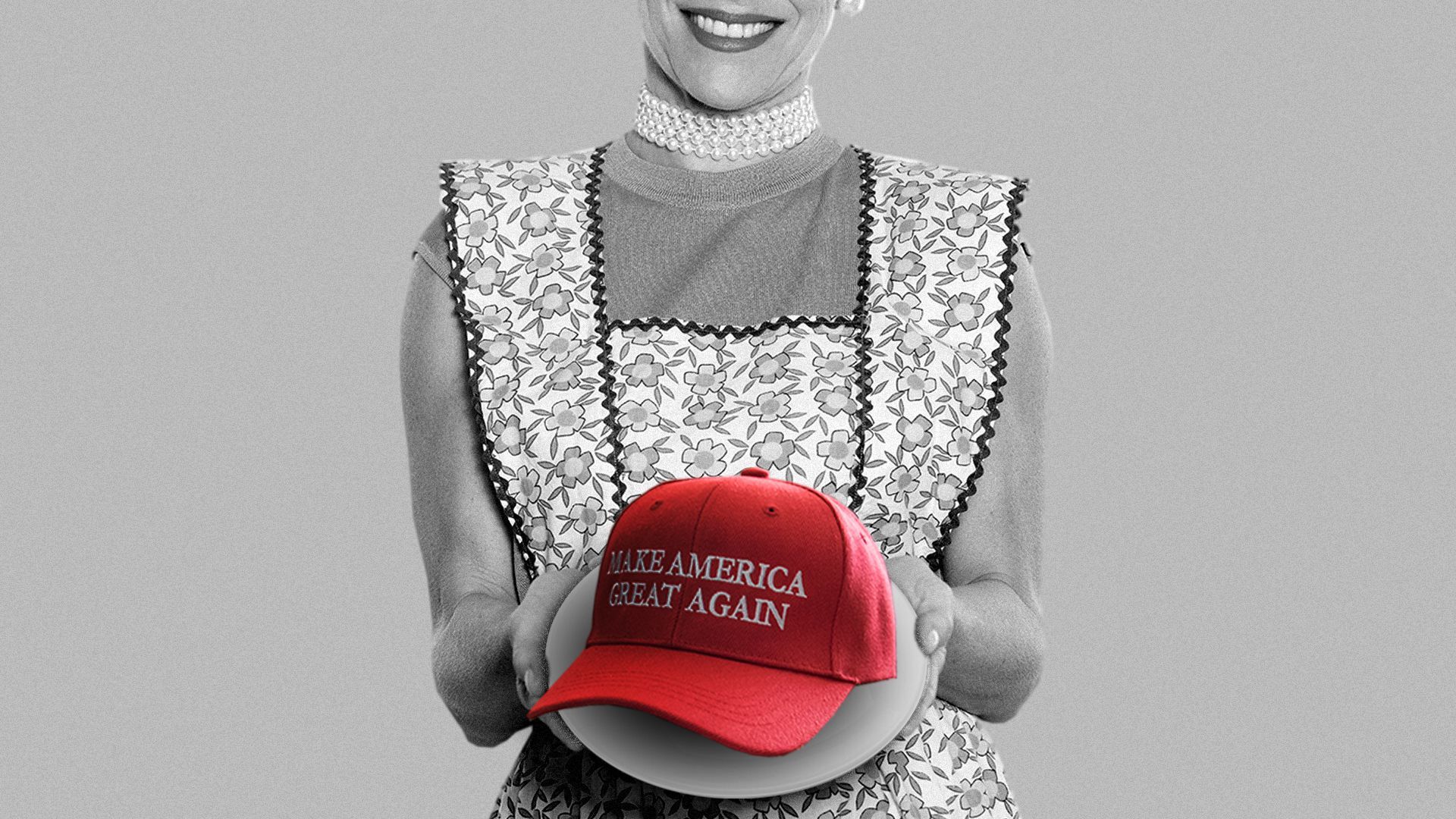
President Trump cast an outdated vision of "the 'suburban housewife'" as he swiped this week at Joe Biden's newly minted running mate Kamala Harris — building on his months-long play to drive a wedge through battleground-state suburbs by reframing white voters' expectations.
The big picture: As he struggles to find an attack that will stick against the Biden campaign, Trump for a while now has been stoking fears of lawless cities and an end to what he's called the “Suburban Lifestyle Dream.” It’s a playbook from the ‘70s and ‘80s — but the suburbs have changed a lot since then.