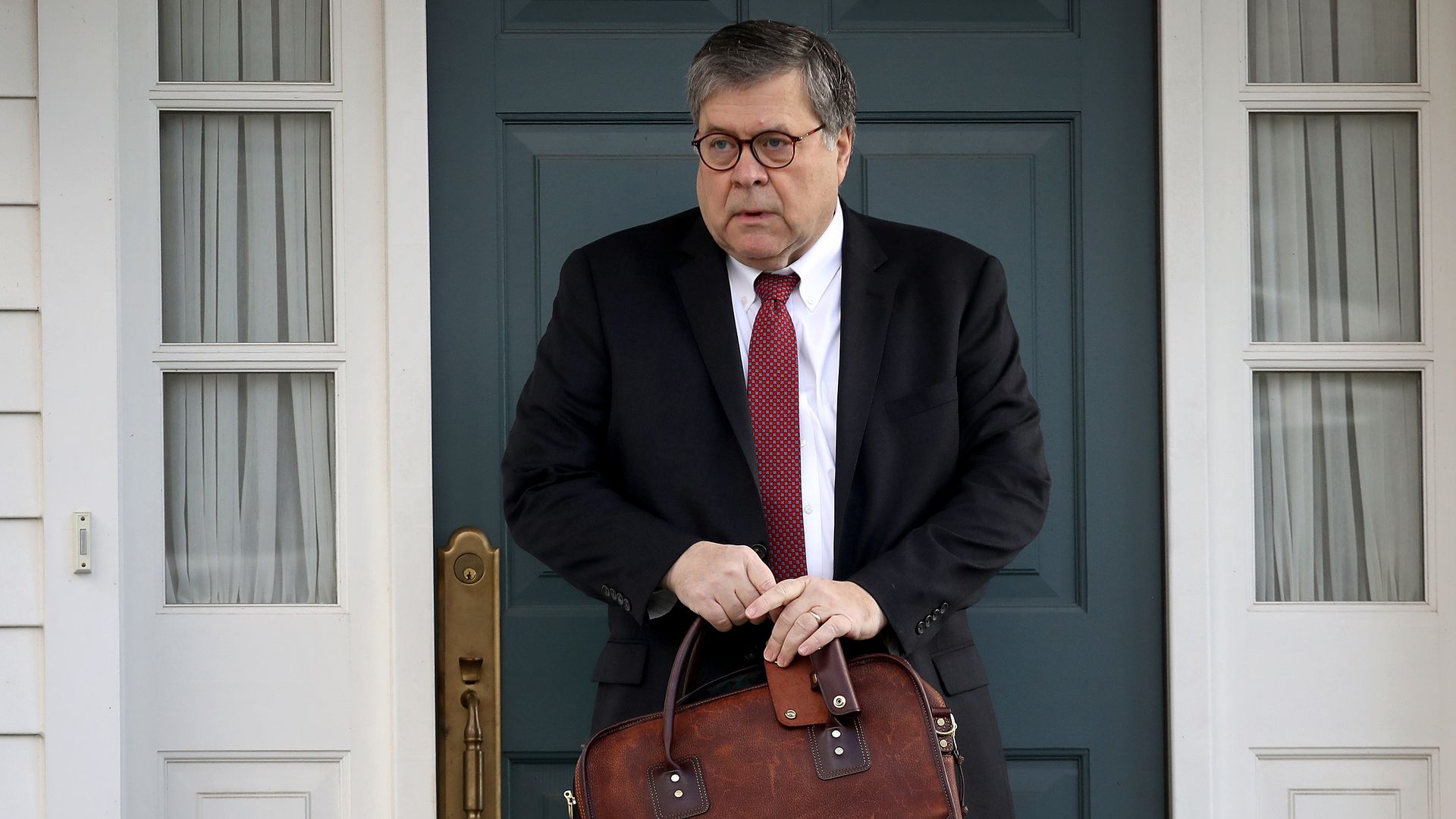
Attorney General William Barr's four-page summary of special counsel Robert Mueller's investigation drew immediate praise from top Republicans, who declared vindication for President Trump after Mueller found no campaign conspiracy or coordination with Russia to influence the 2016 election.
Yes, but: House Judiciary Committee chairman Rep. Jerrold Nadler was quick to point out that Barr’s letter was not the end of the inquiry, noting that Barr wrote in his summary that "while this report does not conclude that the President committed a crime, it also does not exonerate him." In a tweet, Nadler added that his panel “will be calling Attorney General Barr in to testify” in the near future.
Following the release of Attorney General Bill Barr's summary of the Mueller report, House Judiciary chairman Jerrold Nadler tweeted Sunday that Democrats plan to call on Barr to testify before the committee.
"In light of the very concerning discrepancies and final decision making at the Justice Department following the Special Counsel report, where Mueller did not exonerate the President, we will be calling Attorney General Barr in to testify before @HouseJudiciary in the near future."
Attorney General Bill Barr's letter to Congress today detailed the vast effort by special counsel Robert Mueller's investigation into Russian interference in 2016.
After taking the weekend to pore over the Mueller report, Attorney General William Barr has sent Congress his summary of the "principal conclusions" from the special counsel's 675-day investigation into the Trump campaign's ties to Russia.
The bottom line:
"[T]he investigation did not establish that members of the Trump campaign conspired or coordinated with the Russian government in its election interference activities."
On the question of obstruction of justice, Barr writes that while Mueller's report "does not conclude that the President committed a crime, it also does not exonerate him."
Barr says he and Deputy Attorney General Rod Rosenstein concluded that the evidence "is not sufficient to establish that the President committed an obstruction-of-justice offense," noting that the government would have to prove such a case "beyond a reasonable doubt."
Corruption comes in many forms: cheating, bribery, nepotism, cronyism, embezzlement, fraud, state capture. Donald Trump's nomination of Stephen Moore to the Federal Reserve board falls neatly under the heading of "cronyism."
The big picture: Moore has few apparent qualifications for a seat on the Fed board. Instead, he is being rewarded for his work on Trump's election campaign and for his gushing praise of Trump in places like his "Trumponomics" book.
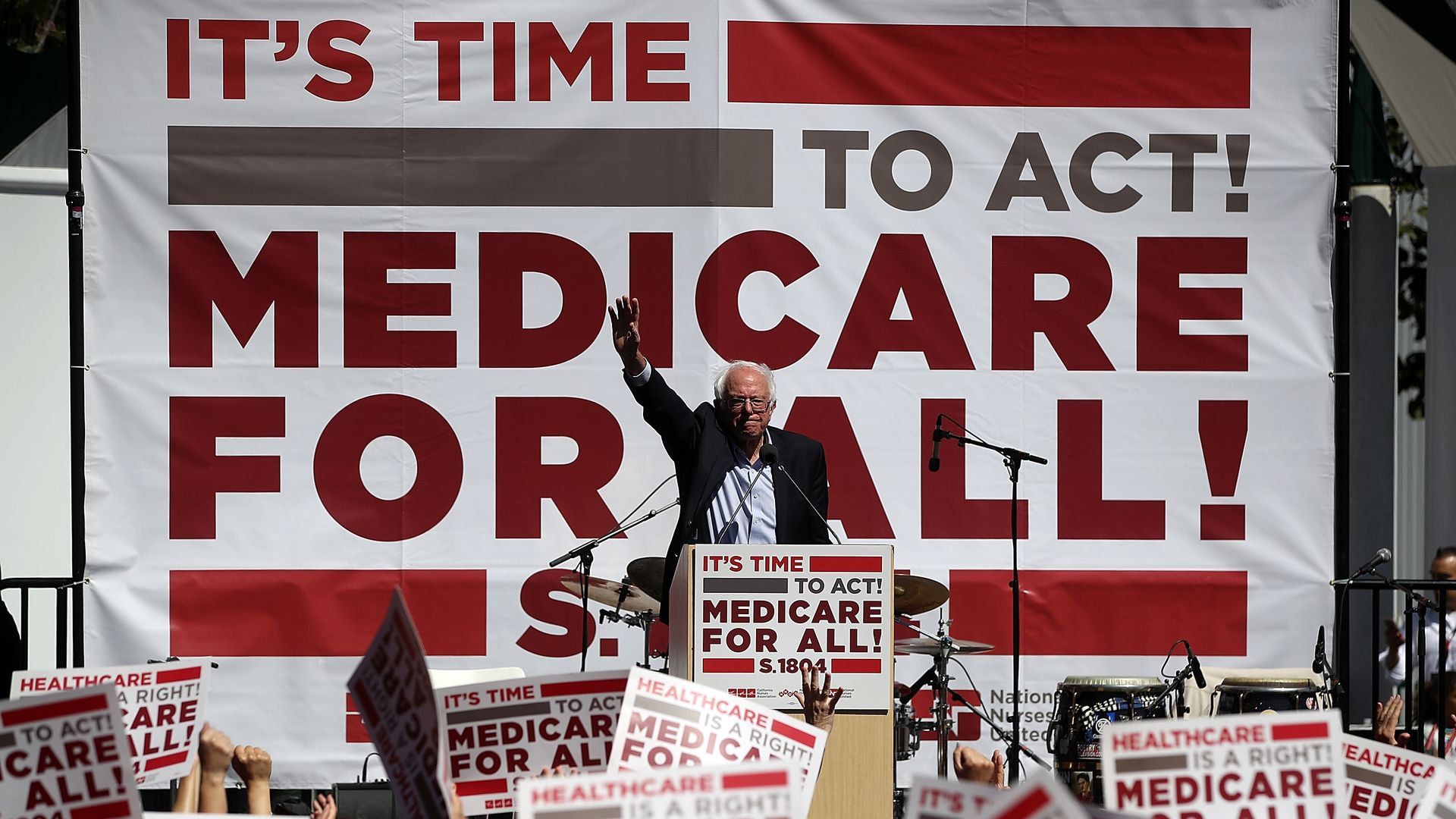
Here's something that ought to catch Democrats' attention: Swing voters at a recent focus group in Wisconsin hadn't heard of either the Green New Deal or "Medicare for all."
Why it matters: These are Democrats' biggest policy staples heading into the 2020 presidential election. They're talking about them all the time, and the ideas are even being weaponized by the right to label the entire Democratic Party as socialists. But none of that is breaking through in this key battleground state.
President Trump has publicly boasted that he could beat any of his 2020 Democratic challengers. But privately, several members of the Trump campaign see a few who could pose a threat to his re-election, and are in the early stages of building out their strategy for attack.
The bottom line: The three candidates that seem to concern the Trump campaign most are Joe Biden, Kamala Harris and Beto O’Rourke. That's in no particular order, and you’ll get a different answer depending on who you talk to.
House Intelligence chair Adam Schiff said on ABC's "This Week" Sunday that even if the Mueller report does not recommend any new indictments — as has been reported — that does not necessarily rule out impeachment for President Trump.
Sure, the market for Democratic presidential candidates is getting a little saturated. So why are some Democrats still thinking of jumping in? Because there's almost never a downside to running.
Data: Axios research; Chart: Harry Stevens and Aïda Amer/Axios





/2019/03/24/1553386140085.gif?w=3840)


