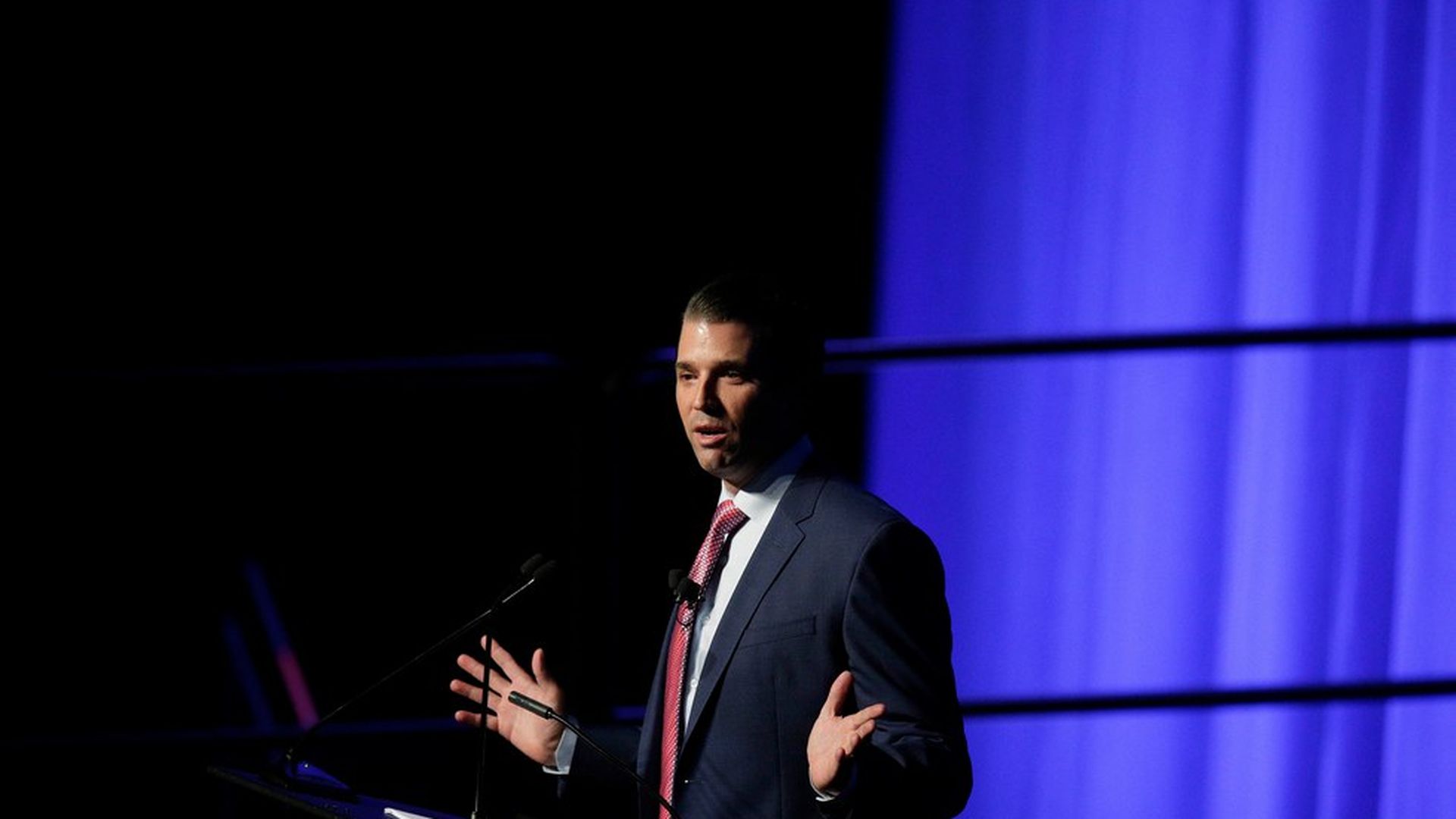
Natalia Veselnitskaya, the Russian lawyer who met with senior members of the Trump campaign in March 2016, said Donald Trump Jr. suggested during the meeting that if his father were to win the election, the administration would be willing to review a 2012 law sanctioning Moscow. In an interview published Monday by Bloomberg, Veselnitskaya also said Trump Jr. had asked for written evidence that illegal funds went to Hillary Clinton's campaign.
Why it matters: Veselnitskaya said she is willing to tell these and other things to the Senate Judiciary Committee if her testimony is made public, and said she'd also be willing to testify before Special Counsel Robert Mueller. Her interview adds another layer to the already controversial Trump Tower meeting, which has played a key role in the Russia investigation.
59% of Americans believe that the United States is currently undergoing the lowest point in its history, according to the American Psychological Association's annual Stress in America poll.
American Psychological Association's annual Stress in America survey; Chart: Andrew Witherspoon / Axios
Sen. Tom Cotton (R-Ark.), 40 — who "plays successfully to the warring constituencies of the Republican Party" — gets a seven-page spread in The New Yorker, with a piece by Jeffrey Toobin, who traveled to the cow-calf farm in Yell County, Arkansas, where the senator grew up:
Why he matters: "Cotton appears to be a hybrid of insurgent and old guard ... As Bannon put it, 'How many guys in town can give a speech at the Council on Foreign Relations and also get kudos in the pages of Breitbart? The answer is, one guy.'"
This week is one year since Trump's shock victory, and Esquire has a delicious oral history, "The Untold Stories of Election Day 2016."
Deputy Editor John Hendrickson tells Axios: "15 people ... did the interviews, a mix of staffers and freelancers, then another 5 ... helped with supplemental editing and art as we hit the home stretch. Our last transcription came in as late as 5:30 p.m. this past Friday night."
A few gems:
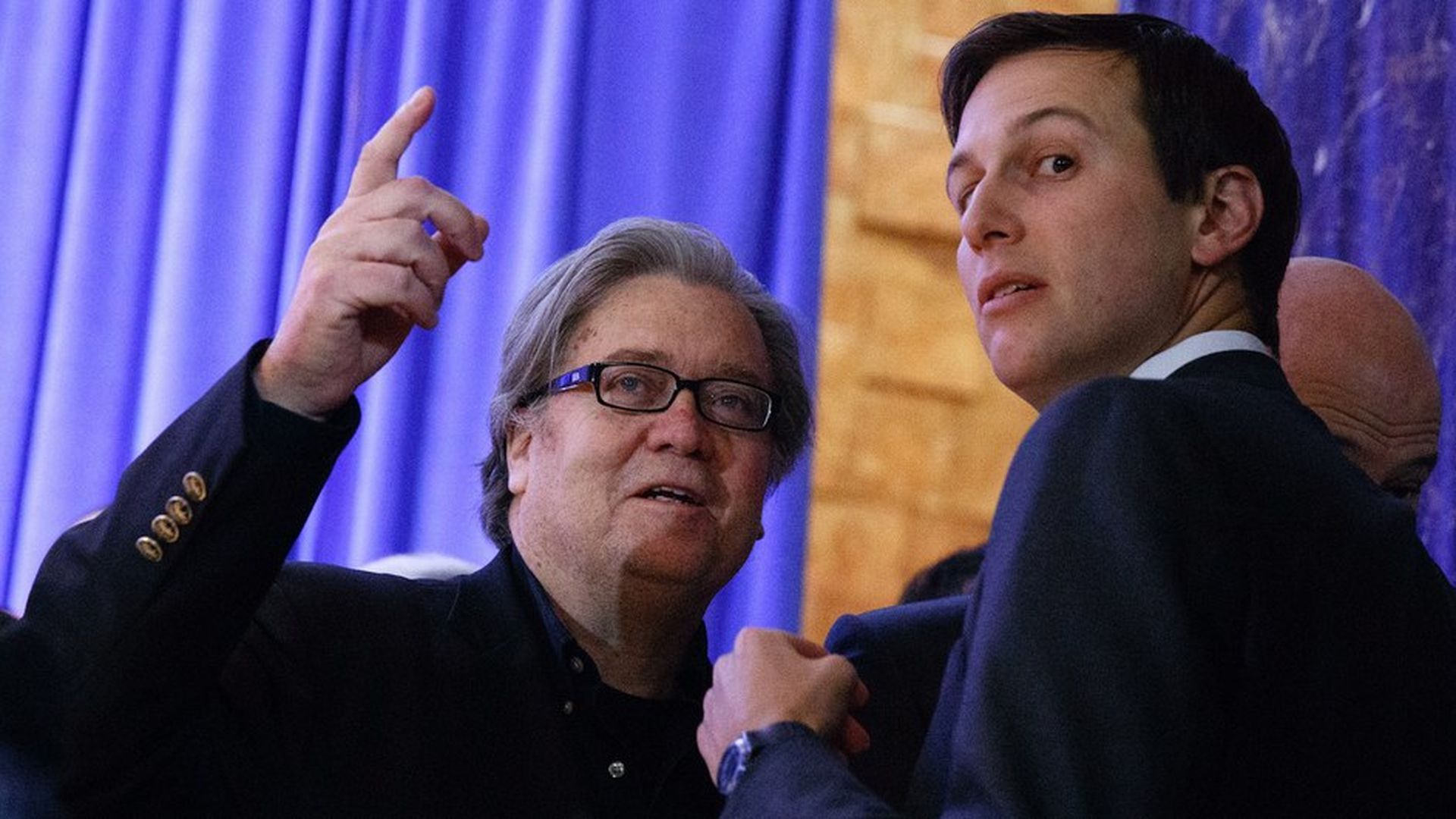
Steve Bannon: "Jared [Kushner] and I were out on this balcony in Trump Tower. We looked at it on Jared's iPhone. And the numbers were so bad that we regrouped inside. We look at each other and we go, 'This can't be right. It just can't.'" And Jared goes, 'I got an idea, let's call Drudge.' And Drudge says, 'The corporate media—they've always been wrong the entire time — these numbers are wrong.'"
Ashley Parker of WashPost, then of N.Y. Times: "The RNC thought they were going to lose. The Trump campaign supporters thought they were going to lose. They were rushing to get their side out of the blame game. I spent part of my day lining up interviews for later that night or the next morning to get their version of events."
Maggie Haberman of N.Y. Times: "One Trump supporter sent me a message saying, 'You're [screwed].' [Laughs] If you use that, please recall me laughing about it. It was really something."
Michael Barbaro of N.Y. Times: "I went home and woke up my husband, I think it was 4 or 5 in the morning, and asked him what the next steps should be journalistically. Should I move to Washington? Should I change jobs? It was pretty disorienting."
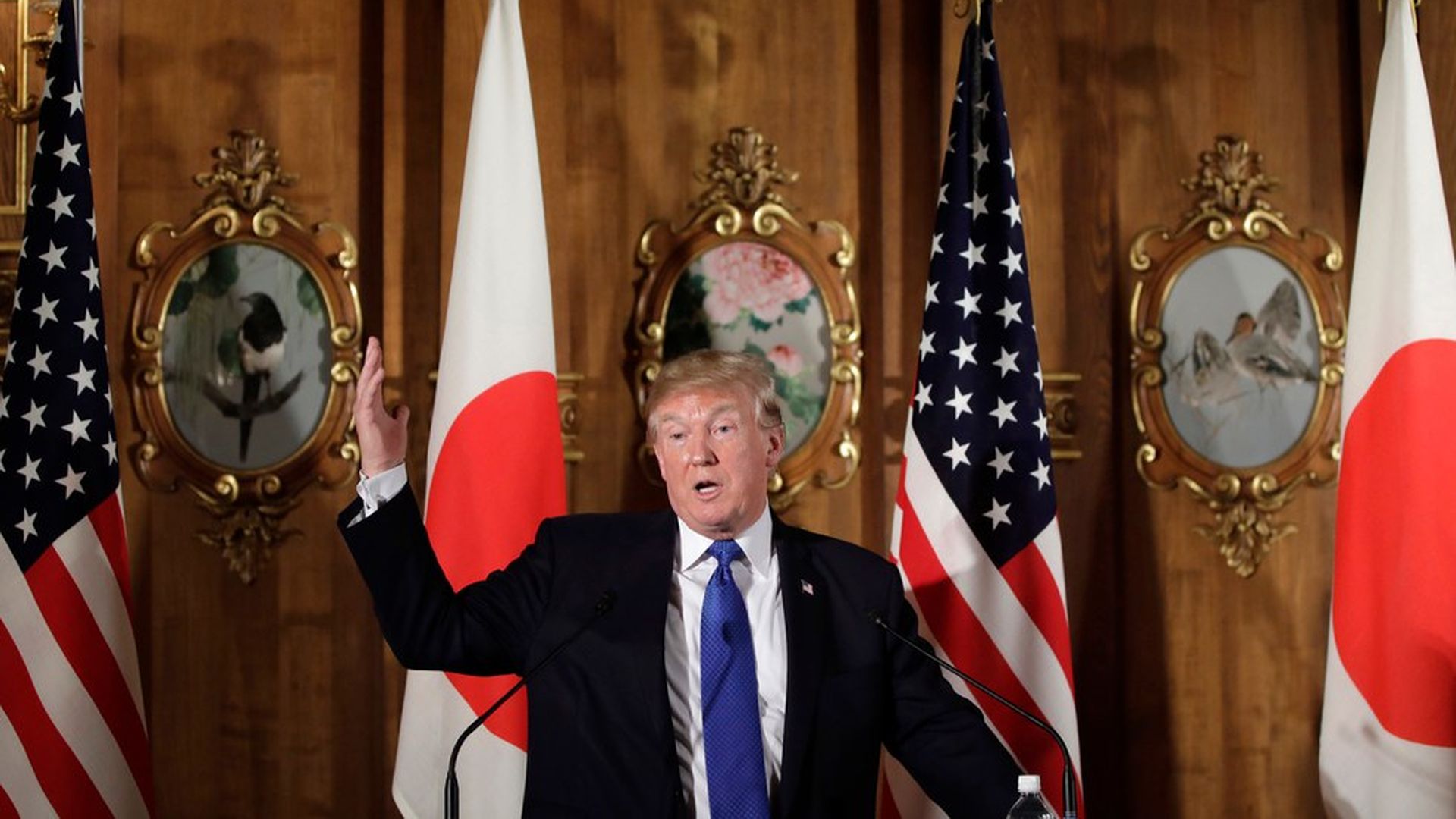
President Trump said that yesterday's mass shooting in Sutherland Springs, Texas was not "a guns situation," instead calling "mental health" the problem during a joint press conference with Japanese Prime Minister Shinzo Abe in Tokyo.
Worth considering: Trump's reaction is similar to his relatively muted response to last month's Las Vegas shooting — when he offered prayers and condolences after an incident perpetrated by a white male. In comparison, last week's ISIS-linked New York truck attack spurred Trump to weigh in on a wide range of controversial policy issues like immigration, federal prosecution of terror suspects, and the detention facility at Guantanamo Bay.
The first indictments are out in Special Counsel Bob Mueller's investigation into Russian interference in the 2016 election and potential collusion by the Trump campaign. The big questions now are how much leverage Mueller has and how far up this could reach.
Big picture: Past special counsel probes and special prosecutor investigations have often remained at the periphery of what the investigation is focused on, or led somewhere other than where the public and the media thought they might. For instance, investigations during the George W. Bush and Bill Clinton administrations never led to charges at the core of the probes.