Axios What's Next

November 13, 2023

1 big thing: Tesla drive-in takes shape
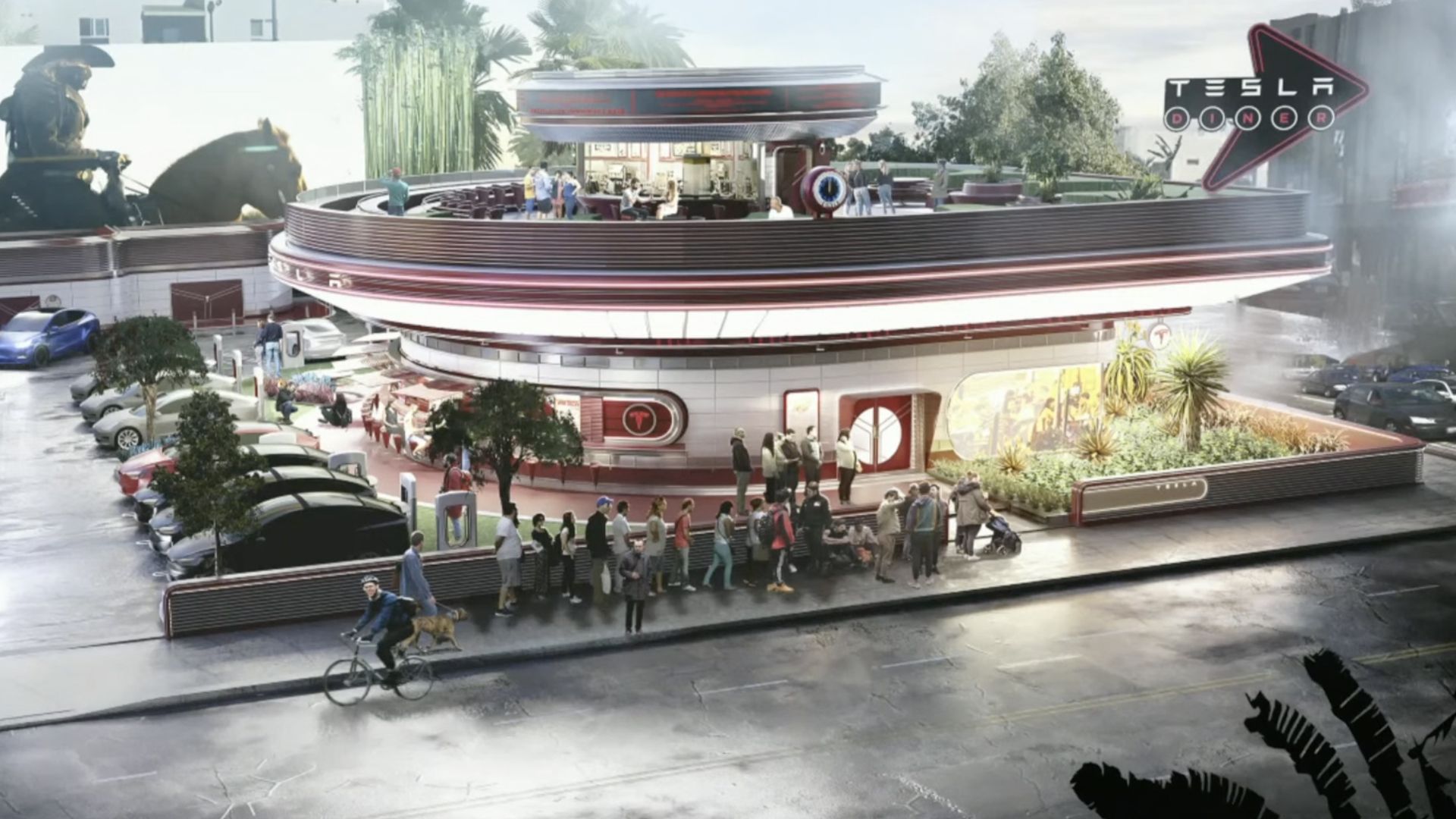
Rendering of a diner with charging stations that Tesla is constructing in Hollywood. Image: Courtesy of Tesla
Tesla is rapidly constructing a planned 1950s-style diner and drive-in movie theater in Hollywood that will also be a Supercharger station with 32 charging stalls, Jennifer reports.
Why it matters: If the country's dominant electric vehicle (EV) maker plans to use its first public restaurant as a national blueprint, it could augur the start of a chain of charge-and-dine stations, which would be a new retail category.
- Several existing food chains have announced plans to install EV chargers for customers to use while they chow down.
Driving the news: Nearly six years after Elon Musk teased on what was then Twitter that he was "Gonna put an old school drive-in, roller skates & rock restaurant at one of the new Tesla Supercharger locations in LA," construction is finally underway.
- Tesla got approval in August from the L.A. Department of Building and Safety "to establish a diner and drive-in movie Supercharger," reports Ottomate, a food automation and robotics newsletter.
- A permit posted at the site, at 7001 West Santa Monica Blvd., lists the contractor as PCL Construction.
- The architect is Stantec, which previously designed and built a water treatment facility for Tesla in the Bay Area together with PCL.
Of note: Tesla, which notoriously does not show its playing cards to reporters, did not respond to two email inquiries about the restaurant.
- Below are some photos from Nov. 3 of the Hollywood construction site — taken by Jennifer's son, who lives in the area.
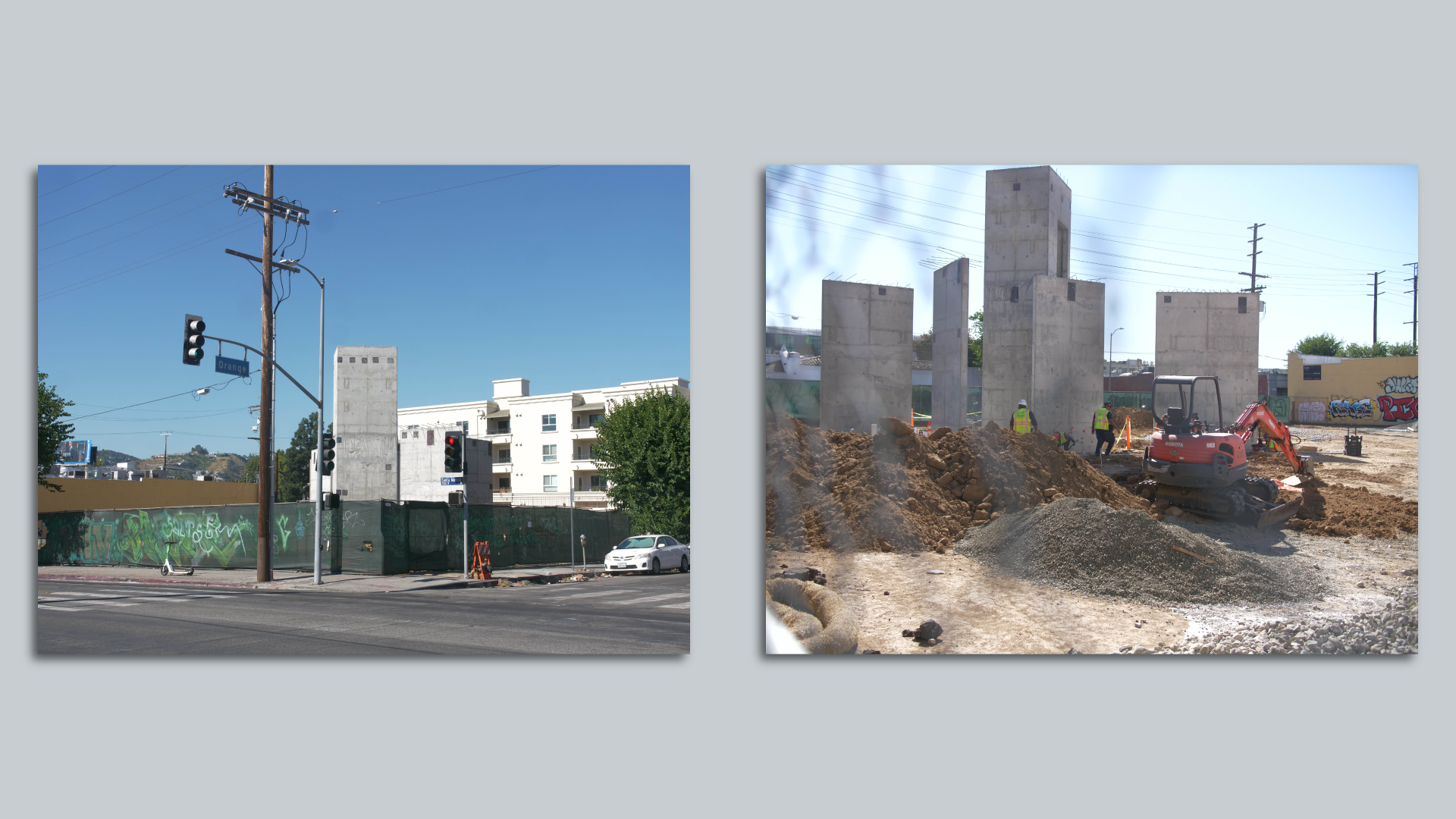
What they're saying: "Tesla originally planned to build the diner in the coastal city of Santa Monica but then moved the plans to Hollywood," reports Electrek, an EV news site.
- The Hollywood site, formerly a Shakey's Pizza, lies along historic Route 66, Electrek says.
- "The plan is for a two-story restaurant structure, surrounded by 32 charging stalls, with two movie screens and a rooftop bar," per Ottomate. "At ground level, carhop-style waitstaff may bring meals to folks who have ordered ahead from their cars."
- There will also be "two movie theater screens where clips of famous movies will be shown," reports Teslarati, a news site dedicated to the automaker.
Details: "Groundbreaking gives us the impression that Tesla could have this project completed by the end of the year," per Teslarati.
- "While it's a lofty goal, this project is one of Tesla's most anticipated, and with the automaker opening its Superchargers to other car companies in the spring, charging locations are one of the most heavily sought-after parts of the EV ownership experience," Teslarati said.
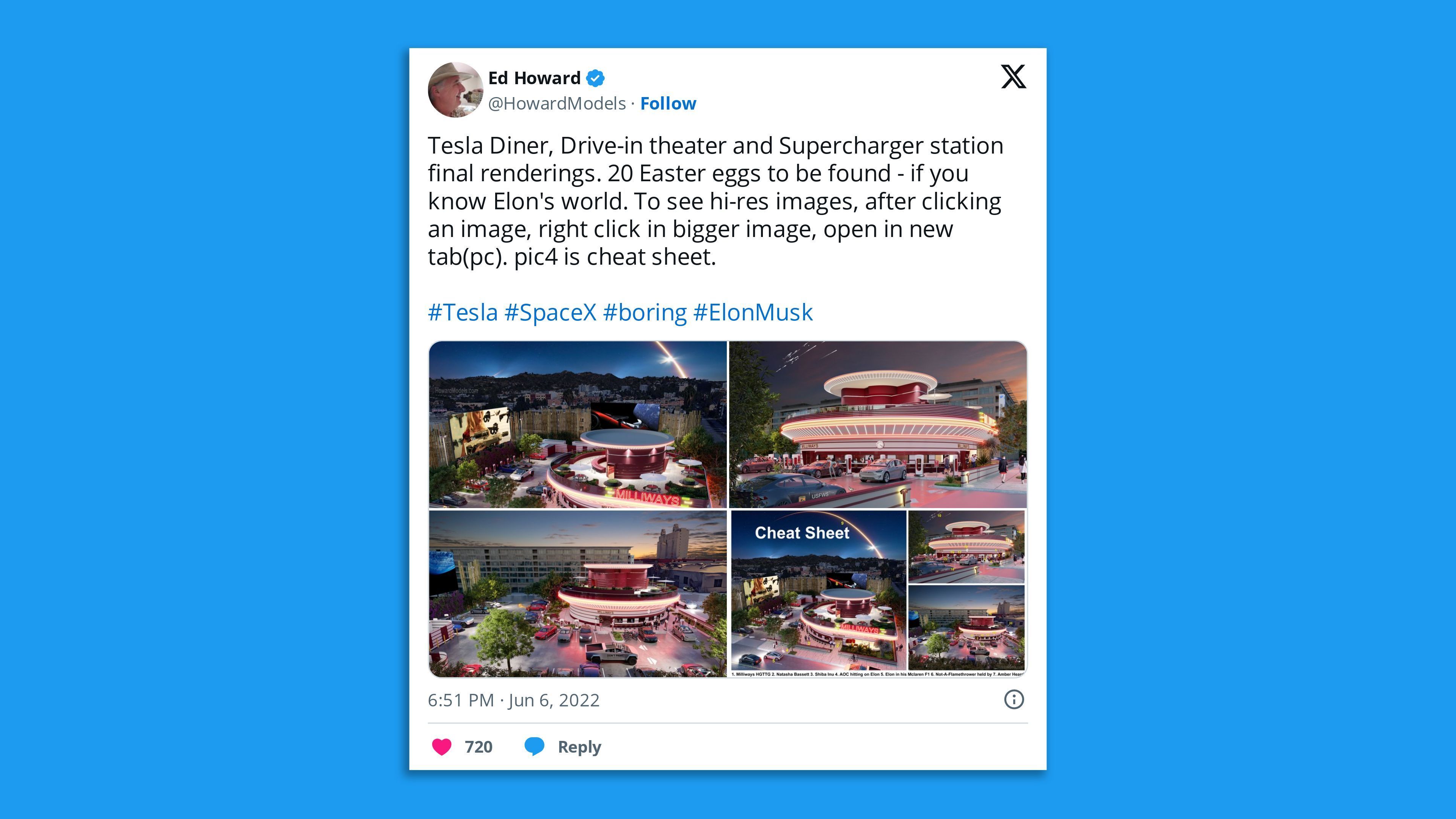
Zoom out: The buzz surrounding the project prompted one specialist in architectural renderings to mock up a few unofficial concept images and post them to X, the Musk-owned site formerly known as Twitter:
What's next: As the restaurant takes shape, it will be interesting to find out its name and whether Tesla plans to propagate the concept.
2. What's next for Shawn Fain?
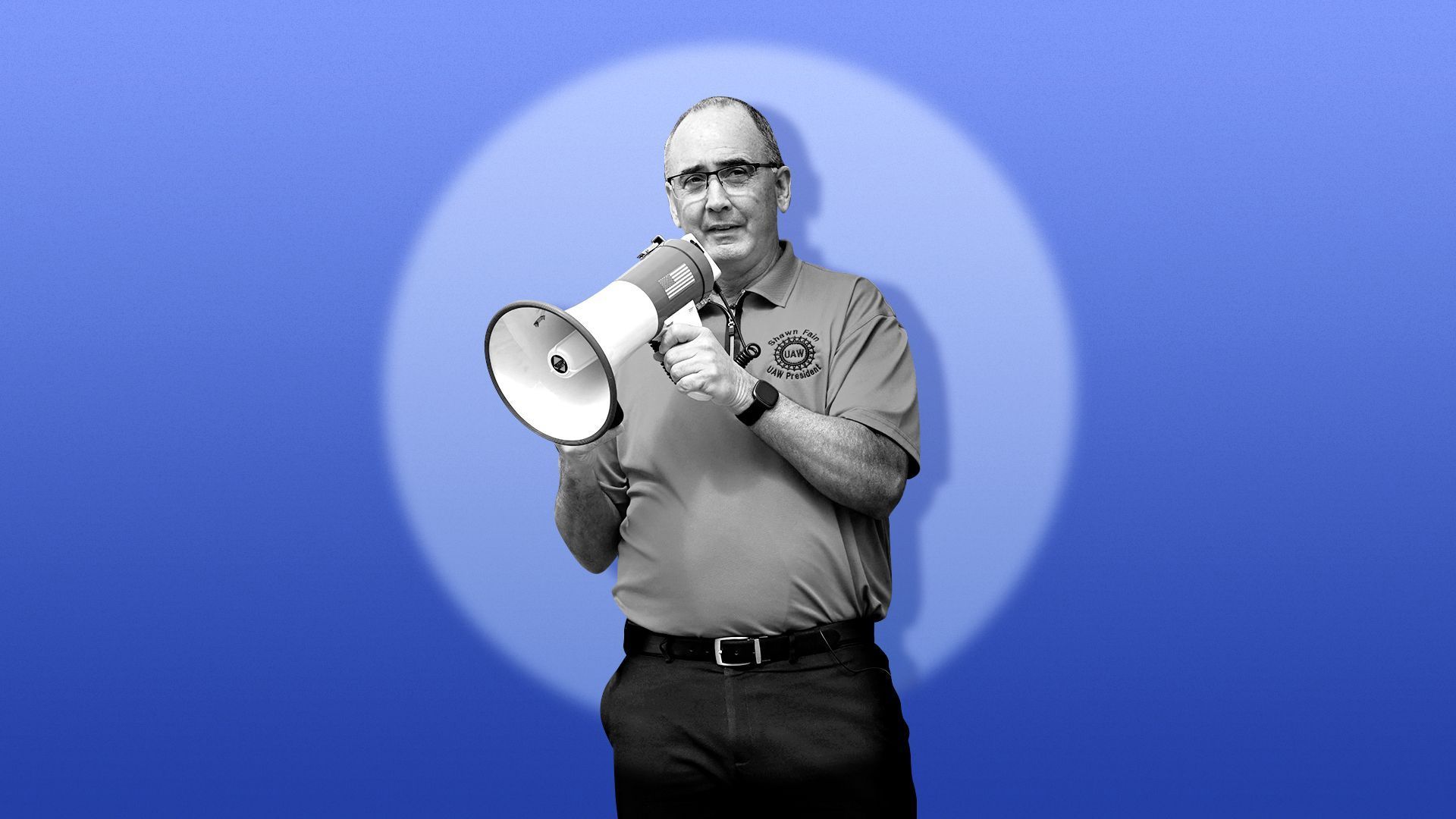
Photo Illustration: Natalie Peeples/Axios. Photo: Jim Watson/AFP/Getty Images
3. 📉 Population bust ahead
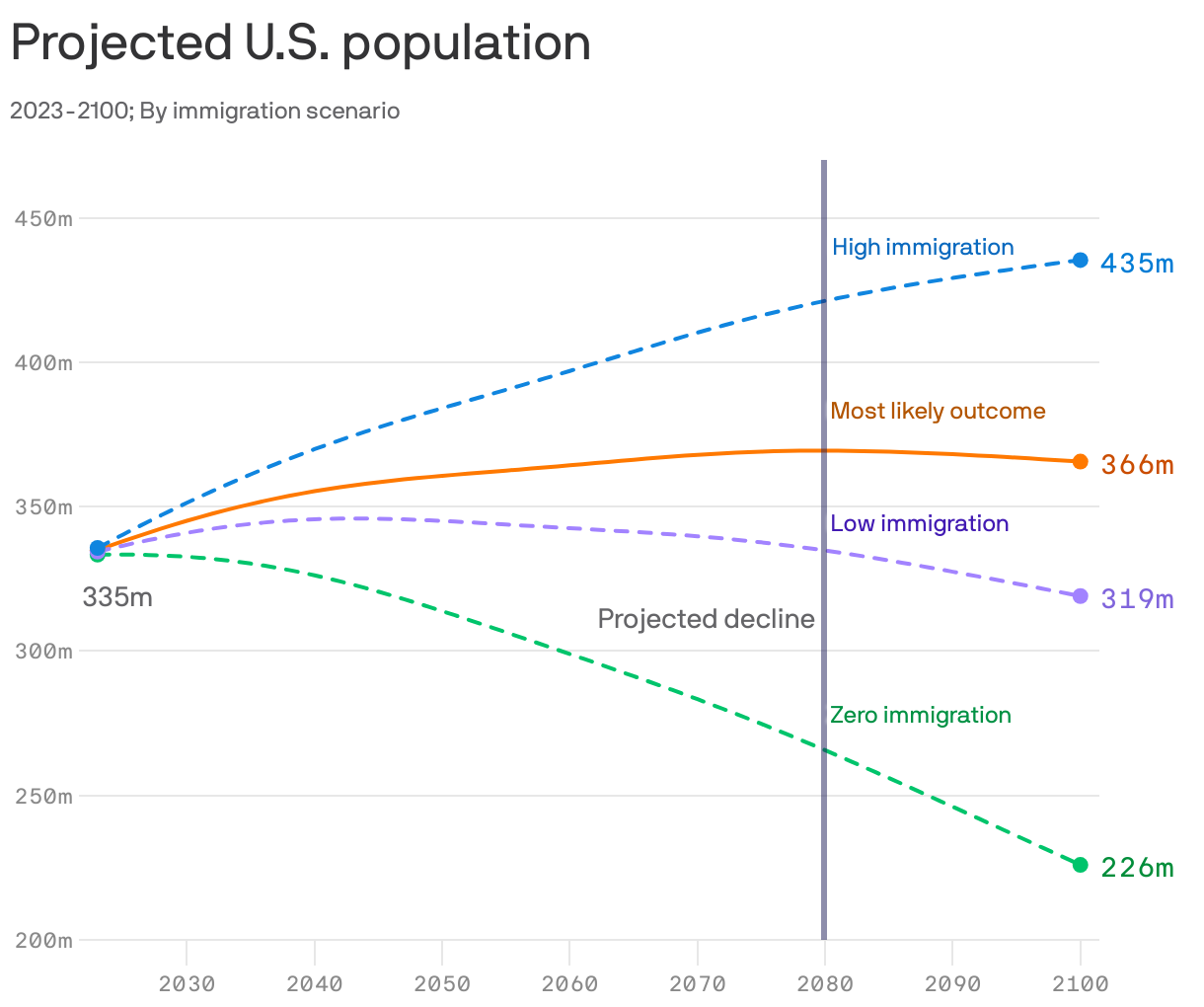
America will enter the 22nd century with a shrinking population unless immigration increases, Axios' Jacob Knutson reports from new Census Bureau projections.
Why it matters: Beyond changing what the country looks like, these demographic trends could profoundly reshape the economy and alter society.
- Population growth is critically important for economic growth and maintaining safety-net programs.
What's happening: The U.S. population will begin declining after reaching a peak of nearly 370 million people in 2080, per the Census Bureau's "most likely" scenario.
- Though it's expected to eventually decline, the population will still likely be 9.2% larger in 2100 than it was in 2023 — jumping from around 335 million people to 366 million.
Between the lines: The Census Bureau's estimates are based on assumptions about future birth and death rates and different migration scenarios.
- In almost all scenarios, immigration was projected to be the largest contributor to population growth, as it has been for decades.
In the agency's zero-immigration scenario, the country's population begins declining almost immediately, and drops to 226 million by 2100.
- With high immigration, the country could reach 435 million people by the end of this century.
4. AI beehives to the rescue
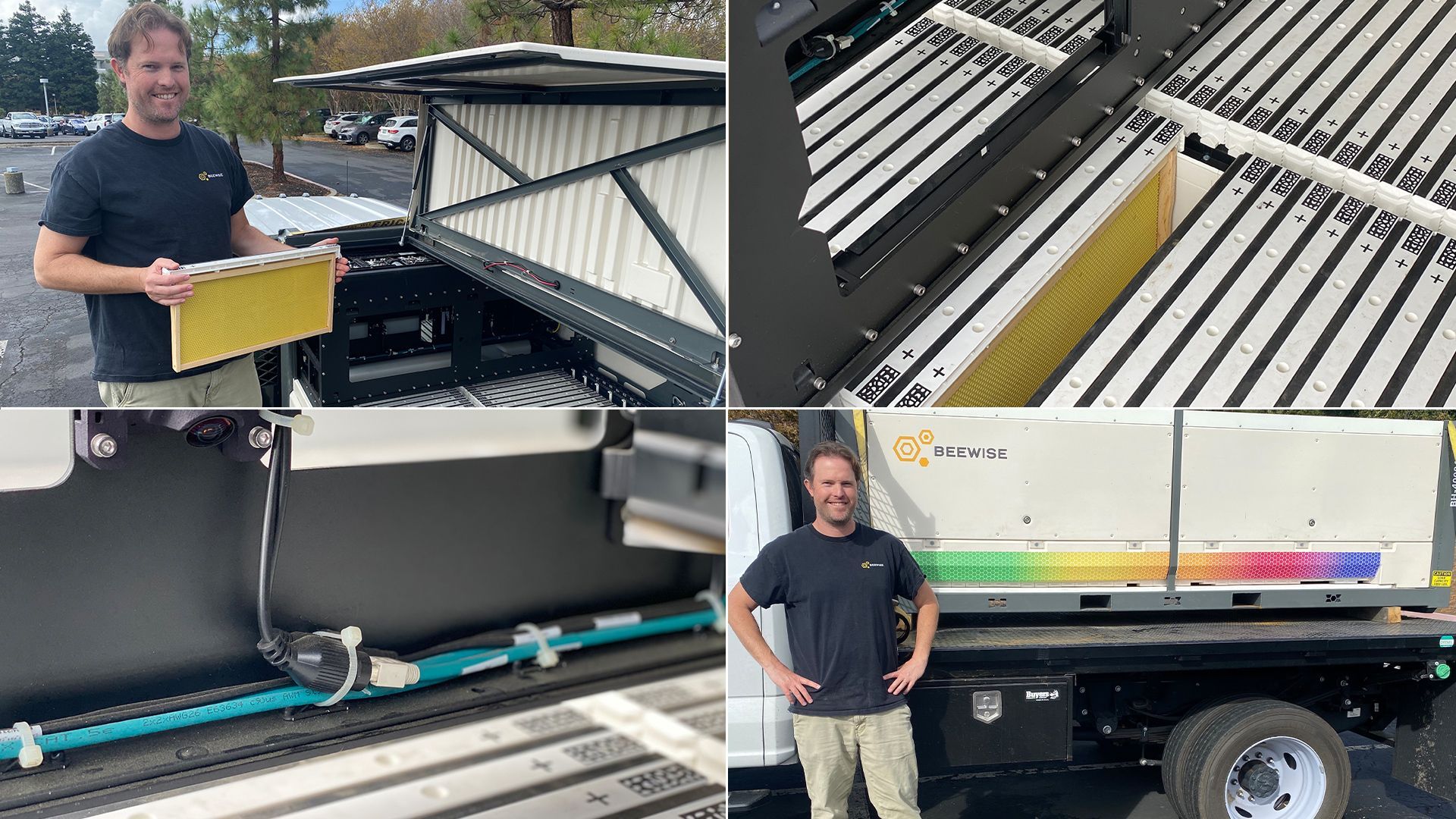
Beewise co-founder Eliyah Radzyner shows off the startup's robotic AI-powered beehive. Photos: Katie Fehrenbacher/Axios
Axios What's Next

The next decade of big, sweeping changes will unfold in cities and communities where new technologies like 5G, AI and drones are transforming how we work, live and play together. What’s Next will guide you through the revolution.