Axios Future of Defense

February 04, 2026

January's over. Welcome to February, the unofficial start to defense conference season.
- I'm reporting from WEST and moderating a defense-tech conversation at the Military Veteran Startups conference next week. See y'all there?
💾 Situational awareness: A suspected Chinese hacking group mimicked U.S. policy briefings to target diplomats, according to research first shared with Axios. Israel-based Dream Security uncovered the phishing campaign.
Up for grabs: The Greenland gambit, RQ-170s over Venezuela and Rostec's plans for World Defense Show 2026.
Today's newsletter is 2,207 words, an 8.5-minute read.
1 big thing: The "end of an era"
Tomorrow, the world lurches toward an age of international uncertainty and increased nuclear-weapons spending. New START is expiring.
Why it matters: The treaty capped and encouraged inspections of the deployed nuclear arsenals of the U.S. and Russia — Cold War rivals with shared animosity and some 85% of the world's warheads.
- "Feb. 5 is going to mark the end of an era," Kingston Reif, a former deputy assistant secretary of defense for threat reduction and arms control, told me.
- "The treaty was a huge net benefit for U.S. national security."
Driving the news: One expert told me arms control was slipping into a coma. Another said it was on life support. They all warned of long-term consequences should another deal — even by handshake, as Russian leader Vladimir Putin suggested — not be consummated.
- "In the post-New START environment, the United States will have to learn — and we're not going to like it — to live in a world with more nuclear risk facing the United States, regardless of the choices we make about the composition of our nuclear forces," said Ankit Panda at the Carnegie Endowment for International Peace.
Zoom in: New START's expiry was foreseen. The five-year extension agreed to in 2021 ends here. The chance for meaningful follow-ons, however, was stymied by major world events:
- The COVID pandemic and a cessation of inspections;
- Russia's 2022 invasion of Ukraine and continued subterfuge across Europe;
- And President Trump's insistence that any future deal also constrain China, which is rapidly developing its still much smaller stockpile.
"There have been many ups and downs," said Rose Gottemoeller, New START's lead negotiator.
- "We have been able to have really strong, mutual predictability about what's going on in each other's nuclear force postures; that has been very important now for decades," she added. "I think it is somewhat worrisome that the treaty is going out of force without something new in sight."
- That said, Gottemoeller, a self-described optimist, thinks Trump "could get a new treaty through the Senate."
- "Presidents like to be on that big stage of saving humanity from nuclear conflagration."
By the numbers: A vast majority (91%) of registered voters think the U.S. should negotiate a new deal with Russia to maintain current limits or further reduce both countries' nukes, according to a YouGov poll commissioned by ReThink Media and the Nuclear Threat Initiative.
- "While I don't think most Americans could tell you what New START is, I think a lot of Americans are still worried about the possibility of a nuclear exchange," NTI president and former Army Secretary Christine Wormuth told me. "They read the papers — or on their phones — and they've heard Putin rattling his nuclear saber."
- That includes the Oreshnik missile and Poseidon torpedo. Meanwhile, Trump has suggested resuming some sort of nuclear weapons testing.
Between the lines: An immediate stateside buildout beyond New START levels would rely on delivery systems and warheads already on hand.
- The Sentinel nuclear missile and the Columbia-class submarine, for example, are years behind schedule.
What we're watching: How France, Germany, Poland and the U.K. react.
- It was less than a year ago when Eurobomb discussions reignited and the countries debated deterrence without Washington.
More from Axios:
New tritium harvesting record set for U.S. nukes
Trump's nuclear dilemma: "Greatest threat" is getting bigger
U.S. to spend $1 trillion on nuclear weapons over next decade
2. Ice ice maybe
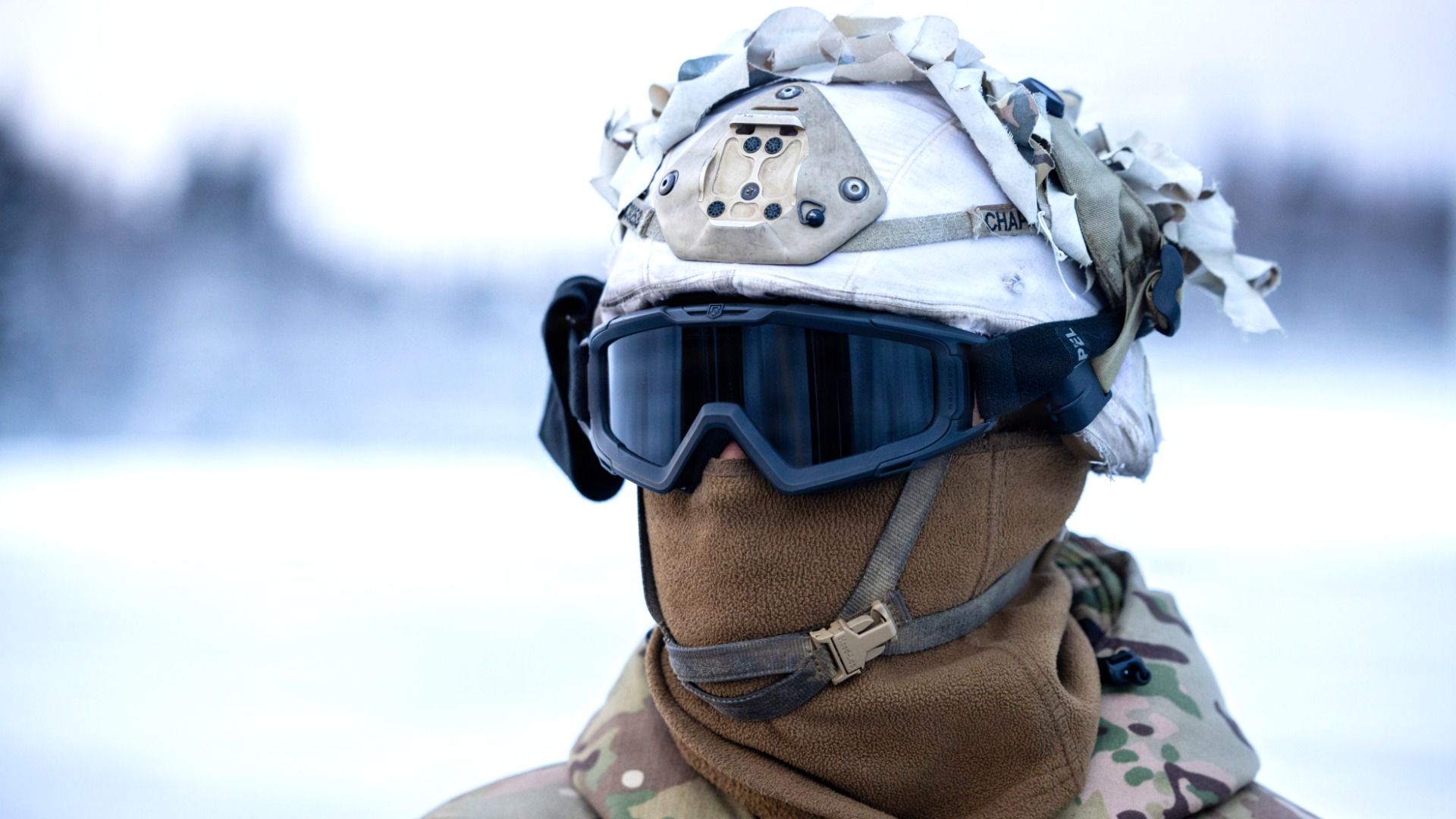
From Chrome Dome flights to Golden Dome missile protections, the U.S. has for decades staked a national-security interest in the Arctic. Today's conversation is quickly evolving, though, spurred by:
- The coziness of Russia and China;
- Global warming, ice melts and easing navigation;
- And the Trump administration's chaotic approach to foreign affairs, compounding already strained transatlantic relationships.
Why it matters: "The Arctic is affected by many different factors, many different narratives. There's the focus on natural resources, shipping routes, and then, of course, its strategic positioning between global powers," Pavel Devyatkin, a senior associate at the Arctic Institute, told me.
- "We are witnessing a dangerous action-reaction cycle, where each military exercise, whether from NATO or Russia, prompts a counter-exercise," he added.
- "But I would emphasize that the escalation that we're seeing isn't inevitable or irreversible."
Driving the news: President Trump's beef with Canada and attraction to Greenland has thrust the Arctic into mainstream political debate.
- NATO allies took Trump's threats to invade Greenland seriously enough that they sent a small detachment of troops to show solidarity with Denmark.
- Trump, in turn, was so enraged by that gesture that he threatened to slam them all with tariffs.
The threats of intra-NATO war (trade or kinetic) have since subsided.
- But experts are questioning why Trump's Arctic strategy seems to shove allies aside when this is an arena where some are arguably ahead — in producing icebreakers, say, or training for icy warfare.
What they're saying: "Every time I read an article that says, 'Well, actually, Arctic security is a real concern. It's good that Trump brought it up,' I feel like, yes, that's true," Jeremy Shapiro at the European Council on Foreign Relations told me.
- "But I think that's missing the point. That's not what is happening here," he said. "He's not going to improve Arctic security. He's going to make it worse."
- "If you were serious about Golden Dome, you'd be having an allied conversation about how to spread the burdens, about how to position the various elements of the system across the territories of the alliance members."
Zoom out: The U.S. has a significant military presence in Alaska. It also operates Pituffik Space Base, formerly Thule Air Base, by way of an agreement with Denmark. (The commander there was dismissed following perceived criticism of Vice President JD Vance.)
- Separately, seven of eight Arctic nations are NATO members. That includes the two most recent members, Finland and Sweden.
The bottom line: "We've been doing a lot ... in contested environments around the world and continue to do so. And the headline here is the Arctic is going to become one of the next contested environments," Striveworks CEO Jim Rebesco told me.
- "It's not all kinetic — tanks, planes, submarines. You've got cyber, you've got other information operations," he said.
- "All of this is coming to a head."
Go deeper: Eight takeaways from the Pentagon's Donroe-inspired defense strategy
3. Exclusive: Machina's Intelligent Factory

Machina Labs raised $124 million and will use a significant chunk of the money to open a robotic manufacturing facility that will initially pump out missile structures and airframes, CEO Edward Mehr told me.
Why it matters: It's additional fuel for the reindustrialization fire.
- "We're going to see a reinvigoration of blue collar — but it's a different blue collar," Mehr said.
- It's now "enabled with robotics and iPads and things that allow them to be significantly more productive than just torquing the wrench over and over again."
Zoom in: The Intelligent Factory, as it's known, will be upward of 200,000 square feet and will be the company's first footprint dedicated to mass production. (Its two existing plants are less than half that size.)
- The new installation will likely not be built in California.
- "We've been talking with three different states," Mehr said. "New Mexico. We're talking with Texas. We talked with Alabama. Recently, Reno, Nevada, came into the equation."
Follow the money: Lockheed Martin Ventures, Balerion Space Ventures, Woven Capital and the Strategic Development Fund, based in Abu Dhabi and owned by EDGE Group, were involved with the Series C.
State of play: Machina has already worked with the Air Force.
- It's also coordinating with European and Israeli players.
What's next: The company's business is right now a 70-30 split of defense and commercial. But that could change over the next few years. Defense, Mehr said, is "very seasonal."
- "We're very patriotic. We want to make sure defense is supplied," he added.
- "But, at the same time, we need to make sure that we're smart about this. Like, if these factories are not doing defense items, they need to be automotive items, they need to be heavy equipment."
Go deeper: A "desire to build"
4. RQ-170 overhead
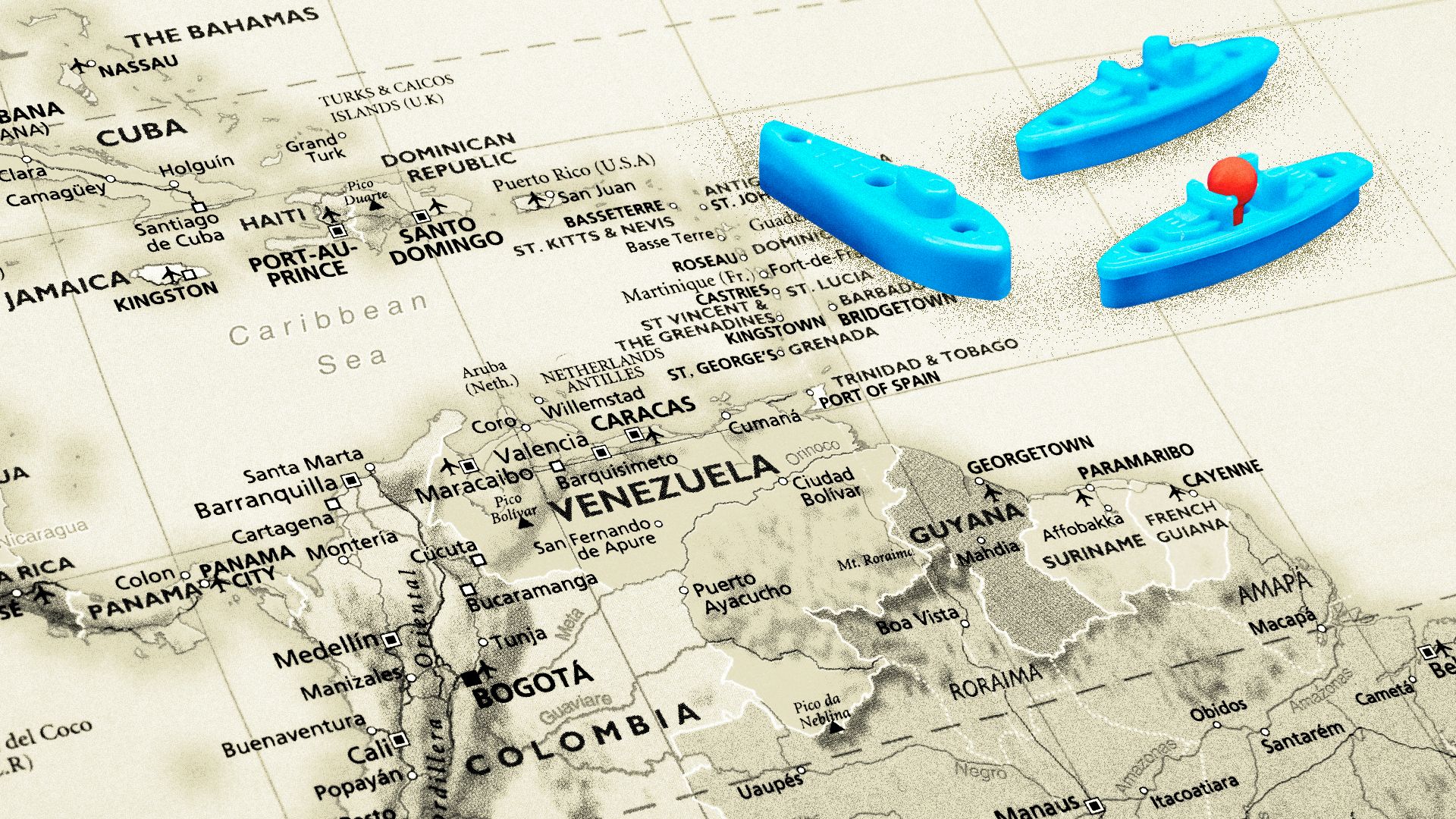
Stealthy RQ-170 surveillance drones aided the U.S. capture of Venezuelan strongman Nicolás Maduro last month, maker Lockheed Martin confirmed.
Why it matters: It's a rare, public flex of such a secretive asset.
- Plus, it's the same type of aircraft that stalked al-Qaeda founder Osama bin Laden more than a decade ago.
Driving the news: Lockheed in a fourth-quarter earnings announcement said Sentinel drones, F-22 and F-35 fighters and Sikorsky Black Hawk helicopters were deployed in Operation Absolute Resolve.
- The U.S. had more than 150 warplanes in the air for the daring raid, according to Joint Chiefs Chairman Gen. Dan Caine. They also included Northrop Grumman's E-2 Hawkeye and Boeing's B-1 Lancer.
Context: The RQ-170 was developed by Lockheed's clandestine Skunk Works division.
- The Air Force in 2020 disclosed it was involved in a $1.4 million test event dedicated to stealth, suppression of enemy air defenses and electronic warfare.
Go deeper: U.S. leveled military facilities in Maduro attack, satellite imagery reveals
5. Quick hits
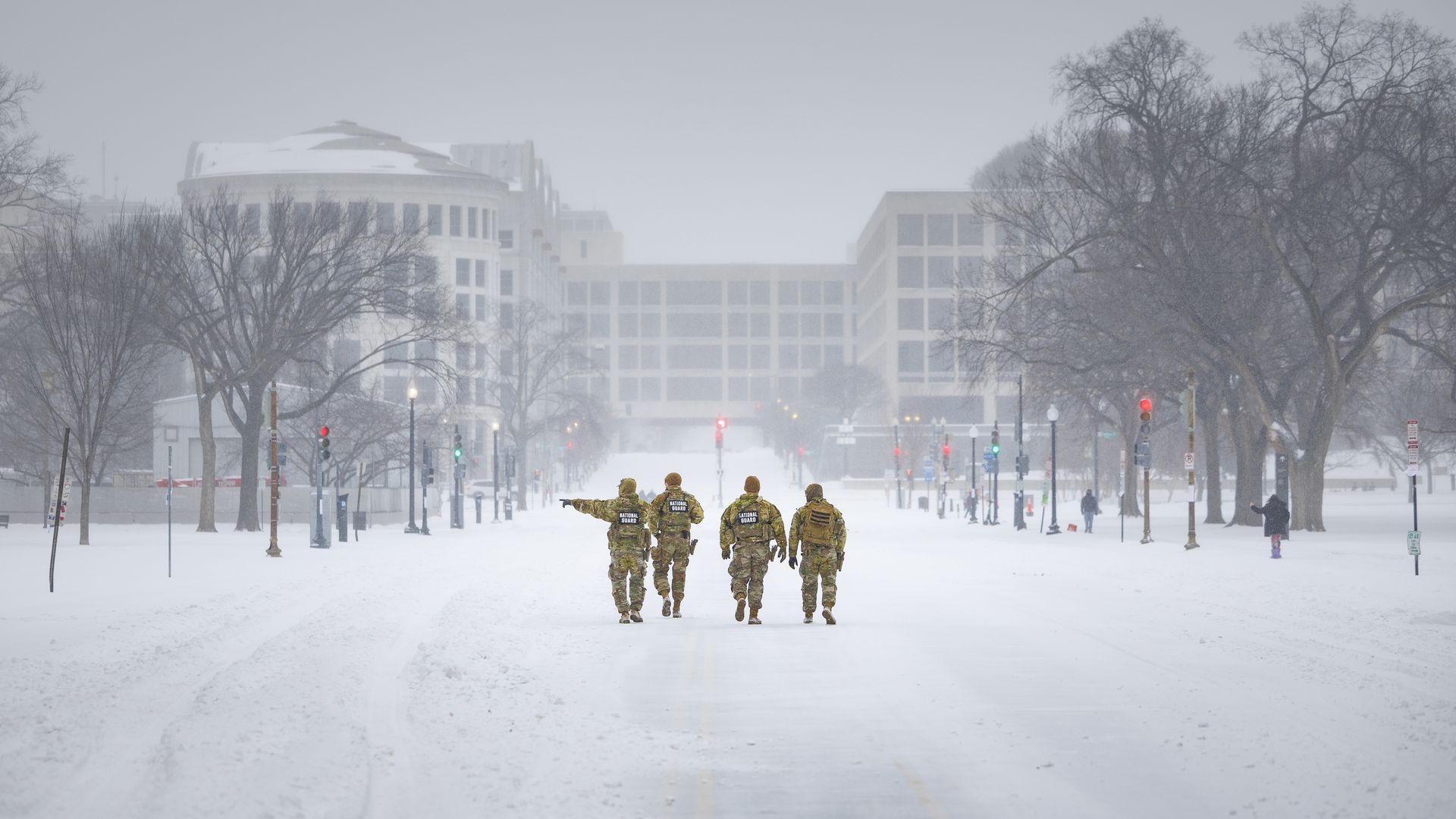
💰 President Trump's use of the National Guard in major American cities cost hundreds of millions of dollars between June and December, according to the Congressional Budget Office. The average daily cost of deployment was most expensive in Washington.
- Why it matters: "Many of the deployments that began in 2025 have been challenged in court," the CBO said in a Jan. 28 letter.
- 💭 My thought bubble: Read this. An oldie but relevant goodie.
🇷🇺 Russia's Rostec will unveil its newest high-mobility multiple launch rocket system, Sarma, at the World Defense Show 2026 in Saudi Arabia later this month.
- Why it matters: It's capable of engaging "personnel, artillery, armored vehicles, air defense systems, other offensive weapons and military facilities," according to state media.
- 💭 My thought bubble: It's always interesting to see what other countries — not the U.S. — bring to trade shows.
📊 American manufacturers are embracing advanced technologies — but at uneven levels and distribution, according to a study conducted by Sustainment and the New American Industrial Alliance.
- Why it matters: Most surveyed (52%) reported adoption of robotics and automation. Some (39%) reported adoption of AI and machine learning. Few (18%) reported adoption of digital twins and simulations.
- 💭 My thought bubble: Another interesting finding? A little less than half the respondents said tariffs added risk to their business, "citing higher costs for imported materials or retaliatory tariffs on exports."
6. Axios interview: Amol Parikh

This week's conversation is with Amol Parikh, the co-CEO at Doodle Labs.
Why he matters: Doodle's radios are used widely in commercial and defense markets, including aboard Red Cat's Black Widow drone and on the front lines in Ukraine.
- Parikh himself has a marketing background. We first linked up in Houston, at AUVSI's XPONENTIAL conference.
Q: When you hear "future of defense," what comes to mind?
A: It is the use of new technologies with a very different rationale — in terms of cost, capability and intelligence — to wage asymmetric warfare.
Q: When will wars be waged solely by robots?
A: Personally, I'm not ready for the Terminator future. I believe that defense maintains our peace and our security, and I believe approaching that in an ethical way keeps human beings involved.
Q: Where are you investing internally, and how could it shake up the status quo?
A: We get a cross section on all kinds of robotics, but specifically drones, commercial and defense. On the defense side, it's all different kinds of categories of systems, from the attritable systems to the long-range intelligence, surveillance and reconnaissance systems.
- We are responding to what the fielded systems are running into as challenges — and the biggest one is electronic warfare.
- We're actually building out our sales-focused engineering team as well, just so we can be very hands-on.
Q: How many emails do you get a day, and how do you deal with them?
A: Man, too many. And I do not have a system in place.
- If anyone who reads your newsletter does and they want to get in touch, I'd be eternally grateful.
Q: What's your secret to a successful overnight flight?
A: It's a luxury: a good pair of over-the-ear headphones and an eye mask.
Q: What advice would you give your younger self?
A: I would marry my wife 1,000 times over.
7. Check this out
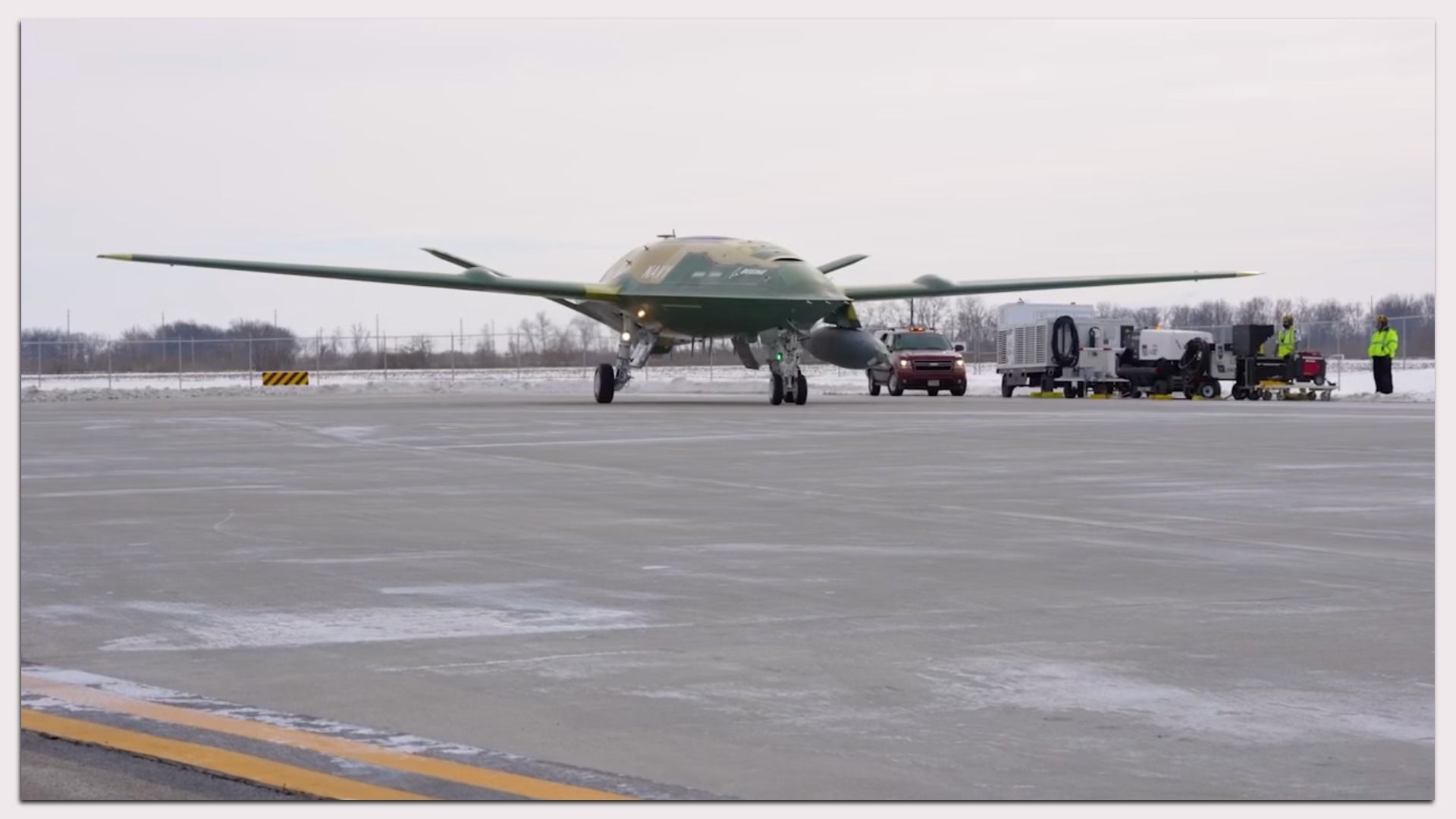
It's not quite first flight, but it's getting there.
The big picture: Boeing's MQ-25 Stingray is undergoing taxi testing, according to footage shared by the U.S. Navy.
- Above, the refueling drone rolls across the MidAmerica facilities near St. Louis.
Follow the money: The Navy awarded Boeing an $805 million contract in 2018 for four MQ-25s.
Go deeper: F-47 could be airborne "faster than normal," says Boeing exec
Shoutout to Dave Lawler for editing and Matt Piper for copy editing.
👋🏼 Thanks, as always, for reading and sharing. Tell your friends to subscribe here.
Sign up for Axios Future of Defense