Study: Seattle area is unprepared for climate disasters

Add Axios as your preferred source to
see more of our stories on Google.
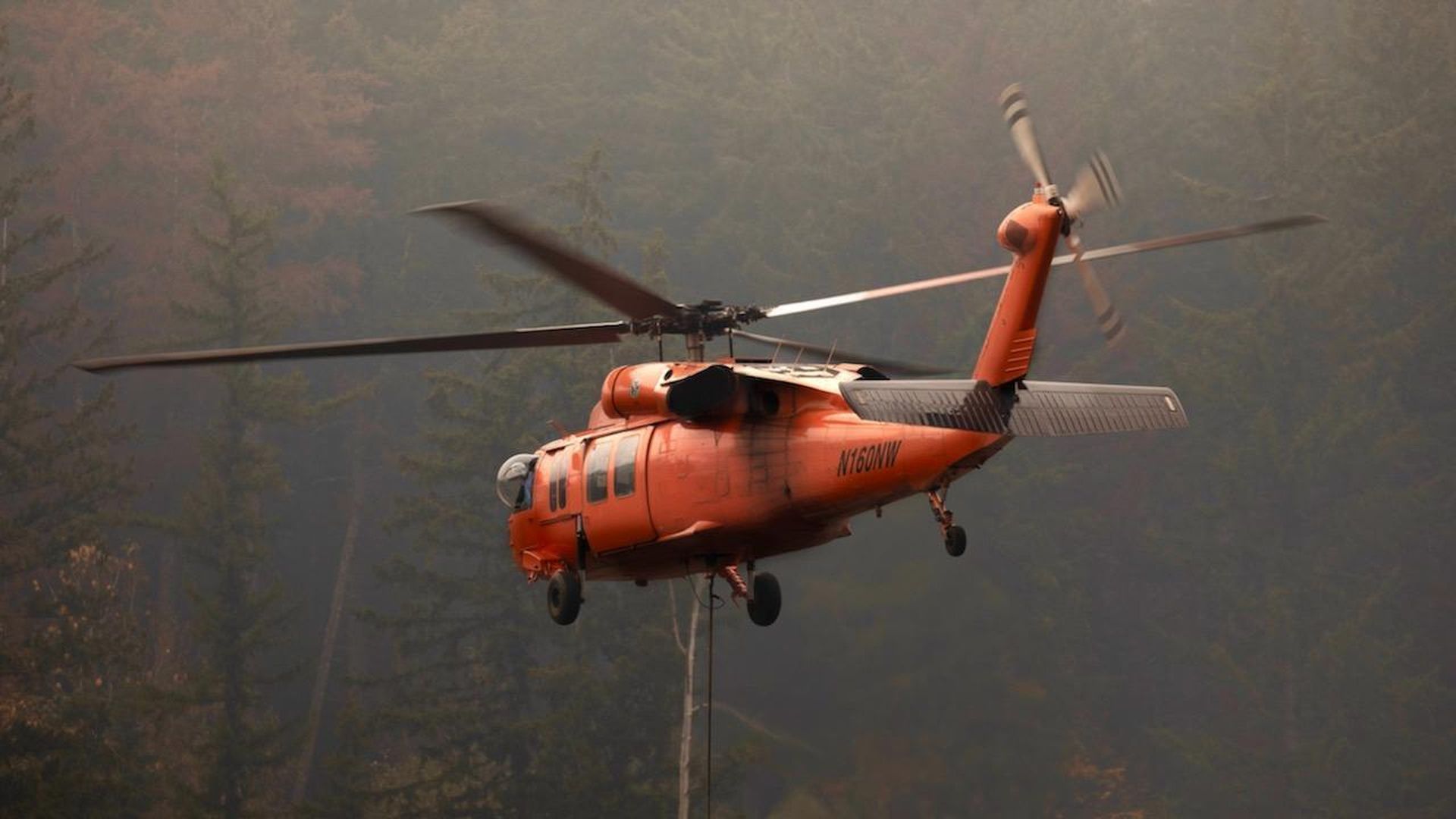
A helicopter drops water on the 2022 Bolt Creek Fire in King County. Photo: Courtesy of InciWeb
Washington is the sixth-worst state for climate disasters and King is its least prepared county, a recent study finds.
Why it matters: The Pacific Northwest faces new climate change-related threats like summer wildfires, winter flooding and weather-related power outages in addition to earthquake threats and even potential volcanic eruptions.
By the numbers: King County ranked 12th among the 50 least prepared places, according to homeowners insurance resource ClaimGuide's risk assessment of over 3,000 U.S. counties.
- With threats from wildfires, drought, flooding and severe storms, King County has a risk rating of 99.65 out of 100 and faces anticipated annual losses of $774 million, per the study.
- Washington had 88 disaster declarations between 2014 and 2024 and an average annual loss of over $2 billion per year in damage, according to the analysis.
What they're saying: "Swinging from flooding and landslides to 2021's deadly 'heat dome,' where temperatures rose to nearly 30 degrees above average, Washington state is perennially grappling with at least a few climate-related events each year," the report's authors wrote.
Stunning stats: Nationwide, there were 28 separate billion-dollar weather and climate disasters that collectively caused $92.9 billion in damage last year, per ClaimGuide's analysis.
- Natural disasters causing at least $1 billion in damage nearly tripled in Washington state over the last 20 years.
The fine print: ClaimGuide's analysis determined overall risk scores based on 18 natural hazards from FEMA's National Risk Index and NOAA's National Centers for Environmental Information.
- Additional key metrics include expected annual loss, community resilience and social vulnerability.
The big picture: Washington is among nine states (including California, Colorado and Louisiana) where American National Group, an insurance company owned by Brookfield Asset Management Reinsurance Partners, plans to cease its homeowners insurance business, according to Insurance Business magazine.
- But unlike California, Washington doesn't track whether insurance companies use wildfire risk scores to discontinue policies, so the full scope of such non-renewals is unknown, according to the Seattle Times.
Between the lines: A recent survey found that Americans now believe climate change is a major threat and more Washingtonians are looking at potential climate impacts when buying homes.
Yes, but: ClaimGuide's data also showed that many Americans are not even taking steps to prepare for emergencies that are within their control.
- 61% say they do not have an emergency plan for severe weather and 52% say they do not have an emergency supply kit at home.
What we're watching: Washington's coastal communities will bear the brunt of rising ocean temperatures and sea levels, according to the University of Washington's Sea Grant Program.
- Impacts may include more frequent storms, hydrologic changes to freshwater systems, coastal erosion, flooding and rare but potentially catastrophic events such as tsunamis.
- NOAA's new interactive map lets users see how Washington could look as sea levels rise.