Seattle area mops up after record-breaking deluge

Add Axios as your preferred source to
see more of our stories on Google.
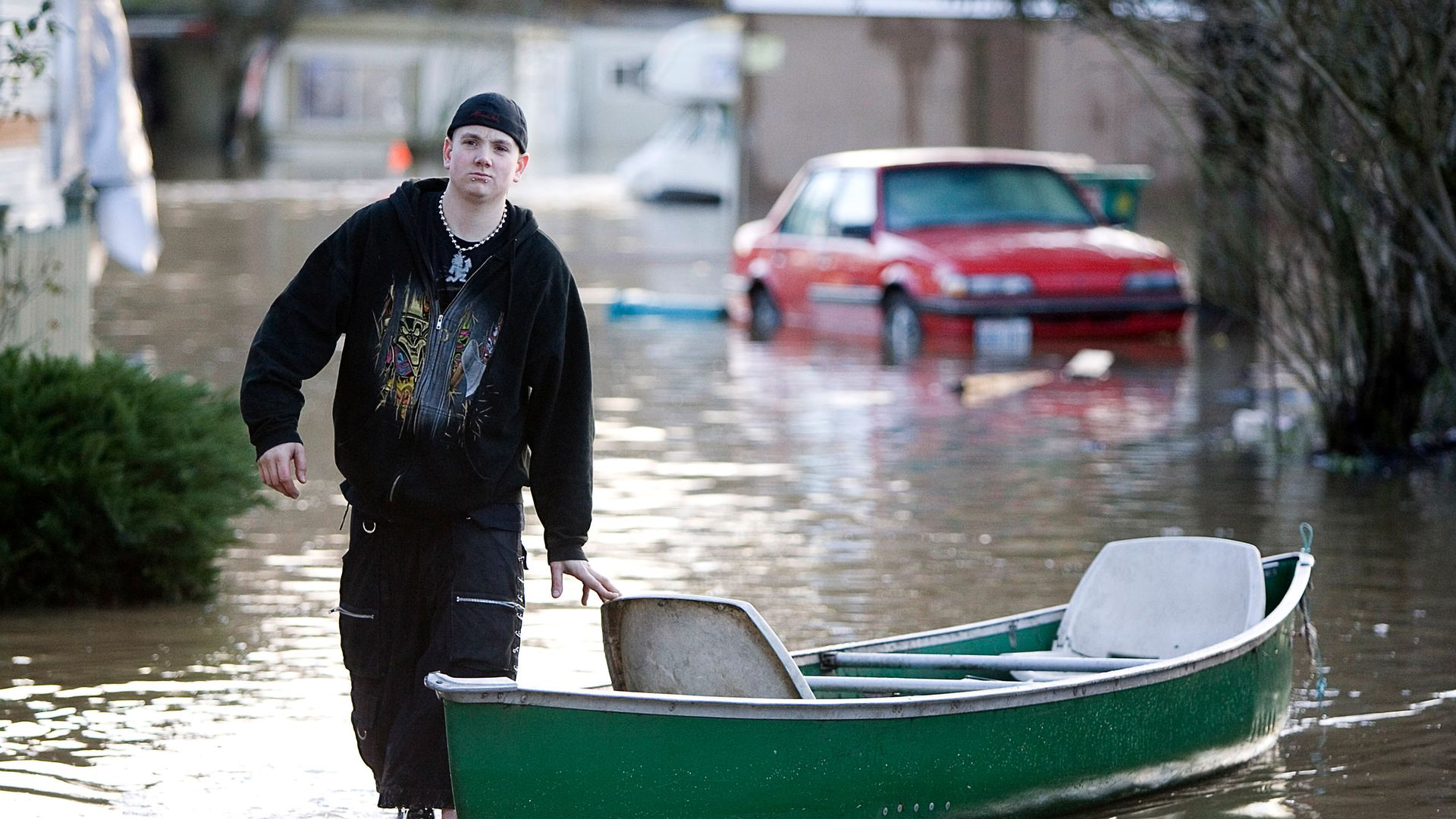
Rivers throughout Western Washington breached banks and levees, closing roads and flooding homes after record-breaking rainfall. Photo: Stephen Brashear/Getty Images
Cleanup from two potent atmospheric rivers that dumped up to 10 inches of rain over two days in some parts of the Pacific Northwest — flooding homes, closing streets and triggering landslides — could last through the week.
The big picture: At least two people died in Oregon creeks during the deluge, which also prompted school shutdowns, a water rescue near Portland and a school bus rescue in Thurston County.
- Landslides forced Amtrak to cancel train service between Seattle and Portland and closed part of the Burke-Gilman Trail in Seattle.
Driving the news: As much as another inch of rain could fall over the next few days on the coast of Washington and the Weather Prediction Center is not ruling out more heavy rainfall, though the greatest impacts are likely behind Seattle.
Details: Daily rain records were set across Washington Tuesday, including Seattle (with 2.39 inches of rain) and Olympia (with 2.96 inches).
- Quillayute measured 4.19 inches on Monday, National Weather Service Seattle meteorologist Kayla Mazurkiewicz told Axios.
- The Stillaguamish River reached 21.34 feet in Snohomish County, breaking records and flooding homes in Arlington and surrounding streets, she said.
- In Skagit County, communities were told to prepare for evacuation and in Snohomish, emergency responders had to rescue drivers who tried to power through flooded roads.
Of note: At least one such rescued person was issued a $432 citation for driving around the road closure, per the sheriff's office.
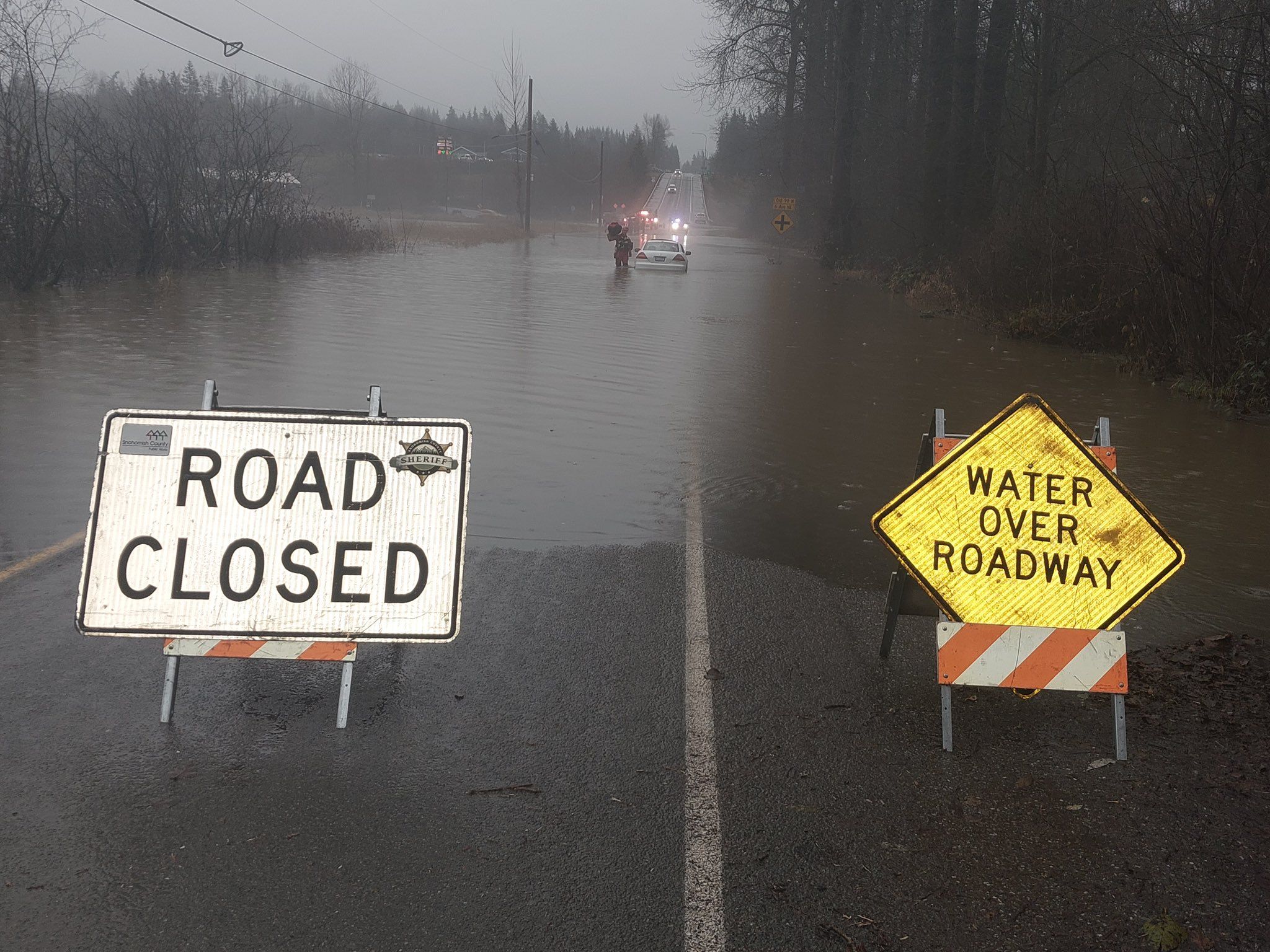
Plus: NWS Seattle said floodwaters may recede slowly from some rivers, including the Stillaguamish, due to the degree of flooding.
- The Skokomish in Mason County could also remain elevated through the weekend.
- Dozens of roads remained closed yesterday with no clear estimated times for reopening, per the Department of Transportation.
Between the lines: Atmospheric rivers are long, narrow highways of moisture that can travel thousands of miles and carry as much as 15 times the average flow of water at the mouth of the Mississippi River. They are responsible for 30–50% of the wet-season precipitation along the West Coast, according to NOAA.
- Climate change is adding even more moisture to atmospheric rivers, leading to higher rain and snow totals, per Axios' Andrew Freedman.
- It's also intensified extreme weather fluctuations, with parts of the western U.S. swinging from drought to flood in recent times.
What's next: By next week, the PNW is likely to be back to its "regularly scheduled programming," said Mazurkiewicz, with scattered rain in the lowlands and snow in the mountains and passes.