1 in 10 Oregonians over 65 has Alzheimer's


Add Axios as your preferred source to
see more of our stories on Google.
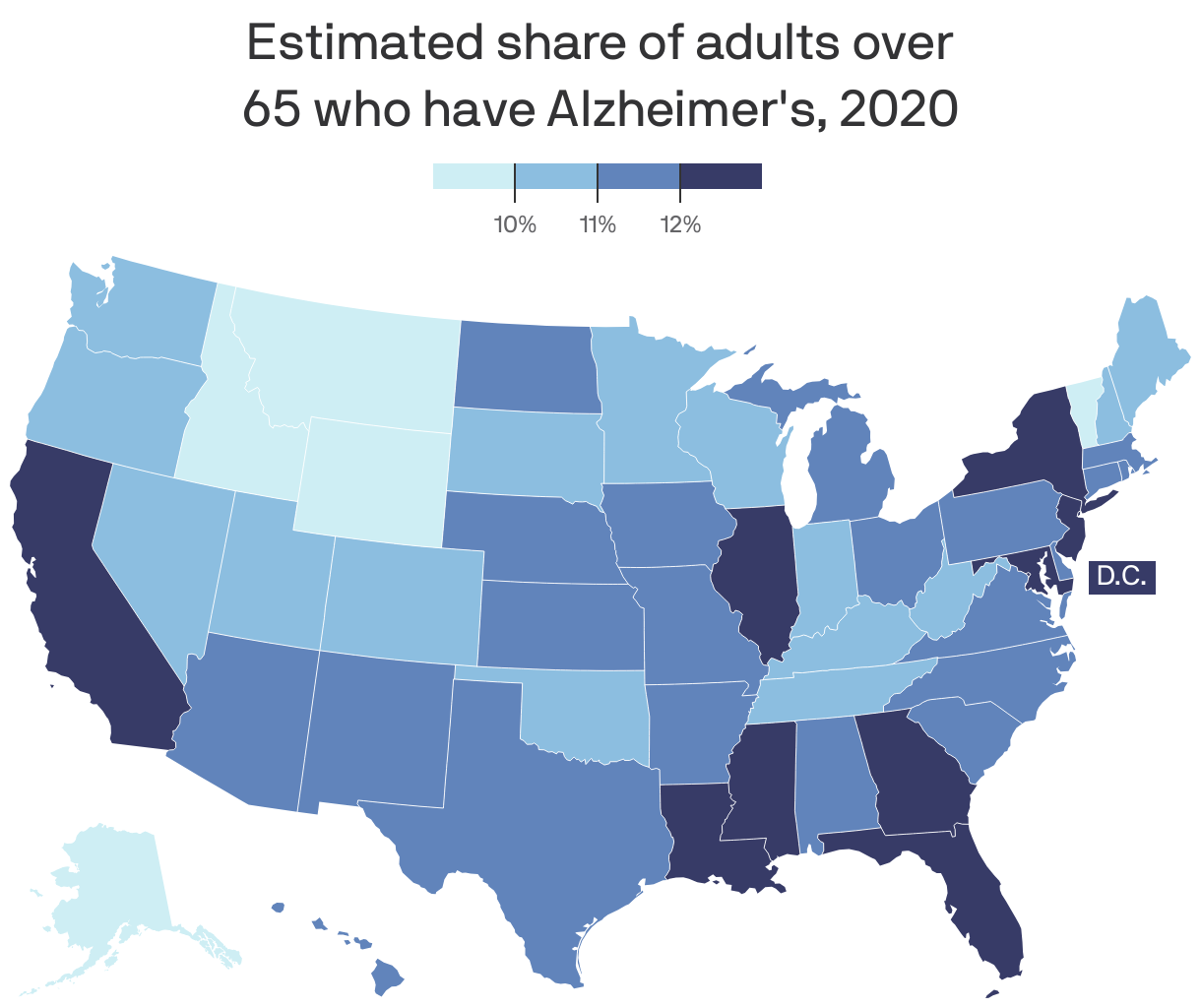
About 10% of Oregonians aged 65 or older — roughly 79,000 people — are living with Alzheimer's, according to 2020 data shared in a new Alzheimer's Association report.
Why it matters: More than 7 million seniors in the U.S. now live with Alzheimer's in the U.S. — the highest number ever recorded — but addressing cognitive decline early can help stave off the disease.
What they're saying: Lakelyn Eichenberger, a gerontologist at Home Instead, said she's not surprised by the rise in numbers, noting an aging population and the advancement in diagnostic tools and testing.
By the numbers: Almost two-thirds of Americans with Alzheimer's are women, according to data cited in the report.
- Risk increases with age: 5.1% of people ages 65-74 have it, and 33.4% of people 85 and older have it, per the report.
- Oregon's 65-and-older population is projected to reach 24% by 2050, according to Portland State University's Population Research Center — an increase of nearly 60% compared with 2022 population statistics.
Zoom in: Oregon's aging population, fueled by falling birth rates and out-migration, is already putting strain on the state's health care system and social services.
- The burden of care is often thrust onto family members. The Alzheimer's Association estimates about 192,000 Oregon families provide unpaid care for a loved one with the disease.
- The nonprofit also projects the number of geriatricians in the state will need to increase by 76% to meet 2050 demand.
Between the lines: New research from Oregon State University could provide a "significant breakthrough" in how Alzheimer's is treated by using nanoparticles to deliver treatment to specific parts of the brain.
Warning signs to watch for in high-risk age groups:
- Trouble finding the right word.
- Difficulty judging distances.
- Misplacing things and struggling to retrace steps.
Be smart: Keeping your brain on its toes, so to speak, can help prevent dementia.
- That means learning new things and staying social, including doing a word puzzle and talking through clues with a friend.
- And don't skimp on sleep.